Connect with us

Women

Aso ebi: Gate Pass To Social Gatherings

Published

on

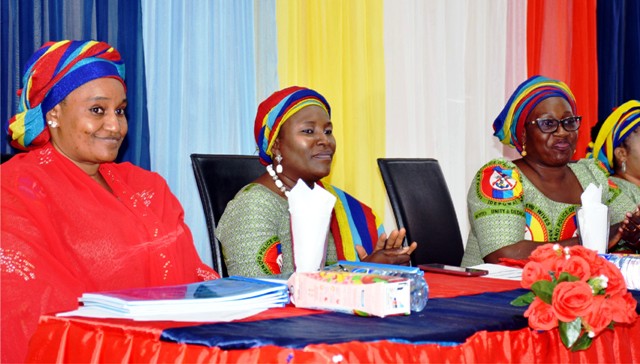
A popular Yoruba adage says, “Eni o wo ankara o je semo” meaning:  the guest who does not wear uniform fabrics, popularly called ‘Aso ebi’ will not eat at the social gathering the fabric is meant to celebrate.
‘Aso ebi’, usually worn by family members  and friends at ceremonies, has in contemporary times,  become the gate pass to social events such as weddings, burials, harvests, ordination of religious leaders, political rallies and campaigns in Nigeria. It gives a sense of belonging to those who adorn them during the events. It equally makes the celebrator to feel loved and important.
According to Wikipedia, ‘Aso ebi’ is a uniform-attire traditionally worn in Nigeria and in some other West African countries as an indicator of cooperation and solidarity during ceremonies and festive periods.  `Aso ebi’ can be made with Ankara, Lace, ‘Aso oke’ (hand woven fabrics), Damask, George, `atiku’, `Senator’, and a host of others materials for both men and women.
The prices of these fabrics range from N500 per pack to N150,000 depending on the class, status and taste of the celebrator. They are mostly sewn in native blouse and wrapper/skirt or gown for women and native shirt and trousers/wrapper and even ‘agbada’ for men.
‘Aso ebi’ adds beauty, colour and glamour and grandeur to events.
Analysts note that guests who wear ‘Aso ebi’ to social functions are usually believed to have directly or indirectly contributed to the success of such functions.
They also argue that those determined to identify with a celebrator through adorning of ‘Aso ebi’ often do not mind the quality or market value of the fabric.
According to analysts, a guest who refuses to adorn ‘Aso ebi’ may receive cold reception especially from ushers at the event no matter how highly placed or influential he may be.
Thus, most guests purchase ‘Aso ebi’ and appear in them on the day of the events, whether convenient or not,  just to fulfill all righteousness, since they are not likely to wear them after that day.
It is also believed that some people see the purchasing of these outfits as an opportunity to acquire more clothes as they may not have the time to go to markets to buy fabrics.
A fashion designer, Mrs Seun Olujide, says an average of 10 ladies send ‘Aso ebi’ to her shop for sewing weekly because of one event or the other.
“This keeps us busy, helps us to hone our designing skills, and deepens our mastery of the art while we make a living from it.
“When our clients wear their fabrics, it gives them a sense of belonging when they get to the event venue because no one likes to feel left out. We are also fulfilled as fashion designers when our clients bring us commendation from their friends and admirers about our works.
“Personally, when I attend a wedding in ‘Aso ebi’, it increases my confidence. I don’t feel like outcast or someone who does not want to support her friend or family member,” she says.
Mr Ojo Ogidi, however, notes that some people exploit ‘Aso ebi’ buyers by selling to them at high prices, noting that this makes such people unable to sell more packs of   `Aso ebi’ because some intending buyers would have carried out market survey and observed the exploitation.
“To beat such pranks, two or more potential buyers will   jointly buy just a set, instead of the individuals buying a set each,’’ he argues.
A civil servant, Mr Funmi Ajayi, says she teamed up with four others and bought a set of lace materials for a wedding which the event host sold at a skyrocketing price.
“We decided to buy a set and share it among ourselves. Each of us gave to our fashion designer who combined it with other matching fabrics and sewed.
“Our host gave us a single gift which we gave to the oldest among us. By doing so, we contributed to the success of the wedding and were accorded the same recognition at the reception as others who bought and wore the full set of the lace material,’’ Ajayi says.
Mrs Boluwatife Alabi of April Fabrics, Lagos, is of the opinion that an event without ‘Aso ebi’ is incomplete.
“What is a wedding without the ‘Aso ebi’ ladies? What is a celebration of life without friends and family members cladding in `Aso ebi’ of various materials and styles?
“I make it a point of duty to select the best fabrics for my clients because the more colourful the fabrics, the more colourful the event will be,’’ the fabrics seller argues.
She explains that ‘Aso ebi’ sellers add a little amount to the market price of the fabrics to cover the cost of souvenirs to be given to guests.
“I am aware of instances where certain amount are added to the cost price by organisers, but that is to cover for souvenirs that will be distributed to guests during the function.”
A student, Miss Itunu Asamany, believes that ‘Aso ebi’ is vital to social functions as it serves as a means of identification with age mates, relatives, groups or friends.
“It always makes such events beautiful, colourful and well organised. The bride during her wedding will be able to identify her friends and close relatives by what they wear,’’ she says.
Asamany, however, condemns charging of outrageous prices for ‘Aso ebi’ by some celebrators. She is convinced that the high prices are exploitative and can discourage many potential `aso-ebi’ buyers.
“Some people go as far as adding 30 per cent of the cost price to the selling price; this is not fair at all.
“I won’t break a bank to please my friend. If the selling price of the ‘Aso ebi’ is beyond my budget, I will not buy it but go for what is within my power.”
However, a trader, Mr Koko Adeola, has a different view. He says he will not mind spending a huge amount of money on ‘Aso ebi’ for close friends but won’t bother doing so for an acquaintance.
“I will not buy an expensive “Aso ebi’’ from someone who is just an acquaintance. The level of relationship I have with you will determine whether I will attend your function in `Aso ebi’. A major advantage of ‘Aso ebi’ is that it helps to identify invited guests from those who gate-crashed,’’ he says.
He observes that ‘Aso ebi’ is less expensive for men. “Men are lucky when it comes to buying ‘Aso ebi’ because, many times, all they need to buy is just the cap which may not cost more than N500.’’
A businesswoman, Ada Mbah, is worried that ‘Aso ebi’ can breed unhealthy rivalry between families, especially, during entertainment and sharing of gifts at events.
“Why should  the family and friends of the groom be refused food and drinks because they are wearing a different fabric (‘Aso ebi’) from those of the bride?
“I attended an event without wearing the ‘Aso ebi’ and I was told that only people with the uniform would be entertained and given gifts.
“I was embarrassed because I bought the fabric but did not wear it to that particular occasion. I really felt bad because I was addressed very rudely and treated like outcast.
Mbah’s friend, Deborah Ige, is of the opinion that a guest can still be treated badly even when wearing Aso ebi. She recalls when she was ignored during entertainment at a ceremony even with her ‘Aso ebi’.
He says: “I bought the fabric for the event, but when it was time for entertainment, I only got a bottle of water.’’
According to her, getting the required attention during social gatherings with or without ‘Aso ebi’ will depend on planning.
“There are instances where the population of the guests is  more than what the host has budgeted for; he or she will  resort to rationing foods and drinks,’’ she argues.
A marketer,  Mr Joseph Omojola,  is of the opinion that since ‘Aso ebi’ has become the trending gate pass to events whether secular or religious, there is the need for more security consciousness to ensure that criminal elements do not disguise as family members or friends by wearing the ‘Aso ebi’.
Analysts are convinced that wearing ‘Aso ebi’ is a major way of promoting African culture, and if well managed, will reduce foreign influence on Africans’ dressing.
They suggest that African governments should do more to promote local production of the indigenous fabrics at affordable costs and consider using them for school uniforms and office wears on certain days of the week.
Onijala writes for News Agency of Nigeria.


Busayo Onijala

Continue Reading

Women

Who Is A Classic Woman? 

Published

on

A classic woman is one  who has identified herself in terms of fashion, occupation  or the kind of business she does.
A woman can be classical in the way she entertains her audience in terms of music and movies.  You will discover that some female musicians are identified with the kind of music they sing.
A classical woman is one who always wants to appear trendy.
Generally, classical women are normally identified with the kind of things they are involved in.
There are ladies that want to be identified with wearing of shorts (short trousers) in the public. They use it to showcase their beauty. They want to be identified with such things as they see it as socialisation.
Some wear trousers that are so tight just to showcase all the curves they possess.
Consultant stylists and etiquette experts say some fashions won by some persons are inappropriate because of how and when they are won.
A classic woman is supposed to dress properly.   She should  be able to wear clothes  that will not expose hidden parts of her body. When such occurs,  then it is indecent dressing.
Ladies should be known for two things, classical and beauty.  One can be classic with minimisation.  The minimum woman should go is to look good, decent and presentable.
Some ladies like wearing short skirts but no matter  how short the skirt is,  it should look elegant. The skirt  should not be too short like the mini-skirt.
Dressing or fashion depends on the environment the persons finds herself.  The kind of clothes won to the office may be different from the one won at home. Likewise,  a dress won to a party may be different from the one won too swimming pool.
For one to look classical or decent, body shape should be taken into consideration.
Colours of a particular fashion can make one look odd or nice.  Looking model does not mean that one should go naked or dull.
Don’t wear clothes  that you need to drag from time to time in order not to expose yourself.
Eunice Choko-Kayode
Continue Reading

Women

Emohua Widows Receive Items From Ogbakor Ikwerre California

Published

on

A Non-Governmental Organization, (NGO) Ogbakor Ikwerre,California, DBA, Ikwerre Community Association, California, through it’s outreach projects has donated food items to over 300 Widows in Rumuekpe and Rumuji in Emohua Local Government Area of Rivers State.
Speaking during the handover of the items to the women leaders of the communities in Emohua, yesterday, the team leader of the Ogbakor Ikwerre Community Association in California, Dr Christiana Chukumati, said that the donation is an annual event that has  been on since 2014.
According to her, the NGO is donating the items among the four local government area of Ikwerre adding that this year is for widows in Rumuekpe and Rumuji communities.
“Today is Rumuekpe and Rumuji communities, next we are going to another Ikwerre local government area also.
” The NGO has been carrying on the activities since 2014 within the
Ikwerre communities”, Dr Chukumati said.
She thanked the Royal father of Rumuekpe, His Royal Highness, Golden Amb. Christian Amadi, Eze Chigu and the Royal Highness of Rumuji and Odegu Kingdom, Ohna Christian Okachineke Elechi Newe-Eli (the xv) for receiving them in their communities.
The team leader also promised the Royal Highness that whenever the NGO has any other items for the communities, she we do well to bring it to them.
Receiving the Ogbakor Ikwerre Community Association in California in Rumuekpe, His Royal Highness Golden Christian Amadi, praised the NGO for funding his clan among the communities.
According to the Highness, my community is the only oil producing community in Emohua Local Government Area of Rivers State, adding that his community is feeding the local government area, the state and the nation.
“I thank my children over there in California for remembering the widows in my Kingdom for the food items they brought.
” I pray to God to help them to do also to other Ikwerre communities.
” I want to tell them also that Rumuekpe Kingdom is till undeveloped.
” As you can see the community is nothing to show to the people, I want to beg the Niger Delta Development Commission (NDDC) and the Rivers State government to come to our aid to develop our community. We are underdeveloped”
“God will bless my children over there in California”,  His Royal Highness Amadi prayed.
In her words, the women leader of Rumuekpe community, Comfort Njoku, said that she was happy for the gift items given to them adding that it is not easy to remember the widows.
She explained that in Rumuekpe, the widows have not seen such a gift before and  prayed that is only God that will reward them.
“I want to thank the Ogbakor Ikweree Community Association in California for giving us this items in this festival. We thank God for them and the leader of the group,  Mrs Chukumati.
” What we received today we have not seen it in our community before for widows”, Mrs Njoku stated.
Meanwhile,  in Rumuji community, His Royal Highness, Ohna Christian Okachineke Elechi, said that he lacked words to thank the Ogbakor Ikwerre Community Association in California for the gift to the widows in his communities.
According to him, today is historic in the history of Rumuji community that our children in oversea can remember us, I am very excited and happy over the items.
“I feel very very happy, it is good that our children recognize the widows in my community today.
” I did not know them before but now I  know them, I pray to God Almighty to pay them back for their effort and that they will not lack.
“I pray God to continue to bless them in whatever things they are doing”  he stated.
Earlier, the oldest woman in Rumuji community,  Nletem Josiah, who spoke in her local language interpreted by the woman leader, Agor Leah Onugbom, thanked the Ogbakor Ikwerre Community Association in California for the gift adding that her husband died many years ago that has caused her hardship.
” In my age and these people come and give me these food items,  is only God that will bless them for me.
” This Xmas I will eat and be happy so I want to thank them and that my God, God will bless them for me”,  Mama Josiah said.
By: Kiadum Edookor
Continue Reading

Women

When Rivers Women Pray

Published

on

Port Harcourt, the Rivers State capital went agog when women from all the local government areas of Rivers State came together for a prayer conference themed: “Women Converge 2025”.
The programme in it’s second series, which held at the Alfred Diette Spiff Civic Centre was put together by the Rivers Women Unite For Sim, a foundation that is nurtured by the women of Rivers State for prayers to God for the peaceful and smooth running of the state.
 Like a delegate conference, the  Civic centre was filled to the brim with women dressed in white attires.  They sang, danced and prayed to God for sustenance of peace in Rivers State while reaffirming their support for Governor Sim Fubara and his wife, Lady Valerie.
Women Converge With the sub-theme, “Women In An Evolving World”, explains the actions and strategies that the women use in fitting and succeeding in the digital and technical era that is very competitive.
During political rallies and campaigns, with their drummers, beautifully dressed, showcase their dancing steps to entertain audience.
In everything one does in the earthly world, prayers is key. Prayer, they say conquers. Women have been conquering many odds with prayers, and God answers whenever they pour out their minds concerning issues.
Of course, due to their nature, women have always been in the forefront of championing prayers, garnering supports for those in authority, taking care of their families as well as coping with their job careers.
Since the inception of the current administration, women have been relentless in ensuring that peace reigns in the Rivers state through prayers so 2025 edition of the Women Converge which is the second edition recorded huge success.
Speaking at the ceremony, the wife of the Rivers State Governor, Lady Valerie Fubara, commended Rivers women whose continuous prayers have impacted on the state and appreciated the support by the women to the Governor, Sir Siminalayi Fubara.
She described Rivers women as wonderful for the support both in prayers and solidarity to her family.
She described Women Converge 2025 as another milestone in an effort to shape the society for good and support for the sustenance of peace and development in Rivers State.
According to her, let me enjoin our women to remain prayerful because God is ever ready to answer our prayers. In all that we do, we must not forget the hand of God and seek him for direction and help.  You have always been steadfast and I urge you not to relent and together we will move our society forward.
Describing the theme, “Women Converge 2025, Women In An Evolving World”, as apt, she said it is a reflection of the very essence of actions and strategies that women adapt in navigating the new world order.
She said that despite the complexities of managing the home front and the constraints of economic realities, women had demonstrated formidable strength and resilience to confront the odds of life.
In her words, “This event underscores the resilience of our women to succeed no matter the odds, especially with absolute faith in God and determination for greater accomplishments”.
“Whether in the industry, business, agriculture, public service or even in politics, they have always shown strong determination to adapt and to accomplish like others”, she maintained.
A guest speaker at the event, the founder and medical director of  Save A Live medical centre, Dr. Okoye, told women to always take wise decisions in things concerning maternal and infant mortality.
The medical expert reiterated that women should not misunderstand the biblical idea of “you will deliver like the Hebrew women”.
He advised women to take  instructions from medical experts concerning pregnancy and child birth as those will go a long way in saving their lives and advised the women not to patronize quacks.
In a goodwill message, the former Commissioner for Environment, Prof. Roseline Konya,  expressed hope that the peace women have been praying for is already yielding positive result.
The President of Port Harcourt Chambers of Commerce, Industry, Mines and Agriculture, PHACCIMA, Dr. Chinyere Nwoga, spoke on the sustenance of peace in Rivers State as that will move the state to greater height.
Also speaking at the
Women Converge, Pastor Ene Secondus, enjoined women to continue to pray for peace and it’s sustenance in Rivers State.
One of the guest speakers, Pastor Eno Jerry Eze, during the intercessory prayers said women are the foundation of the society and explained that development of any society depends on the strength of womanhood.
The wife of the former Deputy Governor of Rivers State, Dr Christie Toby, a daughter of Rivers State, Ann Kio Briggs also graced the occasion.
Apart from the prayer session,  women from different local government areas showcased different kinds of food items in their various canopies and stands.
The Okrikans and in fact the Riverine extraction, in a food exhibition displayed fishes, crayfish, oporo (prawn), periwinkle( isam).
The women from Etche and Omuma decorated their tables with agricultural products like Garri, fufu, vegetables (okashi ala), plantain, bananas etc.
The Ekpeyes and Ogbas were not left out as they displayed their own food crops like fish, garri, fufu and the likes.
Women from Ikwerre and Emohua local government areas came with their food stuffs.
By: Eunice Choko-kayode
Continue Reading

Trending