Business
India Spends $74m On Projects In Nigeria -High Commissioner
The Indian High Commissioner to Nigeria, Shri Nagabhushana Reddy says that India has invested more than $74 million on projects in Nigeria this year.
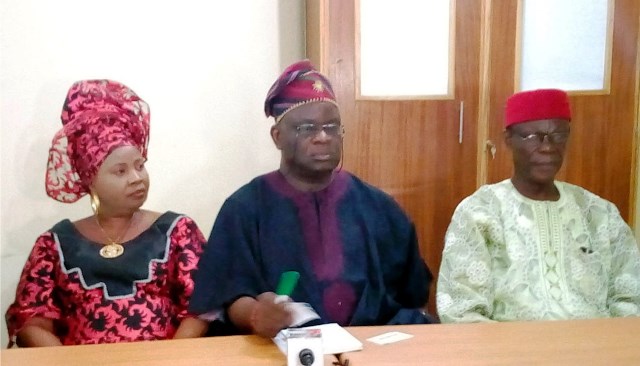
Reddy made this known in Aba yesterday during the Indian Universities Alumni Association, Aba Chapter symposium and cultural fiesta.
He said that Indian government was handling a Solar PhotoVoltaic Renewable Micro-Utility (REMU) project in the six geo-political zones of Nigeria valued at 8.36 million dollars.
According to him, a 50 megawatts Solar Power Plant was also being installed in Bauchi state at the cost of 66.6 million dollars.
He said that India in 2016, approved $60million and $30 million for power projects in Kaduna and Cross River states respectively, while similar project was being processed at $40million for Enugu State.
The High Commissioner said that India fully supports Nigeria’s economic recovery and growth plan through promoting its agriculture and allied sectors as a means of improving the global economy.
Reddy, represented by his deputy, Subhash Chand said that the Nigerian-Indian bilateral relationship in the education sector remains ‘a proud history,’ and of great importance and would be sustained.
He commended the Aba chapter for the initiative and promised that India would always support them.
Meanwhile, Governor Okezie Ikpeazu of Abia State used the opportunity to call on Indian government to establish a tricycle assembly in Aba to serve the large number of residents patronising it.
He said that Aba was once known for production of textiles but regretted that its textile factories have become moribund.
He therefore called on the Indians to come help restore the Aba textile mills to enable it serve the people and create more jobs.
Ikpeazu was represented at the occasion by Mr Emma Emeruwa, Chairman, Aba South LGA.
In his speech, the President, Indian Universities Alumni Association, Aba Chapter, Chief Ben Egwuonwu said the association was formed in 1985 by Dr Bon Asiegbu.
He said that since inception, the association had contributed positively towards the relations between the two countries by stopping discriminatory policies against Nigerians including the alumnae.
He also said that it had helped to solve the problem of rejection of Indian Universities alumni by Indian companies in Nigeria.

Business
FIRS Clarifies New Tax Laws, Debunks Levy Misconceptions
Business
CBN Revises Cash Withdrawal Rules January 2026, Ends Special Authorisation
The Central Bank of Nigeria (CBN) has revised its cash withdrawal rules, discontinuing the special authorisation previously permitting individuals to withdraw N5 million and corporates N10 million once monthly, with effect from January 2026.
In a circular released Tuesday, December 2, 2025, and signed by the Director, Financial Policy & Regulation Department, FIRS, Dr. Rita I. Sike, the apex bank explained that previous cash policies had been introduced over the years in response to evolving circumstances.
However, with time, the need has arisen to streamline these provisions to reflect present-day realities.
“These policies, issued over the years in response to evolving circumstances in cash management, sought to reduce cash usage and encourage accelerated adoption of other payment options, particularly electronic payment channels.
“Effective January 1, 2026, individuals will be allowed to withdraw up to N500,000 weekly across all channels, while corporate entities will be limited to N5 million”, it said.
According to the statement, withdrawals above these thresholds would attract excess withdrawal fees of three percent for individuals and five percent for corporates, with the charges shared between the CBN and the financial institutions.
Deposit Money Banks are required to submit monthly reports on cash withdrawals above the specified limits, as well as on cash deposits, to the relevant supervisory departments.
They must also create separate accounts to warehouse processing charges collected on excess withdrawals.
Exemptions and superseding provisions
Revenue-generating accounts of federal, state, and local governments, along with accounts of microfinance banks and primary mortgage banks with commercial and non-interest banks, are exempted from the new withdrawal limits and excess withdrawal fees.
However, exemptions previously granted to embassies, diplomatic missions, and aid-donor agencies have been withdrawn.
The CBN clarified that the circular is without prejudice to the provisions of certain earlier directives but supersedes others, as detailed in its appendices.
Business
Shippers Council Vows Commitment To Security At Nigerian Ports
-
Business2 days ago
Shippers Council Vows Commitment To Security At Nigerian Ports
-
Business2 days agoNigeria Risks Talents Exodus In Oil And Gas Sector – PENGASSAN
-
Business2 days agoCBN Revises Cash Withdrawal Rules January 2026, Ends Special Authorisation
-
Business2 days ago
NCDMB, Others Task Youths On Skills Acquisition, Peace
-
Business2 days agoFIRS Clarifies New Tax Laws, Debunks Levy Misconceptions
-
News2 days agoTinubu Swears In Christopher Musa As Defence Minister
-
Politics2 days agoTinubu Increases Ambassador-nominees to 65, Seeks Senate’s Confirmation
-
Sports2 days ago
Obagi Emerges OML 58 Football Cup Champions