
Featured
Police Recover Senate Mace Under Bridge …National Disgrace -NAPS …Sack Service Chiefs Now -Enugu Lawmakers … Senate Summons IGP,DG DSS

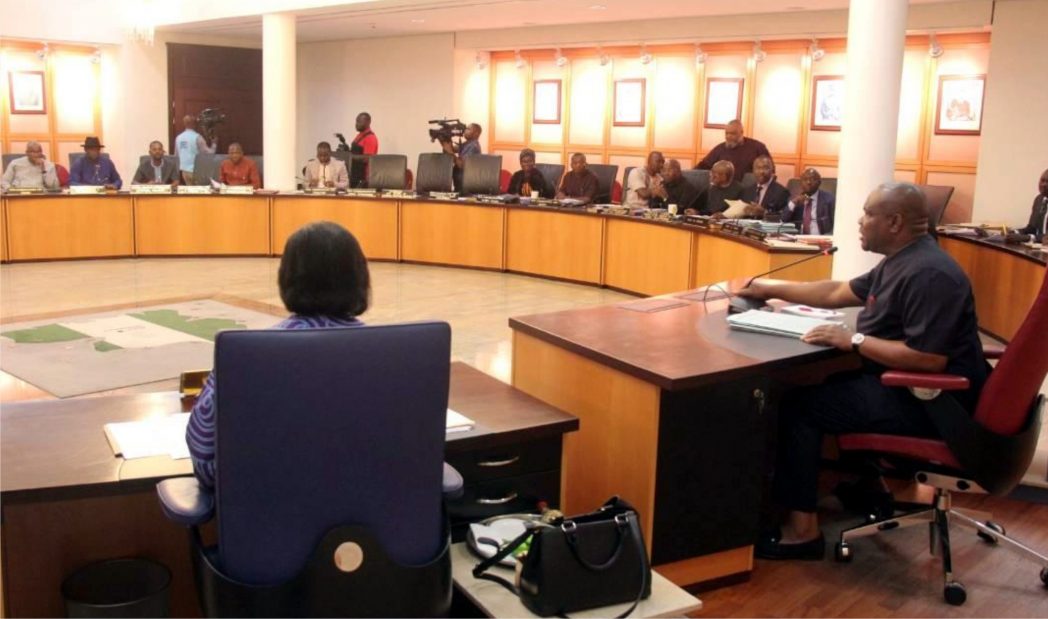
The Senate has confirmed receipt of the snatched mace, which was recovered and returned by the police.
The Deputy President of the Senate, Chief Ike Ekweremadu, made the confirmation in his opening address at the plenary, yesterday.
Ekweremadu said the Senate would insist on the arrest and prosecution of the suspects, saying that the Inspector-General of Police, Ibrahim Idris; and the Director-General of the Department of State Services, Lawal Daura, would be invited to brief the lawmakers next week on their investigation of the crime.
The Deputy Senate President wondered how the thugs crossed the gates, beat the security operatives on duty, and successfully made away with the mace.
However, there is a huge presence of security operatives in and around the National Assembly Complex, yesterday, following the invasion of the Senate chamber with snatching of the mace by thugs, last Wednesday.
Apart from the presence of more policemen, soldiers were also deployed to guard the premises.
The sergeants-at-arms also conducted stricter checks on workers and guests going in.
Some soldiers and policemen stationed at the lobby adjoining the Senate and House of Representatives’ chambersý had a brief argument over their responsibilities in the protection of the area.
The Divisional Police Officer of the National Assembly Division, Mr. A Sulu-Gambari, however, intervened in the matter and resolved the conflict.
The lobby was later cordoned off.
Earlier, the Nigerian police have returned the mace stolen by some hoodlums from the Senate on Wednesday.
The mace which was recovered by the police later, last Wednesday, after it was abandoned by the hoodlums, was brought back by the DIG operations, Joshak Habila.
He handed it over to the chief security officer of the National Assembly, who then passed it to the Sergeant-at-Arms.
The mace has been taken into the chambers, said media adviser to the Senate President, Yusuph Olaniyonu,.
It was learnt that the hoodlums who sensationally stole the Senate mace, last Wednesday, abandoned it under the flyover before the Abuja City Gate, the police said early yesterday.
The police said they were informed by a passerby, who saw it and alerted them, leading to its recovery.
The police said they were still in pursuit of the mace thieves and would ensure that they are brought to justice.
“While a discreet investigation into the incident is still ongoing to arrest and bring the perpetrators to justice, the Nigeria Police Force appreciates the spirited members of the public, most especially motorists within Abuja Metropolis for their support, cooperation and timely information during the rigorous stop and search operations for the recovery of the mace,” said the Deputy Police Public Relations Officer, Superintendent Aremu Adeniran.
Adeniran’s statement mentioned the efforts by the police teams, prior to the recovery of the mace.
“IGP Ibrahim Idris immediately instituted a high-powered Police Investigation and Intelligence Team coordinated by the IGP Monitoring Unit of the Force and further directed a total lock-down of the Federal Capital Territory with intense surveillance patrol and thorough Stop and Search Operations at various Police check-points with a view to arresting perpetrators and possible recovery of the stolen mace.
“The Police teams engaged in massive raids of identified criminal spots/flashpoints, stop and search operations, visibility and confidence building patrols, intelligence gathering which forced the suspected miscreants to abandon the Mace at a point under the flyover before the City Gate, where a patriotic passer-by saw it and alerted the Police”.
Meanwhile, the embattled Senator Ovie Omo-Agege has denied having anything to do with last Wednesday’s invasion of the senate chambers and the removal of the mace.
The senator representing Delta Central has also been released by the police.
The Senate Chamber was, last Wednesday, invaded by some persons who made away with the mace.
Shortly after the mace was stolen, the Senate accused Omo-Agege of sending thugs to steal the mace.
But Omo-Agege, in his reaction, denied involvement in the theft of the mace.
He said he has also left police custody.
A statement by a legal practitioner for the office of the senator, Mr. Lucky Ajokperniovo, said that he only went to the Red Chamber, last Wednesday, to resume work and sit for plenary.
He added that he was only invited by the police to speak about his perspective on the incident.
“We are aware of several media reports suggesting that Senator Omo-Agege personally removed or encouraged anyone to remove the mace of the Senate. This weighty allegation is not true at all.
“Following the said media reports on the mace issue, the police authorities decided to hear from Senator Omo-Agege.
He has told the Police his perspective to help them carry out a proper investigation. He has since left the Police.
Senator Omo-Agege trusts them to thoroughly investigate this very serious matter,” the statement read in part.
Omo-Agege also reacted to the statement by the Senate Spokesperson, Senator Abdullahi Sabi accusing him of leading the hoodlums to cart away the mace.
Omo-Agege described the allegation as ‘very serious’.
“We are carefully studying Senator Sabi’s allegations to ascertain their full ramifications.
Appropriate responses will follow, as may be necessary,” Omo-Agege’s statement read.
The mace which is the symbol of authority of the Senate was on Wednesday, snatched by some unidentified men.
The men barged into the Chamber of the Senate; during plenary, pushed away the Sergeant-at-Arms positioned at the entrance and carted away the mace.
The drama coincided with the protest at the National Assembly against the suspension of Senator Ovie Omo-Agege, APC -Delta Central.
Spokesperson of the Senate, Senator Aliyu Sabi Abdullahi, accused Senator Ovie Omo-Agege of masterminding the snatching of the mace.
He described the action as an attempt to overthrow an arm of government, and insisted it amounted to treason.
Meanwhile,the leadership of National Association of Polytechnic Students (NAPS) has condemned in strong terms, the show of shame at the National Assembly where unknown men invaded the Senate and made away with the Mace.
The students’ body described the act as a national disgrace, stating that they (Senate) has “successfully depressed, disappointed and discouraged millions of Nigeria students.”
NAPS queried the presence of a suspended senator, Ovie Omo-Agege at the plenary just before the Mace snatching incident, they charged the government to revisit the entire security personnel deployed to the Senate Chamber.
While speaking with our correspondent, the President, Comrade Mohammed Eneji and the Public Relations Officer of the association, Comrade Ijaduoye Olasukanmi said: “As Nigerians, we are shocked to hear the incident at the Senate on Wednesday that some thugs invaded the Senate chamber during plenary at 11.30am and made away with the mace.
“How could that happen? It’s is with great shock that just 3 men could invade the Senate Chamber, disrupt the plenary and take away the sign of authority which is called the mace.
“Professor Wole Soyinka once described his generation as a frustrated and wasted one, the set of senators in the Nigerian Senate fall under the same generation with him”.
We are having more reason to believe that the Legislative arm of the government is a waste of time, money and resources.
“NAPS as a body refuse to regard the 109 senators of the Federal Republic of Nigeria as leaders, mentors or personality to look up to if they continue like this. We watched the video carefully; we analysed it and came to a conclusion that we do not have leaders in the Senate but cabals.
The students’ leaders added that “We once again call on the Federal Government to revisit its security architecture across the country. Well, thugs’ invasion is our gain from a government who couldn’t invest in education and budgeted less than 10 per cent on education. Yesterday’s incident was evidence that whatever module the government is using has only brought negative change to the country.
“It is unfortunate that the entire security personnel deployed to Senate Chamber have become spectators who allow thugs to operate with so much confidence and efficiency. This is the lowest we can ever go as a country,” they said.
Similarly, the Enugu State House of Assembly, yesterday, demanded the immediate sack of all Service Chiefs in Nigeria.
Our correspondent reports that the lawmakers made the demand at plenary where they unanimously condemned the invasion of the Senate chambers, Wednesday, by thugs who took away the mace.
They said all heads of security agencies should be sacked because of laxity in security, not only in the Senate but the entire nation.
The legislators came under a motion of public importance brought before the plenary on the floor of the House by the member representing Ezeaugu Constituency, Hon. Chima Obieze, supported by four other members, urging the House to pass a resolution condemning the act.
They called on other houses of assembly in Nigeria to follow suit and condemn the act, which was viewed as a slap on democracy.
The Speaker of the House, Hon. Edward Ubosi while thanking his colleagues for their contribution to the motion, said that what happened was a big disgrace to the nation and called on Mr. President to effect change in the security chiefs who he passed vote of no confidence on.
“I want to thank my colleagues for their contributions. What happened is a disgrace to the nation.”
“As far as I am concerned, the security heads are not performing. The President should try some other people,” he averred and lamented that democracy seemed to be at variance with anarchy.
“There is a serious war between democracy and anarchy in the land,” he said.
Ubosi expressed fears that as things stood in Nigeria, using votes to change a government might not be possible because insecurity was capable of jeopardising democracy.
Mover of the motion, Hon. Obieze, while presenting the motion, had expressed similar fears that if what was appening now was not roundly condemned by all, Nigeria might be heading for disintegation.
“Mr. Speaker, the ship of the state called Nigeria is heading towards the rock and if we, elected lawmakers, as crusaders of democracy refuse to fight for our dear country, then I am afraid darker days may just be ahead of us,” he stated.
Making her own contribution, Hon. Lydia Nkechi-Omeje Ogbu representing Nsukka West, likened what happened at the Senate and what was happening in Nigeria to a war situation.
She lamented that IDPs camps were growing by the day.
“I am highly concerned about what happened yesterday. I am a woman and we women and children suffer a lot when there is trouble in the land. We are at war. There are IDPs everywhere. People are killed in Taraba, Benue, Borno, etc.
“Since this government came to power, there has been lawlessness in the land. The service chiefs should not be concentrated in one section of the land,” she noted.



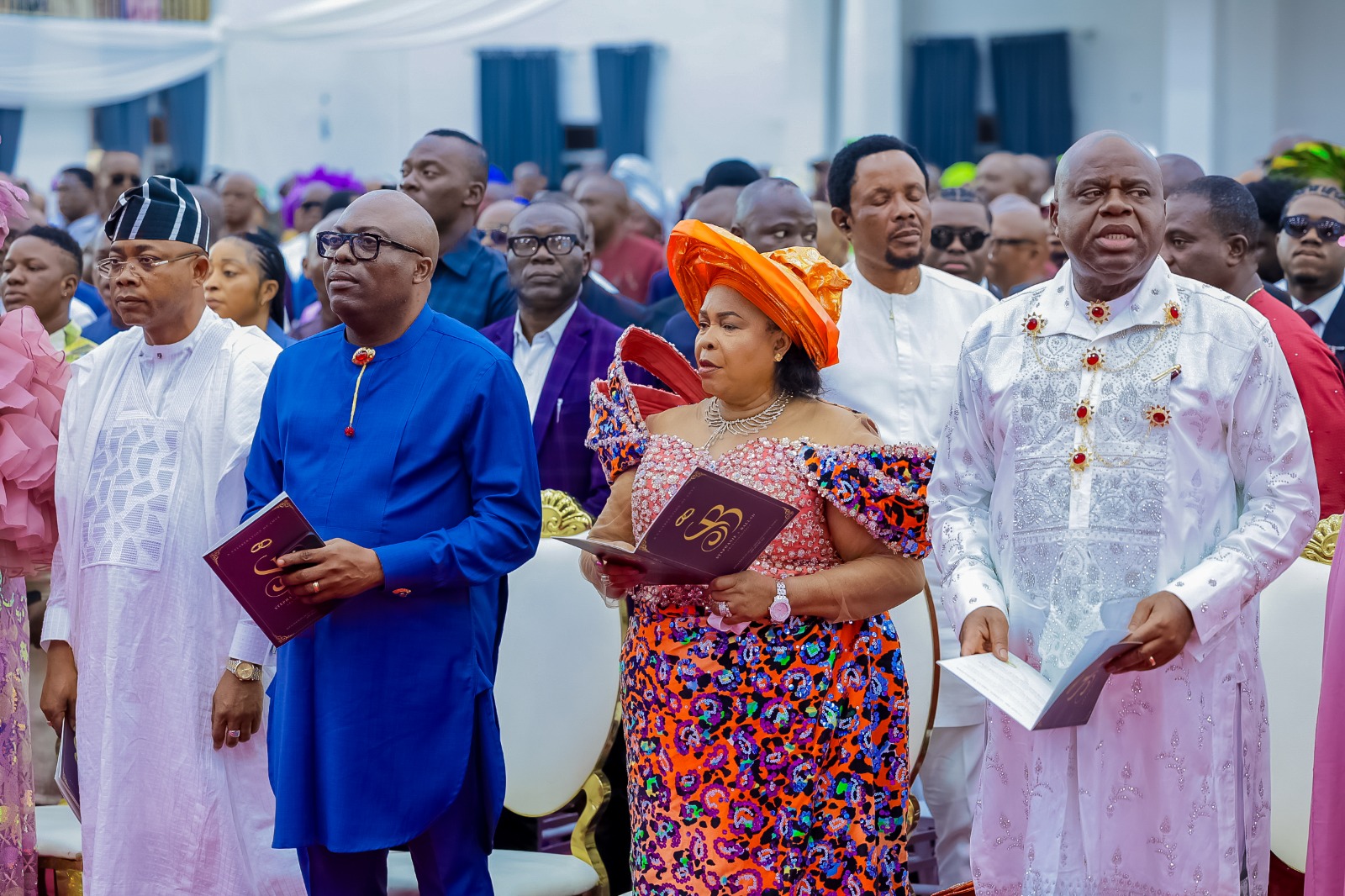
Rivers State, Sir Siminalayi Fubara, has assured members of the National Youth Service Corps (NYSC) of his administration’s commitment to supporting and strengthening the scheme in the State.
Fubara gave the assurance last Friday at the NYSC permanent orientation camp, Nonwa-Gbam, Tai Local Government Area in the State, during the swearing-in ceremony of 2026 Batch B Stream II orientation course.
Represented by the Permanent Secretary, Cabinet Bureau, Office of the Secretary to the State Government, Dr. Promise Oguzie, the governor said the State Government would remain intentional in providing the necessary support to improve the NYSC scheme and enhance the experiences of corps members deployed to the state.
He charged the corps members to be role models and quality nation-builders in their service to the good people of Rivers State in particular, and Nigeria at large.
“I charge you to be exemplary, dedicated and committed in all you do. Take full advantage of all the camp programmes and activities to enrich yourselves”, he said.
In his welcome address, the State Coordinator of NYSC in Rivers State, Mr. Moses Oleghe, urged corps members to see their deployment to Rivers State as a “veritable opportunity to make meaningful contribution to the growth of the State in particular and Nigeria at large.”
He further charged them to serve with all sense of “integrity, discipline, and the fear of God, especially when they will be engaged as INEC ad-hoc staff that will conduct the 2027 general elections.”
A total of 3,584 corps members composed of 1,421 males and 2,163 females were sworn in by the Chief Judge of Rivers State, who was represented by Justice Godspower Aguma.

Governor of Rivers State, Sir Siminalayi Fubara, says Nigeria needs God-fearing leaders for the nation to move in the right direction and make meaningful progress.
The Governor stated this yesterday when he received in audience, the World President of the Seventh Day Adventist Church, Pastor Erton Kohler; his wife, Andriene Marques Kohler; daughter Mariana Marques Kohler and a retinue of ministers of the church at Government House, Port Harcourt.
Fubara who hailed the Seventh Day Adventist Church for its contributions to education and the grooming of future leaders in Nigeria, expressed delight that the Church had over the years, been investing in education at various levels and currently runs two universities in the country.
He commended the church for not only using its institutions to spread the gospel of Christianity but to groom future leaders for the country.
According to him, religion should not be just about defending one’s faith, but also making meaningful impact on the lives of the people.
He said that by floating these educational institutions, the church has demonstrated capacity to support Nigeria in the task of producing not only educated people but a breed of God-fearing leaders.
“Our country is where it is today because we lack the fear of God. If you have the fear of God, there should be a limit to what you can do because you understand the supremacy of God. But when God is not in your equation, you’ll go beyond the line and that is what has brought us to where we are today.
“So, I feel very happy that you are contributing to the development of our future leaders in this country. We need the right people being in the right place; prepared properly with good minds; that is what we need, not just in Nigeria but round the whole world.,” he said.
Governor Fubara further observed that the absence of God-fearing people in high places to take the right decisions that could impact positively on the society, has also given rise to other problems such as social inequality, poverty, corruption and criminality. According to him, Nigeria needs a system where the average parent could afford quality education for their children and a guarantee that upon graduation, the average child will have the capacity to compete favourably with anybody, anywhere in the world.
“If we have a situation where the little money that you’re being paid as wage can also afford you quality healthcare and after working at least for 15-20 years, you have a roof over your head, tell me why you should be involved in any kind of crime? At that point, you’ll feel secured and this attitude of insecurity about the future that leads to all the social vices we have today won’t be there,” he said.
Governor Fubara expressed appreciation to the delegation for the visit and for their prayers for Rivers State, assuring them of his continued support for their programmes in the state.
Leader of the delegation and World President of the Seventh Day Adventist Church, Pastor Erton Kohler said he was in Nigeria for a special conference of the church during which thousands of the church’s ministers will be undergoing an empowerment programme to further equip them for the task of herding their flocks and serving the society.
He expressed gratitude to the Governor for the warm reception accorded his entourage, saying the memory of the visit will linger in his mind for a lifetime.
Kohler disclosed that the Church has over twenty -four million (24,000,000) members and more than 182,000 places of worship, spread across 212 countries of the world.

The Rivers State House of Assembly has approved the 2026–2028 Medium Term Expenditure Framework (MTEF) submitted by Governor Siminalayi Fubara.
This reaffirms the lawmakers’ commitment to enacting laws and taking legislative actions geared towards the overall development of the State.
The Assembly gave the approval during its Second Legislative Sitting of the Fourth Session held last Friday.
Speaking on the MTEF document during plenary, the House Speaker, Rt. Hon. Martin Amaewhule, noted that by the provision of Section 10(1)(b) of the Rivers State Fiscal Responsibility Law No. 8 of 2010, the MTEF ought to have been laid before the House in September 2025.
Amaewhule explained that traditionally, the document is expected to be presented four months before the commencement of the next financial year and immediately after the expiration of every three-year fiscal cycle.
He, however, stated that in the interest of the State and its people, the House considered it necessary to deliberate on the document, describing it as a precursor to the 2026 Budget Estimates.
The Speaker expressed concern that the year had already progressed significantly before the presentation of the framework.
During deliberations on the document, members examined the assumptions and projections contained in the MTEF and observed that strict adherence to the outlined fiscal parameters would ultimately serve the interest of Rivers people.
The lawmakers maintained that effective implementation of the framework would promote prudent financial management and enhance developmental planning across the State.
Following the debate and positive consideration by members, the Speaker put the question to the House and members voted overwhelmingly in support of the approval of the MTEF.
Meanwhile, during the same sitting last Friday, the House also received a petition from the Chairman of Obio/Akpor Local Government Council, Dr. Gift Worlu.
The petition was presented by the member representing Obio/Akpor Constituency II, Hon. Emilia Amadi.
According to the petition, concerns were raised over an imminent security breach, threats to lives, destruction of property and alleged forceful takeover of property by some lawless persons within parts of the Local Government Area.
Presenting the petition before the House, Hon. Amadi appealed to the lawmakers to revisit the matter and take necessary steps aimed at safeguarding lives and property in the affected communities.
The House is expected to further deliberate on the petition and consider measures to address the concerns raised in order to sustain peace and security in the area.
King Onunwor
-

 News2 days ago
RSG Targets Nine Million Residents in Mosquito Net Distribution Campaign
-

 Oil & Energy2 days ago
Aiyedatiwa Signs New Electricity Bill
-

 Oil & Energy2 days ago
NLNG Commissions Research And Innovation Centre In RSU
-

 Maritime2 days ago
Marine Minister Commends President Tinubu On NPERA Bill Assent
-

 News2 days ago
KenPoly Holds Eight Convocations, August 29
-

 News2 days ago
RSG Begins Another Phase of Projects Commissioning Today
-

 News2 days ago
RMAFC Completes Revenue Sharing Review, Proposes New Pay
-

 Maritime2 days ago
NAGAFF Petitions IGP Over Alleged Maritime Police Harassment