
Featured
Police Panel On Rivers Rerun Illegal – Court

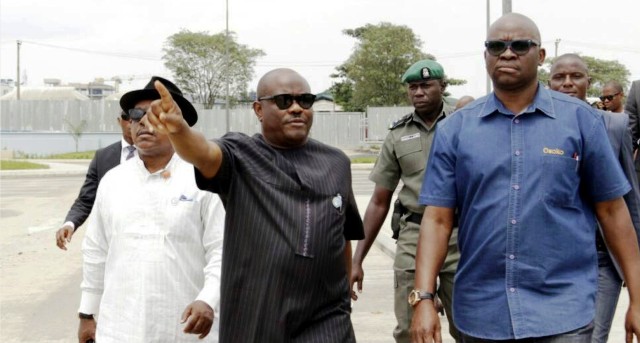
The Federal High Court in Abuja, yesterday, declared as illegal, the Special Joint Investigative Panel that was constituted by the Inspector General of Police, Mr. Idris Ibrahim, to uncover those behind violence that marred the December 10, 2016, legislative re-run elections in Rivers State.
In a 106-paged judgment that lasted over five hours, Justice Gabriel Kolawole described the police probe panel, which included operatives of the Department of State Service (DSS), as “a strange contraption whose existence will create legal doubt”.
Kolawole held that the 15-man Special Joint Investigative Panel was a body unknown to any law in the country.
He maintained that neither the Police Act, Security Agencies Act nor the 1999 Constitution, as amended, empowered the IGP to set-up and co-opt the DSS which was not answerable to him but to the Presidency, into the Rivers re-run probe panel.
According to the court, the Special Panel, in so far as it was not limited to the Nigerian Police Force over which the IGP has authority, but co-opted another security agency, does not have the backing of any known law in Nigeria.
“It is to this extent that the panel is unknown to the Nigerian Law or Criminal Justice System, even though its findings may be useful to bona-fide security agency as a working document”.
The court, however, acknowledged that under Section 4 of the Police Act, the IGP, has the power to constitute an investigative panel.
Meanwhile, the court declined to quash report of the panel, saying it would leave it to the discretion of the Attorney-General of the Federation and Minister of Justice to in the exercise of his powers under section 174 of the Constitution, decide whether any valid charge could be drafted on the basis of a report that emanated from “a body unknown to law”.
Kolawole said he could have nullified report of the panel which the police had already submitted to the AGF, assuming a copy of it was tendered before the court by the plaintiffs.
He said the court could not also disband the panel since it has already concluded the said investigation and submitted its report.
The judge held that the police panel lacks the power to indict any person or to make definitive pronouncements, saying it could at best make recommendations.
He said the exercise that was conducted by the panel could at best be described as “ministerial in nature in line with the concept of covering the field”, saying it could neither be judicial or quasi-judicial in nature.
Consequently, the court granted relief one in the suit that had the Rivers State Government, Governor Nyesom Wike and Attorney General of Rivers State as 1st to 3rd plaintiffs, respectively.
Earlier in the judgment, the court decried that despite the concept of separation of powers, a state governor, even though regarded as the chief security officer of the state, lacks powers to control the security apparatus in the state.
It noted that Section 251 of the Constitution only gave governors “illusion of powers of command of police in their states”.
The court further observed that contrary to the doctrine of separation of powers, the way the constitution was drafted; police commissioners are not under obligation to comply with order of the governor of their state, but that of the President.
The plaintiffs had through their lawyer, Chief Mike Ozekhome, SAN, approached the court to challenge the legality of the police probe panel which they said was merely out to indict and ridicule governor Wike.
Aside the IGP, other defendants to the suit were the DSS and a Deputy Commissioner of Police, Damian Okoro.
The plaintiffs prayed the court to restrain the defendants or their agents from enforcing or executing matters contained in a letter the IGP wrote to Wike on December 20, 2016, pertaining to the probe.
Wike told the court the IGP had in the said letter entitled, ‘Investigation into allegations of crimes committed during the last rerun elections in Rivers State’, stated that the, “purview of the investigation will cover allegations of bribes taken, several brazen murder incidents (including that of serving police officers), reports of gross human rights abuses, acts of sabotage/terrorism, kidnapping for ransom and ballot box snatching, all of which were perpetrated in connivance with several federal and state civil servants as well as highly placed politicians within and outside the state”.
The letter also requested the governor to furnish the police investigative team with all necessary information and exhibits that may assist the team in the investigation.
Wike’s lawyer, Chief Ozekhome, SAN, insisted that action of the police to constitute a panel to investigate crisis that trailed the rerun election was illegal, unlawful, unconstitutional and null and void.
He said it would be in the interest of justice for the court to set aside the IGP’s letter to Wike and direct the police boss to await the outcome of the commission of inquiry already set up by the Rivers State Government.
However, all the defendants urged the court to dismiss the suit as frivolous and highly bereft of any merit.
Both police and the DSS argued that the prayers Wike sought before the court were capable of creating a very “dangerous precedent” if granted.
According to Mr. Femi Falana, SAN, who represented police, “The prayer being sought by the plaintiffs will create a dangerous precedent if granted because it will mean that a terrorism suspect can go to court and say I cannot be investigated.
“We have shown in our addresses that no citizen can go to court and pray the court to stop the police from investigating criminal offences.”
On his part, DSS lawyer, Mr. Tijani Gazali, while aligning with Falana’s submissions, said there was evidence that IGP’s decision to set up the special investigative team was informed by complaints and petitions received on the crimes committed during the rerun.
The defendants further insisted that no court has the power to stop the police from carrying out its constitutional duty of investigating crimes.
They reminded the court that Section 4 of the Police Act and Section 215 of the Constitution had vested the police with the power to investigate all manners of crime.
Kolawole earlier rejected Wike’s application for an interim order of injunction barring the panel from proceeding further with the probe pending hearing and determination of the substantive suit.
Wike had through a supporting affidavit he attached to the suit, told the court that it was security operatives, mainly the police and the Army that orchestrated violence following their partisan stance during the poll.
He said some untoward behaviour of security operatives deployed for the exercise were caught on tape and presented to Nigerians and the whole world by various reputable television stations.
In the affidavit deposed to by one Harrison Obi, a lawyer in Ozehkome’s chamber, Wike told the court that after the election, he constituted a commission of inquiry to look into immediate and remote causes of the violence with a view to avoiding similar occurrence in subsequent elections and punishing the perpetrators of the act.
He said the commission of inquiry was set up under the Commission of Inquiry Law, Cap 30, Laws of Rivers State.
Wike maintained that he is legally empowered to embark on the inquiry as the chief security officer of the state, adding that terms of reference of the panel of investigation set up by the police clearly suggested that the goal of the intended probe is already pre-determined.
He told the court that police has already reached numerous conclusions against him, indicating that its investigation would be biased.
Ozekhome said the intention of the police was to produce a pre-determined damning report to convict Wike through the medium of the Commission of Inquiry.
He said with conclusions already drawn and reached by the police without hearing from his client, the investigation would only amount to a “smokescreen and rubber stamp to give credence to the governor’s guilt”.
Consequently, he prayed the court to set aside the content of the letter by the IGP and order police to await the outcome of the committee of inquiry already set up by Wike.
However, the IGP in his preliminary objection before the court accused Wike of attempting to use the suit to cover his tracks.
It will be recalled that the police panel earlier revealed that it recovered over N100millon bribe money from some officials of the Independent National Electoral Commission (INEC), that conducted the Rivers poll.

Featured
Fubara Pledges Support For Corporate Organisations In Rivers …Says PPP Business Model Responsible For NLNG’s Success


Rivers State Governor, Sir Siminalayi Fubara, has pledged the continued support of his administration for the Nigeria Liquified Natural Gas (NLNG) Limited.
Fubara gave the assurance while receiving the new Managing Director and Chief Executive Officer of the NLNG, Mr Adeleye Falade, who paid him a courtesy visit at Government House, Port Harcourt.
He assured that his administration would continue to contribute its own quota in support of the NLNG.
According to him, the success of the organisation is equally the success of the government of Rivers State and the success of the Federal Government.
“Our duty is to make sure that we support whoever is operating in our state. We are the ones here. If we don’t support you and you don’t succeed, we also will not succeed and Mr President will also not succeed.
“So, the success of your establishment is the success of our state, and overall success of Nigeria. So you can count on our support. Wherever you think we need to come in to support you, please do not hesitate to call upon us.
“You just mentioned here that your predecessor left a handover note showcasing the level of support that he got from the state. It is not going to be different in your own case. I can assure you that. I will also ensure that other units of the government will liaise with you when necessary. So even if you can’t get to me, you can always get to them and if there is anything we can do to help your establishment succeed, we will do it for you,” he said.
The governor attributed the success of the NLNG to the Public Private Partnership ( PPP) business model adopted by the Federal Government and the multinational oil companies.
The NLNG is jointly owned by Nigerian National Petroleum Corporation (NNPC) with 49%, Shell Gas B.V. with 25.6%, Total LNG Nigeria Ltd with 15%, and Eni International with 10.4%.
The partnership model allows for shared risks, costs, and expertise in the LNG sector.
The governor noted that the NLNG has not only survived the difficult business environment but has made sustained progress in the nearly three decades of its existence.
According to him, the decision of the Federal Government to allow the multinational oil companies who have the needed expertise to run the establishment while government plays a supervisory role over it has largely been responsible for its success.
“I’m very proud to say that if there is one establishment that has shown resilience, that has survived in the face of all the political issues prevalent in this country, it is the NLNG. And what is the reason? The reason is very simple. Government has no business in business. That is the truth. Leave the business for those people who can operate it. Let the government play its supervisory role to ensure that there is compliance with the laws; ensure that standards are maintained and also ensure that the right people with the needed expertise are at the helm of affairs. That’s all. I think that is the reason why we still record a lot of successes in NLNG,” he said.
In his opening remark, the new NLNG boss, Mr Adeleye Falade, who led other top officials of the company on the visit, expressed appreciation to the governor for granting them audience, and appealed to the State Government to continue to support the organisation.
“We appreciate the opportunity to meet with you and deepen this important relationship.We deeply value the support the Rivers State Government continues to extend in fostering an enabling operating environment for businesses. NLNG remains deliberate in its contribution to Nigeria’s development, and Rivers State, our primary host, continues to be central to that commitment,” he said.
Falade said the company has continued to work with its host communities to strengthen their capacity to identify, prioritise, and deliver sustainable development initiatives that create lasting impact.
According to him, communities including Amadi-ama, Abua, Ekpeye, Okrika, Kalabari, and Emohua have continued to benefit from this model.
He said that beyond community infrastructure, the NLNG has sustained investments in economic empowerment through initiatives such as Vocational Innovation and Business Empowerment Scheme (VIBES) and Micro Small and Medium Enterprise (MSME) schemes.
These, he said, were designed to support small businesses, build capacity, and stimulate local enterprise across the state.
Among officials of the company who accompanied the Managing Director were General Manager, External Relations and Sustainable Development, Dr Sophia Horsfall; Manager, Government Relations, Mr Abdul Umar; Manager, Community Relations, Dr. Yemi Adeyemi; Head of Government Relations, Mr Mike Igoni; Head of Community Liaison and Engagement, Chief Ifeanyi Umeh.
Others are Technical Assistant to Executive Leadership, Mr Hassan Saleh; Senior Media and Publicity Advisor, Mr Emma Nwatu; Government Relations Advisor, Miss Homa Nmegbu; Senior Government Relations Advisor, Mrs Kate Allison, and Audio -Visual Advisor, Mr Dawood Ahmed.
The Federal Government has reassured Nigerians and the international community of the country’s stability following a recent advisory by the United States authorising the departure of non-emergency personnel from its embassy in Abuja.
The Minister of Information and National Orientation, Mohammed Idris, stated this in a statement issued yesterday by his media aide, Rabiu Ibrahim.
According to the minister, public institutions across the country remain fully operational, with no disruption to governance, economic activities, or daily life.
This followed the decision of the United States Mission in Nigeria to suspend visa appointments at its Embassy in Abuja.
The mission’s decision was contained in a post shared on its official X handle, yesterday.
It stated, “U.S. Embassy Abuja is closed for visa appointments. Applicants should check their email for details on rescheduled appointments.”
The mission, however, clarified that visa operations at the U.S. Consulate General in Lagos remain ongoing.
The development comes amid a broader security advisory issued by the United States, which authorised the departure of non-emergency staff from its Abuja embassy and expanded its Nigeria travel blacklist to 23 states.
The State Department issued the authorised departure order on Tuesday, alongside an updated travel advisory that added Plateau, Jigawa, Kwara, Niger and Taraba to its highest warning category, “Do Not Travel.”
While the overall advisory rating for Nigeria remains at Level 3, “Reconsider Travel,” the department warned that some areas face increased risks due to crime, terrorism, unrest, kidnapping and limited healthcare availability.
According to the advisory, Americans are often targeted for kidnapping and robbery, while terrorist attacks continue to pose a threat across multiple locations, including markets, religious centres, hotels and public gatherings.
It also raised concerns about the state of emergency healthcare in the country, noting that hospitals often require immediate cash payments, ambulance services are unreliable and poorly equipped, and blood supply systems are inconsistent.
Medical facilities in Nigeria, the advisory said, generally do not meet United States or European standards, adding that evacuation may be necessary in medical emergencies.
The advisory further urged US citizens in Nigeria to enrol in the Smart Traveller Enrollment Programme, avoid large gatherings, vary their routines and maintain evacuation plans that do not depend on US government assistance.
It also recommended that individuals establish “proof of life” protocols with family members in the event of kidnapping.
The blacklist is divided into regional clusters. Borno, Kogi, Yobe and northern Adamawa remain under the terrorism, crime and kidnapping category, with the State Department warning that terrorist groups continue to plan and carry out attacks, sometimes in collaboration with local gangs.
For Bauchi, Gombe, Kaduna, Kano, Katsina, Sokoto and Zamfara, the advisory points to widespread banditry, communal clashes and kidnapping, while noting that security operations may occur without warning.
In the South-East and Niger Delta, states including Abia, Anambra, Bayelsa, Delta, Enugu, Imo and Rivers (excluding Port Harcourt) are flagged for crime, kidnapping and civil unrest, with armed gangs and violent protests posing significant risks.
The latest update added Plateau, Jigawa, Kwara, Niger and Taraba to the “Do Not Travel” list, citing the spread of insecurity into new regions, particularly in the Middle Belt where farmer-herder conflicts have intensified.
The advisory described the security situation in these newly added states as unstable and unpredictable, with counter-operations by security forces likely to occur without prior notice.
Idris, however, described the US advisory as a routine precaution based on internal protocols, stressing that it does not reflect the overall security situation in the country.
“While we acknowledge isolated security challenges in some areas, there is no general breakdown of law and order, and the vast majority of the country remains stable,” Idris said.
He noted that ongoing security operations have recorded measurable gains across several regions, attributing the progress to coordinated military efforts, intelligence-led interventions, and strengthened inter-agency collaboration.
“Our security agencies remain actively engaged in protecting lives and property, and the results of these efforts are increasingly evident,” he added.
According to the minister, recent operations have disrupted criminal networks, curtailed the activities of armed groups, and improved safety in vulnerable communities.
Idris also maintained that Nigeria remains open for business, travel, and investment, adding that ongoing economic reforms are strengthening investor confidence and enhancing the country’s global standing.
He said, “International partners and investors continue to engage actively with Nigeria, reflecting confidence in the country’s stability and long-term prospects.”
The minister urged foreign governments to ensure that their advisories reflect current realities and ongoing progress in the country.
“We encourage our international partners to continuously engage with Nigerian authorities to obtain a more comprehensive and current understanding of the situation on the ground,” he said.
The Federal Government reiterated its commitment to sustaining security improvements and ensuring the safety of citizens and visitors, assuring that Nigeria remains a safe and welcoming destination.

Rivers State Governor, Sir Siminalayi Fubara, yesterday extended interim relief measures to the people of Bille Kingdom as the government intensifies efforts to address the ongoing environmental degradation affecting the area.
This was contained in a statement by the Head of Information and Public Relations Unit, Office of the Secretary to the State Government, Juliana Masi, yesterday.
The governor, during a working visit to Bille Kingdom in Degema Local Government Area, reassured residents of his deep concern for their health and well-being.
He reiterated his administration’s commitment to finding a lasting solution to the persistent gas emissions observed in the community’s land and water sources since November 2025.
Represented by the Secretary to the State Government, Dagogo Wokoma, the governor announced immediate interventions to address urgent needs.
Some of the relief measures include the provision of potable water and essential medical services through the release of ?100 million as palliative support for the affected community.
According to the SSG, “Governor Fubara remains deeply committed to the welfare of the people of Bille Kingdom. Although unable to attend in person due to pressing state engagements, he is fully aware of the situation and determined to tackle the root cause of the environmental challenge”.
The governor assured residents that the state government would not relent in its efforts to provide a permanent solution to the gas emissions, emphasizing that the current intervention is only a temporary measure to ease the suffering of the people.
He further urged members of the community to remain law-abiding and continue supporting his administration, noting that he has consistently demonstrated a track record of fulfilling his promises.
Earlier, the Chairman, Council of Chief for Bille Kingdom, Chief Bennet Dokubo, expressed joy over the State visit, describing Fubara as a leader who listens to the plight of the people.
He urged the governor to critically look into the gas emission which he described as dangerous to human health.
“If we take you into the river, we notice that the entire environment is bubbling and smelling.
“We most humbly urge you to critically look into this situation. This is something strange we have never experienced before. It is not good for human health,” the monarch stressed.
-
 Editorial2 days ago
Domesticate FG’s Exit Benefit Scheme
-

 News2 days ago
RSU Unveils Five-Year Strategic Dev Plan …Calls For Collective Commitment To Institutional Excellence
-
 News2 days ago
DHQ Confirms Deaths Of Terrorists, Soldiers In Borno Attack
-

 News2 days ago
Tinubu Commissions Bayelsa Gas Turbine, Other Projects Today
-
Rivers2 days ago
Dep Gov Seeks Collaboration, Transparency Between RIVCHPP, PHCMB
-
Business2 days ago
Niger Delta Investment Summit Targets $5bn Inflows, 500,000 Jobs
-
Nation2 days ago
Rumuji Youth Leader Condemns Protest, Disowns Alleged Government Empowerment Claim
-

 Nation2 days ago
Haniel Jack Foundation Awards Five Rivers Indigenes Scholarship