
Business
2016 Budget: FG Releases N1.2trn For Critical Infrastructure

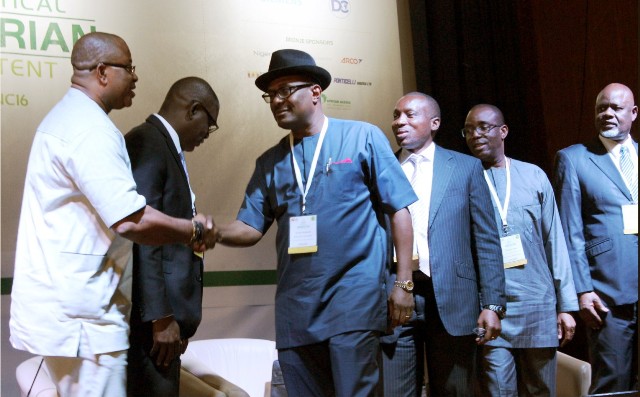
The Federal Government says it has released N1.2 trillion from the 2016 budget to finance critical infrastructure and to meet recurrent needs.
The Minister of Budget and National Planning, Udo Udoma, said this at a Town Hall meeting to celebrate the Mid-Term administration of President Muhammadu Buhari in Abuja yesterday.
Udoma also said that the activity of militancy in 2016 affected the production of oil which created revenue challenges.
“The disruption of oil production in the Niger Delta last year created very serious additional revenue challenges, in addition to low prices, we had low production.
“Never the less, we have been able to meet all of our recurrent expenditure commitment, particularly the payment of salaries to civil servants.
“We have also released N1.2 trillion of the 2016 budget to finance capital projects and programmes.
“This is the most unparalleled in the history of Nigeria’s budget performance, is the highest released that this nation has achieved at a time of dwindling revenues.”
He, however, said that the funds were used for infrastructure, roads, airports, railway lines, Dam and for agricultural supports programme.
Udoma said that 30 per cent of the 2016 budget was dedicated to capital expenditure.
“We inherited an economy with declining revenue and GDP growth, raising inflation, weekly balance of payment, declining foreign reserved, raising public debt, capital market and raising unemployment.
“So, we took an immediate step which is our promise and commitment to fix the economy, so we started by putting together an expansionary N6.06 trillion 2016 budget, tagged budget of change to reflex the economy and reverse this negative trend.”
Also speaking, Minister of Finance, Kemi Adeosun, said that government was working to block leakages, increase on tax GDP and embark on single window projects execution in ports.
Adeosun said the administration needed to stabilise the economy because previously, 10 per cent of government expenditures was on capital projects and 90 per cent on recurrent.
She said that the ministry had to cutdown expenses, overhead money used for travel, stationery by government and track revenue that was not remitted to the government.
“For the Ministry of Finance, our focus now is going to be more on revenue, we borrowed quite a lot in 2016, we don’t want to borrow as much, we want to look at revenue sources, so we are blocking leakages, we are working hard on taxation.
“Only six per cent is attached to the GDP, Nigeria is the lowest in the world. We need to enlighten Nigerians on the need to pay tax and embark on single window projects to block leakages at the ports.”
She said all the 36 states of the federation were viable, noting that the economy is getting better and Nigeria is coming out of recession to become stronger.



Business
Jonathan, Diri, Others Laud Firm’s Milestone in Bayelsa …Says Project Will Drive Industrialisation, Create Jobs



-

 News5 days ago
RSG Targets Nine Million Residents in Mosquito Net Distribution Campaign
-

 Oil & Energy5 days ago
Aiyedatiwa Signs New Electricity Bill
-

 Oil & Energy5 days ago
NLNG Commissions Research And Innovation Centre In RSU
-

 Maritime5 days ago
Marine Minister Commends President Tinubu On NPERA Bill Assent
-

 News5 days ago
KenPoly Holds Eight Convocations, August 29
-

 News5 days ago
RMAFC Completes Revenue Sharing Review, Proposes New Pay
-

 News5 days ago
RSG Begins Another Phase of Projects Commissioning Today
-

 Maritime5 days ago
NAGAFF Petitions IGP Over Alleged Maritime Police Harassment