
Featured
Oil Communities Present Demands To FG

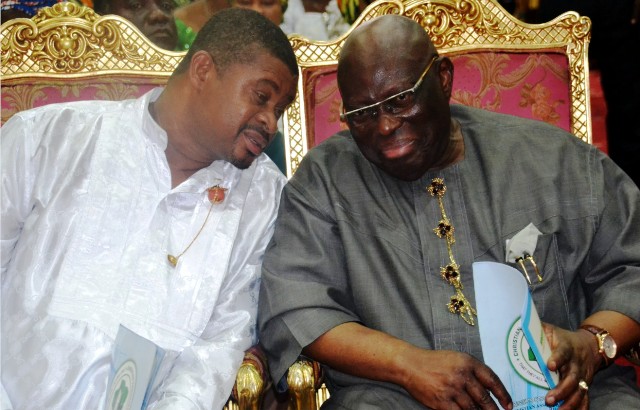
Representatives of oil producing communities and Stakeholders in Rivers State have called for equity, fairness and development of their communities by the Federal Government.
The stakeholders made their submissions public during an interactive forum with visiting Acting President, Prof. Yemi Osinbajo who was on the last lap of his consultations with representatives and leaders of Niger Delta at Government House, Port Harcourt last Monday.
Representative of Pan- Niger Delta Forum (Pan-DEF), Alabo Tonye Graham Douglas called for a sustainable and comprehensive marshal plan for the region.
Graham-Douglas said time has come for a Special Niger Delta Energy corridor as it would boost industrial relations and drive development, adding, “if peace returns by the time this tenure ends, then, development could go a long way”.
The State Pan-DEF leader further called for the setting up of a Mandate Committee to work out modalities for implementation of a workable strategy to drive development in the region.
In his submissions, representative of the Rivers Elders Council, Onueze Okocha, a Senior Advocate of Nigeria (SAN) sought for synergy among federal, state and local governments, adding that “the people of Rivers State do not consider that they are at war with the federal government or other states of the federation”.
Okocha decried that in recent times the federal government has acted as if they have problem with the state which has affected the people negatively.
The former President of Nigeria Bar Association argued that the loyalty of the governor, Chief Nyesom Wike is not in doubt, but noted that begging issue of boundary adjustment and ceding of Soku Oil well to neighbouring Bayelsa State have affected the revenue profile of the State.
Against this backdrop, Okocha lamented that the people are not given equal opportunities in the polity, “to compete and determine what will be their collective interest”.
Speaking for Oceania Communities in the Kalabari area of the state, Chief Hope Opusingi submitted that the communities have over 160 oil wells and gas installations.
Opusingi lamented that over 50 years of oil exploration in their fishing communities has affected their livelihood, and destroyed their environment due to pollution.
The Opu Kula traditional ruler explained that the dwindling means of livelihood has compelled youths to engage in vandalization and illegal bunkering “as their physiological needs continue to drive the youths unless a truthful consultation is made”.
He advocated for the siting of federal agencies and assets such as polytechnics, universities to provide opportunities for the people of the area, and pleaded that security agencies operating in their area be compelled to respect traditional institutions and women.
Speaking for the people of Ogba/Egbema/Ndoni area, Justice Ben Ogbari said the area produces over 39 per cent of the country’s gas, but observed that despite these huge economic contributions, the people are still beset by environmental degradation and lack of infrastructure.
Ogbari noted that the entire wild life and water have been polluted and called on the federal government to do all in its powers to provide youth employment opportunities and roads to link the area to other parts of the country.
Notable activist and environmental rights advocate, Ann Kio-Briggs who spoke for the Women of Rivers State said they re seeking for equity and justice in the use of resources from their soil.
She denied the devastation of the environment by oil exploring companies which, according to her, has denied women their means of livelihood and sustaining their families.
Ann Kio-Briggs used the forum to call on the Federal |Government to stop withdrawing security details of the governor, saying that, “if the situation persists, we may have no other option but to protect our governor”.
An ex-agitator, Richard Akinaba urged the Federal Government to create skills and other opportunities that will reduce illegal bunkering and pipeline vandalization.
Akinaba is of the view that if illegal refining is legalized and modular refineries set up, it will help check violence and at the same time transform the economy.
Meanwhile, Chairman of the Rivers State Traditional Rulers Council and Amayanabo of Opobo, King Dandison Jaja has joined in calling for a joint Marshal Plan for Niger Delta.
He said, “As traditional rulers, we are worried what will happen in the next 20 years if a plan is not put in place”.
Part of the Marshal Plan, the Opobo monarch recommended should include the Commencement of Nigeria Liquified Natural Gas (NLNG) Train 7 in Bonny and kick off of Brass NLNG project.
The traditional ruler also recommended that the money used in funding subsidy for petroleum products should be channeled to other areas, and called for the stoppage of fuel importation.
Consequently, Governor Wike has called on the Federal government to resuscitate its horibund agencies and assets in the state.
Chief Wike who spoke during the interactive forum with the Acting President said the poor state of federal assets contributes to economic deprivation of the people.
Such assets include the moribund federal Port in Port Harcourt, the airport, Bonny-Bodo Road East West Road, as the advocated for the full implementation of Ogoni Environment Project.



Governor of Rivers State, Sir Siminalayi Fubara, has reaffirmed the unwavering commitment of his administration to peace, unity, security, and inclusive development as Rivers State marked its 59th anniversary, last Wednesday.
In a goodwill message issued on Wednesday to commemorate the anniversary, Governor Fubara stated that despite the challenges faced over the years, the people of Rivers State have continued to demonstrate resilience, strength, and an enduring spirit of unity that has sustained the state since its creation.
The Governor noted that the strong bond of brotherhood among the various ethnic nationalities of the state, including the Ijaw, Ikwerre, Ogoni, Etche, Ekpeye, Andoni, Kalabari, and others, remains one of Rivers State’s greatest strengths and a critical foundation for peace, stability, and progress.
He further observed that Rivers State has remained a major driver of Nigeria’s economy for decades, not only because of its abundant oil and gas resources, but also because of the exceptional contributions of its people across diverse sectors including academia, jurisprudence, business, entertainment, public service, and sports.
Governor Fubara assured the people that his administration will continue to prioritize policies and programmes that promote peace, protect lives and property, and expand development across all parts of the state. He emphasized that governance must be people centered and impactful, with equal attention given to every Local Government Area of the state.
The Governor also paid tribute to the elders and founding leaders of the state for preserving the spirit of unity and coexistence over the years, while urging the youths to remain hopeful, responsible, and actively committed to building a greater Rivers State through innovation, hard work, and patriotism.
He equally acknowledged the invaluable role of women in strengthening families, communities, and society, describing them as indispensable partners in the continued growth and stability of the state.
Governor Fubara called on all Rivers people to use the occasion of the anniversary as a moment of reflection and renewed commitment to peaceful coexistence, mutual respect, dialogue, and collective progress, stressing that the unity and future of Rivers State must always rise above personal interests and political differences.
Rivers State was created on May 27, 1967, by General Yakubu Gowon.


The Rivers State Government has distributed science equipment and materials to all senior secondary schools across the state to support students during the ongoing West African Examinations Council exams and to strengthen practical learning.
Flagging off the distribution at the Rivers State Senior Secondary Schools Board premises in Port Harcourt, on Monday, the State Commissioner for Education, Dr. Peters Nwagor, said the move demonstrates Governor Siminalayi Fubara’s commitment to improving education standards in the State.
Nwagor said the materials were approved and provided by the state government specifically to boost the teaching and learning of science subjects, describing science education as the foundation for technological advancement, innovation, and national development.
“No society can compete globally without deliberate investment in science and technology,” the Commissioner stated.
He commended the governor for consistently prioritising the education sector by providing tools needed for effective teaching and hands-on learning.
The Commissioner directed principals to ensure that the equipment are used strictly for practical lessons in their schools, warning that any principal or administrator found diverting, hoarding, or selling the materials wil face disciplinary action under public service regulations.
Nwagor also warned against examination malpractice, saying any principal found aiding or encouraging malpractices will be decisively sanctioned.
“We must collectively restore the dignity and credibility of our educational system,” he said.
Also speaking, Chairman, Rivers State Senior Secondary Schools Board, Tony Egwurugwu, urged school heads to make judicious use of the materials for students’ benefit.
He thanked the State Government for providing the resources, and assured that monitoring mechanisms would be put in place to ensure the materials serve their intended purpose.
In his own remarks, a Board Member for Technical Education, Nwisabari Bani Samuel, expressed appreciation to the governor for prioritising education and acknowledged the Commissioner’s role in advancing education development in the State.
He said the distribution covers all senior secondary schools in the State and is intended to improve students’ performance in both internal and external science examinations.
Akujobi Amadi
-

 Rivers1 day ago
Police arrest 3 suspects over killing of driver in Rivers
-
Politics1 day ago
I DIDN’T PROMISE YOU TICKETS, AKPABIO TELLS APC SENATORS WHO FAILED PRIMARIES
-

 News1 day ago
FUBARA ASSURES NUT OF SECURITY OF SCHOOLS IN RIVERS
-

 News1 day ago
NDLEA Arrests Four Notorious Female Drug Dealers In Four States
-

 News1 day ago
WORLD FOOD SAFETY DAY: VETERINARIANS TASK GOVT ON MODERN ABATTOIR IN RIVERS
-

 News1 day ago
RSG ADVOCATES IMPLEMENTATION OF SUMMIT RESOLUTIONS FOR N’DELTA DEV
-

 News1 day ago
Xenophobia: FG Approves Five Evacuation Flights For Nigerians In S’Africa
-
Politics1 day ago
Court Dismisses Rivers PDP Members’ Suit Over LG Election Candidates