
Featured
Trip To Idi Amin’s Uganda …Of Attacks On Unfriendly Judges

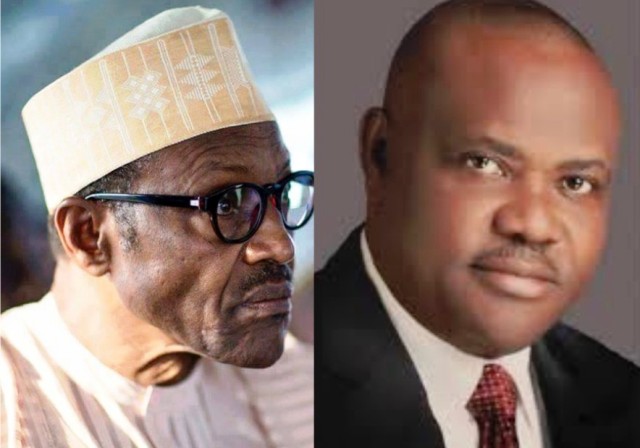
Last Saturday morning, Nigerians woke up to the news that a detachment of heavily armed men of the Directorate of State Services (DSS) and the Police attempted to abduct a Federal High Court Judge resident in Port Harcourt. And that in a bid to defend the embattled Judge, Rivers State Executive Governor, Nyesom Wike was manhandled by the assailants.
Many considered the news unbelievable, because judges belong to the third arm of government, the Judiciary which has its own code of conduct and ethics. Corrupt and undisciplined judges are a responsibility of the National Judicial Council (NJC) which reserves the right to investigate and punish such erring judges.
In performance of that duty, the NJC recently retired and sacked some judges and opened investigation into the background of Judges who gave conflicting judgements on same issues, with a view to ascertaining their level of compromise.
This is why it came to many as a huge shock that the DSS and the Police, all part of the executive arm could launch such affront on a sitting judge without recourse to the NJC for proper trial.
This kind of Gestapo-stuff attack, many thought ended with the Idi Amin’s Uganda and should not be repeated, especially in a democratic Nigeria. Many think this may be an unfriendly judge, who the powers that be want to teach a lesson, same lesson daily thought opposition politicians in the name of fighting corruption.
Among victims are Ekiti State Governor, Ayo Fayose, (PDP), Ex-Minister Godsday Orubebe, (PDP), former Chief Security Adivser (CSA), Col Sambo Dasuki (rtd) PDP, among several others. Interestingly, none of the former State governors who jumped ship to the All Progressives Congress (APC) from the PDP has been investigated, despite the many petitions against them.
What that translates to is that no matter how dark a governor’s sins may be, once we defects to the ruling APC his past is wiped clean. He is a new creature fit for eternal life. A life without probes and that of impunity.
Is this the democracy that ushered an opposition party in governance for the first time in the history of Nigeria? Or is it another Military rule, where perceived enemies are incarcerated at will by the powers that be?
Whither the civil society organizations? Whither the civil rights activists? Whither vocal Nigerians who badmouthed the former government to its grave?
On our last check, only the Nigerian Bar Association (NBA) has spoken against the arrest of two other judges after Saturday’s midnight invasion of their homes. The NBA declared a state of emergency in the Judiciary and asked President Muhammadu Buhari to order the immediate release of the affected judges or there would be consequences”.
Addressing newsmen alongside four former Presidents of the NBA, President Abubakar Mahmoud (SAN) said two Supreme Court Justices Iyang Okoro and Sylvester Ngwuta were “abducted”, with their families, adding that he had yet to have full details of other judges who could have been involved.
Mahmoud said NBA condemned what it termed the Gestapo-style operation of the DSS and announced the constitution of an emergency or crisis management team comprising past presidents to engage the government.
Mahmoud, according to the Vanguard said, it was not the responsibility of the DSS to arrest judges and described the DSS action as an unconstitutional means of intimidating the Judiciary and undermining its independence.
“I want to emphasise again that we are not under military rule and we cannot accept this unholy event and Gestapo-style operation”, Mahmoud warned.
According to him, “Any issues affecting the Judicial officers, there are established procedures of handling them and we demand that this constitutional process be obeyed”, and demanded the immediate release of the affected Judges.
“The release must be done immediately and without any conditions. Two, we demand that the Department of State Services (DSS) should limit itself to its statutory and constitutional responsibilities”, Mahmoud said, adding, “I’ll be meeting with the Chief Justice of Nigeria (CJN) tonight or tomorrow. There will be consequences should these demands are not met”.
But wait! Who ordered the arrest of the judges? Who tried and found them guilty? If they are yet to be tried, who would try them? The executive?
What are the consequences of this siege on an arm of government, as important as the Judiciary, believed to be the last hope of the common man?
An attack on the Judiciary is not merely an attack on Lawyers and Judges, it is indeed an attack against civilization, democracy and the rule of law. It is infact, a siege on the Nigerian people.
The immediate consequence of the action will be to intimidate incorrigible judges to join the bandwagon and do only the bidding of the ruling party, or be arrested and assaulted. The other is to use the clampdown to enlist friendly judges who would, at all times, offer favourable judgments to the power that be.
Otherwise, what is the rationale behind the attacks on judges? If the executive arm discovers an action it considers corrupt and wishes such Judge be punished there are laid out constitutional provisions and not assume the role of a judge in its own case.
The Buhari administration needs to be reminded for the umpteenth time that this is not a military rule where the Head of State is the maximum ruler, prosecutor and judge at the same time. The administration must therefore submit itself to the rule of law and invest on democratic growth, because the recent attack on judicial officers is not only undemocratic, it is unnecessary, vexatious and primitive.
First, it was the use of the Code of Conduct Bureau to effect leadership change in the Senate by trying Senate President Bukola Saraki before the Code of Conduct Tribunal (CCT), over questions bordering on party discipline but tied to false declaration of assets.
The protracted case at some point pitched the entire National Assembly against the Executive. Infact, it is not yet Uhuru, as both the Federal government and the Senate seem to find themselves in a marriage of convenience, with each waiting for when the other would strike first.
This makes the attack on the Judiciary one too many. Its marks of military adventurism and has no place in a democracy. Corruption is a crime which punishment is adequately provided for in our statute books. Therefore, any war against corruption must be fought according to the law and not transport Nigeria back into history, when, might was right.
Political might, it must be emphasized, belongs to the people and must not be used against its owners.
This is what the military siege against officers of the judicial arm translates into- an abuse of the people’s power. Such must be avoided, same way Governor Wike intervened in the foiled attempt to abduct another judge.
My Agony is against one of the most annoying fallacies of the kind of federalism Nigeria operates, and which makes the Governor, Chief Security Officer (CSO) of his State, while infact the power is exercised randomly and at will by many others, on the orders of a single individual, not the CSO. Methinks State Police remains the only answer to the trip back to military rule.
Soye Wilson Jamabo



Rivers State Governor, Sir Siminialayi Fubara, has dissolved the State Executive Council.
The governor announced the cabinet dissolution yesterday in a statement titled ‘Government Special Announcement’, signed by his new Chief Press Secretary, Onwuka Nzeshi.
Governor Fubara directed all Commissioners and Special Advisers to hand over to the Permanent Secretaries or the most Senior officers in their Ministries with immediate effect.
He thanked the outgoing members of the State Executive Council for their service and wished them the best in their future endeavours.
The three-paragraph special announcement read, “His Excellency, Sir Siminalayi Fubara, GSSRS, Governor of Rivers State, has dissolved the State Executive Council.
“His Excellency, the Governor, has therefore directed all Commissioners and Special Advisers to hand over to the Permanent Secretaries or the most Senior officers in their Ministries with immediate effect.
“His Excellency further expresses his deepest appreciation to the outgoing members of the Executive Council wishing them the best in their future endeavours.”
The Independent National Electoral Commission (INEC) yesterday told the National Assembly that it requires N873.78bn to conduct the 2027 general elections, even as it seeks N171bn to fund its operations in the 2026 fiscal year.
INEC Chairman, Prof Joash Amupitan, made the disclosure while presenting the commission’s 2026 budget proposal and the projected cost for the 2027 general elections before the National Assembly Joint Committee on Electoral Matters in Abuja.
According to Amupitan, the N873.78bn election budget covers the full conduct of national polls in 2027.
An additional N171bn is needed to support INEC’s routine activities in 2026, including bye-elections and off-season elections, the commission stated.
The INEC boss said the proposed election budget does not include a fresh request from the National Youth Service Corps seeking increased allowances for corps members engaged as ad-hoc staff during elections.
He explained that, although the details of specific line items were not exhaustively presented, the almost N1tn election budget is structured across five major components.
“N379.75bn is for operational costs, N92.32bn for administrative costs, N209.21bn for technological costs, N154.91bn for election capital costs and N42.61bn for miscellaneous expenses,” Amupitan said.
The INEC chief noted that the budget was prepared “in line with Section 3(3) of the Electoral Act 2022, which mandates the Commission to prepare its election budget at least one year before the general election.”
On the 2026 fiscal year, Amupitan disclosed that the Ministry of Finance provided an envelope of N140bn, stressing, however, that “INEC is proposing a total expenditure of N171bn.”
The breakdown includes N109bn for personnel costs, N18.7bn for overheads, N42.63bn for election-related activities and N1.4bn for capital expenditure.
He argued that the envelope budgeting system is not suitable for the Commission’s operations, noting that INEC’s activities often require urgent and flexible funding.
Amupitan also identified the lack of a dedicated communications network as a major operational challenge, adding that if the commission develops its own network infrastructure, Nigerians would be in a better position to hold it accountable for any technical glitches.
Speaking at the session, Senator Adams Oshiomhole (APC, Edo North) said external agencies should not dictate the budgeting framework for INEC, given the unique and sensitive nature of its mandate.
He advocated that the envelope budgeting model should be set aside.
He urged the National Assembly to work with INEC’s financial proposal to avoid future instances of possible underfunding.
In the same vein, a member of the House of Representatives from Edo State, Billy Osawaru, called for INEC’s budget to be placed on first-line charge as provided in the Constitution, with funds released in full and on time to enable the Commission to plan early enough for the 2027 general election.
The Joint Committee approved a motion recommending the one-time release of the Commission’s annual budget.
The committee also said it would consider the NYSC’s request for about N32bn to increase allowances for corps members to N125,000 each when engaged for election duties.
The Chairman of the Senate Committee on INEC, Senator Simon Along, assured that the National Assembly would work closely with the Commission to ensure it receives the necessary support for the successful conduct of the 2027 general elections.
Similarly, the Chairman of the House Committee on Electoral Matters, Bayo Balogun, also pledged legislative support, warning INEC to be careful about promises it might be unable to keep.
He recalled that during the 2023 general election, INEC made strong assurances about uploading results to the INEC Result Viewing portal, creating the impression that results could be monitored in real time.
“iREV was not even in the Electoral Act; it was only in INEC regulations. So, be careful how you make promises,” Balogun warned.
The N873.78bn proposed by INEC for next year’s general election is a significant increase from the N313.4bn released to the Commission by the Federal Government for the conduct of the 2023 general election.

President Bola Tinubu yesterday expressed grief over the death of a former President of the Academic Staff Union of Universities and one of Africa’s foremost literary scholars, Professor Emeritus Biodun Jeyifo.
Jeyifo passed away on Wednesday, drawing tributes from across Nigeria and the global academic community.
In a condolence message to the family, friends, and associates of the late scholar, Tinubu in a statement by his spokesperson, Bayo Onanuga, described Jeyifo as a towering intellectual whose contributions to African literature, postcolonial studies, and cultural theory left an enduring legacy.
He noted that the late professor would be sorely missed for his incisive criticism and masterful interpretations of the works of Nobel laureate, Professor Wole Soyinka.
The President also recalled Jeyifo’s leadership of ASUU, praising the temperance, foresight, and wisdom he brought to the union over the years.
Tinubu said Jeyifo played a key role in shaping negotiation frameworks with the government aimed at improving working conditions for university staff and enhancing the learning environment in Nigerian universities.
According to the President, Professor Jeyifo’s longstanding advocacy for academic freedom and social justice will continue to inspire generations.
He added that the late scholar’s influence extended beyond academia into political and cultural journalism, where he served as a mentor to numerous scholars, writers, and activists.
Tinubu condoled with ASUU, the Nigerian Academy of Letters, the Wole Soyinka Centre for Investigative Journalism, the University of Ibadan, Obafemi Awolowo University, Oberlin University, Cornell University, and Harvard University—institutions where Jeyifo studied, taught, or made significant scholarly contributions.
“Nigeria and the global academic community have lost a towering figure and outstanding global citizen,” the President said.
“Professor Biodun Jeyifo was an intellectual giant who dedicated his entire life to knowledge production and the promotion of human dignity. I share a strong personal relationship with him. His contributions to literary and cultural advancement and to society at large will be missed.”
Jeyifo was widely regarded as one of Africa’s most influential literary critics and public intellectuals. Among several honours, he received the prestigious W.E.B. Du Bois Medal in 2019.
-

 Sports4 days ago
2026 WC: Nigeria, DR Congo Awaits FIFA Verdict Today
-
Politics4 days ago
ADC, PDP, LP Missing As INEC Set For By- Elections In Rivers
-

 Environment4 days ago
Oxfam, partners celebrate 5 years of climate governance programmes in Nigeria
-
Politics4 days ago
FG’s Economic Policies Not Working – APC Chieftain
-

 Politics4 days ago
2027: Diri Unveils RHA LG Coordinators, APC Congress Panel
-

 Politics4 days ago
Reps To Meet,’Morrow Over INEC’s 2027 Election Timetable
-

 News3 days ago
Victory Over Insurgency Certain, Tinubu Assures
-

 Politics4 days ago
Group Continues Push For Real Time Election Results Transmission