
Featured
Senate To Make Election Debates Mandatory …Moves To Locate NEDC Office In Maiduguri …Summons MTN, Banks Over $13.9bn Illegal Transfers

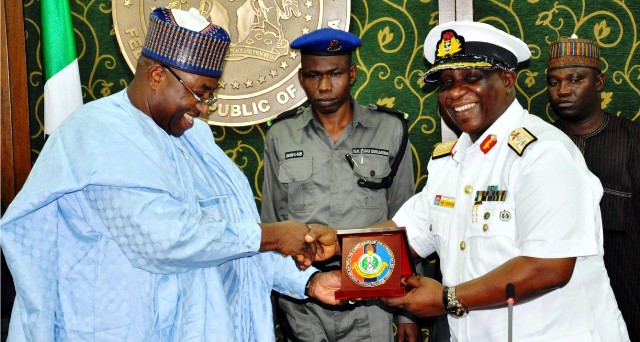
The Senate has commenced moves to make it mandatory for those seeking elective positions to participate in pre-election debates.
The moves by the Senate followed the presentation of a bill by Sen. Abdulfatai Buhari (APC- Oyo North) which was read for the second time.
The upper legislative chamber referred the bill to the Committee on Establishment and Public Service as well as Committee on INEC.
The bill is entitled: “Nigerian Political Debates Commission Bill, 2015.”
If passed, those seeking election as president, governor, lawmakers and other elective positions, including their running mates, would have to go through a debate which would be organised by a proposed commission.
Presenting the lead debate, Buhari said that the bill would give legislative backing to the establishment of a commission that would be charged with organising the debate.
“The bill, if considered and passed by this hallowed chamber, will strengthen our democracy and bring it in conformity with the practice in other renowned democracies of the world,” he said.
He said that the United States was a good example where debates were properly used to reach out to the electorate.
The senator said that political parties and aspirants were already accustomed to the debates which had now become mandatory since it began in 1960 between then Democratic nominee, John Kennedy and his Republican rival, Richard Nixon.
He urged his colleagues to support the bill for passage.
“The debate is the de facto election process in the United States as results of elections are predicated on the candidates’ performance at the debates.
“An analogous experience of this crucial indispensability of electoral debate is the current presidential debate between Hillary Clinton of the Democratic Party and Donald Trump of the Republican Party”, he added.
In another development, following the presentation of the report on the Committee of the North East Development Commission (NEDC) by Senator Sam Egwu (Ebonyi North) to the Senate on Tuesday, the Senate has resolved to take the headquarter of the commission to Maiduguri, the Borno State capital.
The report recommended that 3 per cent of Value Added Tax (VAT) be paid to the commission’s vault for the next 10 years to enable the reconstruction of wanton destruction of the zone by Boko Haram insurgents.
However, Senator Biodun Olujimi (Ekiti South) objected to VAT remittances on the ground that part of VAT is derived from alcohol, which remains a banned substance in the North on religious grounds.
Reacting, Senate Leader, Ali Ndume, argued that VAT remittances should be sustained as recommended, saying the people in the North East are ‘heavy drinkers.’
“My President, Distinguished Colleagues, even in the North East, they are heavy drinkers of alcoholic beverages and in a way, they are also contributing to VAT. I, therefore, ask that the recommendations should be upheld,” Ndume said.
In his ruling, the Senate President, while upholding the recommendations of the report referred it to Ad-hoc Committee with a mandate to report back in a week time.
Meanwhile, the Senate has launched a probe into the allegation that MTN Nigeria repatriated a total sum of $13.9billion from Nigeria to other countries between 2006 and 2016 by summoning the management of the telecoms service provider, their bankers and some businessmen over alleged violation of the Foreign Exchange (Monitoring and Miscellaneous) Act.
During its plenary, yesterday, the Upper Chamber requested MTN and the others to appear before its Committee on Banking, Insurance and Other Financial Institutions next week.
Recall that the lawmaker representing Kogi West, Senator Dino Melaye had revealed that “between 2006 and 2016, the MTN Nigeria, in collaboration with four commercial banks and with the help of a serving minister, has moved over $12billion out of this country”.
Melaye later claimed that the illegal repatriation was allegedly facilitated by the Minister of Trade and Investment, Dr. Okechukwu Elenemah, naming banks allegedly involved as: Stanbic IBTC, Standard Chartered Bank, Citi Bank and Diamond Bank.



Governor of Rivers State, Sir Siminalayi Fubara, has reaffirmed the unwavering commitment of his administration to peace, unity, security, and inclusive development as Rivers State marked its 59th anniversary, last Wednesday.
In a goodwill message issued on Wednesday to commemorate the anniversary, Governor Fubara stated that despite the challenges faced over the years, the people of Rivers State have continued to demonstrate resilience, strength, and an enduring spirit of unity that has sustained the state since its creation.
The Governor noted that the strong bond of brotherhood among the various ethnic nationalities of the state, including the Ijaw, Ikwerre, Ogoni, Etche, Ekpeye, Andoni, Kalabari, and others, remains one of Rivers State’s greatest strengths and a critical foundation for peace, stability, and progress.
He further observed that Rivers State has remained a major driver of Nigeria’s economy for decades, not only because of its abundant oil and gas resources, but also because of the exceptional contributions of its people across diverse sectors including academia, jurisprudence, business, entertainment, public service, and sports.
Governor Fubara assured the people that his administration will continue to prioritize policies and programmes that promote peace, protect lives and property, and expand development across all parts of the state. He emphasized that governance must be people centered and impactful, with equal attention given to every Local Government Area of the state.
The Governor also paid tribute to the elders and founding leaders of the state for preserving the spirit of unity and coexistence over the years, while urging the youths to remain hopeful, responsible, and actively committed to building a greater Rivers State through innovation, hard work, and patriotism.
He equally acknowledged the invaluable role of women in strengthening families, communities, and society, describing them as indispensable partners in the continued growth and stability of the state.
Governor Fubara called on all Rivers people to use the occasion of the anniversary as a moment of reflection and renewed commitment to peaceful coexistence, mutual respect, dialogue, and collective progress, stressing that the unity and future of Rivers State must always rise above personal interests and political differences.
Rivers State was created on May 27, 1967, by General Yakubu Gowon.


The Rivers State Government has distributed science equipment and materials to all senior secondary schools across the state to support students during the ongoing West African Examinations Council exams and to strengthen practical learning.
Flagging off the distribution at the Rivers State Senior Secondary Schools Board premises in Port Harcourt, on Monday, the State Commissioner for Education, Dr. Peters Nwagor, said the move demonstrates Governor Siminalayi Fubara’s commitment to improving education standards in the State.
Nwagor said the materials were approved and provided by the state government specifically to boost the teaching and learning of science subjects, describing science education as the foundation for technological advancement, innovation, and national development.
“No society can compete globally without deliberate investment in science and technology,” the Commissioner stated.
He commended the governor for consistently prioritising the education sector by providing tools needed for effective teaching and hands-on learning.
The Commissioner directed principals to ensure that the equipment are used strictly for practical lessons in their schools, warning that any principal or administrator found diverting, hoarding, or selling the materials wil face disciplinary action under public service regulations.
Nwagor also warned against examination malpractice, saying any principal found aiding or encouraging malpractices will be decisively sanctioned.
“We must collectively restore the dignity and credibility of our educational system,” he said.
Also speaking, Chairman, Rivers State Senior Secondary Schools Board, Tony Egwurugwu, urged school heads to make judicious use of the materials for students’ benefit.
He thanked the State Government for providing the resources, and assured that monitoring mechanisms would be put in place to ensure the materials serve their intended purpose.
In his own remarks, a Board Member for Technical Education, Nwisabari Bani Samuel, expressed appreciation to the governor for prioritising education and acknowledged the Commissioner’s role in advancing education development in the State.
He said the distribution covers all senior secondary schools in the State and is intended to improve students’ performance in both internal and external science examinations.
Akujobi Amadi
-
News1 day ago
Obuah’s Victory Excites Former Lawmaker as APC Primaries Conclude in Rivers West
-

 Politics3 days ago
APC PRIMARIES: FUBARA’S WITHDRAWAL, HISTORIC SACRIFICE FOR NATIONAL STABILITY ……. GROUP
-

 News3 days ago
Court Sentences Seven To Death Over Murder Of Cleric In Rivers
-
News1 day ago
105 Nigerians Killed In S/Africa In Seven Years
-

 Sports3 days ago
PH Arsenal Community Set For Streets Procession, Saturday
-

 Politics3 days ago
IPAC Flays INEC Over Election Guidelines Judgement
-

 Politics3 days ago
NDC To Adopt Electronic Voting For Future Primaries
-

 Politics3 days ago
Ex-IGP Defects To SDP After APC Primary Fiasco