
Politics
Theresa May: ‘Nigerian Women Limited By Own Thinking’

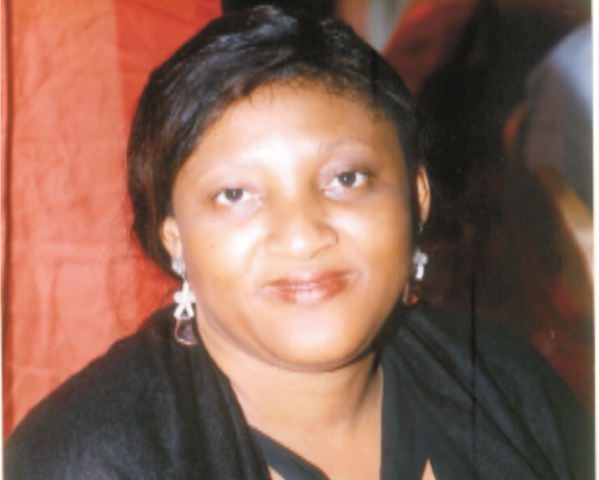
On Wednesday, July 13, Theresa May assumed office as Prime Minister of Britain, the second woman to take the position in the history of that country. In this interview with Opaka Dokubo, lawyer and women’s rights activist, Debora Effiong talks on the significance of this development and other contemporary issues in the Nigerian polity.
Excerpts:
How did you feel when you heard about Theresa May becoming British Prime Minister?
For me, it was really a welcome development when I heard the announcement of Theresa May as the new Prime Minister of Britain. Like you mentioned earlier, history is repeating itself and considering the global momentum addressing the increase in female participation in governance.
So, for us it was more like a green light … it spoke volume to our work, it lend credence to what we’re doing because we’ve been trying to see how we can get those global examples which we can bring home here in Nigeria. The question is, if it’s in the UK, why not Nigeria? If it’s in the US, why not Nigeria? Remember when the Liberian president, Elen Johnson Sirleaf emerged as the first female president of Liberia, we went on with advocacy and we said ‘if Liberia why not Nigeria?
So, for me, it’s a welcome development. It’s a huge one for the women’s rights movement. It’s a giant stride. I think it’s a development that will impact globally, regionally and also nationally. For us as a country nationally, for Africa regionally and for the entire international space because there’s been a lot of clamouring, a lot of advocacy, a lot of demand … We have several instruments, guaranteeing women’s right, several instruments promoting women’s inclusion in the political space but a lot of those instruments have not been adequately addressed or enforced within the context of our laws and legislation.
I think that providence also has something to do with this. There’s a kind of paradigm shift right now and I believe there’s a god who has a hand in the current global affairs. I feel strongly that our prayers are getting answered.
What do you consider the singular most important hindrance to women’s participation in politics?
I will say it’s the society because embedded in the society discourse itself is culture and also embedded in the culture discourse patriarchy. Others come behind, whether women or men or whatever, it’s a cultural thing. There’s a stereotyping mindset and thinking here in this part of the world: Women are supposed to be seen and not heard. So, it becomes a cultural issue where a woman takes up a leadership position.
Even in the house, the traits are so evident. If the woman has more money and is more asserting than the husband, the husband feels this threat and becomes obsessed. Transporting that to the larger society is there. I’ve met many men who will tell you they can’t work under a woman. It’s more of a cultural issue to me and that’s why the political space has not been opened up to encourage as many women as possible.
Are women not part of the culture?
Yes women are part of it but you should understand the way the system works. The cultural setting is that men are the gatekeepers, they’re the custodians, they’re the molders of the norms and customs of the people. The traditional gatekeepers are the men, not women. Traditional and ancestral stools are dominated by men in this part of the world, I have crises-crossed the Niger Delta and there’s a recurrent issue: Women are not part of community governance structure. And it starts at that level. And coming to the outer space, we come with that mind set, we think that way, even the women unconsciously are limited by their own thinking. Women accept the stereotyping. It is believed that there are certain professions that are exclusive preserve of the male. A woman is interpreted along her care giving roles.
So who should really champion the cause of women?
The government is key because the instruments that enforce and ensure that the issues equality and equity are addressed are within the preserve of the government. The government makes the policing; they make the laws so they’re expected to enforce legislation in that regard: For example, we’ve been clamourning for 35% affirmative action. Recently, after the International Women’s Day Celebration, the clamouring has risen to 50-50. We’re looking at planet 50-50. We’re calling for parity now.
So if there’s enforcement of that legislation, deliberately, 35% of positions, including elective positions will be left for women. It’s an affirmative measure. The NDDC is an affirmative action measure that was taken by the government. When there was this cry that the Niger Delta states were being neglected in terms of development, the NDDC came as a response to that to address the development needs of the region. Today we have the quota system for educationally disadvantaged states. We have the Federal Character Commission.
It’s an affirmative action, so if the women are demanding for an affirmation action measure, we’re asking for a bridge in the gap, the gap is too wide. Today, in states like Rivers State, we’re still battling with one or two women in the House of Assembly. It is ridiculous yet how many states are able to achieve that? We have 360 honourable members in the House of Representatives, go and count whether you will have 50 to 60 women out 360. You can’t get. So, the issue of affirmative action is a must do by the government.
We see the government as a strategic voice in this advocacy. Of course, the women have tried and after the government comes the men. We should also have some male champions. Most times men see women issues as an affront to masculinity. It’s a perception, it’s wrong. It’s a very wrong perception so men need to be sensitized. They need to understand that what the women are actually asking is partnership. Women don’t want to take over, women just want to partner with men. There is really nothing to take over. All that we want is carry us along. The real essence of equality is not equality in terms of status, position, prestige. We want equality in terms of opportunities and outcome.
Look at Rivers State, the judiciary is handled by women but you have 23 LG caretaker committees chairmen without a woman.
Those are some of the concerns. I’m not making case for the governor, I don’t know his mind set around the appointments but you know that Rivers is plagued with a lot of security issues. May be they’re thinking that the issues of security is what can be adequately…. You know men are seen as protectors they’re masculine, they’re strong, they’re capable of certain actions. Or may be he is also feeling that the judiciary has had a fair share of women.
And really, I said something about the men being the gatekeepers, the boys who did the whole lot of electioneering work have to be rewarded in one way or the other. We didn’t have many women coming out to do some of those things that are required in politics. You understand how politics works in this part of the world it’s compensatory.
We have the concluding re-run elections coming up July 30, do you have any concerns?
Seriously I do have security concerns and we’re hoping that things will be in place. You know Rivers State has been in the news for a very long time. The political big wigs, the contenders, the power tussle, the assassinations, the killings, the violence, it’s been in the news for a long time. The best thing that happened to us was the Supreme Court pronouncement. That helped to douse some tension in the state but we know it’s not yet over because the rerun is at the corner. And we’re all concerned. We can only keep praying and being hopeful that the prayers of the saints will be heard and answered.
Sometimes when things go beyond human handling, I think you have to involve God at some point. Some of us we’ve decided that the situation in Rivers State requires more of prayers than even action because we don’t know which action will be right and which will not be right. There are insinuations and comments all over that if care is not taken a state of emergency could be declared in Rivers. Nobody wants all of that. So there are really concerns. I have concerns.
I have no political side. I just want the best. This is a state where I live. I want the peace and prosperity of the state so that we can all continue to dwell and exist in peace, We cannot in the name of elections or in the name of winning or whatever you call it, destroy the democratic ideals by the very people who should hold it sacred. When you entrust into these people, you don’t expect that they will destroy the fabric of society just because of their ambition.
The former president made a very noble statement. For everything he will be remembered for, that is one statement that will go down history. He said my ambition is not worth anybody’s blood and that was why he decided to, whether the election went in his favour or not, sheat the sword. We hope that other leaders will learn from this. That’s the hallmark of humility.
Rivers State is the case here and we’re really calling on the leaders in Rivers State to take the interest of the state at heart and not their ambition. Politics is not a do or die and some of them are going back to these offices for the second, third, forth term. The way politics is played in this part of the world is either I gain access or I die.
The past British Prime Minister honourably resigned and you could see him moving his things out of his official residence. That will hardly happen in Nigeria, hardly happen in Africa. So, our message to all the political actors is sheat your sword. We want Rivers of Peace, not Rivers of violence or Rivers of blood. We want peace in the state because Rivers State is a rallying point for the entire six states in the Niger Delta. Anything that happens in Rivers State rubs off on other states. So we’re calling our leaders to sheat their sword, take the election results in good faith. It favours you, it does not favour you, go for peace. We just want peace in Rivers State.
Lawyers and the judiciary have been indicated as having a part in the unsavoury state of affairs in this country what do you say as a lawyer?
Well, that’s a tough one for me. Within the judicial system there’s a whole lot of issues popping up. I read recently that even the NBA election is almost being truncated because there is a court order stopping election from holding. There is serious contention among the candidates and I said to myself, at what point would we rise above this?
So, even within the judiciary, both the bar and the bench, there are monumental issues. For me, I get a bit confused at what point would we have to address these issues. You saw the series of judgements that were given, forward and backward. The court of Appeal will give a judgement, the Supreme Court will over rule the judgement of the Court of Appeal. Same issues but different verdicts.
So, I feel strongly that there’s a drag of politics creeping into the judiciary. I may not be able to adequately explain this. It is looking more to me like the more you look the less you see. A lot of lawyers’ integrity has been punctured, especially in this current political dispensation. I still think that the judiciary needs a whole lot of re-assessment, some reviewing and also some over hauling.


Rt Hon. Abbas secured the party’s ticket through an affirmation exercise conducted across the 13 electoral wards in the constituency.
The wards involved include Kwarbai A, Kwarbai B, Limancin-Kona, Unguwar Fatika, Unguwar Juma, Dutsen Abba, Gyallesu, Kufena, Dambo, Wuchichiri, Tudun Wada, Tukur-Tukur, and Kaura.
The exercise, which began simultaneously in all wards at about 10 a.m., recorded large turnout of APC members who gathered at various party offices across the constituency.
At Kwarbai B Ward, the Speaker’s ward, the process was conducted peacefully under the supervision of the ward APC Returning Officer, Malam Iliyasu Muhammad Balarabe, in the presence of Rt Hon. Abbas.
According to the ward APC secretary, Nafiu Sabo, the ward has over 10,000 registered members, but 220 members were accredited for the exercise.
Before the affirmation, Mallam Balarabe informed members that Rt Hon Abbas was the only aspirant who purchased nomination forms, underwent screening, and was cleared by the APC national leadership to contest the Zaria Federal Constituency seat.
Following a voice vote by accredited members, the Speaker was affirmed as the party’s candidate in the ward, a process replicated across the remaining 12 wards.
At the constituency collation centre, the APC Returning Officer for the House of Representatives primary in Zaria Federal Constituency, Dr. Hamisu Ibrahim Kubau, announced that 1,376 APC members across the 13 wards endorsed Rt Hon. Abbas as the party’s flag bearer.
He explained that although thousands of party members participated in the exercise, only accredited delegates were allowed to vote.
Dr. Kubau declared: “There are 13 wards in Zaria Federal Constituency, and only one aspirant purchased a form, was screened, and cleared. He is Rt. Hon. Abbas Tajudeen. After due process, we conducted affirmations across all wards.”
He added that the process was peaceful and monitored by officials of the Independent National Electoral Commission (INEC) and party representatives.
Chairman of the APC House of Representatives Primary Elections in Kaduna State, Senator Yakubu Oseni, described the outcome as a reflection of the Speaker’s popularity and acceptance among constituents.
He expressed confidence that Rt Hon Abbas would secure victory in the 2027 general elections.
Speaking after his declaration, Rt Hon. Abbas expressed appreciation to APC members for reaffirming their confidence in him.
The incumbent Reps including Emily Inyang and Godwin Offionio, in separate interviews
protested the handling of the primaries conducted by the leadership of the party in the state, saying it was skewed against them.
The aspirants further described the primaries as a charade and an embarrassment to the state.
According to them, the House of Representatives primaries fell short of the provisions of both the Electoral Act as amended in 2026 and the party’s constitution.
They accused the leadership of the party in the state, backed by Governor Bassey Otu, of violating the party’s constitution in the conduct of the House of Representatives primaries across the state on Saturday.
Hon. Godwin Offiono, representing Ogoja/Yala Federal Constituency, particularly expressed disappointment with the primary that allegedly disenfranchised registered members of the party in his constituency.
Hon. Offiono asserted that having failed to arrive at a consensus, the party leadership opted for a direct primary to decide the candidate for the 2027 election.
“But what I witnessed today was not only alarming, but quite disheartening that our electoral system have not shown any improvement, especially now that we have a man of God in the person of the governor as the leader of the party.
“How do you declare a result by 9:00am even when the electoral materials were yet to arrive at Yala.
“As an aspirant, I couldn’t even vote or see the materials for my own primary at my Okuku ward in Yala Local Government Area, where I come from. But no matter what happens I am still in the race and have not stepped down for anybody.
“The governor had all the time in the world to drive the process of consensus but he never did. As a representative, I cannot even see my governor. I called, no response. I sent text no reply. I am treated as an out cast,” he lamented.
In an emotion laden tone during a telephone interview, Hon. Offiono further said: “I could not believe that first term NASS members like me can be treated in this shoddy manner even when I don’t know my offence.
“I have been a loyal party man. I appeal to the governor to do the right thing, follow the Electoral Act and party constitution in electing representatives.”
Similarly, Hon. Emil Inyang of Akamkpa/Biase Federal Constituency said he still remained in the race and had not stepped down for anybody.
According to him, “If this shenanigan called primary is allowed to stand, it would affect the party’s fortune in the general elections.
“My appeal to the governor is to allow the people to decide. And if they so voted against me, I will rest and not fight over anything.
“There was no stakeholders meeting held to decide on anything before now, and someone can not be unilaterally imposed on us all in the name of compromised primary,” he stated.
A coalition of support groups within the All Progressives Congress (APC) has protested the disqualification of former presidential aspirant, Mr Tein Jack-Rich, from the Rivers West Senatorial race ahead of the party’s primaries for the 2027 general elections.
The groups, in a statement issued on Saturday morning in Abuja, described the action of the party’s screening committee as unjust and capable of worsening internal divisions within the APC in Rivers State.
The statement, signed by the coalition’s National Coordinator, Dr. Bilal Galadima, and General Secretary, Hon. James Ogenyi, accused the party leadership in Rivers State of favouring politicians loyal to the Minister of the Federal Capital Territory, Chief Nyesom Wike, while sidelining long-standing members of the APC.
The coalition alleged that only aspirants aligned with Chief Wike were cleared to contest for elective positions in the state.
“How can our party allow only one man who is not a member of our party to make decisions or dictate the direction of our party?”, the group queried.
The coalition specifically faulted the exclusion of Mr Jack-Rich, describing him as a loyal party member who had supported the APC for more than 13 years and previously contested the party’s presidential ticket.
It also questioned the alleged clearance of Chief Felix Obua, whom it described as a recent entrant into the party and an ally of Chief Wike.
“How can our party disqualify Jack-Rich, a former presidential aspirant who has been loyal and supported our party for the last 13 years, only for our party to choose Felix Obua, a Wike loyalist who only joined the party three months ago?”, the statement read.
The group warned that failure by the APC leadership and National Working Committee (NWC) to address the matter as it could weaken the party’s structure in Rivers State ahead of the 2027 elections.
It called on party leaders to uphold internal democracy, reward loyalty and ensure a level playing field for all aspirants.
INEC TO BEGIN MEMBERSHIP VERIFICATION AS POLITICAL PARTIES SUBMIT REGISTER
All 22 registered political parties have successfully submitted their membership registers to the Independent National Electoral Commission (INEC) in compliance with the Electoral Act 2026, the Commission has said.
In a statement issued on Friday, Chairman, Information and Voter Education Committee, Mr Mohammed Haruna, said the submission followed the extension granted by the Commission after political parties raised concerns during a meeting on Tuesday, March 24, 2026, regarding the timeline provided in the Revised Timetable and Schedule of Activities for the 2027 general elections.
He said, “The Commission is pleased to note that all registered parties submitted their registers as of 8th May 2026, two days before the extended deadline.”
He recalled that following a meeting with political parties, the Commission, in a statement issued on the 27th of March, 2026, adjusted the deadline for the submission of party registers from 21st April 2026 to 10th May 2026 to align with the provisions of Section 77(4) of the Electoral Act 2026 and the actual dates fixed by political parties for their primaries.
Mr Haruna noted that political parties were accordingly allowed to conduct their primaries within the approved period from 23rd April 2026 to 30th May 2026, while the register of party members was required to be submitted to the Commission not later than 21 days before the conduct of their respective primaries.
He added, “INEC wishes to state that all registered political parties complied with the requirement within the extended timeframe and will subject the submitted registers to the necessary verification processes in line with the law.”
The Commission restated its commitment to the conduct of free, fair, credible and inclusive elections.
-

 Editorial3 days ago
Enough Of Xenophobic Attacks On Nigerians
-

 Nation3 days ago
RSU, Otonti Nduka Foundation Holds Centenary Conference, Unveil Book on Values in Nigeria
-

 Oil & Energy3 days ago
Rivers PETROAN Elects 12-Member Executive
-

 Sports3 days ago
Oparaodu Urges Rivers United To Win Katsina United
-
Politics3 days ago
APC Group Protests Ex–Presidential Aspirant’s Disqualification From Rivers Senatorial Race
-
Politics3 days ago
Reps Speaker Secures APC Return Ticket For Fifth Term
-

 Sports3 days ago
” Nigeria’s best domestic players are not in NPFL”
-
Politics3 days ago
Primaries: Diri Lauds APC’s Unity, Cohesion In Bayelsa