
Business
Nigerian Students Laud FG’s Seafarers Programme

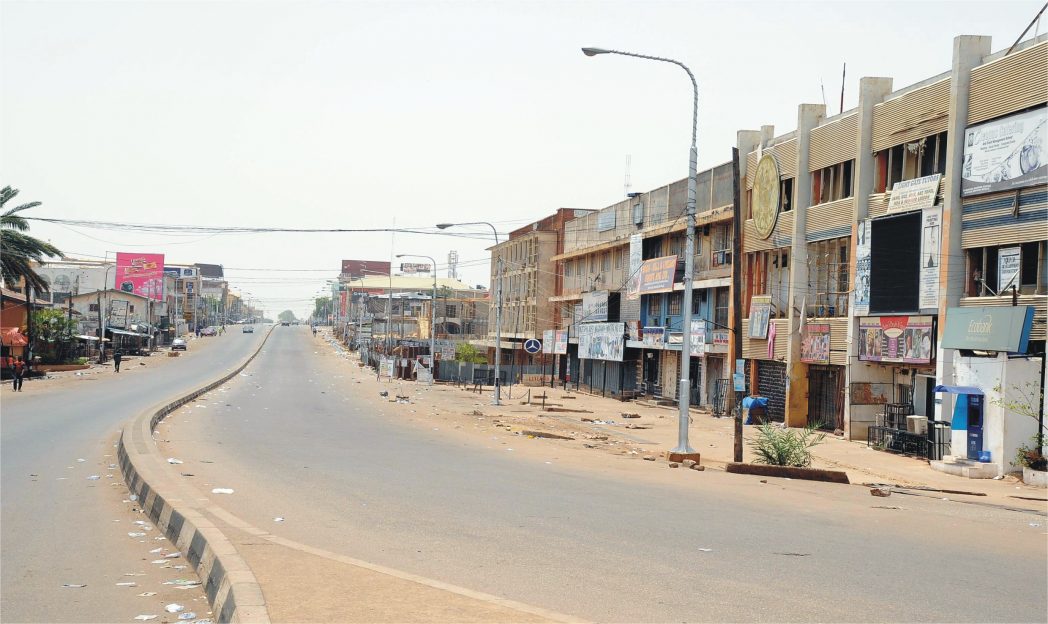
Locked up shops on Ahmadu Bello Way during Presidential National Assembly elections in Lagos on Saturday.
Nigerian students undergoing seafarers training in the Philippines have commended the Federal Government for instituting the National Seafarers Development Programme (NSDP).
A total of 153 Nigerian students are undergoing training at the University of Perpetual Help in the Philippines.
They gave the commendation on Wednesday when a delegation of the management of the Nigerian Maritime Administration and Safety Agency (NIMASA) paid a courtesy visit on the authorities of the university at Pamplona in Las Pinas City. The Tide source reports that some members of management of NIMASA are currently in the Philippines on a tour of institutions training Nigerian cadets undergoing the NSDP.
“I have never heard or witnessed in my life an administration which has supported parastatals like President Goodluck Jonathan,” the leader of the students, Mr Raphael Eguagie, told the delegation.
He also commended the Director-General of NIMASA, Mr Patrick Akpobolokemi, and the management of the agency for their efforts in making the scholarship scheme successful.
Eguagie expressed the gratitude of the students for being selected, after a rigorous process that ensured that the best were chosen from different states of the federation.
“At the end of the programme it is expected that more than 5,000 students would have received world-class training in the maritime sector and they will resurrect the maritime industry in Nigeria.
“Two weeks ago, the school introduced enhancement classes for deck and engine cadets on how to handle Bridge and Engine Simulators as well as operating and maintaining other equipment in the department.
“Just two weeks ago, we were at sea for a week on-the-job training and we were posted to different departments to enable us to familiarise ourselves with our duties and responsibilities,” he stated.
The President of the university’s council, Mr Anthony Tamayo, in a message, commended the management of NIMASA for choosing the University for the Programme.
Tamayo was represented by his son, Dr Antonio Tamayo, who is the Chief Executive Officer of the university.
Tamayo urged the Nigerian Government not to relent in promoting collaboration, mutual understanding and solidarity with the university to strengthen the relationship between Nigeria and the Philippines.
He said the Nigerian cadets were passionate to learn, noting that they were also respectful and were taking the training serious. The chief executive said the university had been able to know some Nigerian cultures, assuring that “as time goes on, the two countries will learn more about each other.
“Philippines and Nigerian bilateral relations had been strengthened, particularly in educational areas, due to the fact that both nations were able to exchange students.
“Nigerian scholars after the three years study will be helpful and would have acquired the appropriate skills to practise the profession.
“Since English is the medium of our instructions here in Philippines because both Nigeria and Filipinos speak English, this has reduced the level of language barrier,” Tamayo said.
Also speaking, Mr Callistus Obi, Executive Director, Maritime Labour and Cabotage Services of NIMASA, said that President Jonathan had mandated NIMASA to continue with the NSDP.
He told the students to be disciplined, adding that their commitments to the programme would determine government’s willingness to continue sponsoring the scheme.
Obi said that Nigeria had started building a maritime university, the first Maritime University in West Africa.
“We the staff of NIMASA are making sacrifices to ensure that you (cadets) continue to enjoy the benefits of the training.
“We have to cut foreign trips by staff as well as expenses to ensure that you complete your education.
“We expect that you will also make sacrifices so that others who are not privileged to be here can also benefit wherever they are in Nigeria.”
He commended the management of the institution for making students to imbibe not only intellectual capacity but also morals.
A marine engineering student, Miss Rita Idonor, said that the students were initially having communication barrier, noting however, that they had adapted to Filipino ways of life.
Idonor said that the school’s management was also teaching them Philippines’ language to enable them blend with the Filipino ways of life.
Mr Perekeme Odofori, another marine engineering student, said he had undergone a lot of practical training but needed to improve on theoretical aspects.
Odofori said that the Nigerian ambassador in the Philippines had promised to compel the management of the university to assist the Nigerian students to improve on the theoretical aspect of the training.
He, however, said that he was fully prepared to come and impact his knowledge to other Nigerians, who had yet to undergo the training.
Teports say that the students are also undergoing studies in mandatory basic trainings such as Elementary First Aid, Fire Prevention, Personal Safety, Social Responsibility and Personal Survival Techniques.


Nkpemenyie Mcdominic
Reports say that the training is designed to equip youths with practical technical skills for employment in the oil and gas and construction sectors, with emphasis on employability, safety, competence and self reliance.
In attendance at the flag-off ceremony this week, at the Petroleum Training Institute (PTI) Conference Hall, Effurun, were stakeholders, dignitaries, and political representatives, among others.
Dafinone, represented by his Chief of Staff, Adelabu Bodjor, said the initiative reflects a deliberate political investment in human capital development across Delta Central.
He explained that the training focuses on rigging and scaffolding, noting that “both are essential technical competencies required in industrial operations, construction projects, and oil and gas installations”.
Bodjor added, “The programme is intended to reduce dependency among youths by providing job-ready skills capable of supporting long-term economic opportunities and self-sufficiency. The initiative aligns with Senator Dafinone’s broader development agenda, which prioritises practical skill acquisition as a pathway to sustainable empowerment.”
Also addressing the participants, the NCDMB, Felix Omatsola Ogbe, represented by Mr. Teddy Bai, commended Dafinone for sponsoring the programme, describing it as “a timely response to critical manpower gaps in the industry”.
Bai explained that rigging and scaffolding remain safety-sensitive skills required across fabrication yards, offshore platforms, and construction sites, stressing that the programme bridges the gap between certification and practical competence.
He also charged the training consultant, OROH Contractors Limited, to maintain strict standards of professionalism, safety, and discipline, while urging participants to remain committed, focused, and disciplined throughout the exercise.
The Senate Liaison Officer for Sapele Local Government Area, Chief Patrick Akamuvba, , described the programme as a major step in strengthening human capital development in Delta Central.
Akamuvba said scaffolding and rigging skills are in high demand across residential, commercial, and industrial construction projects, noting that the training offers real employment opportunities for beneficiaries
He urged participants to prioritise knowledge and certification over short-term material expectations, stressing that discipline and seriousness would determine their long-term success.
He also cautioned youths against social vices and distractions, advising them to remain focused to maximise the opportunities provided by the programme.
-
News17 hours ago
Obuah’s Victory Excites Former Lawmaker as APC Primaries Conclude in Rivers West
-

 Politics3 days ago
APC PRIMARIES: FUBARA’S WITHDRAWAL, HISTORIC SACRIFICE FOR NATIONAL STABILITY ……. GROUP
-

 News3 days ago
Court Sentences Seven To Death Over Murder Of Cleric In Rivers
-
News18 hours ago
105 Nigerians Killed In S/Africa In Seven Years
-

 Sports3 days ago
PH Arsenal Community Set For Streets Procession, Saturday
-

 Politics3 days ago
IPAC Flays INEC Over Election Guidelines Judgement
-

 Politics3 days ago
NDC To Adopt Electronic Voting For Future Primaries
-

 Politics3 days ago
Otu Vows To Recall Indolent, Arrogant Cross River Legislators