Connect with us

Opinion

Of Social Media And Friendship (I)

Published

on

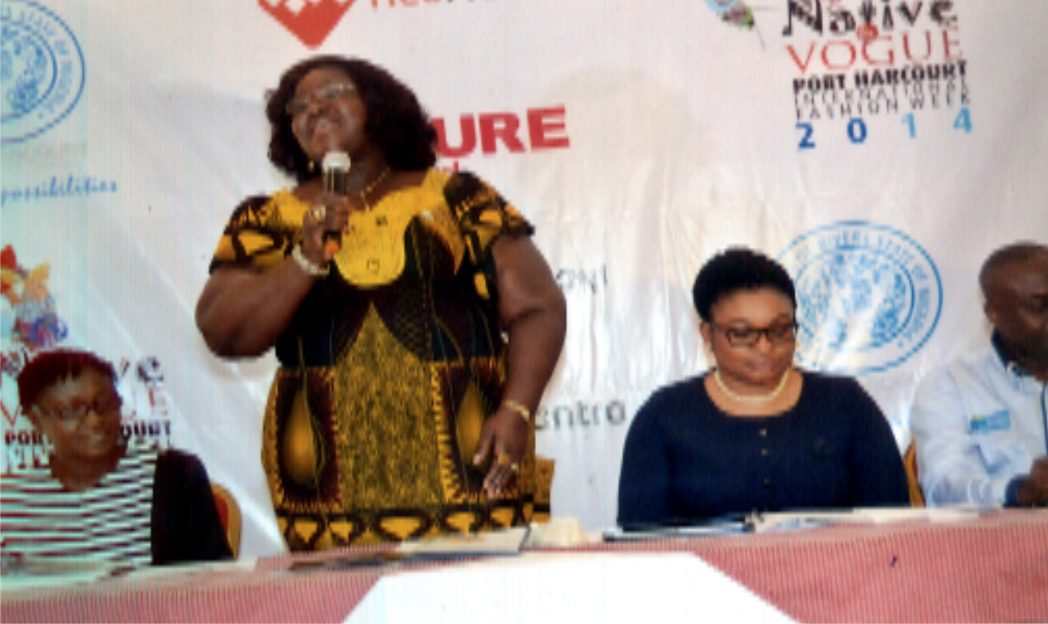
Rivers State Commissioner for Information and Communications, Mrs Ibim Semenitari (standing) addressing the press conference to mark 2nd Port Harcourt International Fashion Week at Voitel Hotel Port Harcourt. With her are  Deputy Editor Allure Vanguard, Jemi Ekunkunbor (left) Chief Operating Officer, Neomantra (Ltd) Lagos, Nkiruka Oguadinma (right)            Photo  Chriss Monyanaga

Rivers State Commissioner for Information and Communications, Mrs Ibim Semenitari (standing) addressing the press conference to mark 2nd Port Harcourt International Fashion Week at Voitel Hotel Port Harcourt. With her are Deputy Editor Allure Vanguard, Jemi Ekunkunbor (left) Chief Operating Officer, Neomantra (Ltd) Lagos, Nkiruka Oguadinma (right) Photo Chriss Monyanaga

The Social Media is not a
safe place to make new friends. However, some persons may use the Social Media platforms to connect with people they have never met not because it is the safest channel but simply because such persons are an inspiration to them in certain ways and without the Social Media channel, they may never have the opportunity to interact with them as role models. The Social Media is also a place to reconnect with old friends and family members, as well as keep in touch with colleagues, constituents, customers, and the electorate, by sharing views, ideas, opinions and best practices on issues, whether of prime importance or trivial concerns.
Available and commonly used Social Media platforms include, Blogs, Facebook, Twitter, YouTube, Flickr, MySpace, WhatsApp, Google Talk, Yahoo Chat, Yahoo Messenger, Bitstrips Chat, Linkedln, Badoo, Tango, among others.
The Social Media, as a tool of communication, is not the only medium through which individuals, institutions, governments and any other interested parties can communicate with a wider audience.
Other mass media tools such as the Web and the traditional media are also relevant tools of communication with friends, family, institutions, governments and other citizens.
In the present technology-driven age, all mass media tools are essentially required in efforts to communicate to a large number of persons. Individuals, groups, institutions, organisations, agencies and governments, one way or the other, use available mass media channels, including the conventional media: Print – Newspapers and Magazines, and Electronic – Radio and Television, and the Social Media to communicate and share their views, ideas, experiences, policies and programmes, and best practices and also illicit feedback.
For the individual, the Social Media is not an entirely safe place to make new friends. This is because most of the Social Media platforms do not have content filters that should help sift falsehoods and allow only the truths on the portal. It cannot identify dubious persons who may want to take advantage of the freedom of access the platforms avail. It is this deficiency that some dubious persons have taken advantage of to commit cybercrimes or lure innocent citizens to their early graves.
A case in point is the July, 2012 murder of Agbor-born Miss Cynthia Akuzogwu Udoka Osokogu in a hotel around Festac Town, Lagos. The post-graduate student of Nasarawa State University, Keffi, and owner of Dresscode, an enterprising clothing retail shop, had established contact through Facebook with some conmen who claimed to be students in University of Lagos. After series of chats, her Facebook friends had agreed to host her when she visits Lagos to buy wears for her boutique in Nasarawa.
The daughter of a Jos-based retired Brigadier-General in the Nigerian Army, Cynthia, had travelled to Lagos for her business, only to meet her waterloo in the hands of conmen who claimed to be friends.
Is Social Media A Safe Place To Make Friends?
The two suspects in her murder were arrested in Festac after police had identified them through the CCTV footage of the incident in the hotel, and also tracked call logs of the phone line used in conversations with the victim. The two, on interrogation, confessed to the murder, and admitted she was the sixth victim of their Facebook scam.
In June, 2014 in Rivers State, a manager with Shell Petroleum Development Company (SPDC) was found dead at Agbon-Nchia, Eleme in Eleme Local Government Area, after having been missing for about two weeks. The police said confessions from criminal suspects arrested in connection with his death, revealed that the manager had established contact with the criminal ring using a beautiful female member whose picture was posted on Badoo as a single girl, supposedly looking for a male to date as a companion.
The Shell manager, a married man, had contrived a relationship with the fake female friend, who after several conversations on the platform, agreed to visit the fake female friend on a date at Eleme. On arrival at Eleme, the manager was accosted by a male gang member, who claimed to have been sent by the fake female friend to direct him to her supposed house in the town. But instead of taking the manager to the female friend’s house, the young man took the manager to an isolated area in Agbon-Nchia, in the outskirts of Eleme, where the criminal syndicate’s leader and other members laid an ambush, waiting for their prey, that they killed later after using his ATM to collect every kobo in his account. The criminal suspects also confessed to similar atrocities in the past, using the same Social Media tool.
There is a litany of other cases across the world, where certain persons had established contact through Facebook, WhatsApp, Twitter, with people they did not initially know but such interactions or conversations ended up in deaths resulting from murders, culpable homicides, bizarre and horrific tragedies.
Some dubious persons have also used the Social Media to exploit or extort the innocent and extracting money or essential belongings from them under false pretense. A case in point is the denial recently by former President Olusegun Obasanjo that he owns a Facebook account, having been faced by friends, close political associates and journalists, who had encountered bitter experiences struggling to connect with him and possibly get some favours. Obasanjo’s reaction revealed that his picture had been used by dubious persons, who created account name with his picture on Facebook to perpetrate evil by extorting unsuspecting members of the public through Facebook. Obasanjo may not be the only famous politician in Nigeria, whose name and face have been used as a bait to defraud, steal, and even commit unspeakable criminal offences against the laws of the land.

James is a student of Fatima College, Borikiri, Port Harcourt.


Pelagie James

Continue Reading

Opinion

When Democracy Becomes Too Expensive

Published

on

Quote: “When elections become investments to be recovered, governance turns transactional and the moral foundation of democracy begins to erode.”
The high cost of participating in politics in Nigeria remains a serious and growing concern. The trend is rising so sharply that democratic competition increasingly risks becoming the preserve of a wealthy few. From exorbitant party nomination fees to campaign logistics, media exposure, litigation expenses, and regulatory charges such as the proposed ?150 million campaign advertising permit reportedly introduced in Enugu under Governor Peter Mbah, the financial barriers to public office are steadily hardening. If not addressed, this trajectory could erode inclusion, weaken electoral credibility, and deepen corruption within the political system.
Money has always played a role in politics. Elections require funding for mobilisation, communication and administration, while political parties need resources to organise primaries and reach voters across the nation’s diverse terrain. However, when financial demands become excessive, they cease to be necessities and instead become structural barriers that exclude capable citizens from participation.
The Enugu situation provides a troubling case study. Reports indicate that the Enugu State Structures for Signage and Advertisement Agency (ENSSAA) announced a mandatory ?150 million advertising permit fee for parties and candidates participating in the 2026 local government and 2027 general elections. According to the agency’s General Manager, Francis Aninwike, the fee would permit deployment of campaign materials — banners, branded vehicles, T-shirts and handbills — and street rallies, with sanctions for non-compliance.
One is compelled to ask: how can someone vying for office be required to pay ?150 million merely as an advertising permit, separate from nomination forms and other logistics? Where would a civil servant, a teacher earning N70,000 minimum wage, or a young graduate eager to serve find such a sum? How can ordinary citizens compete in a system demanding such staggering outlays?
An opposition party has described the steep fee as a ploy by the All Progressives Congress (APC) in Enugu State to stifle opposition participation. Whether sustained or not, the perception is damaging. Aside from incumbents or those backed by powerful interests, how many candidates can realistically afford ?150 million solely for advertising clearance?
There is no dispute that state agencies have legitimate responsibilities. Regulating outdoor advertising and preventing visual pollution are valid objectives. However, such regulation should not come at a heavy cost to Nigeria’s fragile democracy. The Aninwike-led ENSSAA and similar bodies must recognise that while regulation is necessary, affordability is essential for democratic participation.
The constitutional framework recognises the central role of the Independent National Electoral Commission (INEC) in ensuring free and fair elections. Yet formal administration is only part of the democratic equation. Informal financial pressures — delegate inducements, media monetisation, security logistics and post-election litigation — already multiply the cost of contesting beyond official limits. Massive campaign-related fees further compound an expensive process.
Recent findings presented at a policy engagement organised by the Westminster Foundation for Democracy in Abuja underscored the gravity of the situation. House of Representatives Minority Leader Kingsley Chinda warned that Nigerian politics is becoming an elite preserve in which only those with deep pockets can compete. Access to vast financial resources, he argued, has become a near precondition for political viability, transforming what should be a civic right into an expensive venture.
He noted that politics in Nigeria has been thoroughly monetised, systematically pricing out women, youth and persons with disabilities — the very groups policy frameworks claim to uplift.
The implications are disturbing. In a context where elections are viewed as investments, public office becomes a site of capital recovery. Contracts are inflated, appointments monetised, and governance turns transactional. What emerges is a vicious cycle: only the wealthy can contest, and once in office, they seek to recoup their investment, deepening public cynicism and eroding the moral basis of governance.
Although some parties waived nomination fees for women in 2017 and 2023, and parties such as the Young Progressive Party were formed to promote youth participation, exorbitant campaign expenditures continue to sideline many aspirants. Women accounted for only about 8.4 per cent of candidates in the 2023 general elections, with similarly low youth representation.
The cumulative effect is dangerous. When political entry is determined primarily by financial capacity rather than competence or vision, the recruitment pool narrows drastically. Talented professionals and grassroots organisers may never appear on ballots simply because they cannot afford the price of entry. A system that filters out merit while rewarding wealth weakens governance outcomes.
Nigeria must therefore treat rising electoral costs not as routine complaints but as democratic stability concerns. Political parties should drastically reduce nomination fees, especially for women, youth and persons with disabilities. Transparent fundraising and spending disclosures should replace opaque financing structures.
Regulatory agencies must balance administrative control with democratic openness. Campaign advertising fees should be proportionate and structured in ways that do not create artificial barriers. INEC and other enforcement institutions must strengthen monitoring of spending ceilings and apply meaningful sanctions for violations.
Civil society, the media and professional bodies also have critical roles to play. Public discourse should prioritise issue-based campaigns rather than money-driven spectacle.
Ultimately, democracy thrives not merely when elections are conducted, but when they are genuinely accessible. Political participation must remain a civic right, not a luxury commodity. Nigeria’s democratic journey cannot afford to drift into a system where leadership selection depends primarily on financial muscle rather than merit and service.
By: Calista Ezeaku
Continue Reading

Opinion

Righteous Leadership Still Thrives

Published

on

Quote: “Institutional decay is not irreversible when integrity and action sit at the helm.”
In every institution, there comes a defining moment when leadership either deepens decline or inspires rebirth. For the Rivers State Newspaper Corporation (Publishers of The Tide), that defining moment arrived when the Permanent Secretary, Ministry of Information, Sir. Honour Sirawoo Ph.D, came to share the premises with the Staff of The Corporation due to the ongoing renovation work at the State Secretariat. For years, the physical condition of the corporation mirrored the uncertainty that hung in the air. Leaking roofs told silent stories during the rainy season, damaged floors bore the weight of neglect, and the once vibrant environment seemed to plead for urgent attention. Staff members worked under conditions that tested both resilience and commitment. Buckets placed strategically to catch dripping water became a routine sight at some quarters, while cracked tiles and weathered walls diminished the pride that should accompany service in a state-owned media institution.
Yet, in the midst of these challenges, hope was not entirely lost. There remained a collective belief that with purposeful leadership, restoration was possible. That hope found expression when Honour Sirawoo Ph.D., Permanent Secretary in the Rivers State Ministry of Information, assumed as a co-occupier. His arrival was quiet, but his impact would soon resonate loudly across the premises.Leadership, it is often said, is not about occupying an office but about occupying responsibility. From his earliest inspections of the corporation’s facilities, it became evident that he saw not just buildings in disrepair, but a workforce deserving of dignity.The transformation began swiftly. Contractors appeared on site. Assessments were carried out with precision. Plans were not merely announced; they were implemented. Leaking roofs that had long defied repair were carefully amended.
For the first time in years, staff could listen to rainfall without anxiety. Damaged floors were reconstructed, restoring both safety and aesthetics. Walking through the corridors no longer required cautious navigation around broken surfaces. The fencing of the premises, once a pressing security concern, became a priority. A properly secured environment now speaks of order, responsibility, and foresight. General maintenance, often overlooked in public institutions, was institutionalized. From structural reinforcements to aesthetic upgrades, the corporation began to wear a new look. But beyond bricks and mortar, something deeper changed. Morale improved. Staff productivity increased. The psychological boost of working in a conducive environment cannot be overstated. The transformation has not merely been cosmetic; it has been cultural.
 Workers now speak with renewed pride about their workplace. Visitors to the premises have noticed the difference. The once tired-looking structures now stand as testimony to what decisive leadership can accomplish. In governance, righteousness is reflected in fairness, diligence, and a genuine concern for people. These virtues have characterized the stewardship of Honour Sirawoo Ph.D.His approach demonstrates that public office is a sacred trust, not a ceremonial title. He has shown that administrative leadership can be both compassionate and result-driven.The improvements at the corporation align with a broader vision of strengthening information dissemination in Rivers State. A vibrant media institution is essential for democratic growth.By restoring the physical infrastructure of The Tide, he has indirectly strengthened the voice of the state. Journalists and editors now operate in an atmosphere that encourages excellence.
It is often said that environment influences output. The recent editions and renewed energy within the newsroom reflect this truth. When righteous leadership prevails, systems respond positively. Accountability replaces complacency, and progress becomes measurable. Honour Sirawoo Ph.D. has exemplified a leadership style rooted in integrity and practical action. He did not merely acknowledge problems; he confronted them. Such commitment deserves recognition beyond routine commendation. It speaks to a capacity for higher responsibilities within the state’s administrative architecture. Rivers State stands at a critical juncture where visionary administrators are needed across ministries and agencies. Leaders who understand that development begins with attention to detail are invaluable. The transformation at the Rivers State Newspaper Corporation serves as a case study in responsive governance. It proves that institutional decay is not irreversible.
Higher positions of trust demand proven competence, moral uprightness, and administrative foresight. In these respects, Honour Sirawoo Ph.D. has demonstrated remarkable readiness. His performance suggests suitability not only for continued leadership within the Ministry of Information but also for broader strategic roles that shape state policy. Beyond the state, Nigeria’s public service landscape requires administrators who combine academic depth with practical efficiency. His credentials and achievements place him in that league. “When the righteous bear rule, the people rejoice” is more than a biblical aphorism; it is a lived experience within the corporation today. The chapter of the Holy Bible that declares, “When the righteous are in authority, the people rejoice”, (Proverbs 29:2), is a timeless reminder that good governance brings joy and stability to the people.
The joy of the staff is visible in their renewed dedication. The pride of ownership has returned. The institution breathes again. History often remembers leaders not for speeches but for tangible impact. The restored roofs, repaired floors, secured fences, and ongoing maintenance are enduring symbols of purposeful governance. The place started its journey to new looks with the arrival of the acting General Manager, Stella Gbaraba, who in her little way, initiated and executed some repair works in the premises. It will be worthy to point out that the duo are of the Ogoni extraction of the state, it is then safe to say that the combination is superb in that it has produced some excellent results. Importantly, the Permanent Secretary did not stop at The Tide Newspaper premises alone. His vision of renewal extended beyond a single institution to embrace all the State owned media houses under the ministry’s supervision.
At Rivers State Television, he executed massive renovation works that redefined the operational environment. Offices were upgraded, structural defects corrected, and modern standards restored to a facility that serves as a visual voice of the state. State-of-the-art office equipment were procured to enhance efficiency, ensuring that staff members could perform their duties with contemporary tools befitting a modern broadcast station. Radio Rivers too also got its own share of the Permanent Secretary’s benevolence and team spirit. Understanding the strategic importance of radio in grassroots communication, he ensured that critical infrastructure received attention. He provided them with steady power supply, reducing the interruptions that once hampered seamless broadcasting and ensuring consistency in programming delivery.
A functional Out Broadcast Van (OB Van) was made available, expanding the station’s capacity for live coverage of events across the state and beyond. The studios were upgraded to be up-to-date, improving sound quality, technical operations, and overall broadcast standards in line with modern expectations. Garden City Radio equally got its own touch in a superlative way. Renovation, equipment upgrades, and operational enhancements positioned the station on a stronger footing. Across the board, his interventions were not selective but comprehensive, reflecting a leadership philosophy anchored on inclusiveness and institutional strengthening. His target generally is to leave the State-owned media houses in a better shape than he met them. That objective is not rhetorical; it is practical and measurable in bricks, cables, studios, offices, and renewed human confidence.
By strengthening television, radio, and print under one coordinated vision, he has reinforced the information architecture of Rivers State. The cumulative effect of these interventions is a more vibrant, responsive, and professional state media system capable of meeting contemporary communication demands. As the Rivers State Newspaper Corporation along side its sister state-owned media houses continue their journey, it does so strengthened by the evidence that righteous leadership still thrives. And indeed, when the righteous bear rule, the people truly rejoice.
By: King Onunwor
Continue Reading

Opinion

Incentives: Key to Police Morale

Published

on

Quote: “When a police officer rejects ?50 million in bribes to rescue over 100 victims, integrity stops being a slogan and becomes a standard.”
It is important we first commend the Commander-in-Chief of the Armed Forces of Nigeria, President Bola Ahmed Tinubu, for his policies that are geared towards eradicating terrorism and banditry in the country. In recent times, his policy on national security which resulted in strategic partnership with United States of America and other countries, has paid off. In the same vein, we commend the Inspector General of Police, IGP Kayode Egbetokun, for implementing the security policies of President Bola Ahmed Tinubu which has culminated into effective, proactive and result-oriented policing. Also worthy of note is the effective oversight function of the Police Service Commission (PSC) led by DIG Hashimu Argungu (Rtd) in terms of adequate monitoring and supervision of personnel. The Nigeria Police Force has been plagued by negative perceptions in recent years, with some officers engaging in unprofessional conducts.
 The Police high command and the Police Service Commission (PSC), in line with rules and regulations governing the Force, have being prompt in punishing erring officers. We have seen some officers dismissed from the service for gross misconduct while some others were punished depending on the gravity of their offense. While we commend the Police authority for their proactiveness in restoring discipline to the Force, they should also imbibe the culture of rewarding distinguished and outstanding Police officers. Very Senior Officers like the Assistant Inspector General of Police, AIG Auwal Musa Mohammed, in charge of Zone 6 Calabar, who ensured personnel and men in his zone comply and adhere fully to security tactics and instructions of IGP Egbekotun that translated to massive achievement over the weekend should be encouraged.
Meanwhile, the likes of Deputy Commissioner of Police, Zonal CID 6 Calabar, DCP Udu Moses Ogechi, PhD, who are working tirelessly to restore reputation to the Police Force should be rewarded to boost their morale, and inspire other officers to put in their best. DCP Ogechi is currently the Head of the Zonal Criminal Investigation Department (ZCID) in Zone 6, Calabar. He recently led a successful operation on Valentines Day (14th February) to dismantle a kidnapping and job-scam syndicate, rescuing over 100 victims. The syndicate had been exploiting Nigerians, particularly youths who are eager to relocate abroad, promising them fake job opportunities and visa.What is remarkable about DCP Ogechi’s achievement is not just the rescue of the victims, but also his refusal to be swayed by corruption. The syndicate attempted to bribe him with ?50 million, but he and his team rejected the offer, stood firm and demonstrated their commitment to professionalism and the rule of law.
This is commendable and deserving of recognition. DCP Ogechi’s patriotic action and his uncompromising stance especially at a time when the Police Force is working to regain public trust, deserves accolades and recognition by the police authorities. His bravery and integrity in the face of corruption are a shining example to other officers. DCP Ogechi’s sterling personality did not come as a surprise to us given his track record of excellent performance everywhere he goes. While serving in Rivers State as ACP Operations, he successfully flushed out cultists from the State. He led the team that apprehended notorious cultists led by Nwondi Onuigwe who were responsible for killing Police Officers, kidnapping and robbery of passengers along Emohua East West road. Recall that the Rivers State Government had placed millions of Naira bounty on Wordi.
It is on record that crime was reduced to its barest minimum during Ogechi’s reign as ACP Operations in Rivers State. His efforts earned him an award for excellent professionalism from the Nigeria Union of Journalists (NUJ), Rivers State Council. As Nigeria strives to strengthen its institutions and combat corruption, it is essential to acknowledge serving officers who have distinguished themselves. The reward system is a crucial aspect of motivating officers to perform their duties creditably. Rewarding deserving officers like DCP Ogechi will surely inspire other fine officers who are working tirelessly to rid our society of crimes and criminality.
By: Ike Wigodo
Continue Reading

Trending