
Politics
Yar’Adua: The Politics, The Debate

Many people are worried about the president’s absence which is already having negative effect on state matters. The new President of the Court of Appeal, Justice Ayo Isa Salami, and Chief Justice of Nigeria, Justice Katsina Alu were supposed to be sworn-in by the president after the confirmation of their appointments by the Senate.
Also, the annual National Merit Award list which was due at the end of last year, was also delayed due to the absence of the president.
Apart from this, the National Assembly last November, passed the N353.6 billion supplementary budget, which includes capital spending of about N253 billion. Part of the money is for the rehabilitation of the ex-militants and other post amnesty intervention programmes in the Niger Delta.
However, when it became apparent that the nation may not have a substantive chief justice, the Minister of Justice, Michael Aondoakaa, had to come out and state that the out-going chief justice Idris Kutigi could perform the swearing in on behalf of the president.
Despite protest from some lawyers and civil rights activities; Kutigi had justified the action by saying that the Oath Act of 2004 provides for the swearing-in of the CJN, justices of the Supreme Court, president of the Court of Appeal and justices of the Court of Appeal, among others by the president or the CJN.
Surprisely, Barrister Ibimina Kelechi a legal practitioner based in Port Harcourt, never concurred with this argument, as he said he had already proceeded to the Federal High Court, Abuja to fault the swearing-in of the CJN.
According to him, with the swearing-in of Justice Alloysius Katsina-Alu as the CJN, a constitutional vacuum has been created. Kelechi said, “Nigeria political and constitutional history would never be the same again.”
But Hon. Justice C.J. Okocha does not seem to agree with his learned colleague, as he said the swearing-in and the administration of oath on Justice Katsina-Alu was in order.
Okocha also the former president of NBA admitted that the out gone CJN does not lack the power to administer oath on the present CJN, but noted that there would have been chaos if one arm of government did not have a leadership.
In spite this development, controversies have continued to trail all the executive functions performed in the absence of the president, for example, the off-shore signing of the supplementary budget by the President ran into the fire storm of public discourse. Some were skeptical over whether it was true that Yar’Adua actually signed the budget, whether or not the signature on the N353.6 billion supplementary budget was that of President Umaru Yar’Adua.
A release from the Presidency had stated that the president actually signed the budget in the hospital in Saudi Arabia, five weeks after it was passed by the National Assembly.
Some were cynical whether it was true that his Principal Secretary, David Edebvie, actually took the budget to him in Saudi-Arabia. The pen with which President Yar’Adua allegedly signed the off-shore supplementary budget hardly dried up before the Ijaw National Congress (INC) called for the photograph of the President in action as usual or the signature for forensic verification.
However, the Attorney-general of the Federation, Chief Michael Kaase Aondoakaa (SAN), while contributing to the debate said that President Umaru Yar’Adua “can perform his functions as President from any where in the world”.
According to him, Yar’Adua was not suffering from infirmity of body or mind as to render him permanently incapable of discharging the functions of his office from any where in the world. He noted that the Federal Executive Council, (FEC) which is a creation of the Nigerian constitution, had on December, 2 invoked its powers under section 144 (1) (a) of the 1999 constitution to pass a resolution and declared Yar’Adua fit to continue in governance.
The minister argued that there was no need for Yar’Adua to inform the National Assembly on exercising the functions of his office through the vice president and his ministers as enshrined in section (5) (1) and section 148 (1) of the 1999 Constitution.
Section 5(1) of the 1999 Constitution of the Federal Republic of Nigeria reads: “subject to the provisions of this constitution, the executive powers of the federation
(a) shall be vested in the president and may subject as aforesaid and to the provisions of any law made by the National Assembly be exercised by him either directly or through the vice president and ministers of the government of the federation or officers in the public service of the federation and (b) shall extend to the execution and maintenance of this constitution, all laws made by the National Assembly and to all manners has, for the time being power to make laws, section 148 (1) of the 1999 constitution also reads:
(b) (1) The president may, in his discretion, assign to the vice president or any minister of government of the federation responsibility for any business of the government of the federation including the administration of any department of government. According to him, Yar’Adua has since been delegating the powers of his office to members of the FEC including the vice president.
He said the call by some Nigerians and the reliefs being sought in the pending suits before the court to compel the president to either resign his office or inform the National Assembly of his ill-health to allow Jonathan take over as acting president were unnecessary. The suit was filed by Lagos lawyer, Femi Falana. Aondoakaa argued that in the first place, the case of Yar’Adua’s health was not all that bad to necessitate the invocation of section 145 of the 1999 Constitution.
He said assuming without conceding that it was that bad, the invocation of the provision of section 145, which is one of the principal reliefs being sought by Falana is discretionary.
The section 145 of the 1999 Constitution reads: “whenever the president transmits to the president of the Senate and the speaker of the House of Representatives a written declaration that he is proceeding on vacation or that he is otherwise unable to discharge the functions, such functions shall be discharged by the vice president as acting president.”
But a right group, Socio-Economic Rights and Accountability Project (SERAP), has petitioned the UN Human Rights Council (UNRC), requesting the body to urgently consider the deteriorating economic and social rights situation in Nigeria due to President Umaru Musa Yar’Adua’s prolonged absence from duty, and his failure to empower the Vice President Goodluck Jonathan, to act as president to sign and effectively implement the 2009 supplementary budget, and the budget for 2010.
The petition dated 3 January 2010 and signed by SERAP’s Executive Director, Adekunbo Mumuni, copy of which was made available on line urged the HRC “to simultaneously hold a special session on the non-compliance by the Nigerian government with its obligations in relation to the realisation of economic, social and cultural rights; and to consider this petition under the HRC new complaint procedure established pursuant to resolution 60/251 of 15 March 2006”.
Similarly, a youth group under the aegis of Amalgamated Northern Political Forum and the South Elements Progressive Union, have warned that “Nigeria risks losing its democratic gains of the past years if the country continues to function without a president.”
The group, through their national chairman, Mr. John Yahaya and Joseph Ambakederimo, respectively insisted that those speaking against the president’s continued refusal to follow constitutional process since leaving the country about 42 days ago, should not be seen as hating the president.
The Conference of Nigerian Political Parties, the Action Congress and some prominent lawyers had opposed the legality of Yar’Adua’s signing of the Supplementary Budget in Saudi Arabia.
However, as Yar’Adua continues to stay in Saudi Arabia for medical treatment, his sudden departure “without formally handing over” political analysts say, “will continue to generate controversy among Nigerians, due to the obvious vacuum his absence has created in the act of governing the country at this critical period.”

Politics
Alleged Coup: Protests Rock N’Assembly As Detained Officers’ Children, Wives Demand Justice

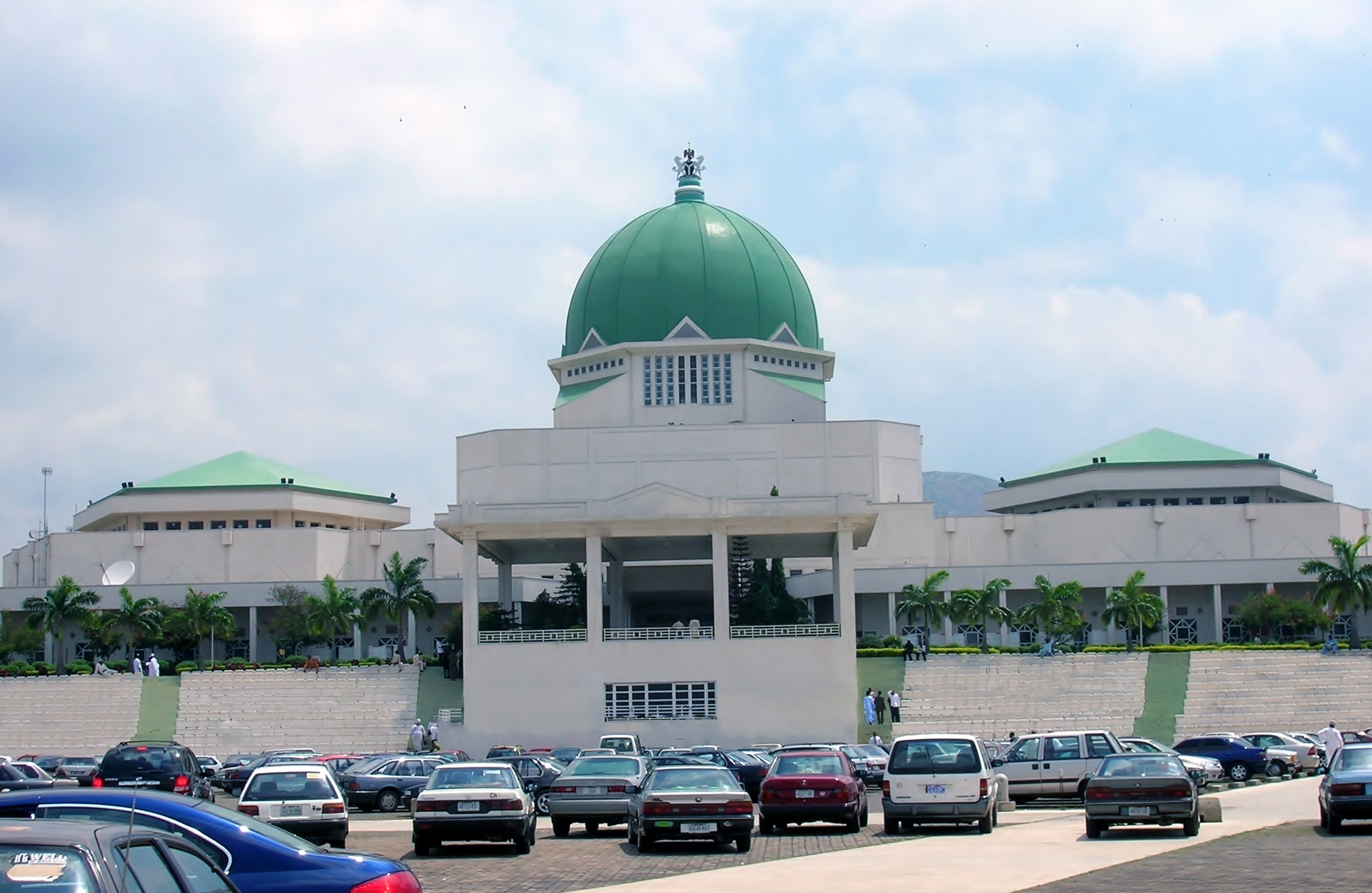
Scores of children and wives of military officers detained over an alleged coup plot yesterday staged a peaceful protest at the National Assembly, demanding a speedy trial and the release of the accused officials.
The protesters who gathered at the entrance of the National Assembly complex, moved in a slow procession while clutching placards with inscriptions such as “Don’t Kill Our Daddies,” “Detention Without Trial is Injustice,” and “Six Months of Torture: Enough Is Enough.”
Amid tears and trembling voices, the children appealed for justice and access to their detained fathers, many of whom they said they had not seen for months.
The appeal was made during a press briefing in Abuja attended by no fewer than 20 wives and several children of the detained officers, including a two-month-old baby.
The families were accompanied by human rights lawyer, Deji Adeyanju and activist Omoyele Sowore.
At the briefing, the families lamented that the officers had been held for over 160 days without trial or contact with their relatives, describing the situation as a violation of their fundamental rights.
Speaking on behalf of the families, Memuna Bashiru said the prolonged detention had thrown their households into uncertainty and emotional distress, noting that while allegations had been widely publicised, families remained in the dark about the fate of their loved ones.
The arrest of the indicted officers was first announced on October 4, 2025, by the then Director of Defense Information, Brigadier General Tukur Gusau, who disclosed that 16 officers were taken into custody for alleged breaches of military regulations and acts of indiscipline.
However, an interim investigation later suggested the existence of a clandestine network of officers, allegedly coordinated by a senior Army officer, which had begun preliminary planning for a coup.
According to the report, the alleged plot involved surveillance of key national assets, including the Presidential Villa, Armed Forces Complex, Niger Barracks in Abuja, and major international airports, with October 25, 2025, cited as the planned date for the operation.
Those reportedly in custody include Brig Gen M. A. Sadiq, Col M. A. Maaji, Lt Col S. Bappah, Lt Col A. A. Hayatu, Lt Col P. Dangnap, Lt Col M. Almakura, Maj A. J. Ibrahim, Maj M. M. Jiddah, Maj M. A. Usman, Maj D. Yusuf, Capt I. Bello, Capt A. A. Yusuf, Lt S. S. Felix, Lt Cdr D. B. Abdullahi, Sqn Ldr S. B. Adamu and Maj I. Dauda.
The alleged plot, according to findings, targeted senior government officials, including President Tinubu and Vice President Kashim Shettima.

In a statement issued yesterday, the party’s National Publicity Secretary, Mr Felix Morka, said the exercise would take place in all wards and designated centres nationwide.
He called on existing members to update their records, while encouraging new entrants to join the party through the digital platform.
“As the electronic membership registration exercise resumes in all wards and designated locations nationwide, we urge existing members to validate their membership while new members are encouraged to register and join the progressive family,” Mr Morka said.
According to him, eligibility for registration is limited to individuals aged 18 and above who possess a valid National Identification Number (NIN).
The party said the initiative is part of efforts to modernise its operations by transitioning to a digital database that would enhance record accuracy and accessibility.
Mr Morka noted that the e-registration would “digitise the party’s membership register, ensure the integrity of records, and enhance efficient access to membership data for planning and management decisions.”
He added that the move is also aimed at promoting internal democracy within the party and strengthening its commitment to democratic innovation.
The APC had previously introduced electronic registration as part of broader reforms to streamline its membership system and improve organisational efficiency.
-
 Editorial2 days ago
Domesticate FG’s Exit Benefit Scheme
-

 News2 days ago
RSU Unveils Five-Year Strategic Dev Plan …Calls For Collective Commitment To Institutional Excellence
-
 News2 days ago
DHQ Confirms Deaths Of Terrorists, Soldiers In Borno Attack
-

 News2 days ago
Tinubu Commissions Bayelsa Gas Turbine, Other Projects Today
-
Business2 days ago
Niger Delta Investment Summit Targets $5bn Inflows, 500,000 Jobs
-
Rivers2 days ago
Dep Gov Seeks Collaboration, Transparency Between RIVCHPP, PHCMB
-
Nation2 days ago
Rumuji Youth Leader Condemns Protest, Disowns Alleged Government Empowerment Claim
-

 Nation2 days ago
Haniel Jack Foundation Awards Five Rivers Indigenes Scholarship