
Business
NIMASA Bans Unregistered Vessels

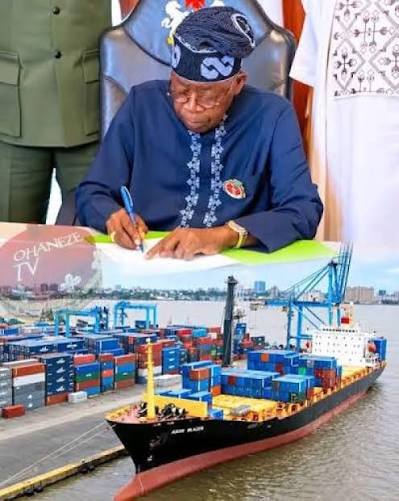
Concerned that majority of the vessels providing marine services to international oil and Gas Companies (IOCs) in their upstream operations in Nigeria are neither registered with the National Authority nor under the cabotage Act, the nation’s maritime regulator, NIMASA has come out with a raft of new measures to boost the country’s shipping tonnage.
Speaking at the OTL Africa Downstream conference in Lagos, the agency’s Director- General, Mr Temisan Omatseye called on all the IOCs to immediately review their marine service contracting process in a manner that ensures that only fully complaint cabotage vessels are contracted to provide marine services. He also directed all vessels already in the service of oil companies but not duly as required by the Act to immediately do so within a reasonable time frame from now.
The NIMASA boss specifically noted that by the requirement of the Act, all floating production and storage offshore vessels (FPSOs), drilling rigs and mobile production platforms operating in the Nigeria waters, are all required with NIMASA by virtue of section 44 of the NIMASA Act.
Omatseye reminded all IOCs operating FPSOs rigs and platforms that are not registered that they are doing so in contravention of the extant law of the land, advised them to without further delay, bring them in full compliance with the requirements of the cabotage Act.
The agency, therefore, made the following declarations, which he stated will immediately be followed by formal marine notices.
All vessels currently engaged in cabotage trade in Nigeria but are not duly registered in special register for cabotage vessels are, in the main, contravening section 22 of the cabotage Act and are therefore liable on conviction to the sanctions stipulated in section 35 of the Act, including untimely forfeiture of the vessels are hereby strongly advised to take immediate steps to comply fully with all relevant provisions of the Acts as the agency shall henceforth commerce full enforcement of its power under the Act.
Ship-owners, shipping companies and agents are hereby advised that vessels involved in the importation of petroleum products into Nigeria should henceforth desist from discharging their cargo to non-cabotage complaint vessels for onward delivery to various points and ports in Nigeria. Such ship to ship transfer contravenes section 5 and 22 of the cabotage Act, and is laible to the sanctions stipulated in section 35 of the Act.
All foreign vessels involved in the importation of petroleum products are hereby strongly advised to henceforth deal only with cabotage complaint vessels. Similarly, all lighter vessels wishing to be engaged in such operations are advised to comply fully with all relevant provisions of the cabotage Act 2003.
Omatseye also outlined new key areas of focus for the achievement of increased maritime industry value, including a scheme for accelerated acquisition of cabotage service trading assets, provision of critical maritime infrastructure to domesticate asset maintenance services and mass production of human capital to meet manning demand and other technical skills.





-

 Education2 days ago
FCE Yola Graduates 3,555 Teachers , Seeks Upgrade to University
-

 Sports2 days ago
Nigerian Trio Target Titles At PFL Africa Finals
-

 Niger Delta2 days ago
Diri Restates Stance On Lagos-Calabar Coastal Highway
-

 Niger Delta2 days ago
C’River, NUJ Pay Tribute To Late Guardian Editor
-

 News2 days ago
NDLEA Recovers Tons Of Illicit Drug Consignments In Nine States
-

 Opinion2 days ago
Checking Voter Apathy In Nigeria’s Electoral Process
-

 Politics2 days ago
2027: DICKSON’S EX-ALLY VOWS TO WORK AGAINST NDC INTEREST IN BAYELSA
-

 Politics2 days ago
2027: GROUP PLEDGES 40,000 SUPPORTERS FOR COALITION CANDIDATES IN RIVERS