
Politics
Electronic Transmission Of Results, In Whose Interest?

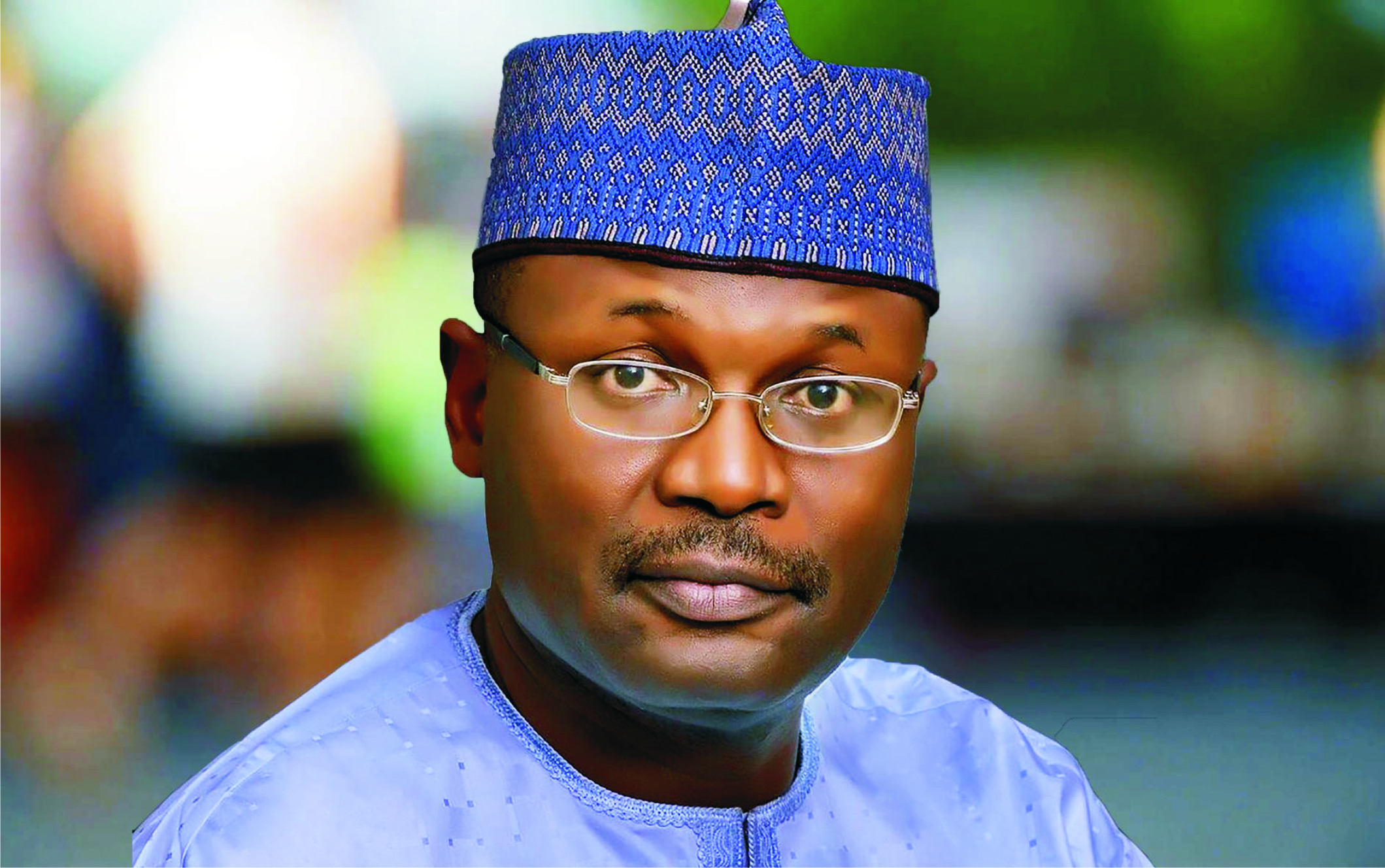
“I am not in support of electronic transmission of results. We are not ready. It is best if we are equipped and ready to secure the website that nobody can hack. If we say for 2023, we are going to transmit results electronically, is it possible? Everybody knows that it is only the person with the highest number of votes that will get it. So, results should be announced at the polling units and collation centres, where applicable. Let us not start what we cannot do.”
That was the position
proudly made public by a Distinguished Senator of the Federal Republic representing Bauchi South Senatorial District of Bauchi State.
As the agency that bears much of the difficulties and collateral consequences associated with manual collation and transmission of votes at elections, over the years, the Independent National Electoral Commission (INEC) had expressed preference for the adoption of electronic results by electronic means. Against this backdrop, Chairman of the Commission, Prof. Mahmood Yakubu, had urged the National Assembly to amend the Constitution and the Electoral Act 2010 to allow for electronic collation and transmission of results; arguing that the manual method enshrined in the laws is too cumbersome and expensive.
“We have to also address our electoral process which is manual. It is too expensive and cumbersome. The process of collating results is sometimes chaotic because the law says that you must write results manually and collate them manually right from the polling unit to the ward, from the ward to the local government, then, the state and from the state to the national level, in the case of the presidential election. “A lot has been achieved in other climes with the simple application of technology. So, the encumbrances to the deployment of technology in the transmission of election results should be removed as part of this process”, the INEC boss said as part of his submission to the Electoral Act Amendment Bill.
Last week, Nigerians’ expectation for the bill to be passed into law by the Senate was dashed as controversy arose amongst the lawmakers with the questionable appearance of a strange Section 50 (2) which completely outlaws transmission of votes by electronic means.
The contentious provision states that voting at an election under this Bill shall be in accordance with the procedures determined by the commission, which may include electronic voting provided that the commission shall not transmit results of the election by electronic means.”
Of course, the report of the Senate Committee on INEC, led by Sen. Kabiru Gaya, which prepared the bill did not make it to plenary until last Wednesday as some members of the committee threatened to raise objection on the floor of the senate unless the offensive section was expunged and the version to be laid before the senate faithfully corresponds with what they collectively signed up to.
The question Nigerians have since been asking is, who is afraid of electronic transmission of election results and why? With admirable results already recorded on the electronic transmission of election results by INEC in some previous elections including the September, 2020 Edo State governorship election, Nigerians are wondering why anyone would hinder the full scale and unfettered application of appropriate and requisite technology in our electoral system, especially seeing that the electoral body itself has not indicated lack of capacity, inability or unwillingness to undertake the process.
Yet the Chairman, Senate Committee on Army, Senator Ali Ndume, is reported to have said that electronic voting and transmission of election results will not work in the northern part of the country come 2023.
“As a member of the Senate, I am talking realistically, the issue of electronic voting is futuristic, but not realistic for us in the north, particularly. Can you do electronic voting or transmission of results without electricity? The answer is no; he said. According to Senator Ndume, who represents Borno South Senatorial District, the adoption of electronic voting and transmission of results will render the electoral process vulnerable adding that while he was determined to stand against the electronic means, himself and his people were comfortable with the writing of results in hard copies.
“What they are trying to do is to make the election vulnerable. Supposing somebody drops a virus in the process, supposing somebody desfroys the collation centre or attacks the server, what will happen?”, he reasoned, insisting that the envisaged benefits of reduced tension, killing and election rigging were untenable, people rig election only where they are already popular.
“Infact, electronic voting is more susceptible to manipulation… So, we don’t want to get involved in that, particularly we, the northern senators, because we are the ones that don’t have the facilities or the infrastructure that is required to conduct electronic voting … So you are saying that we should go through electronic voting for what? Let’s go out and vote the way we have been voting before”, Senator Ndume insisted.
Reacting to questions on the subject matter, erstwhile INEC Chairman, Prof. Attahiru Jega said, “once there is a robust software and hardware for doing so, it now brings efficiency, transparency and real time ability to see the result as they are transmitted from the polling unit to a National Collation Centre”, however adding that “there are so many challenges in our country. For one to be able to do effective, thorough electronic voting, you need the infrastructure, software and associated support infrastructure. For example, stability of electricity, extensive network coverage and robust internet facilities,” and advised Nigerians to “make haste slowly”.
Yet, individuals and stakeholder groups like the Centre for Democracy and Development (CDD) have expressed the view that the process of collating results had been usually chaotic, vulnerable to manipulation, sometimes violently disrupted and needlessly shrouded, adding that it was to cure this that the electronic transmission of results got endorsement from a wide range of stakeholders, during the public hearings embarked upon by the National Assembly as part of the process to amend the Electoral Act.
“It will eliminate interference by security agents, politicians and even thugs in the collation process. There will not be reason to kidnap electoral officials and snatch ballot materials”, Director, CDD, Idayat Hassan, said, emphasising that, “In Nigerian elections, you can win during voting but lose during collation. Electronic transmission will take away the power of the Returning Officers to influence the election process”. According to Hassan, a paper format that will serve as a back up in the electronic transmission arrangement will take care of the probable incidences of a malfunction of criminal interference.
In his own reaction, Lead Director of the Centre for Social Justice, Eze Onyekpere said those who were arguing against the inclusion of the provision of electronic transmission of results were those who haboured intentions to manipulate votes during elections.
“With election transmission, there will not be any case of results missing on the way or snatching of ballot boxes. Any politician that does not want that to happen is planning to rig election”, Auwal Rafsanjani said.
A report of the joint committee on INEC in the Senate and House of Representatives which was debated yesterday was verified to read” “Section 52 (1)” Voting at an election under this Bill shall be by open secret ballot.
“52 (2) voting at an election under this Bill shall be in accordance with the procedure determined by the Commission, which may include electronic voting.
“52 (3) The commission may transmit results of elections by electronic means where and when practicable”.
Whichever way the National Assembly chooses to swing, Nigerians just don’t want to continue with the system that threatens the lives, livelihoods, mandate and stability of the democratic system at every election season. This, they hope, will be achieved for me them through the Electoral Act Amendment Bill 2021.
By: Opaka Dokubo



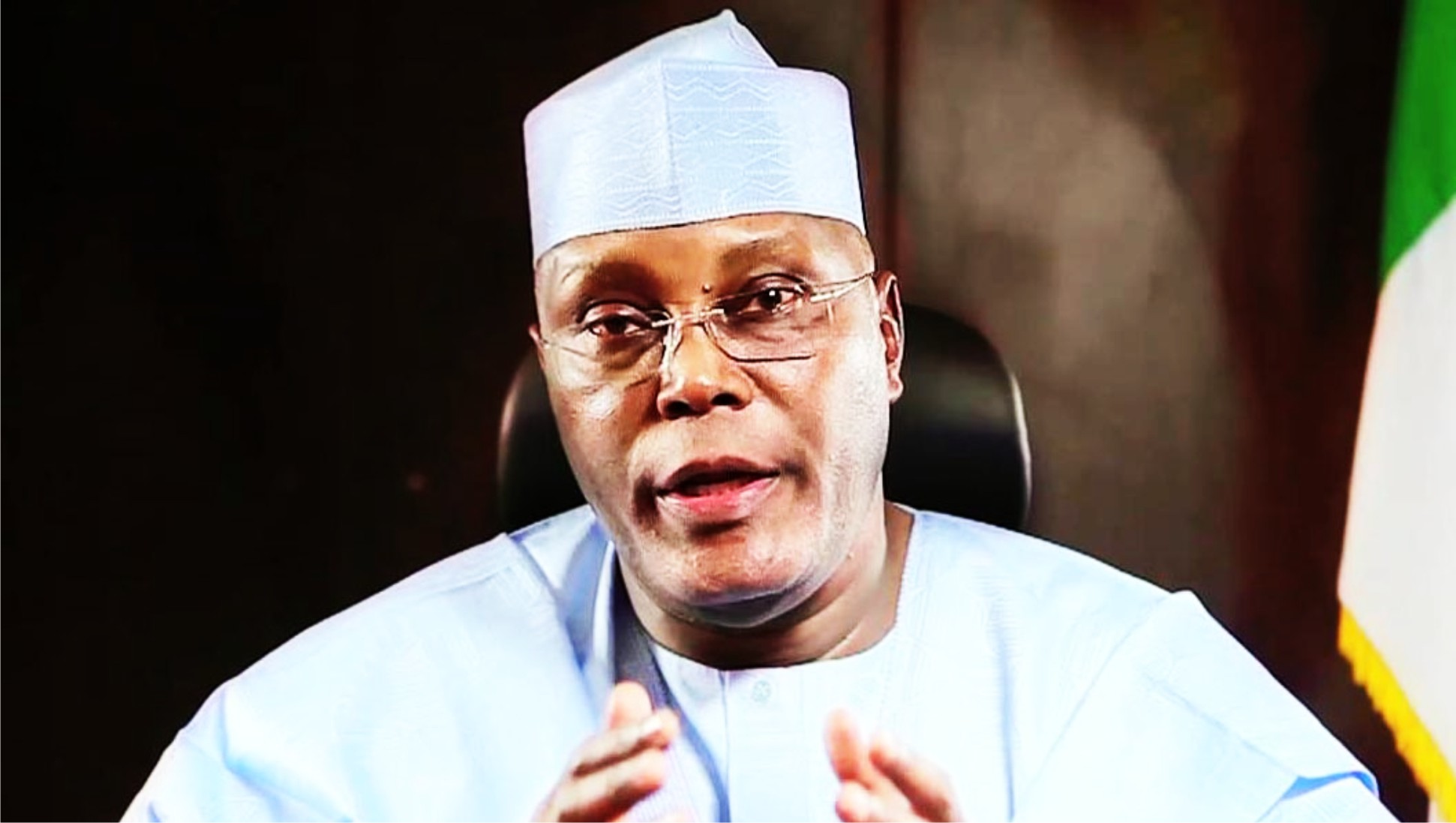
Mr Okonkwo made the announcement on his X (formerly Twitter) account on yesterday, expressing gratitude for what he called Alhaji Abubakar’s show of faith in him.
“I give God all the glory for being appointed by His Excellency Atiku Abubakar as his spokesperson. I thank His Excellency for the immense confidence reposed in me,” Mr Okonkwo said.
The politician credited Alhaji Abubakar with championing dialogue over conflict within party ranks.
He noted that the former vice president favours conversation and compromise when party associates raise genuine worries, rather than dismissing their concerns.
“Rather than take offence at associates for expressing genuine reservations about any action taken, His Excellency always opts for dialogue and compromise that engender solutions to problems,” Mr Okonkwo stated.
According to him, recent talks with Alhaji Abubakar and other ADC leaders tackled worries about South-East political representation within the limits of the Electoral Act, 2026, and the current political climate. He said the discussions produced guarantees for the region’s interests despite existing constraints.
Mr Okonkwo also acknowledged the work of Dr. Kashim Imam; former ADC National Chairman, Ralphs Nwosu; Ekene Onwuka, Alhaji Abubakar’s Senior Special Assistant on Special Duties, in preparing the party for next year’s elections. He thanked his loved ones and supporters for their support and prayers.
“I still covet your prayers for wisdom, courage, provision and protection needed to carry out this challenging responsibility, which will usher in a glorious and great Nigeria,” he added.
The appointment arrives weeks after Mr Okonkwo publicly attacked the ADC’s pick for running mate in 2027. He’d warned that choosing a vice-presidential candidate from the South-South would worsen what he sees as political neglect of the South-East, a region without a president or vice president since 1999.
Despite Mr Okonkwo’s objections, the ADC later announced former Rivers State Governor and ex-Minister of Transportation, Mr Rotimi Amaechi, as Alhaji Abubakar’s running mate following the ex-vice president’s clinching of the party’s presidential nomination.

The Red Chamber passed the bill last Wednesday after more than two-thirds of senators voted in support.
In a statement issued yesterday by the Directorate of Media and Public Affairs, Office of the Senate Leader, Senator Opeyemi Bamidele described the bill as “a child of necessity and not of political expediency as well as a product of national consensus and not of cynicism.”
The senate leader said the proposal to establish state police was a matter of urgent public importance that could not be delayed because of political interests, given the country’s security challenges.
He explained that the proposal did not originate recently but emerged from memoranda submitted to the Senate Ad-hoc Committee on the Review of the 1999 Constitution.
According to him, the proposal underwent extensive consultations and rigorous scrutiny because of its sensitive nature.
Bamidele said the National Assembly consulted widely with the Executive, the Nigeria Governors’ Forum, the Conference of Speakers of State Legislatures of Nigeria, the leadership of the Nigeria Police and other stakeholders before passing the bill.
He added that during the public hearings conducted across the six geopolitical zones in July 2025, participants overwhelmingly supported the creation of state police.
“At each level of our consultation, nearly all stakeholders embraced the State Police Bill in the light of stark realities we are facing today,” he said.
The Senate leader noted that recommendations from the Nigeria Police contributed to the bill, particularly on accountability and oversight mechanisms aimed at preventing abuse of state police by political actors.
According to him, the police’s support for the proposal underscores its national significance in tackling insecurity at the state and local levels.
Bamidele also said the bill received broad bipartisan backing in both chambers of the National Assembly.
“Even though the APC is the majority, there are members of opposition parties — PDP, ADC, NDC and Labour Party — that exercised their discretion in favour of the Bill, mainly in the national interest and not on parochial basis.
“In the Senate, for instance, 84 out of 109 members voted clause by clause in support of the Bill. This accounted for 77.06 per cent approval at the Senate alone,” he said.
He argued that national security should transcend political affiliations, saying political actors in other countries often set aside partisan interests to support initiatives that strengthen security.
Bamidele called on opposition parties to contribute constructive ideas that would promote peace and stability, adding that they have a responsibility to offer alternatives that would strengthen the country.
“Even when they disagree on some grounds, they are under obligations to provide credible and useful ideas that can make our nation better and greater. Unfortunately, they have not passed this critical test of opposition democracy,” he said.
The group also urged the National Assembly leadership to ensure that anyone found culpable is prosecuted where sufficient admissible evidence exists, while all diverted or unaccounted public funds are recovered and paid into the treasury.
In a letter dated June 27, 2026, and signed by its Deputy Director, Kolawole Oluwadare, SERAP said the allegations were contained in the Auditor-General of the Federation’s 2022 Annual Report, published on September 9, 2025.
The organisation disclosed this in a statement signed and released by Oluwadare, yesterday.
SERAP also asked Akpabio and Abbas to disclose the identities of contractors and companies, including their shareholders and beneficial owners, that allegedly received constituency project funds but failed to execute the projects.
It gave the National Assembly seven days to act on its recommendations, warning that it would institute legal proceedings should the legislature fail to respond.
“We would be grateful if the recommended measures are taken within seven days of the receipt and/or publication of this letter. If we have not heard from you by then, SERAP shall take all appropriate legal actions to compel you and the National Assembly to comply with our request in the public interest,” the letter stated.
It said, “The allegations involve several federal ministries, departments and agencies, including the Environmental Health Registration Council of Nigeria (EHORECON); the Federal College of Animal Health and Production Technology, Volm; the Federal Polytechnic, Udana; the National Agency for the Prohibition of Trafficking in Persons (NAPTIP); and the National Institute of Legislative and Democratic Studies (NILDS).
“The Auditor-General identified numerous cases of payments into private bank accounts, contracts awarded without due process, payments for contracts not executed or services not rendered, undocumented expenditures, inflated contracts, procurement irregularities and failures to account for public funds, recommending in each case that the funds be recovered and remitted to the treasury.
“According to the 2022 audited report, contained in pages 367 to 396, the Environmental Health Registration Council of Nigeria (EHORECON or Council) Abuja paid over ‘N22 million [N22,944,565.16] into the private account of some members of staff of the Council from the Constituency Projects Fund Account.
“There ‘was no evidence of the utilization of the funds and no explanations on the purpose for the payment of such amount into the individual accounts.”
SERAP added, “The Council (EHORECON) also in 2021 ‘awarded suspicious consultancy contracts of over N12 million [N12,030,818.29] for the development of Modern Abattoirs in Kebbi State and the supervision of 7 projects in Kebbi, Jigawa, and Headquarters Abuja.
“The money was to ‘produce bills of quantity, architectural design, structural design, mechanical design, and electrical designs for the contracts and supervision.’ But ‘the ‘items could not be found.’”
Altogether, SERAP said the Auditor-General’s 2022 report alleged EHORECON paid more than ?1.8 billion in constituency project funds through questionable transactions.
For the Federal College of Animal Health and Production Technology, Vom, SERAP said the institution “in 2022 reportedly ‘paid over N279 million [N279,700,500.00] to 3 contractors to empower and train youths in selected vocational areas in Borgu and Kontagora, Niger State, train women and youths in entrepreneurship in Niger East Senatorial District and to train youths and women in agro production and self-reliance in Barki Ladi/Riyom Federal Constituency, Plateau State.
“But the money was paid to the contractors without any document.’”
Other irregularities involving the college include another ?279.7 million in mobilisation fees allegedly paid without documentation, and more than ?629.4 million paid to unqualified contractors for various constituency projects without evidence of due process, contract advertisements or details of the contractors.
SERAP further alleged that the Auditor-General’s report identified multiple financial irregularities involving the Federal Polytechnic, Ukana, Akwa Ibom State, including over ?407 million allegedly paid as mobilisation fees without supporting documents, more than ?399 million paid to unqualified contractors, contracts allegedly inflated by over ?192 million, over ?279 million paid for projects not fully executed, ?50 million allegedly paid for an unexecuted borehole project, and more than ?83 million disbursed without the required documentation or approvals.
It also alleged that NAPTIP reportedly irregularly awarded contracts worth over ?21.8 million, paid more than ?176.8 million for logistics and consultancy services without supporting documents, and disbursed over ?89.6 million and ?4.4 million for projects that were allegedly not executed.
The report also alleged that NILDS failed to submit audited financial statements for 2012 to 2022, did not remit over ?15 million in stamp duties, and spent ?1.6 million without authorisation from the Office of the Accountant-General of the Federation.
SERAP said the report recommended the recovery of the affected funds and their remittance to the treasury.
It argued that corruption in constituency projects disproportionately affects poor and vulnerable Nigerians by diverting resources meant for public services and development.
It added that the National Assembly, in exercising its oversight responsibilities, should demonstrate leadership by ensuring accountability in the management of constituency project funds.
The organisation further argued that the allegations, if established, would amount to breaches of the Constitution, the Fiscal Responsibility Act 2007 and the Public Procurement Act 2007, which require transparency, accountability and due process in the management of public resources.
-
News3 days ago
Rivers Court Jails Man Seven Years For Defiling Minor …Directs N5 Million Upkeep For Victim
-
News3 days ago
Alleged Coup Plot: DSS Docks Five For Hiding Sylva’s Whereabouts
-

 News3 days ago
FG To Replace NYSC Khaki With Adire
-
Niger Delta3 days ago
24 Nigerian Universities Make 2026 THE Rankings … 4 S’South Versitieis Pull Through
-
News3 days ago
BOI Unveils Maiden Impact Report, Disburses N644.9bn In 2025
-
Women3 days ago
NAWOJ Seeks Partnership With Hotel Presidential On Summit
-

 News3 days ago
Fubara Seeks Full Resolution Of Bille Gas Leakage …Pledges Upgrade Of Community Health Centre
-
Niger Delta3 days ago
‘Ogbolo ’26’: Bayelsa Community Revives Heritage, Strengthens Unity