
Business
FG Plans To Buy Locally Assembled Cars, Says Osinbajo

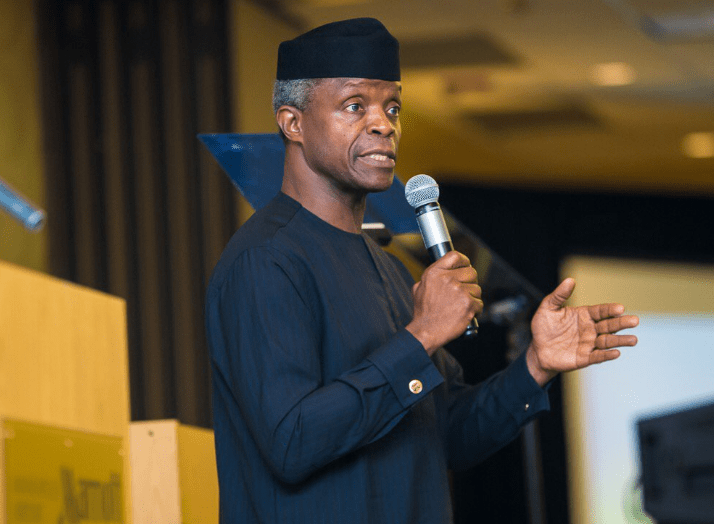
The Federal Government has disclosed its plans to buy locally assembled cars rather than imported foreign ones.
President Muhammadu Buhari disclosed this in his speech delivered virtually by Vice President Yemi Osinbajo, on Monday, at the opening session of the 26th Nigerian Economic Summit Group Conference themed ‘Building partnerships for resilience’.
Responding to the issue of import duties raised at the summit during the speech presentation, the Vice President explained that the reduction of import duty on vehicles would help cut down transportation cost.
“The point of the reduction in levies on motor vehicles, commercial vehicles for transportation is to reduce the cost of transportation by reducing the cost of vehicles,” Osinbajo said.
He added, “With subsidy removal and the increase in fuel price and the pass-through to food prices, transportation costs had to be reduced. Now the automotive policy is directed at localising the production of vehicles.
“So the logic was increase the duty and levies so that local production becomes more competitive. But the annual demand for vehicles is about 720,000 vehicles per year. Actual local production is 14,000 vehicles a year.”
He noted that the current rate of production would not meet the serious national needs and this would mean higher prices of vehicles and greater strain on other sectors of the economy that depend on transportation.
Osinbajo, however, stated that the government was not giving up on the local auto industry.
He said, “Two important things to note; the first is that we still have relatively high duty at 35 per cent; so, there is still a disincentive for importation.”
Osinbajo added that the government was also promoting a policy of buying only locally manufactured cars.



-

 Editorial2 days ago
Enough Of Xenophobic Attacks On Nigerians
-

 Nation2 days ago
RSU, Otonti Nduka Foundation Holds Centenary Conference, Unveil Book on Values in Nigeria
-

 Oil & Energy2 days ago
Rivers PETROAN Elects 12-Member Executive
-
Politics2 days ago
APC Group Protests Ex–Presidential Aspirant’s Disqualification From Rivers Senatorial Race
-
Politics2 days ago
Reps Speaker Secures APC Return Ticket For Fifth Term
-

 Sports2 days ago
Oparaodu Urges Rivers United To Win Katsina United
-

 Environment2 days ago
MOSOP – Tinubu Not Sincere With Ogoni People For Oil Resumption
-
Politics2 days ago
Primaries: Diri Lauds APC’s Unity, Cohesion In Bayelsa