
Opinion
Enough Of The Brutality

Following the directive for lockdown of Lagos, Ogun States and the FCT, by President Muhammadu Buhari and the variety of restrictions imposed by many state governors to contain the ravaging COVID-19 which saw the police and army called out to enforce them, the Police authority issued a statement directing state commissioners of police to ensure members of the force carry out their duty with professionalism.
Part of the statement reads, “The Inspector General of Police, IGP M.A. Adamu, NPM, mni has cautioned officers and men of the police currently deployed for the enforcement of the lockdown and social restriction orders to ensure that the rights of Nigerians are not infringed upon under any pretext.
“Also, persons on essential duties, duly exempted from the restriction orders, should be accorded due courtesies and unfettered access to and fro their place of duty. The IGP notes that the global community is now in extra-ordinary times, with the lockdown taking its tolls on every component of our national life. Therefore, all police officers deployed for the enforcement of these restriction orders must be professional, humane and tactful and must show utmost respect to the citizenry”.
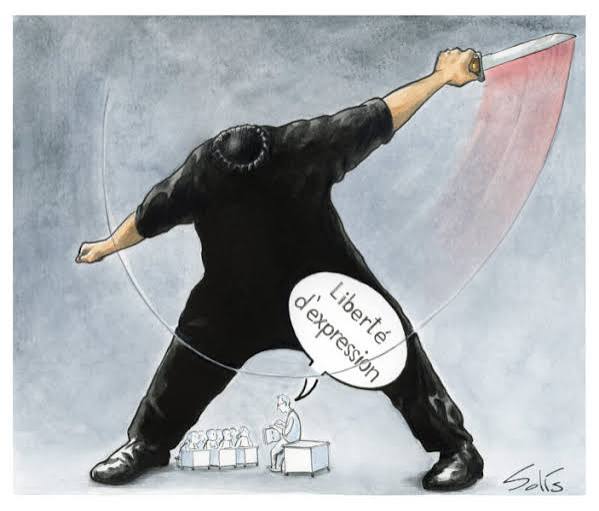
Expectations were high that this time, the police and other security forces which have a reputation for brutality would get it right; that the people statutorily empowered to protect the citizens would do exactly that instead of seeing them as ‘bloody civilians’ that must be eliminated at any slightest provocation.
Incidentally, the hope for an improved attitude by the security force, especially during the ongoing lockdown, has been dashed as news of police brutality and abuse of citizens’ human right has become the order of the day. About two weeks ago, we heard the story of the killing of two young men at Nkpor, Anambra State, allegedly by some police for flouting the lockdown order.
Last weekend, the life of another man, Ifeanyi Arunsi, was snuffed out by some drunken police officers at Ebem Ohafia, Abia State. The disgraceful incident sparked riots, freeing of suspects in the police cell and burning of police vehicles and other public properties by angry youth. In other parts of the state and across the nation, series of similar incidents have occurred within the short period of the lockdown.
A report by the National Human Rights Commission (NHRC) on COVID-19 lockdown enforcement on April 15 indicated that there were eight documented incidents of extra-judicial killing leading to 18 deaths in Kaduna, Abia, Delta, Niger, Ebonyi and Katsina States. The commission noted that whereas COVID-19 had led to the death of about 11 patients (as at that time), law enforcement agents had extra judicially executed 18 persons to enforce the regulations.
Not even journalists and women are spared in the hands of our ruthless security agents. The Rivers State Council of the Nigeria Union of Journalists (NUJ), few days ago, issued a press release, condemning the “unwarranted assault and flogging of a staff of Rhythm/ Silverbird television” by soldiers. Mr. Nkan-kpo Johnson, a videographer, was said to have been molested and inhumanly treated at Ikoku axis of Port Harcourt by military men deployed to enforce the lockdown order by the state government.
This is certainly not the way to go. Journalists play a key role in the fight against the dreaded pandemic. They put their lives on the line to report all efforts towards the containment of the disease. Even without personal protective equipment being provided, or any palliative item extended to them, they strive to attend all COVID-19 programmes, including the burial of a dead patient.
Therefore, what they deserve is appreciation and commendation instead of humiliation, assault and abuse. Our security personnel should see journalists and other persons playing one role or the other in the fight against Coronavirus as partners towards the ultimate aim of saving the lives of the people instead of seeing them as adversaries.
While citizens are encouraged to obey the lockdown rules which, by the way, is for their own good, our law enforcement agents should apply a great level of human face at a time like this when there is hunger, tension and untold hardship everywhere. There is no doubt that if the relief materials promised by government over three weeks ago had gotten to majority of the poor masses across the nation, the urge to go out in search of food will be reduced and the lockdown will bear more fruit.
Meanwhile, reports have it that the same security personnel who torture and kill some people for flouting lockdown orders are still the ones that receive gratification from travellers and aid illegal movement of persons from one location to another, thereby sabotaging the essence of the confinement.
It is, therefore, high time the IGP and other security apparatchiks called their men to order. They should be made to follow the laid down procedure of apprehending culprits and handing them to prosecutors instead of taking laws into their hands.
The truth is that the persistent attitude of killing, torture, inhumane and degrading treatment, unlawful arrest and detention, violation of people’s right and breaking of the laws they are meant to enforce will only continue to tarnish the image of the forces. When the Nigerian Police was ranked the worst globally in 2018, majorly for lacking the capacity to provide internal security, the police through its then spokesperson, Jimoh Moshood, refuted it, describing the report as misleading and a misrepresentation of facts and figures but daily activities of some men of the force continue to lay credence to it.
And some believe these crimes and human right abuses continue to occur because the perpetrators are hardly punished. Yes, in the prevailing lockdown circumstance, Lagos State police command is said to have arrested and tried an officer who was seen in video extorting money from a motorist. In Akwa Ibom State, an officer who assaulted a medical doctor during the restriction period was reportedly demoted. While this is commendable, more punitive measures need to be meted to erring uniform men to serve as deterrent to others. The IGP and various military heads should take drastic actions to curtail the excesses of their men and thoroughly sanitize the system. There should be training and reorientation of the police and military especially in the area of civil relationship. They should be made to realize the sacredness of human life and that only God has the power to take life whenever He wishes.
Calista Ezeaku



Quote: “Ogoniland does not
The latest attack by Chief
Instead, the gathering and
The proposal for a unified
The question should be: who
It is easy to criticise
The people are looking beyond
onest people can reach
Society must therefore
Quote: “Privilege should
There is an old saying that
While motivations cannot
A person who benefits from a
This is why citizens should
We must not assume that
By: Michael Abraham
Quote:”Although the Federal
The recent outburst by the
The senator also alleged
They connect ports, airports,
To address these challenges,
Rwanda and Morocco, for
FERMA should also prioritize
Many Nigerians have asked
-

 News1 day ago
RSG Targets Nine Million Residents in Mosquito Net Distribution Campaign
-

 Oil & Energy1 day ago
Aiyedatiwa Signs New Electricity Bill
-

 Oil & Energy1 day ago
NLNG Commissions Research And Innovation Centre In RSU
-

 Maritime1 day ago
Marine Minister Commends President Tinubu On NPERA Bill Assent
-

 News1 day ago
KenPoly Holds Eight Convocations, August 29
-

 News1 day ago
RSG Begins Another Phase of Projects Commissioning Today
-

 News1 day ago
RMAFC Completes Revenue Sharing Review, Proposes New Pay
-

 Maritime1 day ago
NAGAFF Petitions IGP Over Alleged Maritime Police Harassment