
News
S’ Court Adjourns Ihedioha, Zamfara’s Fresh Appeals To March 2

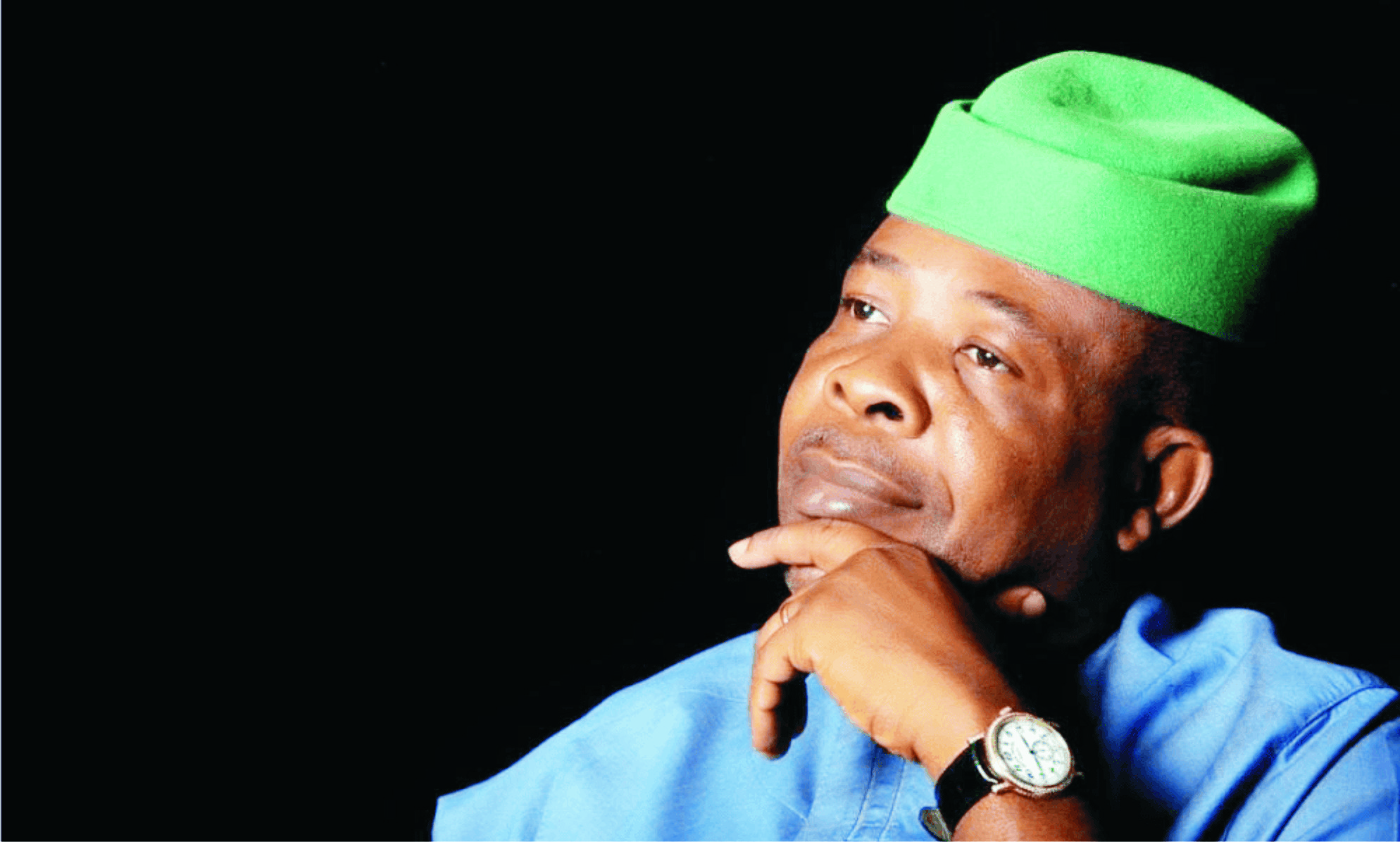
The Supreme Court, yesterday, adjourned the hearing of the fresh application that sacked the governor of Imo State, Hon Emeka Ihedioha, filed to be restored back to the office, till March 2.
The development came on a day the Chief Justice of Nigeria, Justice Tanko Muhammad, assumed the headship of a seven-man panel of justices of the apex court that would hear the matter.
Also, yesterday, the Supreme Court fixed March 2 to review its judgement that sacked all candidates of the All Progressives Congress (APC) that won various positions in Zamfara State in the 2019 general election.
A five-man panel of justices of the apex court headed by the CJN, Justice Tanko Muhammad, adjourned hearing of the application for a review of the judgement, after it noted that some of the parties were not served.
Aside from the CJN, other justices that participated in the proceedings that led to the January 14 judgement of the apex court that removed Ihedioha and declared Senator Hope Uzodinma of the APC, also made a comeback in the panel.
The other justices in the panel are Kudirat Kekere-Ekun who delivered the lead judgement that sacked Ihedioha, Justices Sylvester Ngwuta, Umani Abba-Aji, Aminu Sanusi, Kayode Ariwola and Amina Augie.
When the case was called up, yesterday, Ihedioha’s legal team led by a former Attorney-General of the Federation and Minister of Justice, Chief Kanu Agabi, SAN, applied for a short adjournment to enable them to respond to motions that were served on them.
Neither Uzodinma’s lawyer, Mr Damian Dodo, SAN, nor that of the Independent National Electoral Commission (INEC), opposed the request.
Consequently, the CJN-led panel deferred the hearing of Ihedioha’s request for review of its judgement till March 2.
It would be recalled that the panel had in its verdict that is being challenged by Ihedioha and his party, the Peoples Democratic Party (PDP), declared Uzodinma winner of the Imo governorship contest after it noted that some valid votes that accrued to him in 388 polling units were illegally excluded during the computation process.
It held that if the excluded votes were added, Uzodinma, who was the appellant, would have secured the majority of valid votes cast at the governorship election.
The apex court, therefore, ordered INEC, which was the 1st Respondent in the matter, to immediately issue a fresh certificate of return to Uzodinma who came fourth in the election.
Dissatisfied with the decision, Ihedioha, in his fresh five grounds of appeal, contended that the Supreme Court lacked the jurisdiction to declare Uzodinma governor in the absence of any proof that votes ascribed to him met the mandatory geographical spread.
Reacting, the APC and PDP, yesterday, aired their opinions regarding the adjournment of the Supreme Court review on the January 14, 2020 judgement till March 2, as requested by the PDP, to respond to motions that were served on them by the APC.
According to the Imo PDP Publicity Secretary, Damian Opara, “APC and Senator Hope Uzodinma filed a motion that was served on the applicants.
“Normally, when you file such motion, they need time to study and respond to it. How can somebody say that they were not prepared in a matter they filed long time ago. The lawyers needed time to study and reply them. We are fully prepared for the matter”.
When asked if his party was in high expectation, he said: “Well, I am not a lawyer but the little I know is that justice will prevail.”
On the other hand, the Imo APC Publicity Secretary, Enyinnaya Onuegbu, said, “The reasons for asking for adjournment was that the processes were still coming in. Maybe, they have filed or they were still supposed to file.
“Yesterday, they filed and served a fresh application, which apparently, the respondents have not responded to.
“What I mean is that the reply that the Senator Hope Uzodinma and APC served on Agabi, probably, the lawyer to the applicant would want to serve further responses.
“But the only thing is that why will they ask for a hearing notice despite knowing that all the processes have not come in. They are asking for a hearing notice and inconvenience the party on the other side.
“But it is allowed for the party on the other side to ask for an adjournment. You see, we did not oppose the application; we conceded to it. Normally, the courts do not have any choice than to consent to such an adjournment”.
When asked if APC was still in high expectation, he said: “We have the judgement of the Supreme Court. The governor has been sworn-in and adjudicating the function of the office, including payment of the civil servants.
“He paid January salaries by January 26; the governor has allowed most unusual contractors appointed by the past administration to continue their contracts.
“We are already in the office, so we do not expect any change because the time to contest any election petition matter in court has come and gone.”
On the issue of the governor yet to arrive in Imo, Onuegbu said: “The governor accompanied the president to Ethiopia, for four to five days; the governor by law is expected to attend Federal Executive Council (FEC) meeting on Wednesday.
“The Imo State has a liaison office in Abuja, which is why wherever the governor is that is where the Government House is. The functions of government run smoothly with other appointees and the civil servants. Yes, we should expect the governor home.”
On the Zamfara case, the fresh application was brought by a faction of the APC led by a former governor of the state, Abdulaziz Yari.
Counsel to the Applicants, Chief Robert Clarke, SAN, said his clients were challenging the verdict of the apex court on the basis of its consequential orders that handed victory to candidates of the PDP in the state, which he said rendered the entire judgement a nullity.
The Applicants argued that reliefs the Supreme Court granted in favour of the PDP and its candidates were extraneous to issues that aggrieved members of the APC brought before it for adjudication.
In their fresh application marked SC/377/19, they argued, “That the Consequential Orders made by this Honourable Court in 5 appeals have made non-parties to the appeal to unjustifiably benefit from the outcome of the appeal contrary to age-long decided authorities by this same court, hence, making these non-parties to reap from where they never sowed.
“That the teeming electorate in Zamfara State have been unfairly and unjustifiably denied or deprived of their natural or ordinary outcome of the votes cast by them.”
However, Chief Mike Ozekhome, SAN, who appeared for the Senator Kabiru Marafa-led faction of the APC in Zamfara State, told the apex court that he filed a preliminary objection to challenge the competence of the fresh application.
The Independent National Electoral Commission (INEC) was cited as the 179th Respondent in the matter.



The Rivers State chapter of the All Progressives Congress Christian Leaders Forum has expressed strong confidence in the capacity of All Progressives Congress (All Progressives Congress) candidates in the state to deliver effective governance if elected into office in the coming elections.
The State Coordinator of the forum, Archbishop Lucky Aroh, made this known during a breakfast and thanksgiving meeting held in Port Harcourt, where leaders gathered to pray for the stability of the party and the safety of its candidates ahead of the 2027 general elections.According to him, the meeting was convened to seek divine intervention for peace, unity, and security among APC candidates across Rivers State.
“Today we are praying for APC stability in Rivers State and the security of our candidates that have been elected to contest the 2027 elections. It is a breakfast meeting,” Aroh said.
He further expressed optimism that the party’s candidates would not disappoint the people if entrusted with leadership responsibilities.
“They will not fail when elected into office. We are here as fathers of the land to let them know, and I must tell you the truth that these are the authentic people that will do well in Rivers State,” he added.
Speaking earlier, the National Chairman of the forum, Professor Olanrewaju Abraham, commended the Rivers State chapter for organizing the programme, noting that the national body of the forum believes strongly in the power of prayer.
He stated that political leadership provides an opportunity to influence society positively, including advancing moral and spiritual values, while expressing confidence that APC candidates at all levels would emerge victorious in the upcoming elections.
Also speaking, the Rivers State Women Leader of the APC, Hon. Darling Amadi, praised the forum for its commitment to prayers for peace, stability, and the protection of party candidates.
Represented by the Deputy Women Leader of the party in the state, she described the initiative as commendable and urged other political and support groups within the party to emulate the gesture in promoting unity and stability.
By: John Bibor, Menebe Emmanuel & Fortune Paibi
Prominent businessman and philanthropist, Elder Anthony Osagwe-Ogo, was celebrated in grand style as he marked his 70th birthday anniversary, with distinguished Nigerians, business leaders, and golf enthusiasts gathering to honour his remarkable contributions to society.
The colourful celebration took place at the Port Harcourt Golf Club, where friends, associates, and well-wishers converged to pay tribute to the revered elder statesman.
Chairman of the occasion, High Chief (Dr.) Ikenna Okafor, described the celebrant as a detribalised Nigerian whose generosity, humility, and commitment to humanity have earned him admiration across different communities and backgrounds.
According to Dr. Okafor, Pa Osagwe-Ogo’s impact on society and the development of his community remains unparalleled. He noted that members of the golfing community are proud to be associated with a father figure who consistently promotes the welfare and well-being of those around him.
He further stated that the history and growth of the Port Harcourt Golf Club cannot be told without acknowledging the significant role played by the celebrant, whose wisdom, encouragement, and leadership have helped sustain the club over the years.
“We are here to celebrate a man who has impacted humanity positively, a peace-loving individual and an epitome of hope for the younger generation. We pray to emulate his virtues. Today, we celebrate a bridge-builder, a trailblazer, and an iconic leader whose life continues to inspire many,” Dr. Okafor said.
He expressed delight at the large turnout of guests from various walks of life, describing it as a testament to the respect and affection Pa Osagwe-Ogo commands within and beyond Rivers State.
In his response, the celebrant, Pa Anthony Osagwe-Ogo, expressed profound gratitude to God for preserving his life and granting him the privilege of attaining the milestone age of 70.
He also thanked members of the Port Harcourt Golf Club, family members, friends, and associates for identifying with him during the celebration and for their unwavering support over the years.
The event featured the cutting of the birthday cake, presentation of awards to deserving members of the club, goodwill messages, and moments of celebration among guests.
The ceremony was attended by notable personalities from the business community, the golfing fraternity, and other sectors, all of whom joined in celebrating the life and legacy of the respected elder statesman.
Rivers State Governor, Sir Siminalayi Fubara, and the Permanent Secretary of the Rivers State Ministry of Information and Communications, Dr. Honour Kuru Sirawoo, have been honoured with awards of recognition in connection with the 2026 Democracy Day celebrations held in Port Harcourt.
The awards, which formed part of activities marking Nigeria’s Democracy Day on June 12, were formally presented on Tuesday at the Ministry of Information and Communications in Port Harcourt.
Presenting the awards was Hon. Abdul Hameed Oladipupo Alli, popularly known as “Mr. Nigeria,” Publisher of Asiwaju Trumpet Magazine and Achievers World International Magazine.
Governor Fubara was recognised for his efforts in sustaining peace, stability, and a conducive political atmospherJohn Bibor / Menebe Emmanuel / Fortune Paibie in Rivers State. The organisers noted that his administration has fostered harmony and strengthened civic participation across the state.
Dr. Sirawoo, on the other hand, was honoured for his exemplary administrative leadership and significant contributions to effective information management within the Ministry of Information and Communications.
Representing Dr. Sirawoo at the presentation ceremony, Dr. Christian Davies received the award on his behalf and expressed gratitude for the recognition. He described the honour as a reflection of Dr. Sirawoo’s unwavering commitment to professionalism, excellence, and dedicated public service.
Dr. Davies assured the organisers that the award would be formally conveyed to the Permanent Secretary.
The event also featured the presentation of commemorative publications highlighting major governance and civic milestones in Rivers State, including Easter celebrations, Workers’ Day activities, the Governor’s third anniversary in office, and Democracy Day programmes.
Organisers of the awards commended the Rivers State administration for what they described as sustained peace, political stability, and improved civic engagement, noting that these achievements have contributed significantly to the state’s continued development.
By: Jessica Sambol