
News
We ‘re Not Against New Minimum Wage -Govs

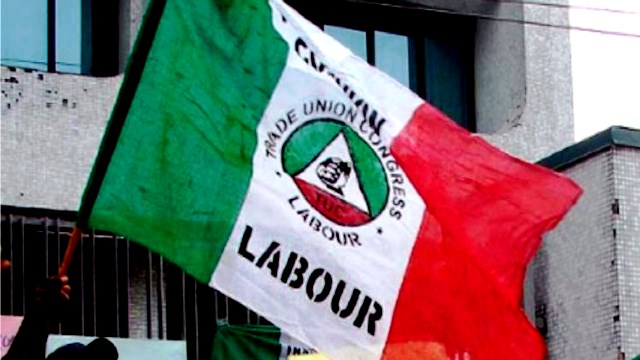
The 36 state governors under the aegis of Nigeria Governors’ Forum, NGF said yesterday that they were not in any way opposed to new minimum wage for workers in the country.
Rising from a meeting in Abuja yesterday, the governors who noted that the Organised Labour was right to agitate for salary increase, however said that their concern is the ability to implement it and pay, adding that the problem was not just about agreeing to a figure, but the availability of resources to meet up with the commitment.
Speaking to journalists after the meeting in Abuja, Governor of Zamfara State and Chairman of NGF, Abdulaziz Yari stressed that with the present minimum wage at N18,000, many states were struggling to pay with some of them already hugely indebted.
The Organized Labour is asking for N30,000 whereas the government is offering N24,000. Yari said: “Like we said, we can do minimum wage on any amount we need but the issue is the ability to pay the minimum wage agreed in the last meeting which the Minister of Labour attended with the negotiation committee and also the committe that we also set up.
“We made it clear that we are not against the upward review of salary, we are in tandem with the NLC to get the minimum wage reviewed but the problem we are having is the capacity to pay what is agreed
. “As at today, most of the states are struggling to pay the N18,000 minimum wage. Some states are paying between 35 to 50% of the minimum wage and some states are owing salary arears.
“If we say we are going to do an upward review of the minimum wage, it is not about only reviewing it but how we are going to get the resources to cater for it.” Meanwhile, the National President of Nigeria Labour Congress (NLC), Comrade Ayuba Wabba, was invited to brief the Forum on states’ performance in the use of London and Paris Club refunds. It would be recalled that the Federal Government disbursed the fund to states with the condition to use larger percentage of the money to pay workers’ salaries.
Speaking further, Yari said, “Also, sometimes ago, London and Paris Club refund was paid and part of the agreement was that we will deal with the issues of workers and it was a serious agreement that we signed with the Minister of Finance and the Federal government that the larger chunk of the money will be channeled to payment of salaries.
“Some states are in the process but one of the conditions critically accepted is to ensure that this funds was utilised acccording to the agreement. “We invited the National President of the Nigerian Labour Congress to give us a details on how some states have performed. Some states that are not up to date have signed an MOU with the NLC and their representatives in states on how they can overcome the issue of salary arears and that has been done and it will be taken to the CBN so that those states will be paid.”
Also speaking to reporters after the meeting, Wabba who insisted that workers cannot continue to provide services on empty stomach, said that even though Labour was prepared to dialogue on the minimum wage issue, but there is limit to it. Wabba said:
“All through history of minimum wage in Nigeria, it has never been given on a platter of gold. We thought the situation has changed, things have improved, and therefore, through collective bargaining and dialogue, we will be able to reach a compromise.
“If we do that, fine and good. Where that is not done, you should also know that no worker can continue to work on an empty stomach.
That has been our message. We will continue to dialogue but there is also a limit to dialogue.”
The NLC boss noted that the challenge in the Nigerian economy especially the eroding of the purchasing power of the worker caused by continuous devaluation of the naira, the exchange rate, the increase in pump price of petrol and electricity tariff, have affected the Nigerian worker. Wabba who observed that by law, the minimum wage ought to have been reviewed as far back as 2016 as previously agreed, said, “All these factors put together necessitated the NLC and organized Labour to demand for a new minimum wage which is in tandem with best global practice.
“What we are telling the Governors is that the minimum wage is due and everybody must be committed to it, committed to it in the sense that every state was given an opportunity to…when the (negotiation) committee finished its work, we wrote individually to the state governments to send in input.
“Twenty one states responded in writing. Some quoted figures, some said, whatever is agreed, they are going to pay. Some have made statements that they are going to pay. “So, for anybody to come under a platform and say ‘well, we have issue with that,’ I think the best thing is to go back to their states, put your workers together and say ‘I will not be able to pay.
That is what I think is honourable, that is what I think is supposed to be done.” However, the Labour leader said that he pleaded with the governors that they should understand that the workers must earn a living from their salary as they provide critical services in the system.



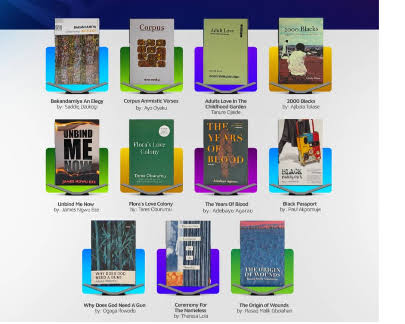
Eleven outstanding poetry collections are now in the race for the $100,000 Nigeria Prize for Literature, arguably Africa’s biggest and most prestigious literary prize.
The 11 collections were selected from a total of 223 entries received for this year’s competition.
Chairman of the Advisory Board for the Prize, Prof. Akachi Adimora-Ezeigbo, who announced the longlist, said the emergence of the 11 collections marks a significant milestone in this year’s competition and reflects the exceptional quality, creativity and diversity of contemporary Nigerian poetry.
According to her, the longlisted titles, arranged in alphabetical order, are: Adult Love by Tanure Ojaide; Bakandimiya by Saddiq Dzukogi; Black Passport by Paul Akpomuje; 2000 Blacks by Ajibola Tolase; Ceremony For The Nameless by Theresa Lola; Corpus: Animistic Verses by Ayo Oyeku; and Floral’s Love Colony by Tares Oburumu.
Other successful entries are, The Origin of Wounds by Malik Gbolahan; The Years of Blood by Adebayo Agarau; Unbind Me Now by James Ugwu Eze; and Why Does God Need a Gun by Ogaga Ifowodo.
Prof. Adimora-Ezeigbo described the announcement as an important stage in the 2026 edition of the prize.
She noted that the collections demonstrate the remarkable capacity of poetry to illuminate human experience through thoughtful reflection, cultural memory and artistic expression.
According to her, the works revisit history while interrogating dominant historical narratives and exposing the forces that shape collective identities and social relations.
She stated that despite their varied emphases, the books share a commitment to exploring the endurance of individuals and communities in the face of violence, oppression and social fragmentation.
On style and language, Prof. Adimora-Ezeigbo said the books display an impressive diversity of poetic techniques marked by lyrical intensity, symbolic depth and artistic innovation.
“Many employ densely poetic, allegorical, and elegiac modes that invite multiple layers of interpretation, while others draw extensively on folklore, oral traditions, and contemporary realities to create a compelling fusion of past and present. Their language is generally fluid, evocative, and aesthetically refined, relying on vivid imagery, emotional resonance, and intellectual sophistication to communicate complex ideas. These works demonstrate how poetic language can illuminate social realities; challenge established perspectives and give voice to both individual and collective experiences.
“The next stage will demand a closer reading of each work, with attention to language, form, originality and lasting literary value,” she stated.
The Board chairman commended the judges for their painstaking work and reaffirmed the Advisory Board’s commitment to a credible process, literary excellence and the promotion of a strong reading culture.
With the announcement of the 11-title longlist, the competition now moves to the next phase, with a shortlist of three expected in August and the winner to be announced in October.
Sponsored by the Nigeria Liquefied Natural Gas (NLNG), The Nigeria Prize for Literature carries a cash award of $100,000 for the author of the winning book.
Now in its 22nd year, the prize rotates annually across four genres – prose fiction, poetry, drama and children’s literature – with the 2026 edition devoted to poetry.
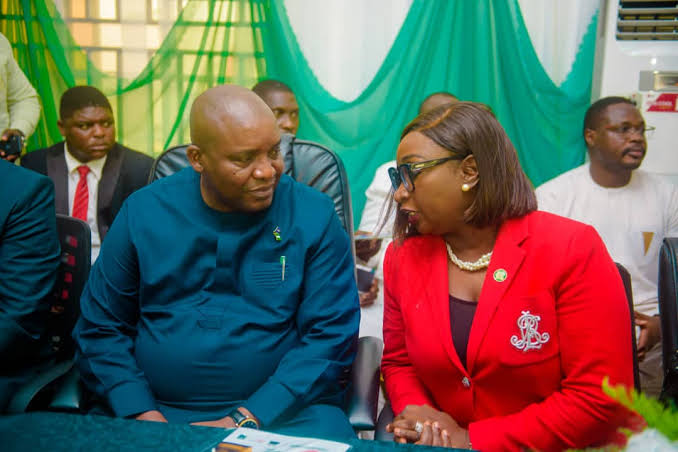
The Rivers State Government has applauded the Nigerian Medical Association (NMA), Rivers State Branch, for its steadfast dedication to advancing medical excellence and contributing significantly to healthcare development in the state and the country at large.
Speaking at the 2026 Annual General Meeting and Scientific Conference of the NMA held in Port Harcourt last Wednesday, the Secretary to the State Government, Dr. Dagogo Wokoma, described the association as a vital partner in the quest to improve healthcare delivery and outcomes.
Wokoma, according to a statement by the Head of Information and Public Relations Unit in his office, Julian Masi, noted that the NMA’s sustained advocacy for professional standards and quality medical practice has continued to impact positively on the healthcare sector and national development.
He said the conference theme, “Medical Practice in Nigeria: The Past, the Present and Quo Vadis,” offers a valuable platform for stakeholders to evaluate the progress made in the health sector, examine present realities, and develop practical solutions for future challenges.
He paid tribute to Nigerian doctors and other healthcare professionals for their sacrifices and unwavering commitment to service despite the challenges confronting the sector.
“We deeply appreciate the immense sacrifices made daily by Nigerian doctors and other healthcare professionals. In the face of numerous challenges, they continue to demonstrate exceptional resilience, professionalism, dedication and commitment to saving lives. Their contributions remain critical to national development,” he said.
In her keynote address, the immediate past Commissioner for Health, Prof. Adaeze C. Oreh, called on participants to critically examine the current state of medical practice in Nigeria and explore innovative approaches that will address emerging healthcare challenges in line with the conference theme.
Earlier, the Chairman of the Nigerian Medical Association, Rivers State Branch, Dr. (Prof.) Annabel Ureh Oparaodu, expressed gratitude to Governor Siminialayi Fubara for his continued support for the medical profession in Rivers State.
She urged delegates to maximize the opportunities provided by the conference through active engagement and knowledge sharing.
Highlights of the event included the commissioning of the Nigerian Medical Association Doctors’ Lodge and the NMA Water Factory, initiatives designed to improve members’ welfare and promote sustainability within the association.
The National Population Commission (NPC) has announced the commencement of a nationwide digital registration of births and deaths in Rivers State under the Electronic Civil Registration and Vital Statistics, E-CRVS, System, using the new VitalReg platform.
Federal Commissioner, NPC, Rivers State, Prof. Itotenaan Henry Ogiri, announced said this recently during a press briefing in his Port Harcourt office.
Ogiri said the full digital registration of births and deaths took effect nationwide on July 1, 2026, and is now being implemented across Rivers’ 23 Local Government Areas as part of the Commission’s rollout in the 36 States of the Federation and the FCT.
“Today’s announcement marks a significant milestone in Nigeria’s journey towards a modern, technology-driven civil registration system,
“It reflects the Commission’s commitment to ensuring that every birth and every death occurring in our country is accurately captured through a secure, efficient and digitally enabled platform,” he said.
The Federal Commissioner noted that while Nigeria records an estimated five million births annually, coverage remains low.
“Birth registration currently stands at about 57%, while death registration is below 20% nationwide.
“These gaps underscore the urgent need for a more efficient and accessible registration system,” he stated.
To address this, he said the commission has established 4,011 functional registration centres across the 774 LGAs, with plans to expand to about 8,000 centres nationwide.
According to him, in Rivers State, structures have been put in place and personnel are working with health facilities, LGAs and community stakeholders to ensure accessibility.
Ogiri explained that the VitalReg platform offers faster registration, 24-hour access, automated data validation for accuracy, reduced paperwork and waiting time, enhanced record security, and a stronger national database to support other government information systems.
He added that the platform would integrate seamlessly with Nigeria’s national digital identity framework, including the National Identity Management Commission (NIMC) to improve coordination and service delivery.
“The initiative builds on the launch of the E-CRVS System and the inauguration of the National Coordination Committee on CRVS by President Bola Ahmed Tinubu on November 8, 2023.
“It also aligns with the Federal Government’s Renewed Hope Agenda on digital transformation and transparency,” he said.
The NPC Commissioner stressed that success depends on partnerships and public participation and listed key collaborators as ALGON, NIMC, UNICEF and Barnksforte Technologies Limited.
“In Rivers State, we will continue to work closely with the State Government, Local Government Councils, healthcare providers, traditional institutions, religious organisations, development partners, civil society organisations and the media to ensure that no child or family is left behind,” he said.
The commissioner called on parents, guardians, healthcare workers and community leaders to ensure prompt registration of every birth and death, noting that a complete civil registration system strengthens governance and supports sustainable development.
He reassured the public that birth registration and birth notification services remain highly subsidised, though specialised administrative services such as record modification, certificate reissuance, attestations and verification will attract approved charges to support system sustainability.
Ogiri appreciated the Rivers State Government for its support, and commended NPC staff in the State, as well as development partners, LGAs, healthcare institutions, traditional and religious leaders for advancing civil registration in the state.
He also urged the media to continue to amplify the message “that every birth counts, every death matters and every Nigerian deserves a legal identity.”
“As we commence this new chapter, let us all work together to build a civil registration system that is modern, inclusive and trusted by all,” Ogiri concluded.
-
 Politics4 days ago
Buhari Administration Originated Fake PFIPC, Budget Office Tells Reps
-

 Business4 days ago
$50m Steel Pipe Facility: NCDMB Lauds Brentex, Assures Industry Patronage
-

 Rivers4 days ago
NBA Set To Inaugurate New National Executive In PH
-
 Politics4 days ago
CHRISTIAN FORUM PASSES CONFIDENCE VOTE ON TINUBU, WIKE, OTHERS
-
 Politics4 days ago
Tinubu Felicitates Umahi @63, Says Works Minister Outstanding
-
 Politics4 days ago
Speak For Yourself, Otti Tells Uzodimma Over Tinubu’s Reelection Bid
-
 Politics4 days ago
Votes Will Count In 2027, INEC Assures Nigerians
-
 Politics4 days ago
How I Paved Way For Other Govs To Join APC — Eno