
Business
FG Tasks States On Infrastructure Dev

The Federal Government has called on the 36 State Governments to use Public Private Partnership (PPP) model to improve public service delivery and infrastructure in their respective states.
The acting Director-General, Infrastructure Concession Regulatory Commission (ICRC), Mr Chidi Izuwah, made this call in Abuja last Thursday at the launch of the 2018 Nigeria PPP Network (NPPPN).
The theme was “Accelerated Infrastructure Transformation for Sub-National Governments in Nigeria: the PPP Imperative”.
Izuwah said states could use PPP to deliver projects such as schools, hostels, state-of-the-art markets, bus terminals, hospitals, Agro processing and farm mechanisation, among others.
He said that the ICRC was already working with some states to develop PPP projects, that were economically viable to the country.
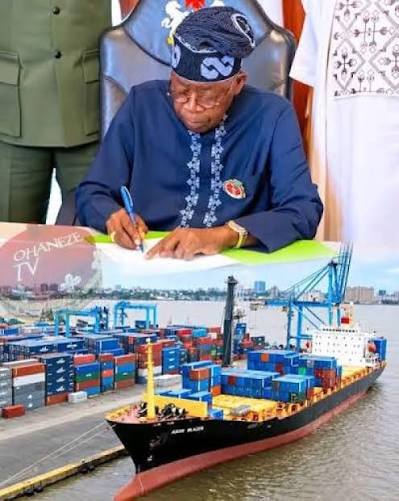
He cited the Lekki Deep Water ports, and the Ibom Deep Water ports as some of the projects that are currently being carried out in collaboration with the federal government, state government and private actors.
“The fastest way to accelerate economic growth in Nigeria is by developing infrastructure.
“ICRC is willing to make her in-house PPP technical expertise in PPP transactions available to states who are willing,” he said.
Meanwhile, the Director-General, Nigeria Governor’s Forum, Mr Assihana Okauru said PPP arrangement became attractive because of government’s depleting resources as a result of low oil revenues.
He said that in the last five years, federation revenues to States declined from N3.1 trillion in 2013 to N2 trillion in 2015 and N1.6 tillion in 2016, before recovering mildly to N21 trillion in 2017.
“According to World Bank, Nigeria has attracted about 10.5billion dollars in PPP investments since 2000.
“Much of these investments have been concentrated in ports infrastructure 7.2billion dollars, followed by Electricity 1.9 billion dollars and Natural Gas 679 million dollars.
“However, these investments have not spread evenly across the States,” he said.
Okauru said that the NPPPN provided an opportunity for States to better understand the mechanism of PPP, to make their business environment competitive and attractive for private sector investments.
“Although, a number of States are working to establish PPPs, our records show that only 15 states have established PPP laws to guide the funding model for public infrastructure projects and only about 11 states have PPP offices.
“This has had serious implications on the level of private capital and expertise and the sustainability of private sector investment across States,” he said.
Also, the Minister of Finance, Mrs Zainab Ahmed, said the NPPPN was a brilliant collaborative effort between ICRC and state government.
Ahmed, who was represented by Mr Biodun Alibologe, Deputy Director, PPP department, Federal Ministry of Finance, said the Ministry was committed to properly address the country infrastructure challenges.
Also, in a goodwill message, Secretary to the Government of the Federation, Mr Boss Mustapha, said the forum would strengthen the country infrstructure delivery frameworks to generate bankable PPP projects.





-

 Education19 hours ago
FCE Yola Graduates 3,555 Teachers , Seeks Upgrade to University
-

 Niger Delta21 hours ago
Diri Restates Stance On Lagos-Calabar Coastal Highway
-

 Sports18 hours ago
Nigerian Trio Target Titles At PFL Africa Finals
-

 Niger Delta21 hours ago
C’River, NUJ Pay Tribute To Late Guardian Editor
-

 News22 hours ago
NDLEA Recovers Tons Of Illicit Drug Consignments In Nine States
-

 Opinion21 hours ago
Checking Voter Apathy In Nigeria’s Electoral Process
-

 Politics18 hours ago
2027: DICKSON’S EX-ALLY VOWS TO WORK AGAINST NDC INTEREST IN BAYELSA
-

 Politics18 hours ago
2027: GROUP PLEDGES 40,000 SUPPORTERS FOR COALITION CANDIDATES IN RIVERS