
Business
‘Ajaokuta, Key To Execution, Implementation Of Executive Order 5’

The Director, Centre for Atmospheric Research, National Space Research and Development Agency (CARNASRDA), Prof. Babatunde Rabiu, says building the capacity of Ajaokuta Steel Company Ltd. (ASCL) is key to the execution and implementation of Executive Order 5.
Rabiu made this in an interview with The Tide source in Abuja, Monday.
According to him, no country can develop without developing its engineering and infrastructural capacity for sustainable economic growth.
He said that indigenous technology and engineering firms have been at the front burner of sustaining infrastructural development globally.
The director said that ASCL over the years had helped develop the country in manufacturing steel but was abandoned.
He said that the administration of President Muhammadu Buhari’s had made efforts in restoring the steel company which needed to be sustained for the country to harness its full potential.
“ASCL is very fundamental to our engineering infrastructural development. All sorts of manufacturing must be largely dependent on locally available raw materials for sustainability.
“A neglect of Ajaokuta project is a neglect of engineering infrastructural development.
“For the recently promulgated Executive Order Number 5 to have reasonable level of efficiency, ASCL must be moved from its present level of 98 per cent completion to 100 per cent with immediate effect.
“If the government fails to finish building the ASCL, Executive Order Number 5 will be another paper tiger.
“In other words, ASCL is the key to execution and implementation of this Executive Order Number 5,” Rabiu said.
The director recalled that the report by the Centre for Global Development of 2012 ranked Nigeria 93rd among underdeveloped nations in infrastructural deficiency and economic turbulence.
According to him, building the capacity of indigenous engineering has been relegated to the background which hampers development in every facet of the nation.
He said that engineers were problem solvers and could bring change in ensuring food security, national security, engineering profession, national space development and public service.
“The design and building of all manners of infrastructures, physical or electronic, such as required in power, transportation, education, health care, agriculture, economy, defense, etc, fall within the purview of engineering profession.
“No nation can develop beyond the level of her engineering profession.
“I commend the recent promulgation of Executive Order Number 5, which gives preferences to indigenous firms in the award of contracts.
“This presidential Executive Order 5 has given tremendous advantage to local engineering firms, Ministries, Departments, Agencies and national research and development establishment to compete favourably with any foreign engineering firms within the country,” he said.
He said that the order would promote business in the science and technology sector.
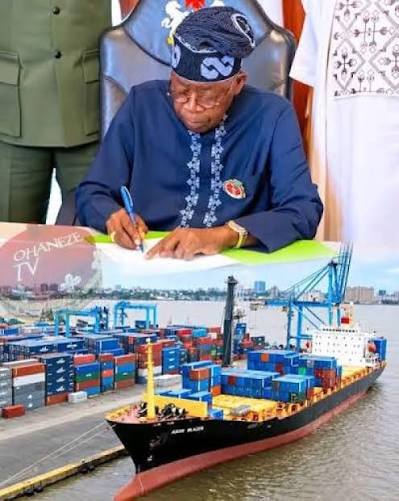
Our source reports that President Buhari, in February signed the Executive Order 5 to improve local content in public procurement with science, engineering and technology components.




-
 Education1 day ago
FCE Yola Graduates 3,555 Teachers , Seeks Upgrade to University
-

 Sports1 day ago
Nigerian Trio Target Titles At PFL Africa Finals
-

 Niger Delta2 days ago
Diri Restates Stance On Lagos-Calabar Coastal Highway
-

 Niger Delta2 days ago
C’River, NUJ Pay Tribute To Late Guardian Editor
-

 News2 days ago
NDLEA Recovers Tons Of Illicit Drug Consignments In Nine States
-

 Opinion1 day ago
Checking Voter Apathy In Nigeria’s Electoral Process
-

 Politics1 day ago
2027: DICKSON’S EX-ALLY VOWS TO WORK AGAINST NDC INTEREST IN BAYELSA
-

 Politics1 day ago
2027: GROUP PLEDGES 40,000 SUPPORTERS FOR COALITION CANDIDATES IN RIVERS