
Featured
Police Invade Clark’s Abuja Residence …At 92, FG Can’t Gag Me -Clark …PANDEF, IYC Kick, Issue FG 48 Hours For Explanation I Did Not Order Raid -IGP

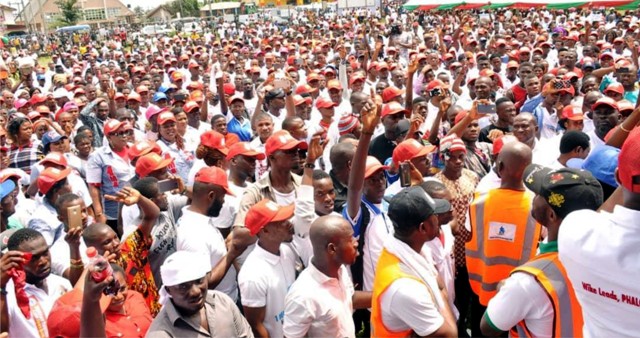
Elder statesman and South-South leader, Chief Edwin Clark, whose Asokoro residence in Abuja was allegedly ransacked for two hours on the orders of the Inspector General of Police, Ibrahim Idris, yesterday, vowed that at 92, government and its agencies can not stop him from speaking his mind on national issues.
Clark, who spoke to newsmen minutes after the invasion, asserted: “I have been Minister in this country, I have been a Senator in this country and if by my age, I am nearing 92 years now, I will be accused of stockpiling weapons in my house, it is too bad.
“The police came to my house, showed me the warrant and I said go ahead. So, they searched the house. They spent two hours and even my secretary, who was on her way to the bank; they said they must search her room and office, so, we have to call her back from the bank.
“She came, they searched, they said they want to search my wife’s room, my wife is in Lagos, they said they will search her room, we have to look for the keys and they searched, they found nothing.
“That is what happened today, that is the embarrassment they wrote down that they found nothing, they signed and we signed. So, we have asked our lawyer to go and get the report,” he said.
“I have never one day thought about carrying gun, I have been fighting for the unity of this country, if at the age of 92 years, I am making statement, and they do not want me to talk, I will continue to talk, which is the position.”
It was gathered that the armed policemen, who prevented people from leaving the house while the search lasted, did not find any weapon in the residence of the former federal commissioner for information.
The police were said to have received information that the elder statesman was stockpiling arms in his house on the basis of which a search warrant was procured and the house invaded, yesterday.
Reacting to the invasion, National Chairman of Pan-Niger Delta Forum (PANDEF), Air Commodore Idongesit Nkanga (rtd), condemned the invasion and resort to totalitarianism by government, demanding that the police publish their findings immediately.
Nkanga said: “We condemn in totality the action of the police while we are hopeful that they will give us the result of the invasion. If they said they are looking for arms and have found no arms, they should very quickly apologize to him, the entire Nigeria and let us know why they have brought us into this state of affairs.”
He added: “We criticize it in totality and it will not end here, the government should stand up and start telling us whether we are in democracy because what is happening now is not democracy again, this is totalitarianism.
“Though the handwriting seemed to be on the wall before now because we have been observing impunity, if we are going back into military dictatorship, the government should let us know, that is what we have also been crying about. Let them publish the result of their invasion very quickly. If they do not do that, then Nigerians will start to know what is ahead of them, this is not democracy,” he said.
Also reacting, Ijaw Youth Council (IYC) led by Pereotubo Oweilaemi Esq., in a statement, said: “Nigeria is gradually descending into a fully blown anarchy. This is dangerous for our democracy. Nigeria is heading to the cliff.”
“Relevant stakeholders need to rise in defence of our hard earned democracy. President Buhari should call his overbearing security agencies to order before they plunge the country into an unmitigated crisis.
“There can be no democracy where there is no dissenting voice. Mr. President should accept that our democracy cannot exist without opposition elements to his government. Chief Clark, who is an elder statesman, his views on national issues need to be appreciated by the government of the day instead of being witch hunted,” he said.
Earlier, the police, yesterday, raided the Abuja residence of federal commissioner for information and South-South Leader, Chief Edwin Clark.
The policemen, who searched all the rooms of the elder statesman, alleged that they were in the house to search for arms which they accused him of keeping.
The policemen, who arrived the Asokoro residence of Clark at 1.30pm, left the premises 2.30pm.
They did not find any incriminating evidence or ammunition in the house.
According to the policemen, they stormed the house on the orders of the Inspector-General of Police, Ibrahim Idris.
Meanwhile, National Secretary of Pan Niger Delta Forum, PANDEF, Dr. Alfred Mulade, yesterday, called on the Federal Government to explain within the next 48 hours the reason(s) for the degrading treatment meted on one of the fathers of the nation, Senator Edwin Clark, by the Police, at his Abuja home.
“We hereby call on the Federal Government to thoroughly investigate and offer explanation within the next 48 hours this barbaric action against one of the fathers of this nation, in such a brazing manner, “he said in a statement, last night.
“PANDEF received with total condemnation, reports of the action of heavily armed men of the Nigerian Police Force’ unwarranted invasion and takeover of the Abuja residence of national elder stateman, Chief Edwin Clark, OFR, CON, today, under the unfounded allegation of stockpiling of weapons from the Niger Delta.”
“We understand that the residence of this revered 91 year old former Federal Minister, a Distinguished second Republic Senator of the Federal Republic, and at present, Leader of the National coalition known as the Nigerian Elders and Leaders Forum, comprising the Pan Niger Delta Forum (PANDEF) for the South – South, Afenifere for the South West, Ohaneze Ndigbo for the South East, Middle Belt Forum for the Middle Belt Zone, and the Northern Elders Forum, was thoroughly raided and searched, room by room and item by item, for over two hours, in a manner most demeaning and embarrassing of the person of this national icon who was physically present at the time of this invasion.”
“PANDEF condemns this very barbaric act which is tantamount to state terrorism and total disregard for his fundamental human rights and complete disregard for established traditional respect for age and national service.
“We insist that Chief EK Clark remains a symbol of our national unity and a leading voice in our search for equity, fairness and justice. PANDEF therefore strongly condemns this unwarranted action against one of the country’s leading statesmen by the Nigerian Police,” he said.
Similarly, the Inspector General of Police, Mr. Ibrahim Idris has denied ordering officers and men of the Nigeria Police to raid the residence of the former Federal Commissioner for Information and South South Leader, Chief Edwin Clark and has order immediate detention of four police personnel and informant involved, IGP monitoring unit to investigate the search by police personnel.
IGP-Idris in a statement disclosed by the Ag DCP Jimoh O Moshood, Force Public Relations Officers, Mr. Idris ordered for the detention of four police personnel and informant involved in the raid. Recall that Police officers had stormed the residence of Clark in search of arms which they accused him of keeping.
The police officers were allegedly reported to have raided the residence by the order of IGP. In view of the above therefore, Police wished to state categorically that Inspector General of Police is not aware and did not order the raid of the residence of the Elder Statesman, Chief Edwin Clark as claimed.
In another development, the monitoring team, set up by the Inspector General of Police, Ibrahim Idris, continued its tour of facilities of the Special Anti Robbery Squad in the South West, warning that SARS operatives will no longer bear arms while on mufti.
The team led by ACP Adepojulo Ilori and ACP Abayomi Shogunle visited the SARS headquarters at Dugbe, Ibadan to monitor their activities. He said: “Henceforth, SARS must wear police uniform whenever they are going for operation.
They would no longer be allowed to carry arms wearing mufti. Any of them you see in mufti carrying arms should be reported immediately. We are acting on the complaints of the public who said they found it difficult to identify them.”
When asked if wearing police uniform would not expose the SARS operatives to danger particularly when they are on undercover assignments, ACP Ilori said there is a special unit of the police that carries out intelligence.
As for SARS operatives wearing dreadlocks, ear rings and tattoo, Ilori said: “After this exercise, you will see reformed SARS.
We are still going to other facilities in Oyo and Ogbomoso just to ensure things are done properly. “If there are bad eggs, we will take necessary actions against them. Those who are not ready to change will be shown the way out. There will be no sacred cow.”



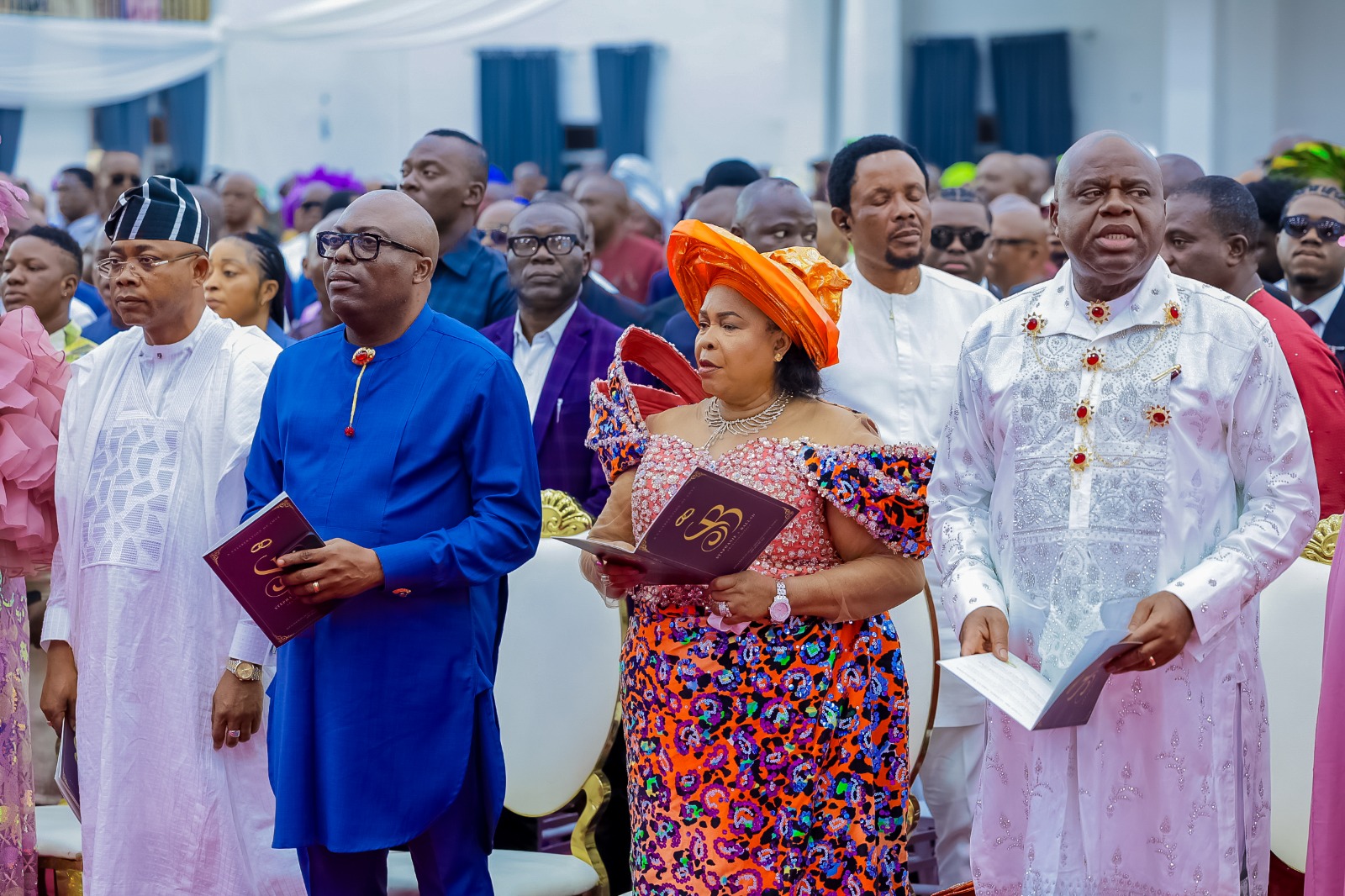
Rivers State, Sir Siminalayi Fubara, has assured members of the National Youth Service Corps (NYSC) of his administration’s commitment to supporting and strengthening the scheme in the State.
Fubara gave the assurance last Friday at the NYSC permanent orientation camp, Nonwa-Gbam, Tai Local Government Area in the State, during the swearing-in ceremony of 2026 Batch B Stream II orientation course.
Represented by the Permanent Secretary, Cabinet Bureau, Office of the Secretary to the State Government, Dr. Promise Oguzie, the governor said the State Government would remain intentional in providing the necessary support to improve the NYSC scheme and enhance the experiences of corps members deployed to the state.
He charged the corps members to be role models and quality nation-builders in their service to the good people of Rivers State in particular, and Nigeria at large.
“I charge you to be exemplary, dedicated and committed in all you do. Take full advantage of all the camp programmes and activities to enrich yourselves”, he said.
In his welcome address, the State Coordinator of NYSC in Rivers State, Mr. Moses Oleghe, urged corps members to see their deployment to Rivers State as a “veritable opportunity to make meaningful contribution to the growth of the State in particular and Nigeria at large.”
He further charged them to serve with all sense of “integrity, discipline, and the fear of God, especially when they will be engaged as INEC ad-hoc staff that will conduct the 2027 general elections.”
A total of 3,584 corps members composed of 1,421 males and 2,163 females were sworn in by the Chief Judge of Rivers State, who was represented by Justice Godspower Aguma.

Governor of Rivers State, Sir Siminalayi Fubara, says Nigeria needs God-fearing leaders for the nation to move in the right direction and make meaningful progress.
The Governor stated this yesterday when he received in audience, the World President of the Seventh Day Adventist Church, Pastor Erton Kohler; his wife, Andriene Marques Kohler; daughter Mariana Marques Kohler and a retinue of ministers of the church at Government House, Port Harcourt.
Fubara who hailed the Seventh Day Adventist Church for its contributions to education and the grooming of future leaders in Nigeria, expressed delight that the Church had over the years, been investing in education at various levels and currently runs two universities in the country.
He commended the church for not only using its institutions to spread the gospel of Christianity but to groom future leaders for the country.
According to him, religion should not be just about defending one’s faith, but also making meaningful impact on the lives of the people.
He said that by floating these educational institutions, the church has demonstrated capacity to support Nigeria in the task of producing not only educated people but a breed of God-fearing leaders.
“Our country is where it is today because we lack the fear of God. If you have the fear of God, there should be a limit to what you can do because you understand the supremacy of God. But when God is not in your equation, you’ll go beyond the line and that is what has brought us to where we are today.
“So, I feel very happy that you are contributing to the development of our future leaders in this country. We need the right people being in the right place; prepared properly with good minds; that is what we need, not just in Nigeria but round the whole world.,” he said.
Governor Fubara further observed that the absence of God-fearing people in high places to take the right decisions that could impact positively on the society, has also given rise to other problems such as social inequality, poverty, corruption and criminality. According to him, Nigeria needs a system where the average parent could afford quality education for their children and a guarantee that upon graduation, the average child will have the capacity to compete favourably with anybody, anywhere in the world.
“If we have a situation where the little money that you’re being paid as wage can also afford you quality healthcare and after working at least for 15-20 years, you have a roof over your head, tell me why you should be involved in any kind of crime? At that point, you’ll feel secured and this attitude of insecurity about the future that leads to all the social vices we have today won’t be there,” he said.
Governor Fubara expressed appreciation to the delegation for the visit and for their prayers for Rivers State, assuring them of his continued support for their programmes in the state.
Leader of the delegation and World President of the Seventh Day Adventist Church, Pastor Erton Kohler said he was in Nigeria for a special conference of the church during which thousands of the church’s ministers will be undergoing an empowerment programme to further equip them for the task of herding their flocks and serving the society.
He expressed gratitude to the Governor for the warm reception accorded his entourage, saying the memory of the visit will linger in his mind for a lifetime.
Kohler disclosed that the Church has over twenty -four million (24,000,000) members and more than 182,000 places of worship, spread across 212 countries of the world.

The Rivers State House of Assembly has approved the 2026–2028 Medium Term Expenditure Framework (MTEF) submitted by Governor Siminalayi Fubara.
This reaffirms the lawmakers’ commitment to enacting laws and taking legislative actions geared towards the overall development of the State.
The Assembly gave the approval during its Second Legislative Sitting of the Fourth Session held last Friday.
Speaking on the MTEF document during plenary, the House Speaker, Rt. Hon. Martin Amaewhule, noted that by the provision of Section 10(1)(b) of the Rivers State Fiscal Responsibility Law No. 8 of 2010, the MTEF ought to have been laid before the House in September 2025.
Amaewhule explained that traditionally, the document is expected to be presented four months before the commencement of the next financial year and immediately after the expiration of every three-year fiscal cycle.
He, however, stated that in the interest of the State and its people, the House considered it necessary to deliberate on the document, describing it as a precursor to the 2026 Budget Estimates.
The Speaker expressed concern that the year had already progressed significantly before the presentation of the framework.
During deliberations on the document, members examined the assumptions and projections contained in the MTEF and observed that strict adherence to the outlined fiscal parameters would ultimately serve the interest of Rivers people.
The lawmakers maintained that effective implementation of the framework would promote prudent financial management and enhance developmental planning across the State.
Following the debate and positive consideration by members, the Speaker put the question to the House and members voted overwhelmingly in support of the approval of the MTEF.
Meanwhile, during the same sitting last Friday, the House also received a petition from the Chairman of Obio/Akpor Local Government Council, Dr. Gift Worlu.
The petition was presented by the member representing Obio/Akpor Constituency II, Hon. Emilia Amadi.
According to the petition, concerns were raised over an imminent security breach, threats to lives, destruction of property and alleged forceful takeover of property by some lawless persons within parts of the Local Government Area.
Presenting the petition before the House, Hon. Amadi appealed to the lawmakers to revisit the matter and take necessary steps aimed at safeguarding lives and property in the affected communities.
The House is expected to further deliberate on the petition and consider measures to address the concerns raised in order to sustain peace and security in the area.
King Onunwor
-

 News2 days ago
RSG Targets Nine Million Residents in Mosquito Net Distribution Campaign
-

 Oil & Energy2 days ago
Aiyedatiwa Signs New Electricity Bill
-

 Maritime2 days ago
Marine Minister Commends President Tinubu On NPERA Bill Assent
-

 Oil & Energy2 days ago
NLNG Commissions Research And Innovation Centre In RSU
-

 News2 days ago
KenPoly Holds Eight Convocations, August 29
-

 News2 days ago
RSG Begins Another Phase of Projects Commissioning Today
-

 News2 days ago
RMAFC Completes Revenue Sharing Review, Proposes New Pay
-

 Maritime2 days ago
NAGAFF Petitions IGP Over Alleged Maritime Police Harassment