
Politics
Vote Merchandising: Destroying Democracy

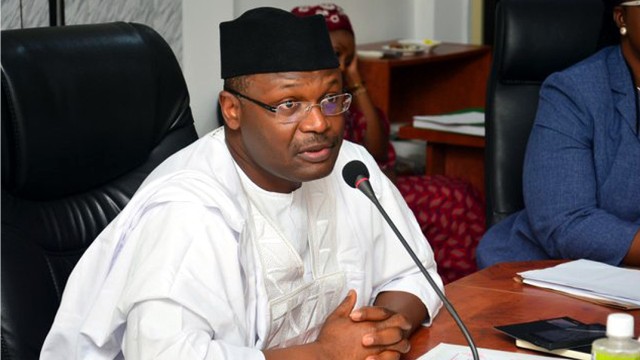
I was offered N5,000 to vote for the party but I rejected it. I am a 73 years old retired teacher. I cannot allow the future of my children to be bought by moneybags. I don’t know how we descended to this level when people brazenly offer money to people to secure their votes. It was not like this in the past. Will our votes count with this problem?”
Inducement of the electorate by the political class in Nigeria is by no means a novel phenomenon in the country. It is a wide spread practice, and has almost become the norm, for politicians to distribute food stuff, clothing materials, household utensils and other items of everyday use to would -be voters during political campaigns in anticipation of securing their endorsement on polls day through their thumb prints on the ballot paper.
In some other cases this subtle the inducement by political office seekers comes in the form of payment of examination fees, bursary allowances, instituting of scholarship schemes and distribution of customized educational materials to pupils and students among others including half-hearted acts of philanthropic gestures. And yes, monies also change hands under various guises, names and purposes but the motive is almost understood by all parties involved that all political favours are always expected to be paid back in kind on election day. These usually happen in months, weeks and days running up to polling days, and even when some of these things take place on election days, they were done in total confidentiality.
However, on July 14, 2018 during the gubernatorial election in Ekiti, the political class in that state descended to new depths in desperation and threw decency and caution to the wind as they were reported to have set up shops where votes were traded for cash to the embarrassment of the watching world.
One report said a newspaper correspondent “who visited polling units in the Fajuyi Area of Ado-Ekiti, observed a large turnout of voters with glaring cases of vote-buying which voters called “see and buy”. It was observed that the vote buyers demanded evidence of PVC and assurance that the seller would vote for their party before offering the money”.
The report went further to say that “a source confirmed that a woman sitting by the new Fajuyi Bridge with three bags paid voters on behalf of one of the major political parties”.
Of course, even before the Independent National Electoral Commission (INEC) announced the result and declared the candidates of the All Progressives Congress (APC) Dr Kayode Fayemi as the winner of the election, the media had been awash with unsavoury stories, images and episodes of the unfortunate development. Reactions, as expected, have also, since then, continued to pour in torrents.
One of such early reactions came from the Peoples Democratic Party (PDP) through its National Publicity Secretary, Kola Ologbondiyan who accused the APC of stealing the mandate of the people of Ekiti State.
Writing on his tweeter handle on the morning following the election day, Mr. Ologbondiyan said “The APC won a presidential election in 2015 on the goodwill of Nigerians. Three years after, it depends on guns, billions of naira, snatching of ballot boxes, altering of figures and other acts of electoral corruption to win a state”.
In his own reaction, a candidate in the said election on the platform of the Accord Party, Mr. Abiodun Aluko alleged that Dr. Fayemi won the poll because his party the APC, was able to buy the highest number of votes.
“The APC as the highest bidder was able to take the highest number of votes that was exactly what happened”, Mr. Aluko, who was also a former Deputy Governor of Ekiti State, said.
Also, a coalition of observer groups and civil society organizations that observed and monitored the election, in a press statement, condemned the declaration of Dr. Fayemi as the winner, saying it was regrettable that INEC as well as the security agencies were used to subvert the will of the people of Ekiti.
The statement which was signed by contacts persons of the group, Comrade Haruna Farouk and Nze Adachi Okoro said, among others: “We have evidences of election malpractices, where a particular party in connivance with security personnel went about inducing electorates with cash and coercing them to snap the ballot papers in order to receive cash gifts from the agents of the party in question”.
Exchanging views on the matter with The Tide in Port Harcourt, a journalist and public affairs analyst, Mr. Obidinma Obidinma, described the incidence of vote for money as a dangerous development that will not help the quest for political advancement and democratic stability in Nigeria.
Mr. Obidinma said apart from setting our democratic development backwards, the practice was capable of igniting violence while also representing a form of corruption that must not be allowed to take root in our body polity because of its capability to destroy the very foundation of a civilized and free society.
If left unchecked, he said, it could embolden the political class to impoverish the people more and generate bad blood among the electorate, adding that but for the heavy presence of security agencies, a crisis that may have been difficult to contain would have erupted in Ekiti.
“And why are we seeing this kind of thing in an administration that says they abhor corruption and that they are fighting corruption?,” he queried and cautioned that “once the electoral process is corrupted, whatever is the life, the fabric of our political foundation will be destroyed”.
According to him, nip it in the bud, the Electoral Act needs to be amended by the National Assembly to “make this aspect of inducement as an electoral offence,” with video evidence made admissible before the “court or a tribunal as an infraction against the electoral process”.
“To be very honest, when I first heard cash for vote development in Ekiti, I felt very disappointed. I felt our democracy under threat and I felt that instead of moving forward, we are taking many steps backward”, said the President, Niger Delta Coalition Against Violence, Comrade Christian Lekia.
Comrade Lekia told The Tide in Port Harcourt that “nothing threatens the survival of democracy much more than this. When people can no longer vote based on their conscience and convictions; when poverty become a condition that will determine the direction of loyalty, that means it is deliberately inflicted.
“And talking about corruption, it only encourages people to go look for money at any cost. There’s no better way of encouraging corruption within political circles than allowing this to stand. It is really appalling, so disappointing and nothing anybody should encourage. It defeats the essence of that whole process”.
The rights activist and peace advocate called on the management of INEC to cancel the blighted July 14, Ekiti governorship election and reschedule the contest to prove its capacity to deliver on its mandate or give way for some others to do the job of midwifing acceptable polls in Nigeria.
“If it were possible, I would have called on INEC to reschedule and re-conduct that election. And where they’re unable, let me call on the managers of that institution (INEC) to resign and allow those who will be prepared to conduct a free, credible poll to take over the management of that election body. I don’t think it portends anything good for anybody. It potends evil and this, I’ll really frightened that we’re yet to get anywhere close to enjoying true evidence of the democracy.
“When people buy their way through, they will defintely want to do anything that will make them strong enough to buy their way through next time without really thinking about the people”, he said.
On what implications the Ekiti experience could hold for the forthcoming 2019 general elections, Comrade Lekia said even though he trusts Nigerians to be too enlightened to allow a replay moving forward, “the process must be seen as transparent. The umpire must earn the confidence of Nigerians in the process and it must be unbiased. They must do everything to make Nigerians believe in their ability to deliver on the conduct of the coming polls.”
He emphasized that “allowing naira power to determine the direction of victory defeats the essence of the contest”, in Ekiti and challenged the National Assembly to wade into the issue with a viewing to enacting legislation that will halt the development.
“They have a whole lot to do and the government must realize that the only way we can think of having in place a democratic culture that will be sustainable is by allowing the people to truly decide”, he reiterated.
Sharing his thoughts on the matter as well, the British envoy in Nigeria, Paul Arkwright tweeted “Ekiti Decides 2018 may appear to have ended with the announcement of the results, but the lessons of the election, with alleged monetary inducements, will not be forgotten easily”.
Opaka Dokubo

Politics
Alleged Coup: Protests Rock N’Assembly As Detained Officers’ Children, Wives Demand Justice

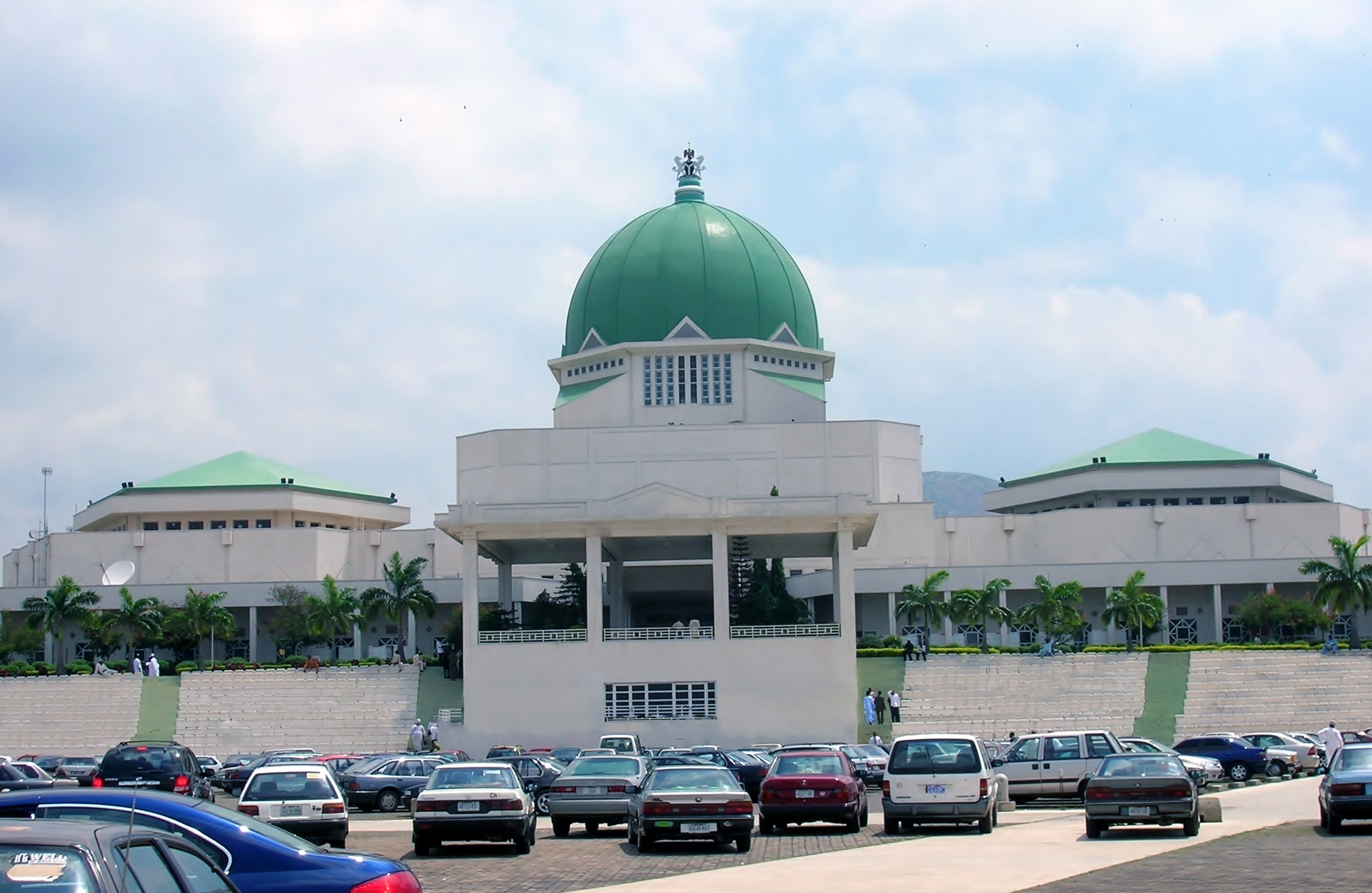
Scores of children and wives of military officers detained over an alleged coup plot yesterday staged a peaceful protest at the National Assembly, demanding a speedy trial and the release of the accused officials.
The protesters who gathered at the entrance of the National Assembly complex, moved in a slow procession while clutching placards with inscriptions such as “Don’t Kill Our Daddies,” “Detention Without Trial is Injustice,” and “Six Months of Torture: Enough Is Enough.”
Amid tears and trembling voices, the children appealed for justice and access to their detained fathers, many of whom they said they had not seen for months.
The appeal was made during a press briefing in Abuja attended by no fewer than 20 wives and several children of the detained officers, including a two-month-old baby.
The families were accompanied by human rights lawyer, Deji Adeyanju and activist Omoyele Sowore.
At the briefing, the families lamented that the officers had been held for over 160 days without trial or contact with their relatives, describing the situation as a violation of their fundamental rights.
Speaking on behalf of the families, Memuna Bashiru said the prolonged detention had thrown their households into uncertainty and emotional distress, noting that while allegations had been widely publicised, families remained in the dark about the fate of their loved ones.
The arrest of the indicted officers was first announced on October 4, 2025, by the then Director of Defense Information, Brigadier General Tukur Gusau, who disclosed that 16 officers were taken into custody for alleged breaches of military regulations and acts of indiscipline.
However, an interim investigation later suggested the existence of a clandestine network of officers, allegedly coordinated by a senior Army officer, which had begun preliminary planning for a coup.
According to the report, the alleged plot involved surveillance of key national assets, including the Presidential Villa, Armed Forces Complex, Niger Barracks in Abuja, and major international airports, with October 25, 2025, cited as the planned date for the operation.
Those reportedly in custody include Brig Gen M. A. Sadiq, Col M. A. Maaji, Lt Col S. Bappah, Lt Col A. A. Hayatu, Lt Col P. Dangnap, Lt Col M. Almakura, Maj A. J. Ibrahim, Maj M. M. Jiddah, Maj M. A. Usman, Maj D. Yusuf, Capt I. Bello, Capt A. A. Yusuf, Lt S. S. Felix, Lt Cdr D. B. Abdullahi, Sqn Ldr S. B. Adamu and Maj I. Dauda.
The alleged plot, according to findings, targeted senior government officials, including President Tinubu and Vice President Kashim Shettima.

In a statement issued yesterday, the party’s National Publicity Secretary, Mr Felix Morka, said the exercise would take place in all wards and designated centres nationwide.
He called on existing members to update their records, while encouraging new entrants to join the party through the digital platform.
“As the electronic membership registration exercise resumes in all wards and designated locations nationwide, we urge existing members to validate their membership while new members are encouraged to register and join the progressive family,” Mr Morka said.
According to him, eligibility for registration is limited to individuals aged 18 and above who possess a valid National Identification Number (NIN).
The party said the initiative is part of efforts to modernise its operations by transitioning to a digital database that would enhance record accuracy and accessibility.
Mr Morka noted that the e-registration would “digitise the party’s membership register, ensure the integrity of records, and enhance efficient access to membership data for planning and management decisions.”
He added that the move is also aimed at promoting internal democracy within the party and strengthening its commitment to democratic innovation.
The APC had previously introduced electronic registration as part of broader reforms to streamline its membership system and improve organisational efficiency.
-
 Editorial4 days ago
Domesticate FG’s Exit Benefit Scheme
-

 News4 days ago
RSU Unveils Five-Year Strategic Dev Plan …Calls For Collective Commitment To Institutional Excellence
-
 News4 days ago
DHQ Confirms Deaths Of Terrorists, Soldiers In Borno Attack
-

 News4 days ago
Tinubu Commissions Bayelsa Gas Turbine, Other Projects Today
-
Business4 days ago
Niger Delta Investment Summit Targets $5bn Inflows, 500,000 Jobs
-
Sports4 days ago
Full Draw For 2026 U-17 AFCON
-
Nation4 days ago
Rumuji Youth Leader Condemns Protest, Disowns Alleged Government Empowerment Claim
-

 Nation4 days ago
Haniel Jack Foundation Awards Five Rivers Indigenes Scholarship