
News
PDP Upsets APC In Osun Senatorial Bye-Election …Nigerians Have Awakened To APC Deceit – PDP …APC Put To Shame – Fani-Kayode

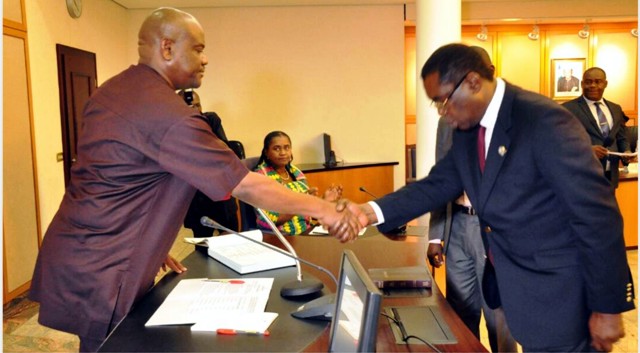
In a major setback for the ruling All Progressives Congress in Osun State, Peoples Democratic Party won the Osun West senatorial bye-election held last Saturday by the Independent National Electoral Commission. In the final result announced by INEC in the early hours of yesterday, the PDP candidate, Otunba Ademola Adeleke, the younger brother of the late Senator Isiaka Adeleke for whose replacement the election was held, won with 97, 480 votes. He beat the APC candidate, Senator Mudashir Hussein, who scored 66,116 votes to place second.
PDP also won in nine of the 10 local government areas in Osun West Senatorial District. According to the results released by INEC, PDP won in Iwo Local Government Area with 12,547 votes, against APC’s 12,205 votes; Ola Oluwa local government with 5, 618 votes, to APC’s 5316 votes; and Ayedire local government with 5, 789 votes, to 5, 360 votes scored by APC. PDP also in Irewole local government with 9, 096 votes, against APC’s 8,952 votes; Ede North local government with 18, 559 votes, against 2,784 votes polled by APC; Ede South local government with 13, 406 votes, to APC’s 2,096 votes; and Ayedaade local government with 9,061 votes, to 7,179 votes scored by APC.
PDP won Egbedore Local Government Area with 7,142 votes, against APC’s 4,768 votes; and Isokan local government with 6,539 votes, to 5,227 votes scored by APC.
APC won in only Ejigbo local government with 12,229 votes, to PDP’s 9,723 votes.
PDP had posted wins in many of the early results announced at the polling units across the 10 local government areas of Osun West senatorial district.
The u-turn in the senatorial district, which was hitherto dominated by APC under Senator Adeleke, was widely seen as a protest against the party for failing to nominate the aspirant from the Adeleke family, who was deemed a perfect choice to continue on the seat of his late brother. The majority of the people, our correspondent learnt, wanted some kind of compensation for the family for the good works of the APC senator for Osun West, whose death on April 23 at the age of 62 had shaken the area to its foundation, leading to protests and tension.
APC’s unwillingness to field Ademola Adeleke had caused him to defect to PDP soon after the death of his brother. He then emerged PDP’s senatorial candidate few weeks to the bye-election.
The defeat of Hussein, who was the choice candidate of Osun State Governor Rauf Aregbesola, was also seen as a verdict against the APC administration in the state. Aregbesola’s tenure has been marred by economic tensions occasioned by his government’s inability to pay workers’ salaries and meet other financial obligations, resulting in several months of unpaid remunerations. There has also been rising religious tension owing to government-instigated rivalry between Moslems and Christians, who had previously lived cordially.
The bye-election was largely peaceful. But the Osun State Police Command said it arrested some hoodlums who were trying to cause commotion at Igbokiti Unit, Ward 10, Okinni, Egbedore local government council.
Our correspondent was informed that the thugs invaded the polling unit with dangerous weapons and attacked voters and some ad hoc electoral officers. Voters waiting to cast their votes were allegedly attacked with machetes, causing them to run for their lives and prompting many others to stay away from the polling booths to avoid being caught up in the violence.
However, Ademola Adeleke, has described his victory as a new dawn for democracy.
Adeleke said, at a news conference on Sunday in Ede, that his electoral victory was “a pointer that PDP will be victorious in the 2018 governorship election in the state’’.
The News Agency of Nigeria reports that Mr. Adeleke scored 97,480 votes and won in nine of the 10 local government areas where the election was held.
The All Progressives Congress, APC, candidate, Mudashiru Husain, polled 66,116 votes and won in only one local government area.
The late Isiaka Adeleke, the first Executive Governor of Osun, was occupying the senatorial seat until his death on April 23.
His younger brother, Ademola, who initially was contesting on the ticket of APC, defected to PDP, a day before the party’s primary, when APC leadership denied him the ticket.
He subsequently defected to PDP and was given the party’s ticket to be its candidate in the election.
The senatorial district comprises 10 local government areas.
He said: “We are working hard to ensure that the 2018 governorship election in Osun is won by PDP.
“My victory is a new dawn in the history of our democracy.
“Our democracy is growing where an incumbent will be there and opposition will defeat the incumbent.
“This is a rare gem and this shows that our democracy is improving.
“We want to make sure that there is nothing like rigging anymore, no matter how you try, we want our democracy to grow.”
Adeleke, however, commended the Independent Electoral Commission (INEC) and the security operatives for ensuring that the election was free and fair.
He commended the people in the senatorial district for coming out en masse to vote for him.
Mr. Adeleke also commended journalists for their sense of professionalism in the coverage of the election.
“I can assure you that I will continue from where my late brother left it and that is where I tag my campaign continuity,” he said.
However, the police were able to arrest three of the suspected political thugs.
The Commissioner of Police, Mr Fimihan Adeoye, confirmed the incident. Adeoye said, “it is true we arrested three suspected thugs in Egbedore and their case is currently under investigation.”
Meanwhile, the Senator Ahmed Makarfi led Peoples’ Democratic Party (PDP) has said that the Party’s victory at the just concluded Osun West by-election reflects the re-awaken Nigerians to the sham and deceit of the All Progressive Congress (APC), led administration at all levels of governance.
This was stated yesterday in a statement signed by the Publicity Secretary of the Party’s National Caretaker Committee (NCC), Dayo Adeyeye.
According to the Party, the PDP remains the party to beat in all elections in Nigeria without the interference of the APC in its current leadership issues.
Hide quoted text
While congratulating the people of Osun West Senatorial District for coming out enmass to vote for the PDP and its candidate, the Party expressed confidence in the abilities of Ademola Adeleke to deliver on his promises to the people.
Also former Aviation Minister, Femi Fani-Kayode, has mocked Governor of Osun state, Rauf Aregbesola, after the Peoples Democratic Party (PDP) won the Osun West senatorial by-election conducted on Saturday.
PDP’s candidate Ademola Adeleke, was declared winner of the by-election by the Independent National Electoral Commission.



The Rivers State chapter of the All Progressives Congress Christian Leaders Forum has expressed strong confidence in the capacity of All Progressives Congress (All Progressives Congress) candidates in the state to deliver effective governance if elected into office in the coming elections.
The State Coordinator of the forum, Archbishop Lucky Aroh, made this known during a breakfast and thanksgiving meeting held in Port Harcourt, where leaders gathered to pray for the stability of the party and the safety of its candidates ahead of the 2027 general elections.According to him, the meeting was convened to seek divine intervention for peace, unity, and security among APC candidates across Rivers State.
“Today we are praying for APC stability in Rivers State and the security of our candidates that have been elected to contest the 2027 elections. It is a breakfast meeting,” Aroh said.
He further expressed optimism that the party’s candidates would not disappoint the people if entrusted with leadership responsibilities.
“They will not fail when elected into office. We are here as fathers of the land to let them know, and I must tell you the truth that these are the authentic people that will do well in Rivers State,” he added.
Speaking earlier, the National Chairman of the forum, Professor Olanrewaju Abraham, commended the Rivers State chapter for organizing the programme, noting that the national body of the forum believes strongly in the power of prayer.
He stated that political leadership provides an opportunity to influence society positively, including advancing moral and spiritual values, while expressing confidence that APC candidates at all levels would emerge victorious in the upcoming elections.
Also speaking, the Rivers State Women Leader of the APC, Hon. Darling Amadi, praised the forum for its commitment to prayers for peace, stability, and the protection of party candidates.
Represented by the Deputy Women Leader of the party in the state, she described the initiative as commendable and urged other political and support groups within the party to emulate the gesture in promoting unity and stability.
By: John Bibor, Menebe Emmanuel & Fortune Paibi
Prominent businessman and philanthropist, Elder Anthony Osagwe-Ogo, was celebrated in grand style as he marked his 70th birthday anniversary, with distinguished Nigerians, business leaders, and golf enthusiasts gathering to honour his remarkable contributions to society.
The colourful celebration took place at the Port Harcourt Golf Club, where friends, associates, and well-wishers converged to pay tribute to the revered elder statesman.
Chairman of the occasion, High Chief (Dr.) Ikenna Okafor, described the celebrant as a detribalised Nigerian whose generosity, humility, and commitment to humanity have earned him admiration across different communities and backgrounds.
According to Dr. Okafor, Pa Osagwe-Ogo’s impact on society and the development of his community remains unparalleled. He noted that members of the golfing community are proud to be associated with a father figure who consistently promotes the welfare and well-being of those around him.
He further stated that the history and growth of the Port Harcourt Golf Club cannot be told without acknowledging the significant role played by the celebrant, whose wisdom, encouragement, and leadership have helped sustain the club over the years.
“We are here to celebrate a man who has impacted humanity positively, a peace-loving individual and an epitome of hope for the younger generation. We pray to emulate his virtues. Today, we celebrate a bridge-builder, a trailblazer, and an iconic leader whose life continues to inspire many,” Dr. Okafor said.
He expressed delight at the large turnout of guests from various walks of life, describing it as a testament to the respect and affection Pa Osagwe-Ogo commands within and beyond Rivers State.
In his response, the celebrant, Pa Anthony Osagwe-Ogo, expressed profound gratitude to God for preserving his life and granting him the privilege of attaining the milestone age of 70.
He also thanked members of the Port Harcourt Golf Club, family members, friends, and associates for identifying with him during the celebration and for their unwavering support over the years.
The event featured the cutting of the birthday cake, presentation of awards to deserving members of the club, goodwill messages, and moments of celebration among guests.
The ceremony was attended by notable personalities from the business community, the golfing fraternity, and other sectors, all of whom joined in celebrating the life and legacy of the respected elder statesman.
Rivers State Governor, Sir Siminalayi Fubara, and the Permanent Secretary of the Rivers State Ministry of Information and Communications, Dr. Honour Kuru Sirawoo, have been honoured with awards of recognition in connection with the 2026 Democracy Day celebrations held in Port Harcourt.
The awards, which formed part of activities marking Nigeria’s Democracy Day on June 12, were formally presented on Tuesday at the Ministry of Information and Communications in Port Harcourt.
Presenting the awards was Hon. Abdul Hameed Oladipupo Alli, popularly known as “Mr. Nigeria,” Publisher of Asiwaju Trumpet Magazine and Achievers World International Magazine.
Governor Fubara was recognised for his efforts in sustaining peace, stability, and a conducive political atmospherJohn Bibor / Menebe Emmanuel / Fortune Paibie in Rivers State. The organisers noted that his administration has fostered harmony and strengthened civic participation across the state.
Dr. Sirawoo, on the other hand, was honoured for his exemplary administrative leadership and significant contributions to effective information management within the Ministry of Information and Communications.
Representing Dr. Sirawoo at the presentation ceremony, Dr. Christian Davies received the award on his behalf and expressed gratitude for the recognition. He described the honour as a reflection of Dr. Sirawoo’s unwavering commitment to professionalism, excellence, and dedicated public service.
Dr. Davies assured the organisers that the award would be formally conveyed to the Permanent Secretary.
The event also featured the presentation of commemorative publications highlighting major governance and civic milestones in Rivers State, including Easter celebrations, Workers’ Day activities, the Governor’s third anniversary in office, and Democracy Day programmes.
Organisers of the awards commended the Rivers State administration for what they described as sustained peace, political stability, and improved civic engagement, noting that these achievements have contributed significantly to the state’s continued development.
By: Jessica Sambol