
Sports
Rivers At 50: Entertainment, Arts And Culture

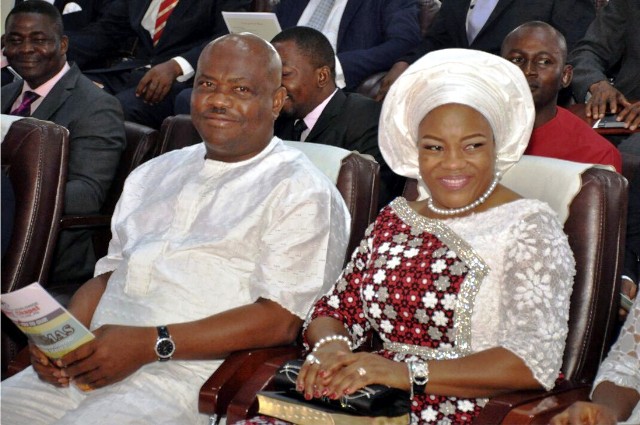
Located in the South-South geo-political zone of Nigeria, Rivers State, the Treasure Base of the country was created on May 27, 1967 by the General Yakubu Gowon’s administration. The state is presently divided into 23 local government areas with diverse ethnic nationalities, distinct languages and age-long cultural heritage.
Today, the state is known across the country and beyond as the hub of oil and gas activities and home for the second busiest seaport in Nigeria; her unique culture, peaceful co-existence and legendary hospitality stand her out among the rest of the states.
As the State celebrates her Golden Jubilee of success, peace, unity and even development under the people-oriented administration of the amiable golden governor, Chief (Barr) Nyesom Ezenwo Wike, it is important to reflect on the past laudable achievements of the state in the last 50 solid years of eventful existence. This will be incomplete without the contributions of our indigenous entertainers whose exploits have turned them into stars and celebrities of international repute viz-a viz movies, music, comedy, tourism, arts and culture.
Movies
In Nigeria’s movie industry popularly known as Nollywood, Rivers State indigenes are not playing second fiddle, rather the state boasts of leading stars in the make believe industry. Since the emergence of Nollywood in 1992, Rivers State has contributed immensely towards its development and global recognition. It is on record that most of the leading stars in the industry passed through the state on their way to stardom, graduating from the Theatre Arts Department of the University of Port Harcourt (UNIPORT). Apart from that, indigenes of the state also hold sway in the industry which today comes just behind Hollywood of America and Bollywood of India.
Some of these indigenous stars who have made the state proud include: Ibinabo Fiberesima, President, Actors Guild of Nigeria (AGN), former Glo Ambassador, Monalisa Chinda-Coker, Nollywood screen goddess, Tonto Dike, celebrated Nollywood costumier and AMAA Award Winner, Amb. Milliscent Jack, Maureen Ihua, etc. Also on parade are veteran actors and producers such as Dr Sam Dede, Columbus Irosoanga, Prince Tonye Princewill, Gentle Jack, Walter Anga, Alaso Wariboko and former state chairman of Association of Movie Producers, Engr Reginald Orlu, among others. The State has a good number of cinema houses where most of their movies are premiered such as Silverbird Cinemas, Genesis De Luxe, The Film House, etc.
Music
The development of modern music and dance in the state has its foundation in the culture and traditions of the various communities. These communities have their unique music and dance patterns which they use in entertaining themselves and important guests or to celebrate important cultural events. Rivers State remains a state to be reckoned with in the Nigerian Music Industry as she has produced some of the veteran highlife musicians who have distinguished themelves locally and interenationally such as cardinal Rex Lawson, King Sunny Brown, Prince David Bull and Jackwest Omodu of the defunct Garden City Band, all of blessed memories and the Great Sinya among others.
It is obvious that today, the number of stakeholders in the music industry in the state is ever increasing. Most of the present day artistes are enjoying corporate sponsorships and endorsement deals for their unique talents. Some have recorded unprecedented album sales sometimes running into hundreds of thousands of copies, others have won prizes and prestigious awards in international contests and other events, hence attracting more investments from many sources.
Some of these modern indigenous artistes are Daniel Wilson, Duncan Mighty, Muma Gee, Lexy M, Lady IB, Peter Stone Cold, Kikis, Oba Omega, Sotty Horsefall and Robin Maja, current state chairman of the Performing Musicians Employers Association of Nigeria (PMAN) among others. These stars have left indelible footprints in the Nigerian Music Clan and the international community.
Comedy
In the comedy clan, the state has produced the best of the humour merchants the country could boast of, who have paid their dues in the industry. Gone are the days when comedy was regarded as a pastime of the unserious, the uneducated and jesters who were paid pittance for their folly. Today, comedy has transformed into a big business, turning its practitioners into millionaires and throwing up a huge industry with several direct investment opportunities and support services.
Among the wave-making indigenous comedians are Julius Agwu, Prince Hezekiah, Dan D’ Humerous, Angel D’ Laugh, Rugged Pastor, Yibo Koko, Micheal Ogolo, Iyowuna Obomanu, Basorge Tariah, late Boma Erekosima and several others. These rib crackers have metamorphosed from mere clowns who were paid peanuts into millionaires.
It is also on record that within the past years, the state has distinguished herself as a centre of arts, culture and tourism in the country as showcased in the various achievements recorded so far.
Arts
Arts generally refers to the use of imagination to express ideas or feelings particularly in paintings, drawings, sculpture and literary works.
The high quality works of Arts in the State represent the evidence of early civilisation and ancestral cultural heritage of the people, patronised by tourists, royal fathers and wealthy personalities in society.
Some of these works include swords, scepters, royal drums, various royal regalia, carvings, iron and marble objects etc. The Rivers State landscape appears to be incomplete without works of art. Most public places and museums are adorned with artistic works that tell tourists about the dominant cultural heritage, values and activities of the people of Rivers State. Art exhibitions are held regularly to promote these works. There are also art galleries that showcase the various art works. This sector is also a source of tourist attractions and revenue to the state.
Culture
The Nigerian government in September 1988 launched the national cultural policy. The policy defines culture as “the totality of the way of life evolved by people in their attempt to meet the challenges in their environment which gives order, meaning to their environment, social, political and economic aesthetics and religious norms and mode of organisation, thus distinguishing a people from their neighbours”.
The Rivers State Ministry of Culture and Tourism has the mandate to put in place programmes and events that will attract international, national and local tourists to savour the rich cultural activities and tourist sites for relaxation and education as well as promote the diverse cultural heritage of Rivers people and identify and develop the tourism potentials of the state as a means of job creation and wealth generation, as well as inculcate pride and dignity in our local artwork and cultural values. This is to establish and brand Rivers State a choice destination for cultural tourism beside oil and gas.
Some of the age-long cultural activities of the state include the annual Opobo International Boat Regatta, the Nwaotam Festival celebrated every 25th of December to welcome the new year and to eliminate the bad spirits of the previous year, celebrated by Opobo, Bonny and other communities of the state. There is also the Oki Festival, a ceremonial dance festival of the Kalabari Clan of the State, the “owu aru sun alali” of Kalabari was celebrated on 30th and 31s January 2009, performed by the Ekine Sekiapu Society.
It is a series of masquerades, it was celebrated in Buguma City previously in 1908, 1927, 1973 and 1991 by the Ekine Sikiapu under the leadership of the OPU Edi. Tradition has it that various masquerades are owned by both the community and the group of compounds which usually last between 15 to 20 years. Another important festival of the people of the State is yam festival. In most communities of the State, yam festivals are celebrated to mark the harvest period after which the people are free to eat the new yams complemented by delicious delicacies amidst the legendary hospitality and goodwill of the people. Musical instruments are usually rolled out in such occasions as well as wrestling contests to entertain the people and visitors alike.
Rivers State is also blessed with literary icons. Writers all over the world are regarded as cultural engineers of society because they help to create and lubricate the fabrics of society through their creativity. Rivers State has enjoyed greater patronage since the creation of the state, a leading example of the indigenous literary gurus is late Captain Elechi Amadi who wrote several novels and plays including The Concubine, The Great Ponds, Isiburu etc. These are best sellers that have succeeded in highlighting the culture and tradition of the state. The annual Garden City literary festival holds in the month of September to celebrate literature and arts in the state and many literary gurus attend the event.
Jacob Obinna



Only Denmark, ranked 21st globally, sits higher among nations that failed to qualify for the tournament, which is being co-hosted by the United States, Mexico and Canada.
England and Chelsea legend John Terry was among those to voice his disappointment, describing Nigeria as a significant loss to a tournament that features 48 nations for the first time.
“Nigeria will be a big miss. This is a World Cup for participants who haven’t had the opportunity to play in the tournament. I would have loved to see a top team like Nigeria there because they’ve got some great individuals. They’re a great nation,” Terry said during a virtual roundtable session organised by SuperSport.
“I think they are a big miss because Nigeria probably would have gone further in the competition, but unfortunately, one side’s loss is another’s gain,” the former England captain added.
Eric Chelle’s side finished second in Group C of the CAF World Cup qualifiers behind South Africa, who secured automatic qualification. Nigeria kept their hopes alive with a playoff semi-final victory over Gabon before falling to the Democratic Republic of Congo on penalties in the decisive playoff final — their second successive absence from the World Cup after also missing the 2022 tournament in Qatar.
The Nigeria Football Federation later challenged DR Congo’s qualification, alleging the use of ineligible players during the campaign, but the appeal was dismissed.
Despite missing the World Cup, the Super Eagles remain Africa’s 3rd highest-ranked team behind Morocco, who sit seventh in the world, and Senegal. Algeria and Egypt complete the continent’s top five.
Defending champions Argentina enter the tournament as the world’s top-ranked side, ahead of Spain, France, England and Portugal. Brazil are sixth, followed by Morocco, the Netherlands, Belgium and Germany.
The next FIFA World Ranking will be released on July 20, a day after the World Cup final.

Chima Akachukwu and Miracle Akhigbe are among the 16 notable stars picked by the Nigeria Cricket Federation (NCF) for the forthcoming Namibia Tour, where the YellowGreens will compete in a T20 and 50-Over Tri-Series, featuring hosts Namibia and Hong Kong China.
Both players make their way back into the YellowGreens fold after periods away from the side and will be eager to contribute their experience and quality as Nigeria pursues success in Namibia.
The NCF said yesterday that the squad, which departs Nigeria today, forms part of the national team’s continued preparations for future international assignments as the YellowGreens seek to build on recent performances and strengthen their standing on the global stage.
Leading the squad is Captain Sulaimon Runsewe, who will spearhead Nigeria’s campaign against two formidable opponents in what promises to be a highly competitive series.
The selected squad combines experienced internationals with emerging talents, providing the technical crew an opportunity to assess player development and team combinations in both the T20 and 50-over formats.
The team will be led on tour by Coaches Leke Oyede and Tamuno John, who will oversee preparations and match operations during the opening phase of the series.
Joining the squad later in Namibia will be the newly appointed Head Coach and High Performance Manager, Stephen Magongo, whose arrival marks another significant step in the Federation’s commitment to strengthening the national team structure and enhancing player development pathways.
Supporting the coaching staff are Team Analyst Jamal Okechukwu, Strength and Conditioning Coach Seye Olympio, and Team Physiotherapist Timothy Adesomowo, forming a well-rounded technical crew focused on maximising player performance and welfare throughout the tour.
The NCF views the Namibia Tri-Series as an important platform for the continued growth of the national team, offering valuable international exposure and competitive match experience against quality opposition. The series will provide the players and technical crew with another opportunity to evaluate progress, fine-tune strategies, and build momentum ahead of future international competitions.
The YellowGreens will face Namibia and Hong Kong China in both T20 and 50-over contests, with the matches expected to test the team’s adaptability, discipline, and resilience in challenging conditions.

Blessing Otu on Monday overcame hard-fighting Kelvin Bebe- Emmanuella in two sets of 6-1, 6-3 to qualify for the second round of the women’s singles of the ongoing 47th Central Bank of Nigeria Senior Tennis Championship, held at the Tennis Courts of the package “B” of the Moshood Abiola National Stadium, Abuja.
Speaking after the round of 32 game, Otu, who will be 19 years old in September, said she capitalised on her opponent’s weaknesses to gain victory, having studied her game very well.
“Bebe is a very good and tough player. But I studied her game and did the job well.
“Although she tried to come back in the second set, I punctured all her tricks to win the match and move on. I wish I could continue like this in the rest of my games,” she said.
Another member of the Otu family, John Out, was also victorious as he defeated Mohammed Abdusalam 2-1 (6-2, 6-7, 6-1) in the men’s singles category to advance into the round of 32.
But the third Otu in the game, Thomas, was not that lucky as he lost by 6-0, 7-5 in two straight sets to Danjuma Isaac.
In other matches, Michael Emmanuel defeated Ibrahim Aminu to advance, while Drimiya Mevi outclassed Seyi Ogunsakin by beating him 2-1 (6-7, 6-3, 6-1). Action continues tomorrow when other top players, including the men’s singles top seed, Abua Cannice, join the chase for honours.
-

 Niger Delta2 days ago
Warri Airport Manager Disputes Air Peace Bird Strike Claim
-

 News2 days ago
Nigeria Won’t Surrender Any Territory To Criminals -Tinubu
-

 News2 days ago
FG Begins Trial Of Over 600 Terrorism Suspects
-

 Rivers2 days ago
79th IAUE Inaugural Lecture: Prof Anero Advoctes Tuition-Free Education For Children
-

 Politics2 days ago
Parties’ Deregistration: How Justice Lifu Overruled Appeal Court Justices
-

 News2 days ago
Rivers Judges Commence Annual Vacation, July 20
-

 Politics2 days ago
ADC: Okonkwo Rejects Amaechi As Presidential Running Mate, Withdraws Support
-

 Politics2 days ago
2027: Tinubu’s Projects Give APC Edge In South East – Yilwatda