
News
Magu: Reps Challenge Presidency In Court

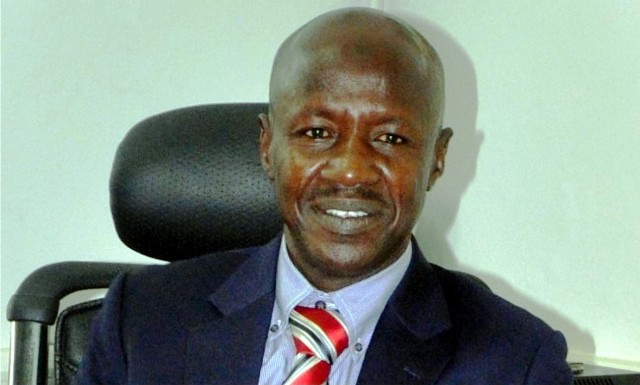
The House of Representatives has urged the Presidency to seek interpretation of the Economic and Financial Crimes Commission (EFCC) Act before a court, following the Senate’s rejection of Mr Ibrahim Magu as chairman.
The House also resolved that the executive should refrain from making statements that connote the usurpation of the judiciary’s powers considering its negative effects on the doctrine of separation of powers.
This followed a motion, yesterday, in Abuja, by Rep. Leo Ogor (Delta-PDP), on the “need to prevent erosion of the Doctrine of Separation of Powers”.
Moving the motion, Ogor explained that by the clear provision of Section 2 (3) of the EFCC Act, the chairman of the anti-corruption agency shall be nominated by the President subject to the confirmation of the Senate.
“Convinced that the EFCC Act is an Act of the National Assembly that can only be set aside by a court of competent jurisdiction, and until that happens, the law remains in force and binding on all persons and authorities in the country.
“Furthermore, the Executive Arm of Government has not filed any proceeding in any court to challenge the provision of Section 2 (3) of the EFCC (established) Act of 2004.”
Ogor said that under the doctrine of separation of powers, the interpretation of the Constitution and Acts of parliament was the sole responsibility of the judiciary and not that of any person or official of the other arms of government.
He said that the statement credited to Vice President, Prof Yemi Osinbajo, was capable of eroding the doctrine of separation of powers with its obvious implication of instituting a dictatorship in the country.
Contributing to the motion, Rep. Simon Arabo (Kaduna-APC), said that there was need by the executive to toe the line of separation of powers.
Also, Rep. Kingsley Chinda (Rivers-PDP), said that people should not continue to upgrade opinions to be actual facts.
“Government should be responsive and listen to the opinions of the masses,” he said.
The motion was unanimously adopted when it was put to a voice vote by the Speaker, Yakubu Dogara.
The House, therefore, mandated its Committee on Legislative Compliance to ensure implementation of its resolution.
Meanwhile, the House of Representatives, yesterday, called on the Inspector-General of Police, Ibrahim Idris, to prosecute the persons behind the assassination attack on Senator Dino Melaye.
The call is the outcome of a motion sponsored by Rep. Herman Hermbe (APC Benue) and unanimously adopted by the House.
Moving the motion, Hembe condemned the assassination attempt on his colleague and described the move as ‘needless.’
“It is condemnable that unknown men stormed Melaye’s residence on April 14, and shot sporadically at his building and cars for over an hour.
“Despite several calls to the Divisional Police Officer of Aiyetero Gbedde Police Division, the police did not come until the gunmen exhausted themselves and escaped.
“Melaye survived what appeared to have been an attempted assassination by the sheer grace of God,’’ Hembe said.
In his contribution to the debate on the motion, Rep. Solomon Ahwinahwi (PDP-Delta) said, “Dino must have said so many things, but it is not enough to kill him.
“I think there is need for us to invite the Inspector-General of Police to explain the circumstances surrounding the criminal act.”
On his part, Rep. Anayo Nnebe (PDP-Anambra), urged the Police to intensify efforts to stem cases of assassination in the country.
“We are all potential victims if the trend is not checked.
“Dino was lucky that the attack did not consume him; the next person may not be lucky,’’ Nnebe added.
The Speaker, Yakubu Dogara, referred the motion to the House committees on Legislative Compliance and Police Affairs for further legislative action.
He urged members of the committees to report back to the House within four weeks.



The Rivers State chapter of the All Progressives Congress Christian Leaders Forum has expressed strong confidence in the capacity of All Progressives Congress (All Progressives Congress) candidates in the state to deliver effective governance if elected into office in the coming elections.
The State Coordinator of the forum, Archbishop Lucky Aroh, made this known during a breakfast and thanksgiving meeting held in Port Harcourt, where leaders gathered to pray for the stability of the party and the safety of its candidates ahead of the 2027 general elections.According to him, the meeting was convened to seek divine intervention for peace, unity, and security among APC candidates across Rivers State.
“Today we are praying for APC stability in Rivers State and the security of our candidates that have been elected to contest the 2027 elections. It is a breakfast meeting,” Aroh said.
He further expressed optimism that the party’s candidates would not disappoint the people if entrusted with leadership responsibilities.
“They will not fail when elected into office. We are here as fathers of the land to let them know, and I must tell you the truth that these are the authentic people that will do well in Rivers State,” he added.
Speaking earlier, the National Chairman of the forum, Professor Olanrewaju Abraham, commended the Rivers State chapter for organizing the programme, noting that the national body of the forum believes strongly in the power of prayer.
He stated that political leadership provides an opportunity to influence society positively, including advancing moral and spiritual values, while expressing confidence that APC candidates at all levels would emerge victorious in the upcoming elections.
Also speaking, the Rivers State Women Leader of the APC, Hon. Darling Amadi, praised the forum for its commitment to prayers for peace, stability, and the protection of party candidates.
Represented by the Deputy Women Leader of the party in the state, she described the initiative as commendable and urged other political and support groups within the party to emulate the gesture in promoting unity and stability.
By: John Bibor, Menebe Emmanuel & Fortune Paibi
Prominent businessman and philanthropist, Elder Anthony Osagwe-Ogo, was celebrated in grand style as he marked his 70th birthday anniversary, with distinguished Nigerians, business leaders, and golf enthusiasts gathering to honour his remarkable contributions to society.
The colourful celebration took place at the Port Harcourt Golf Club, where friends, associates, and well-wishers converged to pay tribute to the revered elder statesman.
Chairman of the occasion, High Chief (Dr.) Ikenna Okafor, described the celebrant as a detribalised Nigerian whose generosity, humility, and commitment to humanity have earned him admiration across different communities and backgrounds.
According to Dr. Okafor, Pa Osagwe-Ogo’s impact on society and the development of his community remains unparalleled. He noted that members of the golfing community are proud to be associated with a father figure who consistently promotes the welfare and well-being of those around him.
He further stated that the history and growth of the Port Harcourt Golf Club cannot be told without acknowledging the significant role played by the celebrant, whose wisdom, encouragement, and leadership have helped sustain the club over the years.
“We are here to celebrate a man who has impacted humanity positively, a peace-loving individual and an epitome of hope for the younger generation. We pray to emulate his virtues. Today, we celebrate a bridge-builder, a trailblazer, and an iconic leader whose life continues to inspire many,” Dr. Okafor said.
He expressed delight at the large turnout of guests from various walks of life, describing it as a testament to the respect and affection Pa Osagwe-Ogo commands within and beyond Rivers State.
In his response, the celebrant, Pa Anthony Osagwe-Ogo, expressed profound gratitude to God for preserving his life and granting him the privilege of attaining the milestone age of 70.
He also thanked members of the Port Harcourt Golf Club, family members, friends, and associates for identifying with him during the celebration and for their unwavering support over the years.
The event featured the cutting of the birthday cake, presentation of awards to deserving members of the club, goodwill messages, and moments of celebration among guests.
The ceremony was attended by notable personalities from the business community, the golfing fraternity, and other sectors, all of whom joined in celebrating the life and legacy of the respected elder statesman.
Rivers State Governor, Sir Siminalayi Fubara, and the Permanent Secretary of the Rivers State Ministry of Information and Communications, Dr. Honour Kuru Sirawoo, have been honoured with awards of recognition in connection with the 2026 Democracy Day celebrations held in Port Harcourt.
The awards, which formed part of activities marking Nigeria’s Democracy Day on June 12, were formally presented on Tuesday at the Ministry of Information and Communications in Port Harcourt.
Presenting the awards was Hon. Abdul Hameed Oladipupo Alli, popularly known as “Mr. Nigeria,” Publisher of Asiwaju Trumpet Magazine and Achievers World International Magazine.
Governor Fubara was recognised for his efforts in sustaining peace, stability, and a conducive political atmospherJohn Bibor / Menebe Emmanuel / Fortune Paibie in Rivers State. The organisers noted that his administration has fostered harmony and strengthened civic participation across the state.
Dr. Sirawoo, on the other hand, was honoured for his exemplary administrative leadership and significant contributions to effective information management within the Ministry of Information and Communications.
Representing Dr. Sirawoo at the presentation ceremony, Dr. Christian Davies received the award on his behalf and expressed gratitude for the recognition. He described the honour as a reflection of Dr. Sirawoo’s unwavering commitment to professionalism, excellence, and dedicated public service.
Dr. Davies assured the organisers that the award would be formally conveyed to the Permanent Secretary.
The event also featured the presentation of commemorative publications highlighting major governance and civic milestones in Rivers State, including Easter celebrations, Workers’ Day activities, the Governor’s third anniversary in office, and Democracy Day programmes.
Organisers of the awards commended the Rivers State administration for what they described as sustained peace, political stability, and improved civic engagement, noting that these achievements have contributed significantly to the state’s continued development.
By: Jessica Sambol