
City Crime
Songhai Farms: Boosting Integrated Farming

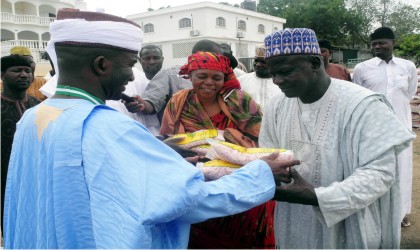
Senator Abdul-Aziz Nyako of Adamawa Central Senatorial District (left), distributing improved maize seedlings to farmers in Yola, recently. Photo: NAN
Have you ever found
a place where nothing is considered a waste, where man, animals, plants, and where all that nature has got to offer are harnessed; each relying on the other without friction?
Finding such a place seems impossible but it exists in Songhai Farms in Porto-Novo, Republic of Benin.
Tourists note that in the farm, everything is re-generated. Leaves, stems and roots are used to produce animal feeds, soil mulch and compost manure while aquatic plants, such as water hyacinth, are used to generate gas and purify water.
Animal wastes such as droppings, horns, bones, intestines, feathers are equally used for biogas production and compost manure while rain water is harvested for aqua-culture, irrigation and human needs.
In the farm, tourists observe that one becomes so in tune with nature because all food items are organic (natural) without additives or any form of chemicals.
Songhai Centre, a 200-acre land that has become an international non-governmental development organisation, was founded in 1985 by a Nigerian-born American Catholic Priest, Rev. Fr. Godfrey Nzamujo.
It has become a destination for agro-tourists from around the world. It is named after a prosperous and powerful empire that was very strong in West Africa between the 14th and 16th centuries.
“Songhai for us is not that empire but the spirit of a people that can carry themselves and know how to make a good reading of their environment and discover the opportunities therein.
“And again, how to convert these into common wealth, rather than individual wealth, which most leaders in Africa are infamously known for today,’’ Lazarus Dourossimi, a tour guide at the centre said.
Apart from citing its regional base in Porto-Novo, the centre has three other farms in Savalou, Parakou and Kinwedji, all in Republic of Benin.
The Porto-Novo centre has pens for chicken, grass-cutters/rabbits, turkey, guinea fowls and quails while the snails and others are kept in neat houses.
The maggot uses the intestines of slaughtered animals and dung to produce relatively big ones that are used in feeding fish.
The farm, a mini-town on its own, has metal workshops, pottery workshops and an industrial zone for the production of bio-energy, liquid and bar soaps, plastics, fruit juice, fish mill and a slaughter house.
It also has administrative blocks, communication buildings, multi-purpose halls, staff and student quarters, feed mill, rice mill, compost production, swimming-pool, chapel, meeting and conference rooms.
It has variety of hotels and restaurants where various natural cuisines are prepared and served to visitors as well as a supermarket where only organically-grown produce and finished products from the farm are sold.
“I want to be a part of Africa saying no to this logic of poverty. When I see brothers and sisters, I am really grateful that we are not giving up. We want to give our children something different.
“In Nigeria, we are being trained to face the problems of yesterday. We are doing our training in agriculture of yesterday.
“We are not seeing the challenges of today and preparing ourselves for the challenges of tomorrow which are very simple.
“It is a challenge of employment for all, particularly young men and women. It is to remove poverty in terms of what we eat, food security and the way we live,’’ Nzamujo told a group of Nigerian agro-tourists who visited the centre recently.
Tourists observe that the farm transforms all its agricultural products, using simple and natural processes and effective technologies that are easily accessible.
They note for instance that palm-nuts are processed into palm oil and palm kernel oil that can be used for various purposes.
“We want to develop the idea that we can really develop in a very sustainable manner if we respect our environment. The environment, therefore, is going to improve our productivity.
“To further magnify what we are doing and in order for us to really get everybody on board, we are developing low-input agricultural production. Most of the production inputs are within the reach of practically everybody here,’’ Nzamujo said.
“The plant is what nature has given us, it takes carbon-dioxide from the air, chemical substances from the soil and some energy to grow fruits, leaves, stem and roots.
The animals consume parts of the plant that man has no use for, like corn stalk, to feed grasscutters.
“Since Songhai is a resource centre, we discovered that out of primary production, we can process our goods into finished goods; hence we need machine and energy.
“For energy to run those machines, we use solar and covert our all categories of waste to methane gas to power our generators and machines.
“We want to train young people so that they can provide jobs for themselves first and then the entire world.
“The second aspect is giving technology to farmers and people to enhance their productive capacity, ‘’ Dourossimi explained.
According to him, the Songhai model of green rural cities has extended to other countries including Nigeria, Liberia, Sierra Leone and Congo Brazzaville.
Statistics shows that Songhai has farms in Cross River, Lagos, Katsina State, Rivers and Enugu State while the project is also being replicated for private individuals in Ebonyi.
In spite of these initiatives, Nzamujo said Nigeria had yet to take full advantage of its vast agricultural potential to transform its fortunes.
“Nigeria, rich as it is and with all the blessings from God, imports food. It is even importing fuel into a country that produces crude oil.
“But we can produce food and send it to all of West Africa but we are doing the opposite. So, we’ve lost it. What we are doing at Songhai Farms is to show that Africans can do it,’’ he said.
Nzamujo said his experience with some states in Nigeria had been worrisome because of the attitudes of the government nominees.
“Something that costs 20 dollars, they want us to quote 40 dollars. We built our Port Novo centre for just a third of what they wanted us to quote in one state,’’ he alleged.
He said that Songhai Farms employed more than 2,500 people from different countries, noting that it recently sponsored 185 candidates to undergo psycho-technical test, written test and endurance test.
“My dream is that when you come to Songhai Farms, you marvel and say Africa is working,’’ Nzamujo said.
A Nigerian agro-tour operator, Mrs Olufunke Taiwo, said: “We want to inspire our farmers to form the habit of cultivating big and sustainable farms as against small ones.
“Running small-scale farms is no longer in vogue, the business of agriculture has grown beyond that.
“We are looking at people to build sustainable farms and these must not necessarily have to be the government but individual farmers that could build big farms to provide employments and grow the wealth of Nigeria.’’
Pedro is of News Agency of Nigeria.
Iyiola Pedro


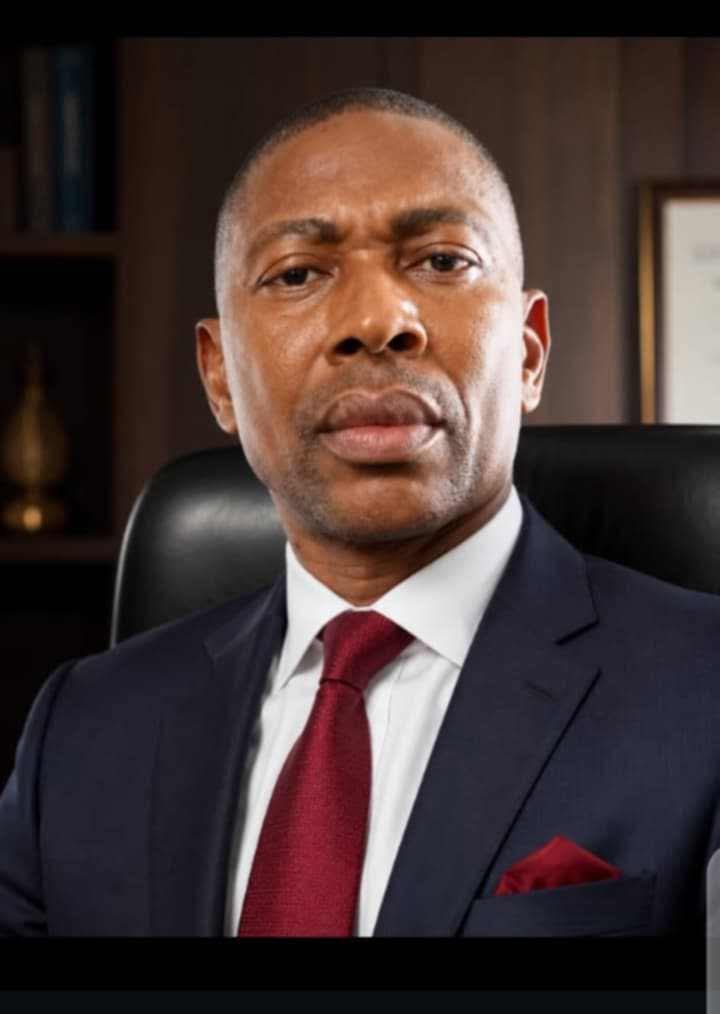
A former staff of the Rivers State Newspaper Corporation, publisher of The Tide Newspapers, Idongpee Akwaowo Reuben, has been appointed the Acting Registrar/Chief Executive Officer of Chartered Chemists of Nigeria (ICCON) by the Federal Government of Nigeria.
Akwaowo’s appointment follows the expiration of the second tenure of the former Registrar, Chemist Jwalshik Wilford.
According to a letter released from the office of the Minister of State for Health and Social Welfare dated August 5, 2026, the Minister of State for Health and Social Welfare, Dr. Iziaq Adekunle Salako, said the appointment was with immediate effect.
The minister had earlier announced Akwaowo’s appointment during a meeting with the Permanent Secretary, Heads of Departments, and Directors in June 10, 2026 in the Minister’s Conference Room.
He said the appointment was automatic and effective 1st June, 2026 following the satisfactory handover that followed the succession procedure.
The Minister nullified the earlier process put in place for a substantive appointment, citing it as a contravention of the provision of the ICCON Act.
He further directed that the appointment letter be issued without further delay.
The Minister admonished the new ICCON Chief Executive to take charge and ensure that the Institute is on the path of peace and progress to deliver her mandates.
In his response, Akwaowo thanked the the Federal Government for the appointment which, he said, has laid every uncertainty surrounding the leadership of the Institute to rest.
He pledged his unalloyed loyalty to the Federal Government and the Minister and promised to work with his Management Team to align with the policy directives of the Ministry as well as the renewed hope agenda of the Federal Government.
Akwaowo joined ICCON in 2005 as a pioneer staff, rose through the ranks and served in many capacities transcending virtually all the departments in the Institute including HOD, Administration/Accounts & Finance.
Most recently, he served as the pioneer Team Lead and the Registrar/CEO Representative in the National Chemical Personnel Audit excercise to Chemical companies and Chemistry Departments in Tertiary Institutions as part of the Institute’s regulatory mandates.
He has attended several courses and workshops and represented the Institute at various conferences and fora.
Akwaowo is a Chartered Chemist and also a member of a number of professional bodies.
He rose to the rank of Director, Scientific in 2025, and was until his appointment, the Coordinator, Zonal Offices of ICCON.
City Crime
Bayelsa Water Coys Raise Alarm Over Business Threats …Set To Resist Multiple Levies Amid High Production Cost


The Socio-Economic Rights and Accountability Project has asked the National Assembly to immediately withdraw the proposed Nigeria Data Protection (Amendment) Bill, 2026, describing it as a backdoor attempt to regulate social media and expand government control over online expression.
SERAP warned that it would institute legal action if the bill is passed in its current or substantially similar form.
The bill, sponsored by Senator Ned Nwoko (APC, Delta North), seeks to compel social media platforms, data controllers and data processors operating in Nigeria to establish physical offices in the country.
It also empowers the Nigeria Data Protection Commission to shut down or prohibit the operations of any entity that fails to comply within 30 days.
In a letter dated July 18, 2026, and addressed to Senate President Godswill Akpabio and Speaker of the House of Representatives Tajudeen Abbas, SERAP said the proposed amendment posed a threat to constitutionally guaranteed rights.
The letter, signed by SERAP Deputy Director Kolawole Oluwadare and issued on Sunday, read in part, “Requirements compelling technology companies to establish local offices would increase government leverage over platforms, facilitate political pressure, make censorship demands easier and expose local employees to retaliation.
“The Bill would create sweeping powers capable of shutting down or excluding social media platforms from the Nigerian market and expose millions of Nigerians to serious violations of their constitutionally and internationally guaranteed human rights.”
SERAP argued that the bill revives previous attempts to regulate social media that attracted widespread public opposition.
“The current Bill revives substantially similar proposals previously introduced by Senator Nwoko, raising renewed concerns that localisation requirements are being used as a vehicle for expanding governmental control over digital platforms and online expression,” it said.
The organisation warned that it would challenge the legislation in court if enacted.
“Should the Bill be enacted into law in its current or substantially similar form, SERAP shall promptly take all appropriate legal actions to challenge its legality in the public interest and to ensure that Nigerians’ fundamental rights are fully protected,” the letter stated.
According to SERAP, the proposed legislation would give the Nigeria Data Protection Commission excessive powers to block digital platforms without adequate procedural safeguards.
“The Bill constitutes a backdoor attempt to regulate social media and increase governmental control over online expression through corporate localisation requirements rather than through transparent and constitutionally permissible regulation,” it said.
The group argued that the bill lacks provisions for prior judicial authorisation, meaningful opportunities for compliance beyond the proposed 30-day period, and safeguards to protect the rights of millions of Nigerians who rely on digital platforms.
SERAP also cited the judgment of the ECOWAS Court of Justice on Nigeria’s suspension of Twitter, arguing that the proposed amendment could produce similar consequences by indirectly excluding social media platforms from operating in the country.
“The Bill also risks recreating the very dangers previously condemned by the ECOWAS Court of Justice. In SERAP and Others v. Federal Republic of Nigeria, the Court held that the suspension of Twitter violated the rights to freedom of expression, access to information and media freedom protected under the African Charter.
“Although the present Bill differs from the Twitter suspension in form, it creates the possibility of achieving the same result indirectly by empowering regulators to prohibit digital platforms from operating in Nigeria.
“The National Assembly should not enact legislation capable of producing, through indirect regulatory means, the very restrictions on fundamental rights that regional human rights law prohibits,” the organisation said.
It maintained that while governments have a legitimate interest in regulating digital platforms, such measures must comply with constitutional guarantees and international human rights standards.
The organisation further warned that mandatory localisation requirements would increase compliance costs for technology companies, startups, educational institutions and artificial intelligence developers.
“The proposed amendment conflicts directly with the objectives of the Nigeria Startup Act 2022 and the National Digital Economy Policy and Strategy.
“Mandatory localisation requirements substantially increase compliance costs, particularly for startups, open-source projects, educational institutions, research organisations, AI developers and smaller technology companies, while reducing Nigeria’s attractiveness as a destination for innovation and investment.
“No major democratic jurisdiction requires every social media platform to establish a physical office as a blanket precondition for providing services.”
SERAP added, “The National Assembly should immediately reject and withdraw the Bill, as it is manifestly incompatible with the Nigerian Constitution and Nigeria’s obligations under the African Charter on Human and Peoples’ Rights and the International Covenant on Civil and Political Rights.”
-

 News2 days ago
RSG Targets Nine Million Residents in Mosquito Net Distribution Campaign
-

 Oil & Energy2 days ago
Aiyedatiwa Signs New Electricity Bill
-

 Oil & Energy2 days ago
NLNG Commissions Research And Innovation Centre In RSU
-

 Maritime2 days ago
Marine Minister Commends President Tinubu On NPERA Bill Assent
-

 News2 days ago
KenPoly Holds Eight Convocations, August 29
-

 News2 days ago
RSG Begins Another Phase of Projects Commissioning Today
-

 News2 days ago
RMAFC Completes Revenue Sharing Review, Proposes New Pay
-

 Maritime2 days ago
NAGAFF Petitions IGP Over Alleged Maritime Police Harassment