
Business
FG Records Over 200 Cases Of Pipeline Vandalism – Nebo

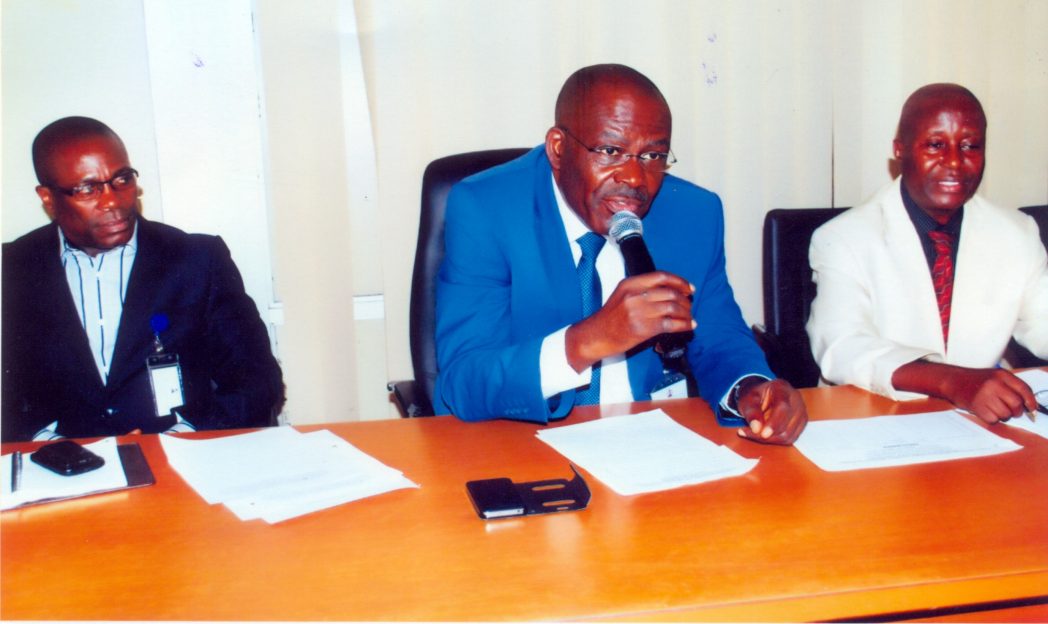
Rivers State Head of Service, Barr Samuel LongJohn (middle), addressing newly appointed Permanent Secretaries in Port Harcourt, recently . With him are Emmanuel Urang (left) and Mr Lambert Ekwueme.
Prof. Chinedu Nebo, the Minister of Power, has said that over 200 cases of gas pipelines vandalism were recorded in 2014.
Nebo disclosed this on Wednesday in Abuja at a news conference on gas infrastructure vandalism in the country.
He said that in December 2014, the power sector lost 1,000 megawatts to activities of vandals.
The minister said that activities of vandals were aimed at frustrating the efforts of President Goodluck Jonathan to provide electricity to Nigerians.
He called on Nigerians to cooperate with government in the fight against vandalism.
“This is a call to all citizens to protect these assets as they belong to all Nigerians.
“Whenever you notice these vandals carrying out their work, please report to the security agents.
“This is something all of us must work together to stop, “he said.
Nebo said that the ministry was working tirelessly with the office of the National Security Adviser and security agencies to check the activities of vandals in the country.
“Mr President has ensured that enough resources were deployed to the fight against pipelines vandalism,“he said.
He noted that vandalism remained a threat to power supply to Nigerians.
Nebo stressed that there was no justifiable individual benefit to gas pipeline vandalism other than sabotage.
He attributed the significant economic loss and insufficient power supply in the country to gas infrastructure vandalism and crude oil theft.
The minister said that 81 per cent of power in the country was generated by thermal plants dependent on gas supply.
Earlier, the Permanent Secretary, Federal Ministry of Power, Dr Godknows Igali, said that security agents were doing their best to check pipeline vandalism.
He noted that the power sector had recorded successes since the reform began in 2010.
The high point of the occasion was the signing of a Memorandum of Understanding (MoU) between the Federal Government and NANS, Youth organisations and some NGOs, to fight pipeline vandalism.



Business
Jonathan, Diri, Others Laud Firm’s Milestone in Bayelsa …Says Project Will Drive Industrialisation, Create Jobs



-

 News2 days ago
RSG Targets Nine Million Residents in Mosquito Net Distribution Campaign
-

 Oil & Energy2 days ago
Aiyedatiwa Signs New Electricity Bill
-

 Oil & Energy2 days ago
NLNG Commissions Research And Innovation Centre In RSU
-

 Maritime2 days ago
Marine Minister Commends President Tinubu On NPERA Bill Assent
-

 News2 days ago
KenPoly Holds Eight Convocations, August 29
-

 News2 days ago
RSG Begins Another Phase of Projects Commissioning Today
-

 News2 days ago
RMAFC Completes Revenue Sharing Review, Proposes New Pay
-

 Maritime2 days ago
NAGAFF Petitions IGP Over Alleged Maritime Police Harassment