
Business
Cabotage Vessel Finance Fund Gets $55m Boost

The efforts of indigenous ship-owners to acquire new vessels and maintain existing ones will soon become fruitful as $55 million has been injected into the Cabotage Vessel Finance Fund (CVFF).
The CVFF was initiated by the federal government to ensure that Nigerian ship owners are empowered to rise to the challenge of maintaining their fleet and meet the aims and objectives of cabotage as enshrined in the provisions of the coastal and inland shipping Act 2003, but its implementation has suffered several setbacks over the years.
It was revealed that as at June 2010, $55 million had accrued into the fund, which was less than $7 million as at July 2009.
Director-General, Maritime Administration and Safety Agency (NIMASA), Mr Temisanre Omatseye, disclosed the latest figure in Lagos. He said arrangement for the administration of CVFF has reached an advanced stage and the first tranche of disbursement would be concluded soon.
Already, four commercial banks that will serve as primary lending institutions (PLIS) have been selected. These are Diamond Bank Plc, Equatorial Trust Bank Plc (ETB), Skye Bank Plc, and Fiedelity Bank Plc.
Meanwhile, 240 cabotage vessels have been recorded in the cabotage special registry maintained by the agency. This represents a 450 per cent increase on the 45 vessels that were recorded as at June 2009.
In order to provide what he described as a “funding corridor” for ship acquisition and infrastructural development, the NIMASA helmsman revealed that he and his team are in the forefront of establishing a Regional Maritime Development Bank (RMDB).
Within the period under review, Omatseye said the agency achieved a 24 hour provisional ship registration regime just as it has recorded 1,318 vessels in its registry. This represents a 45 per cent increase from the previous figure at its inception.
The NIMASA Director- General, who gave a run-down of the strides attained in the last one year by the management of the agency under his leadership, said the nation’s apex maritime regulatory authority would be restructured and re-engineered to improve on its delivery and statutory mandate.
“The destination is Nigeria as a regional maritime centre and a convergence point for regional shipping events and maritime trade logistics hub. We shall collaborate with the Niger Delta Development Commission (NDDC), states and local governments in the Niger Delta region to fund the participation of qualified Niger Delta youths in the National Seafarers Development Programme (NSDP) on the ratio of 20:40:40, he said.
As part of its medium-term goals, Omatseye said the agency will come up with an intervention programme designed to support and complement federal government’s efforts at quick rehabilitation and reintegration of repentant militants.



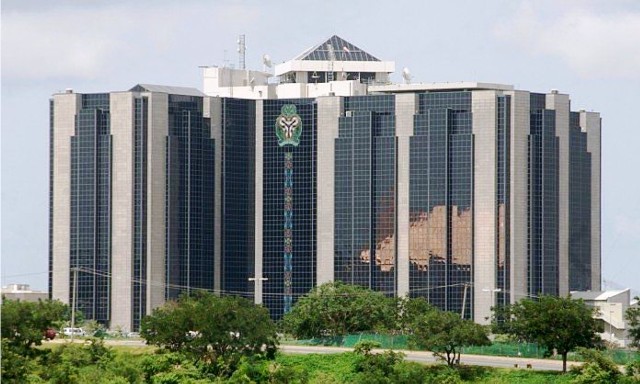
The Central Bank of Nigeria (CBN) has revised its cash withdrawal rules, discontinuing the special authorisation previously permitting individuals to withdraw N5 million and corporates N10 million once monthly, with effect from January 2026.
In a circular released Tuesday, December 2, 2025, and signed by the Director, Financial Policy & Regulation Department, FIRS, Dr. Rita I. Sike, the apex bank explained that previous cash policies had been introduced over the years in response to evolving circumstances.
However, with time, the need has arisen to streamline these provisions to reflect present-day realities.
“These policies, issued over the years in response to evolving circumstances in cash management, sought to reduce cash usage and encourage accelerated adoption of other payment options, particularly electronic payment channels.
“Effective January 1, 2026, individuals will be allowed to withdraw up to N500,000 weekly across all channels, while corporate entities will be limited to N5 million”, it said.
According to the statement, withdrawals above these thresholds would attract excess withdrawal fees of three percent for individuals and five percent for corporates, with the charges shared between the CBN and the financial institutions.
Deposit Money Banks are required to submit monthly reports on cash withdrawals above the specified limits, as well as on cash deposits, to the relevant supervisory departments.
They must also create separate accounts to warehouse processing charges collected on excess withdrawals.
Exemptions and superseding provisions
Revenue-generating accounts of federal, state, and local governments, along with accounts of microfinance banks and primary mortgage banks with commercial and non-interest banks, are exempted from the new withdrawal limits and excess withdrawal fees.
However, exemptions previously granted to embassies, diplomatic missions, and aid-donor agencies have been withdrawn.
The CBN clarified that the circular is without prejudice to the provisions of certain earlier directives but supersedes others, as detailed in its appendices.
-
Business2 days ago
Shippers Council Vows Commitment To Security At Nigerian Ports
-
Business2 days ago
CBN Revises Cash Withdrawal Rules January 2026, Ends Special Authorisation
-

 Business2 days ago
Nigeria Risks Talents Exodus In Oil And Gas Sector – PENGASSAN
-
Business2 days ago
NCDMB, Others Task Youths On Skills Acquisition, Peace
-

 Business2 days ago
FIRS Clarifies New Tax Laws, Debunks Levy Misconceptions
-

 Politics2 days ago
Tinubu Increases Ambassador-nominees to 65, Seeks Senate’s Confirmation
-
Sports2 days ago
Obagi Emerges OML 58 Football Cup Champions
-

 News2 days ago
Tinubu Swears In Christopher Musa As Defence Minister