
Nation
THE STATES

Adamawa
The Adamawa chapter of the Christians Association of Nigeria (CAN) has urged its members to use the period of Easter to pray for peace and unity in the state and country at large.
The call was contained in a statement signed by the state Chairman, Rev. Fr Moses Taparki, and Secretary, Rev. Habila Kakaba.
“All christians are called upon to make the maximum use of the passion period of Easter to pray and intercede for Adamawa and Nigeria, for return of peace in our country.
“Pray for our leaders at all levels, government, traditional and religious leaders. Pray for the oneness and unity of the land and the people of Nigeria,” the statement said.
It urged Christians to continue to be security conscious and cooperate with government and security agents in ensuring a crime-free state.
CAN lauded the state government’s commitment to peace and security, particularly its promotion of inter-religious activities through the state chapter of Nigeria Inter-Religious Council [NIRE).
Bauchi
The State Security Service (SSS) operatives in Bauchi on Sunday repelled an attack by gunmen on their training school, killing two of the attackers.
Confirming the incident to the News Agency of Nigeria (NAN), Bauchi State Commissioner of Police, Alhaji Mohammed Ladan, said that one of the attackers had been apprehended.
“I am just coming from the scene. Two of the assailants were killed while one of them was arrested alive.
“The arrested person told us that they were four in number. It means that one of them has escaped.”
According to him, a rod and wire cutter, pair of pliers, ropes, spanner and cell phones were recovered at the scene.
He, however, said apart from the two people killed, no other lives were lost, adding that no damage was done to property at the Senior Staff Training School of the SSS.
An Assistant Director of the SSS, Mr Olu Justine, said that intelligence report on an impending attack on the school had earlier been gathered while the operatives were placed on alert.
FCT
The Muslim Rights Concern (MURIC), in Abuja, has urged the National Assembly to pass a bill banning public office holders from going abroad for medical treatment.
This was contained in a statement issued by Prof. Is-haq Akintola, Director in Abuja.
According to the statement, the group also demanded that all public office holders withdraw their children and wards studying in foreign institutions and enrol them in Nigerian schools.
“We charge the National Assembly to initiate and pass a bill prohibiting people whose children and wards attend overseas institutions from holding public office.
“This is the only way to compel government to pay attention to our decaying education sector. Who feels it knows.’’
The group said this was the only way Nigerian schools and hospitals could become effective as the public office holders would strive to bring them to international standards.
On the Easter celebration, the group urged Nigerian leaders to emulate the austere and selfless life of Jesus Christ.
Jigawa
A team from the Federal Ministry of Agriculture on the Commercial Agriculture and Development Project on Tuesday paid a courtesy visit to Gov Sule Lamido of Jigawa.
The team leader, Alhaji Muhammad Umar, said in Dutse, that the purpose of the visit was to explore areas of possible partnership with the state government.
Umar disclosed that the ministry was already working with five states on the project and identified them as Lagos, Kano, Kaduna, Enugu and Cross River.
He also identified the 15 areas of collaboration on the project with the states to include poultry management, sorghum, cassava, tomatoes, cotton, oil palm, cocoa, rice and fruit trees cultivation, among others.
Lagos
Nigerian Army chaplain directors of the Catholic and protestant denominations have called for genuine transformation during the Easter in the face of Nigeria’s current challenges.
The Director (Catholic), Rev. Fr. Charles Iroegbu, told newsmen in Lagos that the spirit of Easter should bring laughter to the sad and disappointed in the society.
Kaduna
A farmer, Muhammad Baban-Iro of Rigasa Area in Kaduna on Thursday appeared before a Kaduna Sharia Court for refusing to refund N32,000 being the bride price and other expenses allegedly paid on his daughter.
The demand was made by the suitor following the discovery that she had tested positive to HIV.
One Ibrahim Bala of the same area had gone to the court to complain against Baban-Iro for allegedly collecting the money as bride price and other expenses incurred on his daughter for marriage.
Bala said he decided to discontinue with the marriage following the outcome of a hospital test which showed that his fiancee was HIV-positive.
The complainant said although he could have kept quiet if the lady’s father had allowed him to swap with the younger sister of his bride-to-be, but the man refused, saying he would rather refund.
Katsina
The Nigeria Union of Local Government Employees (NULGE) has expressed concern over the failure of Katsina State Government to implement the N18,000-minimum wage for its members.
In a statement, signed by the state NULGE Chairman, Alhaji Aliyu Haruna, on Friday in Katsina, the union called on the government to promptly implement the wage policy for its members.
“We are appealing to the state government to expedite action on the issue to ensure that the implementation takes effect from this April, along with the payment of arrears,’’ the statement said.
Kwara
An Ophthalmologist, Prof Abdulraheem Mahmoud says 75 percent of the one million Nigerians with blindness should not have been blind.
Mahmoud, said the causes of the blindness were either preventable or curable, and noted that majority of the blind people were poor.
He made the observation in Ilorin at the inaugural lecture of the Department of Ophthalmology, Faculty of Clinical Science of the University of Ilorin.
ateau
As Christians mark Easter, Chief Whip, Plateau House of Assembly, Mr Tim Golu, on Saturday warned the country’s leaders against playing politics with the lives of citizens.
“Nigerian leaders must refrain from hypocrisy and love the governed sincerely and from their hearts.
“Leaders must avoid the temptation to play politics with the lives of Nigerians and the existence of the nation.
“The country belongs to all of us and must be placed above every other consideration,’’ Golu said in Jos in an Easter message.
Taraba
David Sabo Kente Foundation has donated N10 million for the revival of Ajikwen Education Trust Fund to enable it to render financial assistance to students of Jukun descent.
The Chairman of the foundation, Chief David Kente, announced the donation in Wukari, Taraba, on Saturday during the Jukun Youth Cultural Day celebration.
Kente, who was the chairman of the occasion, said education was the “live wire” of every modern society and needed to be supported by all well-meaning citizens.
He advised other Jukun people to “give up fighting wars” in order to attract foreign investments to enhance economic development in the area.
“The Kwararafa kingdom cannot continue military campaigns and capturing of kingdoms to pay tribute to it as our forefathers did.
“We have to change our priorities in order to cope with the challenges of the current world which is a global village,” he said.
Earlier, Mr Wunuken Ali, the President of Jukun Youth Cultural and Development Association, said it was time to intensify contact with Jukun descendants “spread across 26 states’’ of the country to ensure unity of purpose.
Koto Sokoto
Sokoto State Government has introduced “vibrant policies” to develop the agriculture sector in the state.
The Commissioner for Agriculture and Natural Resources, Dr Jabbi Kilgore, said this in Sokoto on Sunday in an interview with the News Agency of Nigeria (NAN).
He said “the ministry is working toward taping available human and mineral resources in the state to move the sector forward”.
Kilgore added that the measure was to ensure massive food production for local consumption and export.
The commissioner said the ministry had already taken measures to provide modern farming inputs at government-subsidised price for sale to farmers.
He said 150 tractors had been distributed to medium and large-scale farmers on loan basis while fertilisers were provided for both rainy and dry season farming.
“The state government wants to modernise farming methods and attract participation of people in the sector.



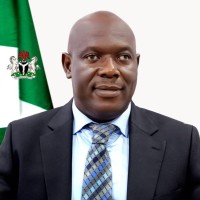
The Hydrocarbon Pollution Remediation Project (HYPREP) has commemorated the 15th anniversary of the release of the United Nations Environment Programme (UNEP) Environmental Assessment Report on Ogoniland, reaffirming its commitment to restoring the environment and improving the livelihoods of affected communities.
In a statement signed by the Project Coordinator, Prof Nenibarini Zabbey, to commemorate the anniversary, HYPREP described the anniversary as a significant milestone in Nigeria’s environmental restoration efforts, noting that the project has made remarkable progress in implementing the recommendations of the landmark UNEP report released on August 4, 2011.
The UNEP report had revealed extensive oil pollution across Ogoniland, severe environmental degradation, and serious public health risks resulting from decades of petroleum operations. It also recommended an initial $1 billion fund to commence the cleanup of the affected communities.
According to HYPREP, the Federal Government formally launched the Ogoni clean-up in 2016, while the Project Coordination Office was established in 2017 to drive the implementation of UNEP’s recommendations.
Zabbey said the current administration has continued to prioritise the project under the Renewed Hope Agenda.
Providing an update on the cleanup, the Project Coordinator disclosed that 30 of the 65 contaminated sites identified by UNEP have been fully remediated, while work is ongoing at several medium- and high-risk locations. It also stated that more than 1.5 million mangrove seedlings have been planted as part of what it described as the world’s largest restoration of oil-degraded mangroves, with over 1,000 hectares of shoreline already rehabilitated.
Zabbey further revealed that 49 Ogoni communities have been connected to potable water schemes through multiple water projects and booster stations aimed at providing safe drinking water across the region.
In the health sector, he said the 100-bed Ogoni Specialist Hospital in Kpite and the 43-bed Cottage Hospital in Buan are nearing completion, adding that several existing health facilities have been upgraded with modern medical equipment, while five ambulances have been donated to improve emergency healthcare services. The Project Coordinator also disclosed that a three-year human health biomonitoring study is being conducted in collaboration with the World Health Organization’s International Agency for Research on Cancer (IARC).
On economic empowerment, Zabbey stated that the Project has created more than 8,000 direct jobs and trained thousands of Ogoni youths and women in various vocational and technical skills, including software development, cybersecurity, aviation, commercial diving, seafaring, mechatronics, and creative arts. The project also reported awarding scholarships to more than 1,000 students, providing grants to small businesses, and supporting persons living with special needs through skills acquisition programmes.
The statement further highlighted ongoing legacy projects, including the Ogoni Power Project and the Centre of Excellence for Environmental Restoration, which it said is about 96 per cent complete. HYPREP also welcomed the recent designation of the Ogoni Wetland as a Ramsar Site of International Importance and pledged to continue promoting biodiversity conservation and sustainable management of the ecosystem.
Marking the anniversary, Zabbey said the progress achieved over the past 15 years demonstrates the collective commitment of government, development partners, stakeholders, and local communities to restoring Ogoniland. He called for renewed collaboration to sustain the cleanup effort, promote environmental sustainability, and support the long-term development of the region. 3
-

 News2 days ago
RSG Targets Nine Million Residents in Mosquito Net Distribution Campaign
-

 Oil & Energy2 days ago
Aiyedatiwa Signs New Electricity Bill
-

 Oil & Energy2 days ago
NLNG Commissions Research And Innovation Centre In RSU
-

 Maritime2 days ago
Marine Minister Commends President Tinubu On NPERA Bill Assent
-

 News2 days ago
KenPoly Holds Eight Convocations, August 29
-

 News2 days ago
RSG Begins Another Phase of Projects Commissioning Today
-

 News2 days ago
RMAFC Completes Revenue Sharing Review, Proposes New Pay
-

 Maritime2 days ago
NAGAFF Petitions IGP Over Alleged Maritime Police Harassment