
Business
Nigeria Ready For Business, Shettima Tells Foreign Investors

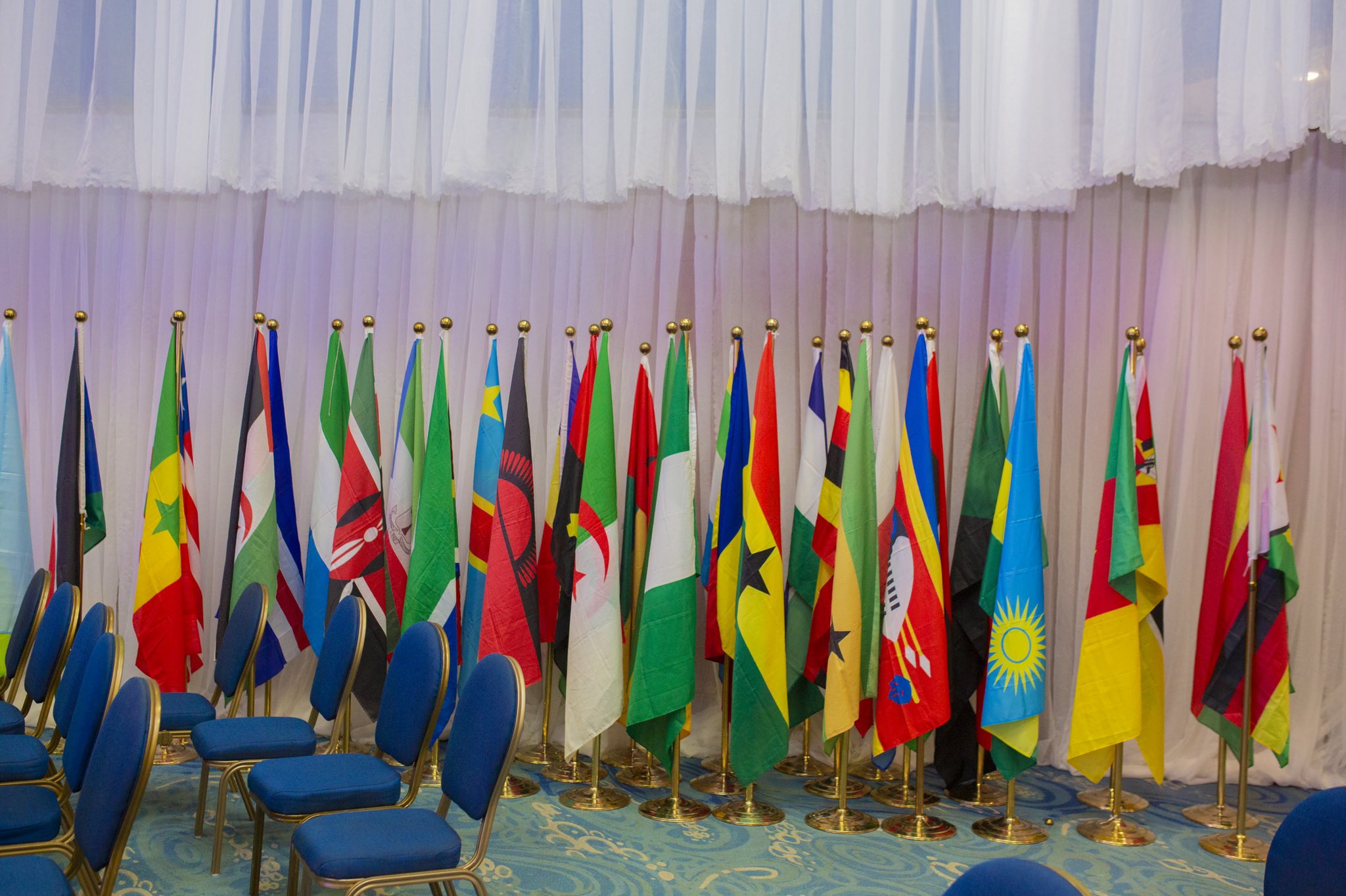
The Vice President, Senator Kashim Shettima, has urged foreign investors to take advantage of the opportunities in Nigeria, declaring that the country is now ready for business.
He noted that the combination of Nigeria’s young, energetic population and the agenda of the new administration placed the country far ahead of others in the region.
Shettima made the call, Tuesday, in his remarks at a side event of the ongoing United Nation Food Systems Summit in Rome, Italy, themed, “Scaling up of multi-stakeholder collaboration and investments in the implementation of the food systems pathways in Nigeria”.
According to the Vice President in a statement by his media office, “we have the capacity of transforming the demograhic bulge into demographic dividends or it will be the demographic disaster that will consume all of us.
“Nigeria will surpass the United States as the third most populous nation on earth and the population is young. The median age is 19.
“With determined leadership and the support of the global community, we believe, as eternal optimists do, that there is hope in the horizon”, the VP stated.
He also expressed hope that the expected transformation can take place on the back of what he described as “building blocks that already exists in Nigeria”.
“They include government’s recent declaration of a state of emergency on food security, moving food and water to the purview of National Security Council; the country’s renewed commitment to food and nutrition since the Nutrition Conference of 2022; the National Food and Micro-Nutrient Intake Survey and the National State Level Food Systems”, he explained.
Speaking on improving collaboration between government and the private sector, Shettima said, “focusing on agribusiness and the understanding that investment that will transform food system will come from the private sector with the government providing the enabling environment, will scale-up investment in the country”.
He further explained that “Nigerian government, together with domestic and international finance institutions, scaled up the Value Chain Development Programme approach for the Special Agro Processing Zones Programme with an impressive investment of $521million from the IFAD, from the IsDB, and from the AfDB.
“The success story of the value chain development programme speaks for itself”, he noted.
Continuing, he said the programme “has empowered 100, 000 small scale farmers to enter into engagement with some of the food marketing companies in the world, enabling them to lift their families out of the poverty trap.
“The VCDP/SAPZ programme really represents unique and concrete model for mobilizing funds for investment in support of our national food systems transformation programme, the transition to more yielding, healthier, more equitable and more sustainable food system”.
Stating that the next frontier of global development faces Africa, Vice President Shettima said Nigeria remains critical to the success or failure of the transition and assured that the new leadership in Nigeria is working hard to position the country on the path of growth.
He said, “we have a President who has a private sector background and a Vice President who is also from the private sector. We have a President who has the knack for selecting the best to drive the process.
“Be rest assured that the next frontiers for global development is facing Africa and Nigeria will make or mar that transition”.
Present at the event were Nigeria’s Permanent Representative to FAO/IFAD/WFP in Rome, Mr Yaya Olaniran; Nigerian Ambassador to Italy, Amb. Mfawa Abam; Deputy Chief of Staff to the President in the Office of the Vice President, Amb. Ibrahim Hadejia, among other senior government officials.



The National Insurance Commission (NAICOM) has urged insurance operators to leverage their enhanced financial capacity to improve customer service, deepen market penetration and drive sustainable growth.
The Commissioner for Insurance, Olusegun Omosehin, made the call at the 2026 Business Journal Insurance and Pension Roundtable in Lagos on Tuesday.
Omosehin said recapitalisation should provide a foundation for better service delivery, innovation and expansion. He identified trust, service and growth as three priorities for operators following the recapitalisation exercise.
“I challenge industry leaders to focus on three priorities: trust, service and growth. Operators must build trust through ethical conduct and prompt claims settlement, improve service delivery through innovation and customer engagement, and pursue growth through financial inclusion, market expansion and product innovation.
“Make customer service a major competitive advantage by embracing technology, responding promptly to inquiries, settling genuine claims and maintaining transparency. Insurance companies must channel their enhanced capital into digital transformation, product development, claims management, risk management and talent development,” Mr Omosehin said.
Omosehin said the real measure of recapitalisation would be its impact on policyholders, businesses and the wider economy. He identified low public confidence, limited awareness and poor customer experience as major challenges confronting the industry.
According to him, Nigerians largely assess insurers by their claims settlement speed, responsiveness, and the accessibility of insurance products.
Omosehin also called for deliberate efforts to deepen insurance penetration, noting that millions of Nigerians remained uninsured. He said many remained vulnerable to financial losses arising from accidents, fire, floods, health emergencies and business disruptions.
Recapitalisation, he added, had strengthened operators’ capacity to develop affordable products and extend coverage to underserved individuals, small businesses and rural communities.
Omosehin identified population growth, digital economy expansion, infrastructure development and rising awareness of financial protection as opportunities for industry growth. He urged operators, however, to translate these opportunities into measurable results through innovation, professionalism and customer-centred operations.
Also speaking, the Vice-President of the Association of Mobile Money and Bank Agents of Nigeria (AMMBAN), Yusuf Adeyemo, urged insurers to simplify their products and communication strategies.
While noting that complex insurance terminology and lengthy policy documents discouraged potential customers, particularly traders and small business owners, Adeyemo urged insurers to leverage the country’s nearly two million mobile money and bank agents to expand coverage, particularly in rural communities.
He said agents could provide accessible channels for purchasing policies, lodging claims and obtaining relevant information.
Adeyemo urged the industry to ensure customers can access claims and pension benefits as easily as they make payments.
The President, Port Harcourt Chamber of Commerce, Mines , Industry and Agriculture (PHCCIMA), Dr. Chinyere Nwoga, has described the Bank of Industry’s initiative of N10 million for micro enterprises and N50 million for small and medium-sized enterprises as a welcome development.
Nwoga said this during a goodwill message at the BOI programme on Guaranteed Loans for Women (GLOW), held in Port Harcourt, recently.
She commended BOI for its commitment to women’s economic empowerment and enterprise development, noting that the initiative would promote entrepreneurship, productivity and job creation.
The PHCCIMA President, however, called for stronger collaboration between BOI and organised business associations to improve women’s access to affordable business financing.
She urged the Bank to recognise credible business associations, particularly PHCCIMA, as institutional partners and potential loan guarantors.
Nwoga noted that the involvement of organised chambers of commerce would simplify the loan process and enable more qualified women entrepreneurs to benefit.
She said credible business associations could help identify eligible businesses, sensitise women entrepreneurs and support enterprise growth.
The GLOW initiative is a ?10 billion BOI financing scheme offering up to ?10 million to micro enterprises and ?50 million to small and medium-sized enterprises.
The facility attracts seven per cent annual interest, with a repayment tenor of up to five years and a six-month moratorium, subject to eligibility requirements.
She noted that the scheme covers sectors such as manufacturing, ICT, agribusiness, healthcare, education, renewable energy, creative industries and value-adding services.
Nwoga reaffirmed PHCCIMA’s readiness to partner with BOI in promoting the initiative and expanding access to finance for women-owned businesses.
She further insisted that stronger partnerships would advance women’s entrepreneurship, inclusive economic growth and the productive capacity of businesses.
King Onunwor
The Federal Government has flagged off the modernisation of the Lagos Port Complex, Apapa, and Tincan Island Ports, describing the project as a strategic investment that will reposition Nigeria as a leading maritime hub in Africa and strengthen the country’s competitiveness in global trade.
The event was conducted by the Minister of Marine and Blue Economy, Adegboyega Oyetola, in partnership with the Minister of Finance and Coordinating Minister of the Economy,Taiwo Oyedele, and other senior government officials, in Lagos, Wednesday.
According to a statement signed by the Media Aide to Oyetola, Dr Bolaji Akinola, and made available to newsmen, Oyetola, while speaking at the groundbreaking ceremony at the Tincan Island Port, said the project, which would cost £746m (approximately N1.45tn), would address decades of infrastructure deficits, reduce logistics costs, attract international shipping lines, stimulate industrial growth and create at least 20,000 direct and indirect jobs.
He said the modernisation programme was a significant step towards realising President Bola Tinubu’s Renewed Hope Agenda, which prioritises infrastructure development as a catalyst for economic growth, investment and job creation.
Oyetola noted that the two ports, which have served as major gateways for Nigeria’s international commerce for decades, have become increasingly inadequate to meet the demands of a rapidly expanding economy and changing global shipping requirements.
He explained that Apapa Port, established in 1913, was more than a century old, while Tincan Island Port was commissioned in 1977, when Nigeria’s population stood at approximately 67.2 million, annual trade was about $17bn and cargo throughput was 8.11 million metric tonnes.
According to him, Nigeria’s population has grown to approximately 240 million, merchandise trade exceeds $100bn annually, while cargo throughput has increased to 129.3 million metric tonnes, nearly 16 times its 1977 level.
Oyetola stressed that the mismatch between growing economic activities and ageing port infrastructure had made comprehensive modernisation both urgent and unavoidable.
“The cost of inaction is far greater than the cost of modernisation,” he added, saying Nigeria would not surrender its competitive advantage.
“Our ambition is to attract more direct calls by international shipping lines, retain Nigerian-bound cargo, expand transshipment opportunities and establish our ports as preferred gateways to trade across the African Continental Free Trade Area. We cannot achieve this ambition with infrastructure that falls behind the demands of modern shipping,” Oyetola said.
Oyetola lamented that cargo dwell time at Nigerian ports had historically ranged between 10 and 18 days, compared with three to five days at leading international ports, resulting in congestion, demurrage, storage charges and higher logistics costs.
He added that these inefficiencies were estimated to cost the Nigerian economy as much as $4bn annually.
The minister warned that Nigeria could no longer afford to lose maritime business to neighbouring countries, which had invested in deep-sea port infrastructure and modern cargo-handling facilities to attract international shipping and transshipment traffic.
“The project will entail the comprehensive rehabilitation and upgrading of critical port infrastructure, including quay walls and berths, dredging and navigation channels, access facilities, cargo-handling equipment and operational systems. It will address longstanding physical constraints while advancing more integrated, efficient and digitally enabled port operations,” Oyetola said.
He projected that the project would generate at least 20,000 direct and indirect jobs across construction, engineering, dredging, logistics, transportation, port operations and related services.
Oyetola said the Lagos ports project formed part of a broader national maritime transformation agenda, which also included the approved modernisation of Onne, Rivers, Delta and Calabar ports.
Also speaking, Oyedele described the modernisation programme as a major step towards reducing the cost of doing business, strengthening the country’s competitiveness and accelerating economic growth.
He noted that more efficient port operations would reduce delays and associated costs for importers and exporters, improve the competitiveness of Nigerian goods and deliver wider benefits to manufacturers, farmers and consumers.
He described the transaction as Nigeria’s largest sovereign export credit transaction since 2009 and Poland’s Export Credit Insurance Corporation, KUKE’s, first project in the country, highlighting it as a strong demonstration of international investor confidence in Nigeria’s economic reforms.
Managing Director of the NPA, Dr Abubakar Dantsoho, described the groundbreaking as a landmark moment in the history of the NPA, reaffirming its commitment to delivering the project in accordance with approved designs, engineering standards and contractual timelines.
He assured stakeholders that the NPA would maintain robust technical supervision, quality assurance and effective coordination throughout construction, with particular attention to safety, environmental standards and the continuity of port operations.
Lady Godknows Ogbulu
-
News5 days ago
Bayelsa Boat Mishap: Tinubu Donates N250m As Death Toll Hits 29
-
News5 days ago
Odu Pays Tribute To Late Chinwah, Describes Him As Courageous, Selfless Academic
-
 Maritime4 days ago
Nigeria, Russia Customs Sign MOU To Trade Facilitations
-

 Sports4 days ago
World marathon champion gets three-year doping ban
-

 Maritime4 days ago
South-South Governors Urges To Shake Off Collective Lethargic To Embrace Blue Economy
-

 Maritime4 days ago
Oyetola Woos Investors With Nigeria’s Seabed Resources, Marine Biotechnology
-

 Business4 days ago
Moniepoint MfB transaction volume hits 1trn daily — CEO
-

 Sports4 days ago
RSG PLEDGES TO PARTNER SWAN FOR SPORTS PROMOTION, DEVELOPMENT