
Opinion
Census In Crisis

Reservations trailing the decision by the federal government to conduct a national population census immediately after the 2023 general elections are not unexpected.
This is more so given the history of past censuses marred by intense controversy that robbed off negatively on their overall outcome and acceptance. With this contentious background, the minimum expectation was that the authorities should have taken measures to eliminate all stumbling blocks to a credible and generally acceptable national headcount.
But this projection appears not to have been properly factored in when the Director-General (DG) of Nigeria Population Commission, NPC Nasir Isa-Kwarra announced after the National Council of State meeting that the exercise will hold a month after the 2023 general elections. Curiously also, the agency intends to hold a pilot census this June after the primaries by political parties. The NPC boss sought to justify the imminence of the census on the ground that extant population data are obsolete projections and estimations with questionable value for planning purposes. It is an open secret that this country has no reliable census data. It is also not in doubt that previous attempts at a reliable census data were dogged by intense controversy, sometimes leading to the rejection of their outcome.
So the issue is not as much with the justification for a reliable national headcount as with its timing. Why the NPC scheduled its pilot scheme after primaries by political parties and the national census after the general elections remains unclear. Is there anything in the conduct of elections that promises to enhance the success and credibility of a national headcount? There is no evidence of that. Rather, the two engagements share common traits in their capacity to divide the country along the line. They are potentially rancorous and explosive.
Being potentially controversial and explosive engagements, there is the mortal risk of effectively managing eventualities arising from their outcome. Ours is a country where elections are synonymous with violence of unimaginable proportions leading to loss of lives and property. In some previous instances, it took considerable time before the crisis escalated by such elections could normalize.
It remains puzzling how a national census that may divide people along the line will fare immediately after usually disputed and rancorous polls. The probable scenario is one that will re-ignite the misgivings and distrusts usually generated by the outcome of such elections. Their combined outcome will likely produce consequences nobody can predict. In effect, having the two incongruous and controversial national assignments close to each other may ignite crisis of proportions that will make a child’s play of extant insecurity in the country.
Even now, many local government areas across the country are inaccessible on accounts of festering insecurity levied by all manner of non-state actors. There are genuine worries on the prospects of elections holding in those communities and local governments if insecurity remains in its current form. It is for the same reason that many well-meaning Nigerians have expressed doubts as to whether the 2023 polls will even hold.
Even if we manage to gamble the elections as INEC has vowed, it will be counterproductive to treat a national headcount similarly. It will make a mess of the entire exercise if people in crisis-torn areas are neither reached nor counted. The suspension of the continuous voters’ registration exercise by INEC in some local government areas should drive home this point most poignantly.
When you add up the potentially disruptive effects of do-or-die elections to the unceasing insecurity that has reduced the worth of human life in this country, one is not left in doubt that the proposed census is ill-timed and ill-advised. It is loaded with frightening prospects for sliding the country closer to the precipice.
The country is currently assailed by existential challenges from all fronts. It is more divided and fragmented than ever before with rising suspicion and mistrust among the constituents. Such misgivings are bound to exacerbate given the high premium the constituents place on the headcount. Things are not remedied by the fact that both revenue sharing and representation in national and state legislatures are based on population.
The two last censuses in 1991 and 2006 did not mark any departure from previous ones as they were equally embroiled in intense disputations as sections sought to gain advantage over others. But while that of 1991 posted a figure of 88.9 million people its 2006 variant came up with 140 million people.
Even then, the unreliability of these figures was brought to the fore by a former chairman of the NPC, Eze Festus Odimegwu. He had told officials of the INEC who approached his agency to officially release some certified data to them to assist in their planned constituency delimitation exercise that there were no officially certified data for all the localities in the country.
Hear him, “the enumeration centres we have, some of them do not exist in reality, some politicians bought them the way you will want to register voters and some people will buy voters’ cards in order to have advantage”. He said those who bought these enumeration areas, raised the figure from about ‘250 to 500 and if you later count and discover that the population is 10, they will say no, but we gave you 500, you have to raise it to that number that we gave you’.
Odimegwu lost his job for coming clear on the monumental fraud past censuses had been. But the issues raised illustrate how desperate our people can go on such issues and a measure of the level of controversy they engender. We can do with less of that crisis now.
Unless there is an agenda that must be executed before this regime exits office, the census should wait for the next government after it has satisfactorily addressed subsisting security challenges.
By: Emeka Omeihe
Omeihe writes for News Agency of Nigeria (NAN).



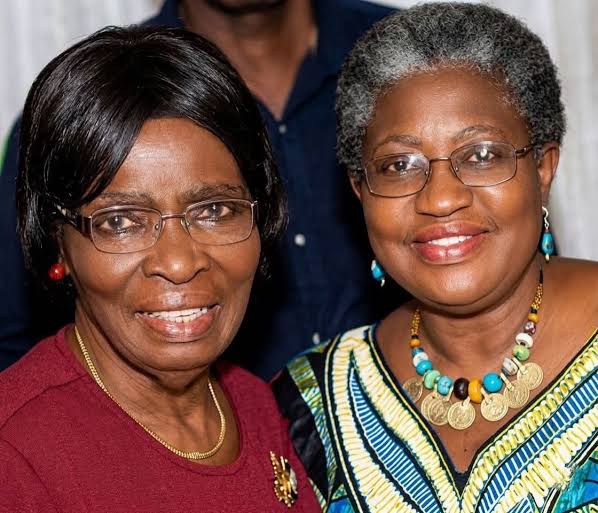
Quote “Professor Kamene Okonjo
Some women leave behind more t
Yet, to remember Professor Kam
Professor Okonjo was the belov
one of the most dramatic chapt
On December 14, 2012, the then
She leaves behind children, gr
Professor Kamene Okonjo deserv
By: Sylvia ThankGod-Amadi

Quote: An African who invokes
This is the concluding part
… Given the fact that I was
At the end of the visit by the
Back to my apartment, at abo
Under normal circumstances, yo
That all she asks is that Chie
For some reason that I do not
I believe that everyone in hu
Our ancestors have not gone fa
By: Jason Osai
The Federal Government’s approval of a N70,000 monthly transport intervention for public service workers for six months, beginning in November 2026, offers hope to employees struggling with the rising cost of living. The agreement with the Nigeria Labour Congress (NLC), reached at a conciliation meeting in Abuja on October 27, is intended to cushion transport costs and ease pressure on workers’ incomes. But for public servants in Rivers State, it raises a familiar question: will the State Government key into the intervention and ensure that its workers benefit? The agreement provides for N70,000 monthly across all levels, for six months. The Federal Government also approved peculiar allowance arrears effective from May 1, 2026, to be paid in three equal instalments beginning in November.
The parties agreed to reconvene after one month to assess implementation. Ultimately, the value of these resolutions will be measured not by announcements but by whether eligible workers receive the money. Transport costs consume a substantial share of many civil servants’ earnings before they can meet household needs. Support for commuting is therefore not a luxury or political favour; it is temporary assistance to help workers remain at their jobs without sinking further into hardship. For lower-paid employees, transport costs can turn modest salaries into a daily exercise in difficult choices and sacrifice.
The agreement also urges State and Local Governments to participate and unions to press for implementation. The federal agreement does not automatically guarantee that every State and Local Government employee will receive the support. State authorities must clarify how it will apply to their workforce, make the necessary arrangements and publish a payment timetable. Rivers State must approach the arrangement with urgency and transparency. The Government should State whether it will implement the intervention and when payments will begin. Any administrative or financial question should be addressed promptly with organised labour, not allowed to become excuses for delay.
The concern is sharpened by the earlier N35,000 monthly wage award introduced by the Federal Government in 2023 after petrol subsidy removal. It was intended as temporary relief pending a new national minimum wage. While several States negotiated and paid wage awards or related sums, implementation nationwide was uneven. Reports in 2024 indicated that many States had failed to pay the federal award, while others provided different amounts. In Rivers, labour and media reports raised concerns about implementation of the N35,000 award for State workers, amid separate announcements and arrangements concerning Local Government employees.
The wage award was meant to ease the immediate effects of subsidy removal, yet workers faced uncertainty over whether the promised relief would reach them. In February 2024, the Rivers State Government announced approval of the N35,000 award for local government workers, but subsequent reports showed that implementation across worker categories remained a concern. The lesson is clear: approval and implementation are not the same. A declaration at a meeting offers little comfort to a worker whose account does not reflect the promised payment. For workers who travel to their offices daily, the implications of delayed support are significant. Transportation expenses compete with food, rent, school fees, healthcare and other essential household needs.
As fares rise, employees may be forced to reduce spending on necessities or borrow to sustain their families. A timely transport intervention would therefore provide practical relief and demonstrate that government understands the economic pressures confronting its workforce. Its temporary nature makes prompt implementation even more important. It is fair to acknowledge that this transport intervention is a new agreement and that its administrative details may require clarification. Rivers State should not be condemned in advance for a failure that has not occurred. Nevertheless, the earlier experience gives workers legitimate grounds to seek assurances before the November commencement date. The State should avoid allowing uncertainty to persist until workers begin asking why the promised assistance has not arrived.
The NLC and unions in Rivers State should engage the State Government immediately and seek a written commitment, an implementation plan and a process for reporting missed payments. If clarification from the Federal Government is needed, the State should seek it without abandoning the goal of providing relief. Labour leaders must also keep members informed about progress and insist that any agreed arrangements are applied fairly and transparently. The Rivers State Government should treat this intervention as an opportunity to rebuild confidence. Timely support would show that workers’ welfare is more than a talking point and that the State recognises the economic realities confronting its employees.
Silence, delay or selective implementation, by contrast, would revive frustration over earlier relief measures and weaken trust between government and labour. Every month lost to administrative delay leaves workers facing the same transport burden without the intended assistance. The State should consult labour, publish arrangements and pay eligible workers on time. Rivers workers should not have to wonder whether federal relief will reach them. The Federal Government has announced the support; now the State must make its position clear. We hope the N70,000 monthly transport intervention will not follow the troubling path of the earlier wage award. Rivers State should learn from that experience and ensure that this time, relief is not merely promised but delivered.
Sylvia ThankGod-Amadi
-
Rivers3 days ago
Don Seeks Repositioning Of Tech Education For Dev
-

 Education3 days ago
PAMO MEDICAL UNIVERSITY -Nullifies Arrest warrant on VC
-
Niger Delta3 days ago
PANDEF Seeks 50% Oil Derivation Allocation Increase
-

 Education3 days ago
IAUE MOVES TO END GHOST WORKERS SYNDROME AS 400 NEW NON-TEACHING STAFF UNDERGO MANDATORY ETHICS TRAINING
-

 News3 days ago
Fresh Ebola Scare As NCDC Records Two Cases
-
News3 days ago
Customs Partners EFCC, NDLEA, Others To Tackle Money Laundering, Terrorism Financing
-

 Politics3 days ago
2027: RIVERS GUBER CANDIDATES SIGN CHARTER TO PRIORITIZE CITIZENS’ DEMANDS
-
 Politics3 days ago
2027: South-East Govs Insist On Tinubu’s Re-election