
Opinion
Fuel Subsidy And The Ghost Of 2012

On January 1, 2012, in his New Year address, President Good luck Jonathan announced the removal of fuel subsidy. The move was intended to lift the burden from the shoulders of the Federal Government in order that the much-needed funds would be freed for infrastructure; and also to deregulate the downstream of the oil and gas industry, thereby stirring up interest from investors.
The policy raised the price of Premium Motor Spirit (PMS), from N65 per litre to N141 per litre overnight, and this did not go down well with Nigerians. On Channels television, the Coordinating Minister of the Economy, Dr. Ngozi Okonjo-Iwala, stated that if nothing was done to stop the subsidy regime, it would increase domestic debt drastically.
Also, in an interview with the BBC, then CBN Governor, Sanusi Lamido, told the world that Nigeria spent $8 billion on fuel subsidy in 2011. A political analyst, Garba Sani, also noted that between 2006 and 2011, the country had spent a whopping $23 billion on subsidy
Even though the economics of the policy was impeccable, on January 2, 2012, protests broke out in major cities, like Lagos, Abuja, and Kano; and later spread to other major cities. By January 5 the major unions, NLC and TUC threatened to begin on January 9 indefinite strike, warning to shut down every aspect of the economy, including the airports.
The protest eventually metamorphosed into what is now remembered as Occupy Nigeria that was supported by Nollywood stars and popular musicians.
By the second week, Nigerians in Diaspora were already protesting in South Africa, Belgium, and the IMF headquarters in Washington DC. The protest that eventually spread across the country and the Nigerian High Commission in London and South Africa was to compel the Federal Government to reinstate fuel subsidy.
One major argument at that time was that fuel subsidy was the only benefit accruable to the ordinary Nigerian from our collective oil wealth. Others argued that negotiations were still ongoing at the time President Jonathan made the announcement on New Year’s Day.
President Jonathan was called all manner of names. The Vice President of NLC, Issa Aremu, commented that the President had shown himself as someone who could not be trusted. The opposition speculated that people in government would fleece any Kobo saved from the subsidy removal. While protesters in Lokoja in Kogi State blocked the major link road between Southern and Northern Nigeria, ex-militants in the Niger Delta blocked the Port Harcourt – Warri Highway; and others called for revolution.
At the Gani Fawehimi Memorial Park in Ojota, Chairman of Joint Action, Dr. Dipo Fasina, stated that the struggle for the liberation of Nigerians from bad governance just started. He went further to call for a revolt to remove President Jonathan from office.
However, there were a few people, like Prof. Akin Iwayemi, who supported the policy, blaming the stunted growth of the downstream oil and gas sector on the overbearing influence of the government. Others who supported the policy asserted that the subsidy only benefitted the rich and the middle class. Yet, others claimed that subsidy was a ruse to empty our national treasury, an avenue for massive corruption and waste.
After many negotiations with the NLC and TUC, the price of PMC was brought down to N97. But President Buhari elevated the price to N165 per litre and everyone was happy, even though doomsday was not eliminated, but postponed, and the ghost of 2012 has remained with us; and in the light of current economic realities, it appears the proverbial chicken has come to roost.
In the past ten years, there have been several indications that the Occupy Nigeria protest against subsidy was only a political stunt by the opposition. Even Prof. Yemi Oke noted that the agitation at that time was a political arrangement and game that had backfired.
As adults, we know that every lie has a short lifespan, and in the case of the fuel subsidy, it was barely ten years before all the lies against President Jonathan began to show signs of cracks as the national budget became bloated due to the subsidy component.
Today, even the Minister for State for Petroleum, Chief Timipre Sylva, had confessed that there is a whole criminal enterprise within the subsidy regime, further claiming that he did not know the actual amount of fuel consumed in this country daily.
In the same vein, Clement Isong, Executive Secretary of Major Oil Marketers of Nigeria, is of the opinion that Nigeria is subsidizing the whole of Africa. According to him, all our neighbours in Africa are buying PMS at the international price while here in Nigeria the price is less than half. The result is a criminal enterprise where no one, even in NNPC knows the litres of PMS we consume in the country.
The NLC has recently faulted the figure bandied by NNPC, especially as it formed the base for its estimate of N3 trillion for subsidy in 2022. Even Governor Fayemi of Ekiti State has called NNPC’s consumption figures as criminal. But, the Speaker of the House of Representatives, Rt. Hon. Femi Gbajabiamila, has constituted an Ad Hoc Committee to investigate the volume of fuel consumed daily in the country. .
Currently, the country is spending as much as N270 billion per month on subsidy; but unfortunately, only N443 billion was appropriated for fuel subsidy from January to June 2022, and if going by IMF’s estimate, we are yet to comprehend the full measure of the long term damage to our economy, especially if the current dollar exchange is thrown into the mix.
Now the whole nation is looking up to Dangote refinery, which we hope would come up before the end of this year. But I am hoping that going forward, no political party would play the kind of unpatriotic role the opposition played in 2012.
By: Raphael Pepple



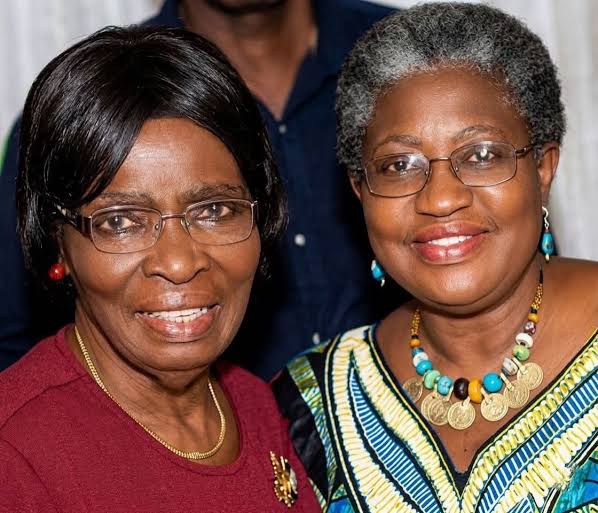
Quote “Professor Kamene Okonjo
Some women leave behind more t
Yet, to remember Professor Kam
Professor Okonjo was the belov
one of the most dramatic chapt
On December 14, 2012, the then
She leaves behind children, gr
Professor Kamene Okonjo deserv
By: Sylvia ThankGod-Amadi

Quote: An African who invokes
This is the concluding part
… Given the fact that I was
At the end of the visit by the
Back to my apartment, at abo
Under normal circumstances, yo
That all she asks is that Chie
For some reason that I do not
I believe that everyone in hu
Our ancestors have not gone fa
By: Jason Osai
The Federal Government’s approval of a N70,000 monthly transport intervention for public service workers for six months, beginning in November 2026, offers hope to employees struggling with the rising cost of living. The agreement with the Nigeria Labour Congress (NLC), reached at a conciliation meeting in Abuja on October 27, is intended to cushion transport costs and ease pressure on workers’ incomes. But for public servants in Rivers State, it raises a familiar question: will the State Government key into the intervention and ensure that its workers benefit? The agreement provides for N70,000 monthly across all levels, for six months. The Federal Government also approved peculiar allowance arrears effective from May 1, 2026, to be paid in three equal instalments beginning in November.
The parties agreed to reconvene after one month to assess implementation. Ultimately, the value of these resolutions will be measured not by announcements but by whether eligible workers receive the money. Transport costs consume a substantial share of many civil servants’ earnings before they can meet household needs. Support for commuting is therefore not a luxury or political favour; it is temporary assistance to help workers remain at their jobs without sinking further into hardship. For lower-paid employees, transport costs can turn modest salaries into a daily exercise in difficult choices and sacrifice.
The agreement also urges State and Local Governments to participate and unions to press for implementation. The federal agreement does not automatically guarantee that every State and Local Government employee will receive the support. State authorities must clarify how it will apply to their workforce, make the necessary arrangements and publish a payment timetable. Rivers State must approach the arrangement with urgency and transparency. The Government should State whether it will implement the intervention and when payments will begin. Any administrative or financial question should be addressed promptly with organised labour, not allowed to become excuses for delay.
The concern is sharpened by the earlier N35,000 monthly wage award introduced by the Federal Government in 2023 after petrol subsidy removal. It was intended as temporary relief pending a new national minimum wage. While several States negotiated and paid wage awards or related sums, implementation nationwide was uneven. Reports in 2024 indicated that many States had failed to pay the federal award, while others provided different amounts. In Rivers, labour and media reports raised concerns about implementation of the N35,000 award for State workers, amid separate announcements and arrangements concerning Local Government employees.
The wage award was meant to ease the immediate effects of subsidy removal, yet workers faced uncertainty over whether the promised relief would reach them. In February 2024, the Rivers State Government announced approval of the N35,000 award for local government workers, but subsequent reports showed that implementation across worker categories remained a concern. The lesson is clear: approval and implementation are not the same. A declaration at a meeting offers little comfort to a worker whose account does not reflect the promised payment. For workers who travel to their offices daily, the implications of delayed support are significant. Transportation expenses compete with food, rent, school fees, healthcare and other essential household needs.
As fares rise, employees may be forced to reduce spending on necessities or borrow to sustain their families. A timely transport intervention would therefore provide practical relief and demonstrate that government understands the economic pressures confronting its workforce. Its temporary nature makes prompt implementation even more important. It is fair to acknowledge that this transport intervention is a new agreement and that its administrative details may require clarification. Rivers State should not be condemned in advance for a failure that has not occurred. Nevertheless, the earlier experience gives workers legitimate grounds to seek assurances before the November commencement date. The State should avoid allowing uncertainty to persist until workers begin asking why the promised assistance has not arrived.
The NLC and unions in Rivers State should engage the State Government immediately and seek a written commitment, an implementation plan and a process for reporting missed payments. If clarification from the Federal Government is needed, the State should seek it without abandoning the goal of providing relief. Labour leaders must also keep members informed about progress and insist that any agreed arrangements are applied fairly and transparently. The Rivers State Government should treat this intervention as an opportunity to rebuild confidence. Timely support would show that workers’ welfare is more than a talking point and that the State recognises the economic realities confronting its employees.
Silence, delay or selective implementation, by contrast, would revive frustration over earlier relief measures and weaken trust between government and labour. Every month lost to administrative delay leaves workers facing the same transport burden without the intended assistance. The State should consult labour, publish arrangements and pay eligible workers on time. Rivers workers should not have to wonder whether federal relief will reach them. The Federal Government has announced the support; now the State must make its position clear. We hope the N70,000 monthly transport intervention will not follow the troubling path of the earlier wage award. Rivers State should learn from that experience and ensure that this time, relief is not merely promised but delivered.
Sylvia ThankGod-Amadi
-
Rivers3 days ago
Don Seeks Repositioning Of Tech Education For Dev
-

 Education3 days ago
PAMO MEDICAL UNIVERSITY -Nullifies Arrest warrant on VC
-
Niger Delta3 days ago
PANDEF Seeks 50% Oil Derivation Allocation Increase
-

 Education3 days ago
IAUE MOVES TO END GHOST WORKERS SYNDROME AS 400 NEW NON-TEACHING STAFF UNDERGO MANDATORY ETHICS TRAINING
-

 News3 days ago
Fresh Ebola Scare As NCDC Records Two Cases
-
News3 days ago
Customs Partners EFCC, NDLEA, Others To Tackle Money Laundering, Terrorism Financing
-
 Politics3 days ago
2027: South-East Govs Insist On Tinubu’s Re-election
-
 Politics3 days ago
2027: RIVERS GUBER CANDIDATES SIGN CHARTER TO PRIORITIZE CITIZENS’ DEMANDS