
Opinion
Consequences Of High Bride Price

Bride price is payment made by a groom or his kin to the family of the bride in order to ratify a marriage. It is paid by the family of the groom to their future in-laws at the start of the marriage usually in cash and materials.
Bride price in Nigeria varies from one ethnic group to another. What obtains as bride price in Rivers State may be different from Kogi State in terms of cash and materials required by the bride’s family. Although there are a few similarities in the list of items to be provided by the groom in Nigeria.
It also varies from family to family. Some families collect as low as N5,000 while others collect as high as N1,000,000.
There are criticisms that this African tradition of paying bride price to the bride’s family before marriage degrades a woman by putting a required monetary value on a wife.But those who support the tradition uphold it as a cherished cultural and religious symbol of marriage.
Some families see bride price as symbolic, hence they ask for less. I have seen a situation where the mother of the bride collected N30,000 and later gave it back to the couple, asking them to put it in their bank account so that it will serve as a “starter pack”. This shows that she wasn’t really giving her out for money.
In our local setting, a marriage is recognised only when bride price and gift items have been presented to the bride’s family. It is important because it validates marriage to give a woman respectable status in the society as a wife.
The importance of bride price can never be over-emphasised. It is one of the highest honours confirming a bride’s value and womanhood, giving a husband the full rights to the economic and reproductive powers of his wife. It is an honour bestowed on the parents that their daughter is getting married.
I see nothing wrong in payment of bride price but in recent time, the issue of high bride price seems to be competitive among families whose daughters are ripe for marriage.It is alarming and heart-breaking how newly-wedded couples end up paying debts years after marriage. When demanding for high bride price, some parents do not realise the fact that the yet-to-be couple will plan for church and court (Registry). The Registry requires little token. Although, the clergy will not ask, but the couple need to settle one or two things in church.
More worrisome is the fact that some parents demand a live cow from an in-law as if the lady is to be exchanged. I know of a culture where cow must be provided to her kinsmen by the surviving husband or children before a late woman must be buried. The claim is that the man didn’t complete the marriage rites before the death if the woman. This is just to extort money from the late woman’s children.
A young man was mandated to pay about N2million to the wife’s kins after losing her during child birth, simply because he never completed marriage rites. What about the welfare of the surviving child?
A situation where a basin of fish that costs over N200,000 must be presented in the name of bride price for a traditional marriage to be contracted gave me concern.
A father also demanded about N1million as dowry for his daughter. For Christ’s sake, no amount of money collected as bride price can pay all the expenses from birth to University level of a lady as this is the dream of greater percentage of our parents nowadays. No amount of money can buy a woman. “Her value is inestimable”.
High bride price can cause disharmony between husband and his in-laws. A young man was lamenting that after his marriage, his in-laws can never be allowed into his family. This is as a result of whatever high bride price they would have charged.
High bride price can cause a man to exhibit violent behaviours when he remembers how much he paid. He gets angry at every little thing the wife does which can lead to domestic violence. The implication is that the woman will suffer in silence with the fear that the man may demand for the high bride price if she leaves the marriage.
Income from her job or personal business is seen by the man as his. She is being denied freedom on using her income and often leads to a situation where the husband must be consulted before any monetary transaction in the family. This leads to hostile marital environment and can destabilise the marriage.
Man dominates the woman in terms of decision-making. The woman has little say or nothing when issues come up in the home. He can say: “Don’t talk, I paid heavily”.
One of the consequences of high bride price is that if perhaps divorce occurs, the bride and the family, according to customary norms, have to return the dowry. If the dowry were very expensive to the tune of N1million, they may not be able to pay back.
High bride price encourages gender inequality. It reduces the power and prestige of the woman with the perception that she was paid for.
High bride price leads to poverty. A couple may have been forced to incur debts in the course of marriage. These are young men and women who are starting life perhaps after graduation and have not made enough savings. Paying back debts incurred during weddings for two to three years should be discouraged.
For many young men, withdrawal syndrome sets in when they remember that they have to provide as much as N1million to marry a wife. You see someone going to marry at the age 50 because he didn’t have enough. Even the ladies are also affected here. Some men get scared of going into such families or ethnic groups for marriage. When will they train their children?
No matter the status of the groom, minimal amount should be fixed for dowry to avoid certain consequences in future. Family of the bride should take cognizance of the fact that their daughter deserves some comfort in her new home.
It is high time the traditional institutions worked through their subjects in the various communities to create awareness on the dangers of high bride price in our society.
Community heads who are saddled with the responsibility of marriage functions and rites should be advised to cut down some of the items and reduce the costs of available ones.
I call on local government councils to work with traditional rulers, community and family
heads as well as women leaders to come out with minimum and maximum amount of money and other items needed as bride price and dowry.
It should be domesticated in the by-laws of the local councils across Nigeria.
By: Eunice Choko-Kayode



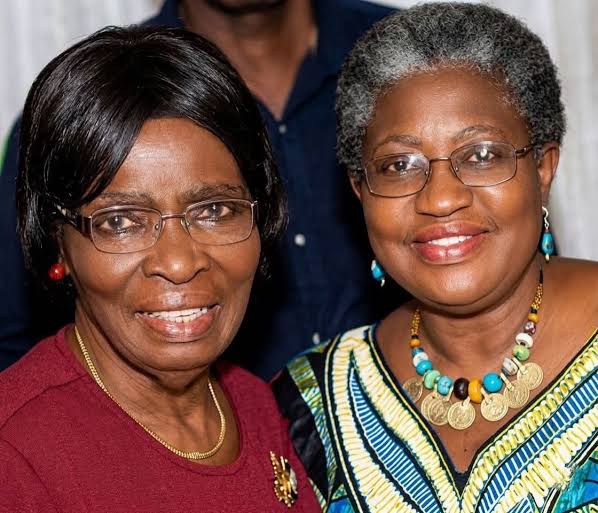
Quote “Professor Kamene Okonjo
Some women leave behind more t
Yet, to remember Professor Kam
Professor Okonjo was the belov
one of the most dramatic chapt
On December 14, 2012, the then
She leaves behind children, gr
Professor Kamene Okonjo deserv
By: Sylvia ThankGod-Amadi

Quote: An African who invokes
This is the concluding part
… Given the fact that I was
At the end of the visit by the
Back to my apartment, at abo
Under normal circumstances, yo
That all she asks is that Chie
For some reason that I do not
I believe that everyone in hu
Our ancestors have not gone fa
By: Jason Osai
The Federal Government’s approval of a N70,000 monthly transport intervention for public service workers for six months, beginning in November 2026, offers hope to employees struggling with the rising cost of living. The agreement with the Nigeria Labour Congress (NLC), reached at a conciliation meeting in Abuja on October 27, is intended to cushion transport costs and ease pressure on workers’ incomes. But for public servants in Rivers State, it raises a familiar question: will the State Government key into the intervention and ensure that its workers benefit? The agreement provides for N70,000 monthly across all levels, for six months. The Federal Government also approved peculiar allowance arrears effective from May 1, 2026, to be paid in three equal instalments beginning in November.
The parties agreed to reconvene after one month to assess implementation. Ultimately, the value of these resolutions will be measured not by announcements but by whether eligible workers receive the money. Transport costs consume a substantial share of many civil servants’ earnings before they can meet household needs. Support for commuting is therefore not a luxury or political favour; it is temporary assistance to help workers remain at their jobs without sinking further into hardship. For lower-paid employees, transport costs can turn modest salaries into a daily exercise in difficult choices and sacrifice.
The agreement also urges State and Local Governments to participate and unions to press for implementation. The federal agreement does not automatically guarantee that every State and Local Government employee will receive the support. State authorities must clarify how it will apply to their workforce, make the necessary arrangements and publish a payment timetable. Rivers State must approach the arrangement with urgency and transparency. The Government should State whether it will implement the intervention and when payments will begin. Any administrative or financial question should be addressed promptly with organised labour, not allowed to become excuses for delay.
The concern is sharpened by the earlier N35,000 monthly wage award introduced by the Federal Government in 2023 after petrol subsidy removal. It was intended as temporary relief pending a new national minimum wage. While several States negotiated and paid wage awards or related sums, implementation nationwide was uneven. Reports in 2024 indicated that many States had failed to pay the federal award, while others provided different amounts. In Rivers, labour and media reports raised concerns about implementation of the N35,000 award for State workers, amid separate announcements and arrangements concerning Local Government employees.
The wage award was meant to ease the immediate effects of subsidy removal, yet workers faced uncertainty over whether the promised relief would reach them. In February 2024, the Rivers State Government announced approval of the N35,000 award for local government workers, but subsequent reports showed that implementation across worker categories remained a concern. The lesson is clear: approval and implementation are not the same. A declaration at a meeting offers little comfort to a worker whose account does not reflect the promised payment. For workers who travel to their offices daily, the implications of delayed support are significant. Transportation expenses compete with food, rent, school fees, healthcare and other essential household needs.
As fares rise, employees may be forced to reduce spending on necessities or borrow to sustain their families. A timely transport intervention would therefore provide practical relief and demonstrate that government understands the economic pressures confronting its workforce. Its temporary nature makes prompt implementation even more important. It is fair to acknowledge that this transport intervention is a new agreement and that its administrative details may require clarification. Rivers State should not be condemned in advance for a failure that has not occurred. Nevertheless, the earlier experience gives workers legitimate grounds to seek assurances before the November commencement date. The State should avoid allowing uncertainty to persist until workers begin asking why the promised assistance has not arrived.
The NLC and unions in Rivers State should engage the State Government immediately and seek a written commitment, an implementation plan and a process for reporting missed payments. If clarification from the Federal Government is needed, the State should seek it without abandoning the goal of providing relief. Labour leaders must also keep members informed about progress and insist that any agreed arrangements are applied fairly and transparently. The Rivers State Government should treat this intervention as an opportunity to rebuild confidence. Timely support would show that workers’ welfare is more than a talking point and that the State recognises the economic realities confronting its employees.
Silence, delay or selective implementation, by contrast, would revive frustration over earlier relief measures and weaken trust between government and labour. Every month lost to administrative delay leaves workers facing the same transport burden without the intended assistance. The State should consult labour, publish arrangements and pay eligible workers on time. Rivers workers should not have to wonder whether federal relief will reach them. The Federal Government has announced the support; now the State must make its position clear. We hope the N70,000 monthly transport intervention will not follow the troubling path of the earlier wage award. Rivers State should learn from that experience and ensure that this time, relief is not merely promised but delivered.
Sylvia ThankGod-Amadi
-
Rivers4 days ago
Don Seeks Repositioning Of Tech Education For Dev
-

 Education4 days ago
PAMO MEDICAL UNIVERSITY -Nullifies Arrest warrant on VC
-
Niger Delta4 days ago
PANDEF Seeks 50% Oil Derivation Allocation Increase
-

 Education4 days ago
IAUE MOVES TO END GHOST WORKERS SYNDROME AS 400 NEW NON-TEACHING STAFF UNDERGO MANDATORY ETHICS TRAINING
-

 News4 days ago
Fresh Ebola Scare As NCDC Records Two Cases
-
News4 days ago
Customs Partners EFCC, NDLEA, Others To Tackle Money Laundering, Terrorism Financing
-

 Politics4 days ago
2027: RIVERS GUBER CANDIDATES SIGN CHARTER TO PRIORITIZE CITIZENS’ DEMANDS
-
 Politics4 days ago
2027: South-East Govs Insist On Tinubu’s Re-election