
Crime/Justice
Re-Imagining Legal Education In Nigeria

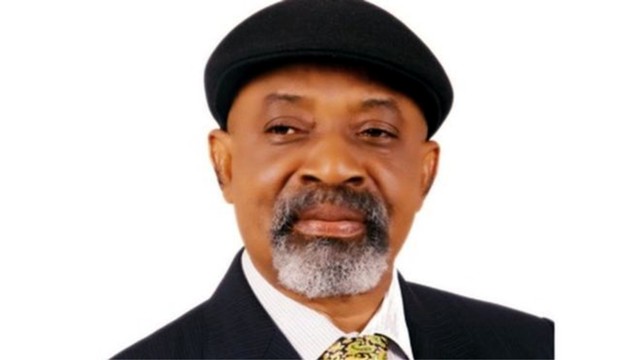
I am delighted to have been invited to be a part of this Summit. I thank the President of the Nigerian Bar Association, Mr. Olumide Akpata, for inviting me, and the Proprietor of Afe Babalola University (ABUAD), Aare Afe Babalola, CON, OFR, SAN, and the entire Management of Afe Babalola University, for collaborating with the NBA to deliver this great Summit, and for hosting the Summit.
I especially commend the leadership and membership of the Nigerian Bar Association for putting together a summit of this nature at such an auspicious time, aimed to assist in advancing legal education in Nigeria. As we all are aware, the NBA is a major stakeholder in the legal education project in Nigeria. First, and pursuant to the provisions of section 2(1) (e) and (f) of Legal Education (Consolidation) Act, Cap L10 LFN 2004, the NBA President and 15 other NBA representatives are members of Council of Legal Education. Second, by virtue of Article 3 of the NBA Constitution, 2015, among the major objectives of the Nigerian Bar Association are promotion and advancement of Legal Education, Continuing Legal Education, Advocacy and Jurisprudence, and Promotion of co-operation between the NBA and other National Institutions. Such national institutions include the Council of Legal Education/Nigerian Law School, Universities and institutions engaged in legal education of aspirants to the Nigerian Bar. Third, most, if not all, law students in Nigeria will end up as Legal Practitioners and as such members of the NBA and of the legal profession in Nigeria; all members of the Bar and the Bench were at one time or another law students. By virtue of section 4(1)(a) of the NBA Constitution, all persons called to the Nigerian Bar and duly enrolled at the Supreme Court of Nigeria as legal practitioners are members of the NBA. Accordingly, progress or otherwise in legal education directly impacts the legal profession. Whatever happens in the legal education sector should be of serious interest to the NBA because failure in the former would seriously hinder progress, effectiveness and continued relevance of the latter in the country.
Furthermore, under under Rule 11 of the Rules of Professional Conduct for Legal Practitioners in Nigeria, the NBA has some roles to play in the requirement of Mandatory Continuing Legal Education in the profession. Continuing Legal Education is an offshoot of the legal training of aspirants to the bar. Moreover, the NBA President is next to the Attorney-General of the Federation in the leader ship hierarchy of the Nigerian Bar, which comprises former law students, all Law Teachers, heads of the Council of Legal education, the Nigerian law School, the various Law Faculties in Nigeria, the heads of other law legal education training institutions in Nigeria. Finally, the NBA President in the absence of a substantive Chairman of the Council of Legal Education plays the role of the Acting Chairman. There is therefore no doubt that the NBA, being a critical stakeholder in the legal education project in Nigeria, has the locus to organise a summit of this nature.
Legal education which comprises in the education of individuals in the principles, practices, and theory of law, is dynamic and all-encompassing, cutting across several jurisdictions, concepts, processes and stages, the overall aim being that of serving society liberally by imparting general and cultural education to law students to make them good law-abiding citizens, as well as instilling in them the significance and relevance of constitutional democratic culture. According to Harvard Law School’s Committee of Legal Education, legal education lays emphasis on training men for the legal profession, and providing centers where scholars might contribute to an understanding of law and government and participate creatively in growth and improvement of law, ethics and governance. To this end, legal education in the 21st century must be one that effectively responds to the economical, technological, and societal shifts that happen at an ever-increasing pace. It must be an education that sets children up to succeed in a world where more than half of the jobs they will have over their careers do not even exist yet (Sara Hallerman, Colon Lewis, and Brad Dresbach). Finally, as recommended by the New Teaching Curriculum in the Nigerian Law School, 21st century legal education in Nigeria is also aimed at producing lawyers who would be in a position to measure up to contemporary benchmarks and international best practices in the legal profession.
I am aware of the efforts so far made by the Council of Legal Education, and the Management and Teachers of the Nigerian Law School, as well as by past and current NBA leaderships towards encouraging a strong partnership between the Bar and the Council of Legal Education/Nigerian Law School in the practical training of aspirants to the Nigerian Bar with a view to meeting the needs of the 21st century. I recognize that a lot of progress has been made in this respect. I salute Law Teachers in the Law School, in the various law faculties and other other institutions that offer legal education in Nigeria. In their individual and collective capacities, Law Teachers in Nigeria have contributed towards the academic, professional and personal development of lawyers and law practice in Nigeria. However, a lot still needs to be done. Legal education needs to continually and consistently develop in order to remain relevant to the needs of a dynamic society. There is need for continuous and concerted efforts by all stakeholders at strengthening existing partnerships and collaboration with a view to improving on the quality of legal education. There is also a need for reorientation in our profession and there is no better place for this to start, than from the foundation, which is our legal education. This is why I consider this summit timely and the theme apt: “Re-Imagining Legal Education In Nigeria”.
Further, with the outbreak of Covid-19 pandemic in 2020, and following the devastating and dislocating aftermaths of the pandemic, diverse opinions on the concept of legal education have emerged. The pandemic stretched its tentacles into diverse facets of life; the educational sector (including legal education) being among the most-hard-hit; the pandemic exposed many weaknesses of existing systems, processes and procedures in legal education, especially in developing segments of the worlds, of which Nigeria is a part. As a form of response to the upshots of the pandemic, stakeholders in education began to explore new, alternative, and dynamic means of teaching and learning to avoid a repeat of the quagmire the restriction occasioned by Covid-19 had caused the world. The legal education sector, managers and stakeholders have no choice than to begin to explore new concepts, more dynamic, pragmatic and responsive teaching and learning methods and systems, In summary, reform, reinvention and re-imaginng have become necessary to enable legal education in Nigeria key fully into what is now regarded all over the world as the “new normal”. In November 2021, the Federal Republic of Ghana held a summit of this nature under them: “The Future of Legal Education in Ghana” and came up with a communique, which is expected to be followed up with necessary reforms to realise the objectives of the summit.
The above said, a very critical development in the legal education sector which this summit should pay serious and elaborate attention to is the recent development in respect of the Nigerian Law School. It should be noted that the Nigerian Law School currently has seven campuses. However, in an unprecedented move, the Senate of the Federal Republic of Nigeria recently passed a Bill to establish six additional Campuses of Nigerian Law School. The decision of the Senate completely brushed aside opposing/contrary advice and views by the Honourable Attorney-General of the Federation, the Council of Legal Education, Nigerian Law School, the Nigerian Bar Association and other major stakeholders in the legal education sector in Nigeria. The extant law, the Legal Education (Consolidation) Act, in its section 1(2) and section 3 respectively confers on the Council of Legal Education the “responsibility for the legal education of persons seeking to become members of the legal profession” and for “Continuing Legal Education”. By the combined effect section 2(5) and section 4 of the Act, the Council may “do such things as it considers expedient for the purpose of performing its functions” subject to general directions by the Hon Attorney-General of the Federation. Thus, the dissenting advice and views of the Council, of the Hon AGF, of the NBA and of some other stakeholders were based mainly on the reasonable realisation that establishment of additional Campuses for the Nigerian Law School is better left in the hands of the Council in collaboration with the Nigerian Law School as administrative matters to be guided by expediency and need, among other factors. The Council of Legal Education, the Management of the Nigerian Law School, among other stakeholders, are better -placed to make/take decisions in this respect. There is an adage that “he who wears the shoes knows where it pinches”. Besides, most of the existing seven Campuses of the Law School are in dire need of urgent infrastructure upgrade which on its part requires greater funding from government and stakeholders. It is hoped that these should be principal among what occupies the attention of stakeholders, rather than suggestions for establishment of too many additional Campuses (at the same time), some of which may end up being not viable, as a result of paucity of funds and dearth of basic infrastructure. Finally, the Council’s views were guided partly by its belief that increased funding for the Nigerian Law School would bring about the needed upgrade in the existing seven Campuses, to adequately serve the need of growing number of aspirants to the Bar seeking admission to the Law School. It is hoped also that this Summit should subject the recent Bill passed by the Senate, among other issues, to rigorous discussions in order to come up with recommendations that would best serve the best interest of legal education, the legal profession, and the Nigerian nation.
At this juncture, it is pertinent to recall that in an effort to improve legal education, especially the practical training of aspirants to the Bar, the Council of Legal Education under the Chairmanship of Hon Justice M.O Onalaja (of blessed memory), had in 2008 constituted a Legal Education Review Committee, headed by Mrs Funke Adekoya, SAN. Other members of the Committee included Prof Yemi Osinbajo SAN (as he then was); Mr. Olisa Agbakoba, SAN; Prof Fidelis Oditah, SAN, QC; Mr. AB. Mahmoud, SAN; Mr. Ernest Ojukwu (then DDG and Head, NLS, Enugu Campus); Mr. Olanrewaju Onadeko (then DDG and Head, NLS, Lagos Campus); Mr. Nasiru Usman (then DDG and Head, NLS, Kano Campus); Prof. I.O Smith (Faculty of Law, UNILAG); Dr. Isa H. Chiroma (then, Dean Law Faculty, UNIMAID) and Mrs Roli Hariman (then lecturer, Nigerian Law School).
The Committee had called for memoranda from all stakeholders in the legal education project in Nigeria. The Committee considered all memoranda received as well as all presentations made at the Legal Education Summit 2006 which had held in Abuja on March 03, 2006 under the theme:”The Future of Legal Education in Nigeria”. Also considered were reports and recommendations of the “National Committee on the Reform of Legal Education in Nigeria”. The Committee paid a visit to several institutions, including the College of Law and the BPP Law School both in London England and the findings aided the work of the Committee (see: Ernest Ojukwu, Legal Education In Nigeria: A Chronicle Of Reforms And Transformation Under Tahir Mamman).
The result of the Committee’s work was positive; the Committee made far-reaching recommendations on reform and improvement of legal education in Nigeria. I am aware that the Committee’s recommendations had led to, among others, the birth in 2008, of a “New Teaching Curriculum” for the Nigerian Law School, a curriculum, which I am told, has been reviewed more than five times, to keep it in tune with developments in law, the legal profession, the legal education sector in Nigeria and across the globe. Thus, tremendous efforts have been made in the past. It is time to build on past and current efforts in order to move legal education to the next level. This Summit presents a great opportunity in this respect.
Moreover, the law setting up Council Legal Education needs to be reviewed to reflect current realities and needs of the profession and the sector. To this end, the NBA has presented before the Body of Benchers, a draft Bill on Legal Education in Nigeria in Nigeria, which Bill seeks, inter alia, to create a Council of Legal Education that will be separate from Nigerian Law School and other Private Law Schools to be established. It is hoped that this development will be among the matters that will be subjected to thorough and dispassionate examination and debates at this Summit, with a view to proffering recommendations on what is the best-suited for the profession, the sector and the nation, without destroying past and present efforts and achievements, without lowering standards, and without dislocating the fabrics and core values of the profession/sector. It is therefore my hope that deliberations and recommendations of this Summit should proceed on the notion that proposed improvements or reform or re-imaging of legal education in Nigeria can only yield more effective results and quickly, if those proposed improvements acknowledge and are founded on past and existing efforts and achievements. Existing structures and achievements will provide a solid foundation to future improvements. We may not have got to where should be. But, no doubt, we have left where we used to be. However, without continual collaborations and improvement, such things as growth and progress, achievement, and success have no meaning. I recall the counsel by Henry Ford, founder of the Ford Motor Company: “Coming together is a beginning, staying together is progress, and working together is success.”
In conclusion, let me assure this Summit and all participants that the Council of Legal Education will seriously consider any communiqué/recommendations emanating from this summit, to ensure that this effort is not in vain.
Thank you and God bless you abundantly.
By: Chief Emeka Ngige
Ngige, is the Chairman, Council of Legal
Education, Nigeria



Children are highly desired and parenthood is culturally significant in Africa. In Nigeria, infertility is a socially unacceptable condition, making victims embark on relentless quest for conception. In Vitro Fertilisation (IVF) is the only alternative but same is expensive.
Admittedly, this has contributed to the advent of illegal baby factories in Nigeria and consequently constitutes an emerging trend of human trafficking.
What is baby factory? This implies to a practice in which young pregnant and unmarried girls are given shelter by a proprietor i.e Oga or Madam of the home until they are delivered of their pregnancies and give up the new born for sale.
This illegal centres and homes are most times camouflaged as “maternity homes, orphanages, social welfare homes, and clinics and are operated by well organised groups”.
As an emerging phenomena in developing countries of the world, it is also prevalent in Nigeria particularly in States such as Abia, Imo, Enugu, Edo, Rivers and Lagos.
It is important as well as my concern to note that children have rights and these rights must be protected. This evil scourge of baby factory is an illegal business involving getting pregnant young girls and women without sanity who either are willing or not to give up their babies for financial gain and benefits without having any contacts with the buyer or ever seeing their baby again.
This category of persons are introduced into this business forcefully, by deceit of evaporated love and care or under the guise that the baby factories are clinics or homes where they can pay less or deliver freely with some promise of jobs, safe abortion or money after delivery.
The owners of the factory and their syndicate insist that babies be put up for adoption by childless couples in the most fortunate scenario, else supply the babies to politicians for their rituals, illegal adoption and human trafficking. Pathetic right?
It is my argument that children born into baby factories are denied various civil and fundamental rights alongside their mothers because of their vulnerability. Some of the rights these children are denied include birth registration.
Nigeria is a signatory to many international and regional instruments targeted at eliminating child trafficking, protecting children and also the promotion of their rights which include, the United Nations Convention on the Rights of the Child (1989) and the Optional Protocol to the Convention on the sale of Children.
Section 12 of the Constitution of the Federal Republic of Nigeria (as amended) stipulates the guidelines for applicability of this treaties in Nigeria.
Regrettably, despite the vast number of statutes protecting children and women, there is still an alarming prevalence of heinous crimes against these vulnerable units of our society.
The Children’s Rights Act was enacted as passed in Law in Nigeria in 2003, to serve as a legal document and protection of children’s rights and responsibilities in Nigeria which consolidates all laws relating to children into one single legislation, as well as specifying the duties and obligations of government, parents and organisations.
However, despite its values and importance, most States in Nigeria have not domesticated the Act, which implies that children in some States are not being protected under this law which prompts unequal rights in children.
Section 30(1) of the Children Rights Act provides that No person shall buy, sell, hire, let on hire, dispose off or obtain possession of or otherwise deal in a child. This section clearly prohibits the act of buying and selling of a child or children.
Section 207 empowers the police to create a specialised unit for the combating of the crime.
The sporadic growth of baby factories across the Nigeria State is a front burner issue that needs urgent address, given the rise in in the thriving business due to the ever increasing in height of economic downturn in the country.
The vulnerability of children and the need for their protection has attracted international recognition as well as domestic legislation.
The Constitution also provides protection for the dignity of the human persons and personal liberty as stated in Sections 34 and 35 respectively. Howbeit, it is very safe to say that these laws are ineffective for the purpose they were enacted.
Having considered this topic in relation to baby factories as an avenue for trafficking and the laws enacted to promote and protect women and children, it is my recommendation that:
1. The government institutions established by law for the protection of children performs their duties.
Security agencies should not delay the prosecution of persons who commit this offence.
The government should ensure that upon discovery facilities harbouring women and children for sale be destroyed and periodic checks should be conducted on churches, mosque, hospital etc.
Intense education and sensitisation campaign and programmes for young girls, and boys and women about unwanted pregnancies.
Government should assume their responsibility of the protection of lives and increase the budgetary allocation for children orientation programme in schools, villages, church and mosque.
Esaenwani Baribor Ferguson
Esaenwani is a practising lawyer based in Port Harcourt at Brisk Attorneys and Consultants.
The Nigeria Police Force is the principal law enforcement agency in Nigeria. It has its origin in Lagos following the creation of a 30-man Counsular in the year, 1861.
It further has its Constitutional backing in the Chapter Six (6), Part Three (3), Section 214 of the Constitution of the Federal Republic of Nigeria , 1999 (as amended). Down the line, the Nigeria Police Force begin to have other formations like the Mobile Police Force in the 1980s.
The motive behind the creation of the Nigeria Police Force, is to preserve law and order, the enforcement of law and regulations with which they are directly charged. The performance of such military duties within and outside the country as may be required of them by or under the authority of the Police Act or any other Act.
When the heat or should I say, the need or urge to provide better policing in the country became necessary, more formations like the Special Anti Robbery Squad (SARS) were birthed around 1992 to battle crime especially armed robbery.
This very formation (SARS), before it went under on Sunday November 11, 2020, when the then Inspector General of Police, Mr Mohammed Adamu announced its disbandment was a talk-of the-town.
People were delighted to catch a glimpse of SARS men especially when they are in operation and in their full regalia. They fought crime to almost zero point before the devil took over the outfit and placed it in the history book.
The Slogan ‘ The Police is Your Friend’ is one of the most disgusting or disturbing things about the Nigeria Police Force. Many are not at ease with it. In most cases, they begin to wonder what the Police is even doing to get the least attention.
But until you are closer to some people including the Police, you may not say for sure what they do or their importance to the society. Some Police men are down-to- earth. They execute their jobs in such professional manner that one may be tempted to purchase Police recruitment form of a given year.
I have the privilege to interface with some of them at some Special Areas in Rivers state. Their profiles are not only intimidating, but reveal a serious road map on how best to tackle security challenges in the country.
When they related to me why they cannot execute some actions, I was flabbergasted. The government ought to look for those kind of officers and secretly talk with them.
They complained of being tagged as saboteurs should they approach their Heads with their ideas on some issues.
One of the officers confided in me how he unearthed a high profile kidnapping gang that nailed a certain bigman. I mean a bigman with both wealth and honour. I looked at the fragile frame of mind of the officer and took his claims with a pinch of salt.
When other of his colleagues at different fora commended him on some hard job success, it then dawned on me that I was dealing with a senior intelligence officer. His challenge was not also far from the ones earlier enumerated by his colleagues .
Armed with the little information I have gathered about the Police and its challenges, I delved into personal investigation. I went round almost the big formations in the state. With utmost humility, I discovered that the government was unfair to the Police.
In some of the outfits, over ten (10) officers are squeezed into one office. About three (3) of them or so share one (1) table. One will begin to imagine what the occupants of such place will produce.
Even the big formations with big names are not better. They suffer even the worst. But as the big men they are, they stomached the whole thing and welcome you with a beaming smile.
If you are not of a good temperament, you may take him (the bigman officer), for an evil man who derives joy in suffering. Or was the foremost Afro Beat King , Fela Anikulapo Kuti right when he sang ‘Suffering and Smiling’?
I think it is about time those that head some big Police formations in the country begin to think on how to improve on their jobs. Those at the top are not too mindful of the welfare of others. I blame them not, because such is a typical Nigerian factor.
I can recall vividly well at a particular public function in Port Harcourt when one officer was introduced as the Financial Officer in charge of a certain Police outfit. The master of ceremony (MC), took it up. He (MC), was like “thank God oga will bless us today”, the officer in a quick reaction, gave it back to the MC, thus, please “I am sorry, we are only bearing the name, the real office is in Abuja”.
People took it as a joke including me, but when I dug into the situation, I knew what exactly the officer meant then. The narrative must change, if the police must perform to the taste of the common man.
The Police and its welfarism must not be gambled with. The government and its authorities should consider the need for Police reform and execute it with immediate alacrity.
This will also help the authority to place a plum line on the Police. I think part of the poor check on the side of the government on the Police is deliberate, in that the authority know that they have not performed their own part of the agreement hence, the ‘On Your Own’ kind of approach to issues.
The police, if well equipped, will do more than expected. The manpower to execute some tactical operations are within them, but lack of support for them remains a bane to their positive operations.
Another point to effective Policing in the country is , management of the Internally Generated Funds by the Police. If the Police are allowed to manage the funds they generate internally, it will go a long way in fixing things among them.
The issue of waiting for approval to fix even furniture in the office is a major clog in the system. At times, they are forced to ask for financial support from the suspects to enable them buy as little as writing materials.
Such ought not to be in that the risk of compromising the matter will be high. If the materials are so provided, the officer will have no option than to do the needful.
Another point is that of personal visit and inspection. The authority should make out time to visit the Police formations across the country. They should visit such places like the convenience, bathrooms, canteens, etc. When you pay some unscheduled visits to some of the mentioned places, you will agree with this piece to the extent of making a quick case for an improved welfare package for the police.
As a citizen of Nigeria, make a personal visit Police formation as part of your menu. Let the issue of the police harassment especially on the roads not deter you. By so doing, you will be armed with some information that will convince you that of a truth, the to any Police is really ‘Your Friend’.
The time to address the challenges of the police is now. No need to dwell on the past. Let’s stop the blame game and think of the way forward.
King Onunwor
-

 News2 days ago
RSG Targets Nine Million Residents in Mosquito Net Distribution Campaign
-

 Oil & Energy2 days ago
Aiyedatiwa Signs New Electricity Bill
-

 Maritime2 days ago
Marine Minister Commends President Tinubu On NPERA Bill Assent
-

 Oil & Energy2 days ago
NLNG Commissions Research And Innovation Centre In RSU
-

 News2 days ago
KenPoly Holds Eight Convocations, August 29
-

 News2 days ago
RSG Begins Another Phase of Projects Commissioning Today
-

 News2 days ago
RMAFC Completes Revenue Sharing Review, Proposes New Pay
-

 Maritime2 days ago
NAGAFF Petitions IGP Over Alleged Maritime Police Harassment