
Nation
NSIA Records N160bn Income

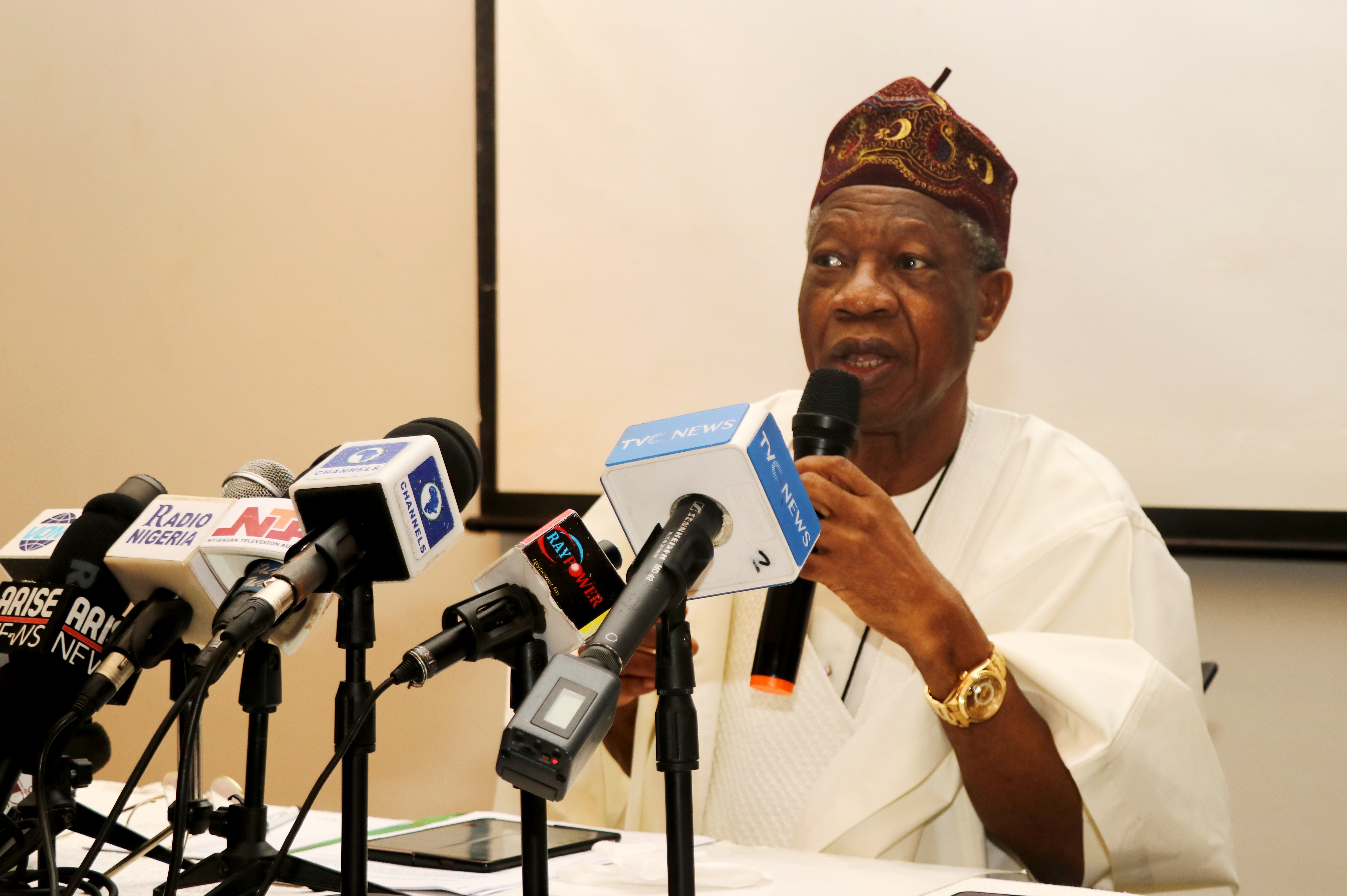
The Nigeria Sovereign Investment Authority (NSIA) says it had a strong year in 2020, recording N160.06billion in total comprehensive income amounting to 343 per cent growth compared to N36.15billion in 2019.
The Managing Director, Mr Uche Orji, revealed this in a virtual media conference on the presentation of the NSIA’s 2020 Audited Financial Statements and Performance Review, yesterday, in Abuja.
Orji attributed the growth, in spite of the challenges of Covid-19, to strong performance from its investments in international capital markets, improved contribution from subsidiaries and affiliates and exchange gain from foreign currency positions.
He added that the authority achieved 33 per cent growth in net assets amounting to N772.75billion as against N579.54billion in the previous year.
He also said that the NSIA received additional contribution of $250million and provided first stabilisation support of $150million from the Stabilisation Fund to the Federal Government.
According to him, the authority also received $311million from funds recovered from late Gen Sani Abacha from the US Department of Justice and Island of Jersey.
He said that the funds were deployed towards the Presidential Infrastructure Development Fund (PIDF) projects of Abuja-Kaduna-Kano Highway, Lagos-Ibadan Expressway and the Second Niger Bridge.
“The 2020 fiscal year was characterised by high volatility and global market uncertainty on account of Covid-19 in the first half.
“However, the authority’s strategic investments generated respectable returns in spite of the impact of Covid-19.
“Notably, NSIA has invested in various private equity and venture capital investment funds to tap into the high-growth sectors.
“NSIA expects that the outlook for 2021 would be positive, however, we expect bouts of volatility as global markets adjust and recover from the impact of the pandemic.”
Speaking on some of the projects and interventions the organisation was involved in; he said that it entered a strategic collaboration with BBVGH for cancer treatments.
Orji said that the group was helping in training personnel and bringing in lower costs cancer medicine for those who were in the NSIA-Lagos University Teaching Hospital Cancer Centre.
He also said it had operationalised the NSIA-Kano Diagnostic Centre and the NSIA-Umuahia Diagnostic Centre which were developed as first-rate diagnostic centres with individual investments of $5.5million each.
For the power sector, Orji said that the NSIA was building a 10 megawatts solar power plant in Kano, which presently was the single largest in Nigeria.
“Expected to be completed at the end of 2022 at a cost of about $15million, the plant would link industrial customers to an additional source of power supply,” he said.
He said it was also setting up a platform with International Development Finance Institutions (DFIs) to allow it spread across various parts of the country.
In agriculture, through the Presidential Fertiliser Initiative (PFI), it produced 12million 50 kilogram bags of NPK 20:10:10 equivalent in 2020.
This, he said, brought the total production since inception to over 30 million 50kg bags equivalent, while the number of participating blending plants increased to 44 from less than seven at inception.
Orji added that the NSIA completed construction of 3,000 hectares Panda Agric Farm in Nasarawa, the first project of the UFF-NSIA partnership.
He said that the NSIA launched Nigeria’s Innovation Fund to address investment opportunities within Nigeria in Information technology.
According to him, with immediate pipeline it includes data networking, data centres, software and services as well as Agri-tech and Bio-tech.
Speaking on gas industrialisation, he said significant progress had been made on developing the Ammonia and Diammonium phosphate production plants in partnership with OCP.
For 2021, he said the organisation was looking forward to completing the concession, capital raise and operationalisation of the Lagos-Ibadan Expressway, Second Niger Bridge and Abuja-Kaduna-Kano Highway.
“In the Future Generations Fund, we expect to allocate more capital to venture capital, global equity markets and an increasing exposure to European equities where we had been under exposed in 2020.
“NSIA believes that broad opening of the markets will provide a comprehensive lift to equities. Although NSIA believes the market is unlikely to repeat some of the performance of 2020.
“It is more likely that a broader market recovery will occur with economies opening unlike the case in 2020 in which technology stocks drove market performance.”
The NSIA was set up to manage funds in excess of budgeted hydrocarbon revenues.
Its mission is to play a leading role in driving sustained economic development for the benefit of all Nigerians.
This would be through building a savings base for the Nigerian people, enhancing the development of Nigeria’s infrastructure and providing stabilisation support in times of economic stress.




The Hydrocarbon Pollution Remediation Project (HYPREP) has commemorated the 15th anniversary of the release of the United Nations Environment Programme (UNEP) Environmental Assessment Report on Ogoniland, reaffirming its commitment to restoring the environment and improving the livelihoods of affected communities.
In a statement signed by the Project Coordinator, Prof Nenibarini Zabbey, to commemorate the anniversary, HYPREP described the anniversary as a significant milestone in Nigeria’s environmental restoration efforts, noting that the project has made remarkable progress in implementing the recommendations of the landmark UNEP report released on August 4, 2011.
The UNEP report had revealed extensive oil pollution across Ogoniland, severe environmental degradation, and serious public health risks resulting from decades of petroleum operations. It also recommended an initial $1 billion fund to commence the cleanup of the affected communities.
According to HYPREP, the Federal Government formally launched the Ogoni clean-up in 2016, while the Project Coordination Office was established in 2017 to drive the implementation of UNEP’s recommendations.
Zabbey said the current administration has continued to prioritise the project under the Renewed Hope Agenda.
Providing an update on the cleanup, the Project Coordinator disclosed that 30 of the 65 contaminated sites identified by UNEP have been fully remediated, while work is ongoing at several medium- and high-risk locations. It also stated that more than 1.5 million mangrove seedlings have been planted as part of what it described as the world’s largest restoration of oil-degraded mangroves, with over 1,000 hectares of shoreline already rehabilitated.
Zabbey further revealed that 49 Ogoni communities have been connected to potable water schemes through multiple water projects and booster stations aimed at providing safe drinking water across the region.
In the health sector, he said the 100-bed Ogoni Specialist Hospital in Kpite and the 43-bed Cottage Hospital in Buan are nearing completion, adding that several existing health facilities have been upgraded with modern medical equipment, while five ambulances have been donated to improve emergency healthcare services. The Project Coordinator also disclosed that a three-year human health biomonitoring study is being conducted in collaboration with the World Health Organization’s International Agency for Research on Cancer (IARC).
On economic empowerment, Zabbey stated that the Project has created more than 8,000 direct jobs and trained thousands of Ogoni youths and women in various vocational and technical skills, including software development, cybersecurity, aviation, commercial diving, seafaring, mechatronics, and creative arts. The project also reported awarding scholarships to more than 1,000 students, providing grants to small businesses, and supporting persons living with special needs through skills acquisition programmes.
The statement further highlighted ongoing legacy projects, including the Ogoni Power Project and the Centre of Excellence for Environmental Restoration, which it said is about 96 per cent complete. HYPREP also welcomed the recent designation of the Ogoni Wetland as a Ramsar Site of International Importance and pledged to continue promoting biodiversity conservation and sustainable management of the ecosystem.
Marking the anniversary, Zabbey said the progress achieved over the past 15 years demonstrates the collective commitment of government, development partners, stakeholders, and local communities to restoring Ogoniland. He called for renewed collaboration to sustain the cleanup effort, promote environmental sustainability, and support the long-term development of the region. 3
-

 News2 days ago
RSG Targets Nine Million Residents in Mosquito Net Distribution Campaign
-

 Oil & Energy2 days ago
Aiyedatiwa Signs New Electricity Bill
-

 Maritime2 days ago
Marine Minister Commends President Tinubu On NPERA Bill Assent
-

 Oil & Energy2 days ago
NLNG Commissions Research And Innovation Centre In RSU
-

 News2 days ago
KenPoly Holds Eight Convocations, August 29
-

 News2 days ago
RMAFC Completes Revenue Sharing Review, Proposes New Pay
-

 News2 days ago
RSG Begins Another Phase of Projects Commissioning Today
-

 Maritime2 days ago
NAGAFF Petitions IGP Over Alleged Maritime Police Harassment