
Entertainment
Nigeria At 58: The Entertainment Milestone

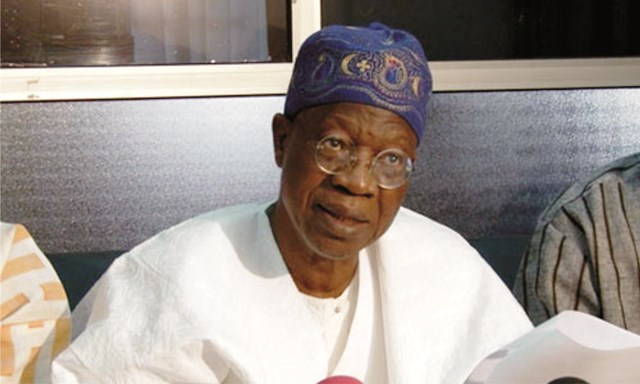
As Nigeria celebrates 58 years of freedom from the shackles of British colonial rule, a retrospective view of the nation’s entertainment enclave in the past eventful years of independence reveals a vibrant and dynamic industry that basks in success despite odds.
Since independence on October 1, 1960, the entertainment industry has metamorphosed into a multi-billion naira industry that has contributed immensely to the growth of the country’s Gross Domestic Product (GDP), rebranding of the nation’s image abroad as well as employment generation.
The unprecedented growth of the industry over the years was made possible by various factors which include, public private participation, government landable policies and programmes, as well as investments and financial grants. One of such policies of the present administration is the granting of pioneer status to the industry and tax rebate for the practitioners and other stakeholders in the industry.
The laudable policy has enabled them to enter into interesting contractual relationships with no restrictive regulatory presence to contend with. The spread of digital technology such as higher level of internet access, increased penetration of smart phones and other social media platforms have ushered in a positive multiplier effect on the various entertainment out lets via-a-vis movie, music comedy, tourism, arts and culture and beauty pageants as well as the hospitality industry.
In the movie sector popularly known as Nolllywood, the growth had been tremendous from the era of late Amaka Igwe’s ‘Checkmate’, one of the most popular television soaps of the 1990s to the advent of the first Nollywood moive “Living in Bondage”, movies like “Diamond Ring”, “Out of Bound”, etc had generated buzz, pushing the actors and actresses into fame and wealth.
As at 2006, the industry realised in amazing N16 billion from record of 50 indigenous movies. The figure represented close to 30 per cent of the N3.5 billion generated from 28 cinemas across the country including movies from Hollywood of America, Bollywood of India Gollywood of Ghana and other countries.
Films like “the Wedding Party” , “A Trip To Jamaica”, ‘Okafor’s Law’ 93 Days’ and the CEO, all shattered box offices. Nollywood also made great impact in major international film festivals across the globe and attracted investors to the country.
According to the CEO of Iroko TV, Mr Jason Njoku, “the VC backed Video-On-Demand (VOD) plat form for Nollywood movies, “Nollywood can now be mentioned in the same breath as Hollywood and Bollywood producing about 1500 and 2000 films annually.
“Nollywood is the most hard working, brutal and dynamic of industries that Nigeria has spawned. It is an economic miracle that the industry has not only flourished, but grown exponentially, considering the conservative budgets movie producers have to work with as well as antiguated distribution that held the industry back for many years. Today Nigerian movies are ruling the movie world”.
In the music sector, the beat goes on as the sector has also become quite successful both economically and structurally. The period of 2004 to 2006 saw the Nigerian music industry explode in the African stage with hits like African Queen’, ‘Tongolo’ and ‘Nabaka’ by Chocolate City’s Jeremiah Jang among others. Some of the hardworking artistes of that period and after wards have become famous and rich through their talents and hardwork.
It was gathered that when M1, one of Nigeria’s foremost rappers released M12 he reportedly received a cheque of N2 million from marketers. In 2013 Burna Boy was said to have received close to N10 million for life within a month of its release, while the very successful duo of Peter and Paul of the now defunct P-Square, once told CNN that they made as much as $100,000 per concert in countries outside Nigeria.
Though these kinds of cheques or money are not the flow but they indicate the kind of money that contemporary artistes flow,. The proliferation of these songs and the culture that of flow in them is a force that is irresistible even though we don’t understand the meaning of some of them like ‘Shoki’ Alingo’ ‘Skelewu, ‘Sekeni’ and ‘Skelemba’ etc.
In spite of its short comings such as jaded content, the dismal collection and administration of royalties and piracy, it is undeniable that the Nigerian music has scaled the heights that were only imaginable by prominent acts of the former decade.
The previous artistes only made money from record sales and live shows, but today, the channel has expanded like Magic the present day artistes now make money through social media platforms, endorsements, syne licencing, call, ring back tunes, concerts, tours and other business ventures.
Innovation in technology is a contributory factor to this novel / phenomenon. According to the co-founder of Chocolate City, Yahaya Maikori, “you cannot have selling records as your business model any more, if you do, you are bound to fail, music has become a promotion too. You do the music and get it out there with the intention to build a brand and then make money from related sectors, music is not the end any more, it is more or less the means to an end.
“Previously when you sold records that was the end, presently, the strategy is to put the music out, if it catches, you loverage on the popularity to across sell, so if the people love your music, they will probably like your shoes or patronise the service provider you endorse, music is no longer a property, but a service”.
There is a new wave of cultural awareness and positive identification of Nigerians locally and in disapora. These days people even speak Nigerian slangs which was not always the case and there is a resuscitated pride in the Nigerian identify. In 2014 CNN conducted a world wide poll on the ‘sexiest accent”, and the Nigerian accent ranked 6th. CNN then wrote: “Dignified with just a hint of willful naivette’, the deep rich ‘ohs’ and ‘Ehs’ of Nigeria bend the English language with out breaking it”, kudos to our innovative music stars.
Comedy has also evolved as a profession in Nigeria today, from court jesting to stand up comedy. There is a flourishing humour industry in the country, it is the next thing after Nollywood, the principal explanation being the ubiquitous adulation of such hunour prenures like Alibaba, Basket Mouth, AY, Julius Agwu Klint D’ Drunk, Okey Bakasi, I Go Dye, Princess Teju Baby Face, Mr. Ibu Skits etc.
So successful have these humour impressaries become that few will grace a thirty minute event and smile home with millions of naira. They are interestingly in top demand in several countries outside Nigeria, but the situation was hot like that in the 80s. the personalities of the era of clowning, mockery, ridicule and satire were Jagua, Danjuma, Gringory, Baba Sala, Baba Aluwe, Zebrudaya etc. Today the importance of humour in Nigeria is such that a successful comedian is another name for a successful Nigerian elite.
tourism is another money spinning industry in Nigeria attracting about N80 billion annual revenue. The important roles of the tourism sector in the socio economic development of any nation cannot be over emphasised. Although some of the tourist sites in the country are not well developed, because it is operating below capacity, tourism remains the fastest growing industry in Nigeria and globally.
The tourism sector also offers the opportunity to lessen the nation’s over dependence on oil revenue, if properly harnessed, as the country boasts of long stretches of exotic beaches, high mountains, well preserved tradition, culture and other enchanting tourist attractions like the slave routes historic artifacts etc.
Over the years, arts and culture had played prominent roles in the nation’s economy, there is a close affinity between tourism, arts and culture. The National Council for Arts and culture is developing the Nigerian culture to become the country’s income earner. Already it has produced some artifacts under waste to wealth scheme, which has attracted global investment and revenue.
It would be recalled that in 1977 the world converged on Lagos-Nigeria for the World Black Festival of Arts and Culture (FESTAC 77) which was goodtime arts were thriving in the country, a period a lot of revenue was generated for the country as a result of promoting and showcasing the country’s rich cultural values, since then, enough has not been done to attract such magnitude of tourists. We need to be proactive instead of paying lip service to the development of the sector because a country that does not preserve its cultural heritage risks losing its identify.
Another interesting aspect of the entertainment industry is beauty pageants which had promoted the culture and tourism potentials of the people and also generated revenue for the country. On the importance of beauty pageants to the economic and socio cultural development of the nation, a Nigerian beauty queen and Zonal Director Miss Commonwealth Pageant Uk, Miss Amaka Oguchi, in a media chat said: “It is quite sad that Nigerians don’t understand the impact a beauty queen can make as a spokes person . she can be a strong weapon used to a waken a sleeping giant (tourism). It is not surprising that beauty pageant show case a country’s fashion sense which is still geared towards promoting its cultural and tourism values.
Nigeria over the years has gained immensely from several national, regional and interventional beauty pageants won or hosted by the country. Nigeria gained global acclaim and revenue when she produced the first ever black African Miss World Agbani Derego. Since then Nigeria has been identified with beauty pasgcants globally.
It is therefore no gain saying the fact that since indepence in 1960 the entertainment industry has recorded awesome mile stones and remains the eggs that lays the golden goose for the nation. This is evident in the recent report by the price water cropor (PWC) which states that Nigeria entertainment and media industry will grow to $8 billion by 2019.
However it is not yet uhuru for the industry as we still need to exploit the gains from Nigeria’s integration into the technology driven global economy.
Jacob Obinna



Nollywood actor, Yul Edochie, has declared his support for President Bola Tinubu’s re-election bid, insisting that the Tinubu-Shettima ticket is his only choice ahead of the 2027 general election. Edochie made the declaration while praising the Tinubu administration over road projects in the South-East, following a recent trip by road to Enugu.
The actor listed the Niger Bridge, the Umunya-Enugu expressway and the Enugu-Port Harcourt expressway among the roads he said had been repaired, adding that streetlights had been installed along the Umunya-Enugu route.
He also claimed that about 90 per cent of Federal roads in the South-East had been fixed, with more work ongoing, before commending the president.
“Kudos to the President Bola Tinubu-led administration,” he wrote.
Making his political position explicit, Edochie ended his message with a firm declaration: “2027, Tinubu/Shettima or nothing.”
Nollywood actor, Osita Iheme, has cautioned Nigerian politicians against turning campaign rallies into entertainment shows, insisting that the country needs competent leaders rather than entertainers.
Iheme, popularly known as Pawpaw, made the remarks in a post shared on his Instagram page, where he expressed displeasure over politicians dancing on stage during political campaigns.
The actor urged politicians to focus on demonstrating their competence, presenting their achievements and explaining their plans for Nigerians instead of engaging in choreography and seeking applause from supporters.
He listed several expectations from political leaders, stressing that Nigerians need competence rather than choreography, good governance rather than hype men, and leadership rather than entertainment.
“Show us what you have done. Tell Nigerians what you will do. You are not going for Grammy,” he said.
The actor further warned politicians against dancing on campaign stages, adding: “I don’t want to see you guys’ dance on stage again. Be careful.”
His comments come as political activities gradually gather momentum ahead of the 2027 general elections, with political actors expected to intensify campaigns and mobilize supporters across the country.
Nigerian singer Habeeb Okikiola, popularly known as Portable, has said he received N100 million in appreciation of his participation in campaign activities for the All Progressives Congress, APC.
The controversial singer announced the alleged payment in a video circulating on social media last Friday, where he displayed what appeared to be a bank alert.
Portable, in the video, wore an APC-branded shirt and a cap bearing the inscription of Ogun West Senator Solomon Adeola, popularly known as Yayi.
He further credited lawmaker and businessman, IBD Dende, for the money.
According to Portable, Adeola directed the payment to be made in recognition of his involvement in the party’s campaign activities ahead of the 2027 general elections.
“My dearest fans! I just woke up to an alert of N100million from Yayi! IBD Dende, oga mi! God bless you. Thank you! Yayi instructed them to send me the money,” he said.
The singer explained that he had earlier been informed that the senator was looking for him but initially suspected that the information was another attempt to deceive him.
According to him, he had previously received promises of financial rewards for participating in campaign activities but did not get the money.
Expressing excitement over the alleged payment, Portable prayed for Adeola and Dende, describing N100 million as a significant amount.
The Tide’s Entertainment source recalls that Portable had earlier publicly acknowledged receiving money for participating in APC campaign activities in support of President Bola Tinubu ahead of the 2027 general elections.
-
News3 days ago
Parents Protest Scholarship Scheme Suspension At PAMO Varsity
-
 News3 days ago
US Hails Nigerian Military For Rescuing 125 Kidnap Victims
-
Business3 days ago
Reps Raise Alarm Over N2trn Agricultural Loan Diversion
-

 Featured3 days ago
Presidents Xi, Trump, Putin Commit To Global Stability, Denuclearisation
-
Politics3 days ago
ADC Faults INEC’s Alleged Limited Capacity To Upload Election Result On IREV
-
Politics3 days ago
Tinubu Expands 2027 Campaign Tour To 19 States
-
Politics3 days ago
Rivers INEC Set To Begin PVCs Distribution Amidst Residents’ Complaints
-
Business3 days ago
Ibom Airlines Hits 52 Percent Of N147.03billion Financial Year, -FAAN