
Nation
THE STATES

Benue
Governor Samuel Ortom of Benue last Monday condemned recent attacks on security operatives in Agatu Local Government Council of the state and called on leaders in the area to produce those that carried out such attacks.
Ortom made the condemnation at the town hall meeting of Benue stakeholders at the Benue People’s House in Makurdi.
The governor said that the attacks undermined the efforts of his administration at ensuring lasting peace between the herdsmen and farmers in the area.
He wondered why security operatives posted to the area to maintain law and order would be attacked by the same people they were sacrificing their comfort to protect.
Borno
The Borno State Government last Tuesday appealed to Ramat Polytechnic workers to end the indefinite strike they embarked upon.
A Permanent Commissioner in the state’s Civil Service Commission Alhaji Adamu Biu told a news conference in Maiduguri that government was ready to meet the demands of the workers.
On February 13, the institution’s chapter of the Academic Staff Union of Polytechnics and the Senior Staff Association of Nigerian Polytechnics directed their members to proceed on indefinite strike.
The unions said the strike followed the government’s refusal to meet their demands.
Biu, who is also the chairman of the Technical Committee on Harmonisation of the Disagreement between the Joint Union of Tertiary Institutions and the State Government, described the strike as unnecessary.
According to him, action has already been taken on most of the demands.
Kaduna
The Kaduna State Primary Health Care Development Agency, last Tuesday said it would train 3, 000 traditional birth attendants to reduce the maternal mortality rate in the state.
Assistant Director of the Agency, Alhaji Hamza Ikara, told newsmen in Kaduna that the traditional birth attendants, to be drawn from the 23 councils, would be trained and retrained.
Ikara said the training would take place in the first week of March and would be conducted for three days.
“ We are conducting this training for the traditional birth attendants to enable us reduce our maternal mortality rate in the state.
“We are conducting free training in three different phases where we select nine LGAs at a time, and all the wards will be involved so as to reduce maternal mortality in the state.
“Kaduna is one of the states with increasing rate of maternal mortality and we want to stem the tide,” he said.
Kano
The Federal Government has awarded contract worth over N1.3 billion for the rehabilitation of some roads in Kano and Katsina states.
The Zonal Director of the Federal Roads Maintenance Agency (FERMA), Mr Mohammed Sani, disclosed this in an interview with newsmen on Tuesday in Kano.
Sani said five roads would be rehabilitated in Kano State at the cost of over N720 million, while in Katsina State, three contracts had been awarded at the cost of over N600 million.
He said in Kano State contract had been awarded for the rehabilitation of Kano-Gwarzo-Dayi, Tiga-Doguwa, Karaye-Rogo, Lajawa-Gamarya-Masuba and Kwanar Maroko-Maroko roads.
“In Katsina state we have three awards which include Daura township road and two roads along Kano-Katsina road.
Katsina
Three hundred and twenty (320) rice farmers in Sandamu Local Government Area of Katsina State have benefited from the Anchor Borrower Programme to boost rice production in the area.
The chairman of rice farmers in the area, Alhaji Usman Na-Lado, disclosed this in an interview with The Tide in Sandamu yesterday.
He said the farmers were provided with pesticides, seedlings and water pumping machines, adding that each farmer would also be provided with fertiliser and cash.
Na-Lado added that the beneficiaries included female farmers, who were also supplied with the farm inputs.
Kwara
The National Orientation Agency (NOA) has called for the establishment of more adult literacy centres to raise educational standard, especially at the grassroots.
The agency’s Director of Mobilisation in Irepodun Local Government Area of Kwara, Mrs Comfort Ajibade, made the call in an interview with newsmen in Omu-Aran in Kwara.
Ajibade also sought the provision of adequate equipment and personnel for the existing adult literacy centres for optimum performance.
“The establishment of more adult literacy centres will help to reduce the level of illiteracy among the people at the grassroots.
Nasarawa
A health official with the ALGON Primary health Care, Karu, Nasarawa State has appealed to the state government to provide more health workers in health centres to meet its challenges.
the Senior Community head/Extension Workers, Mr. Tema Heman, made the called in an interview with The Tide on Monday in karu.
“There are some government’s clinics here that have only one government workers. the rest of the members of staff are volunteers.
“That is what is happening, the centire clinic is run by just one government staff.
Niger
A chieftain of the All Progressive Congress (APC) in Niger State, Alhaji Muazu Bawa, last Tuesday said Nigerians must support the measures put in place by the Federal Government to end recession and set Nigeria on the path of growth.
Bawa told The Tide correspondent in Minna that the measures would take time to mature, as such Nigerians must be patient and help the administration succeed in its endeavour.
He said that the government had invested heavilly in revamping infrastructure, promoting agriculture and saving the national currency, so as to reposition the country for greatness.
Bawa particularly noted that the investment in agriculture was bearing fruits, as more Nigerians have ventured into agriculture and the government was providing inputs and financial support to boost production.
Ogun
A lotto player, Nurudeen Olalakan, was last Tuesday arraigned in an Abeokuta Magistrates’ Court for alleged breachof peace and playing lotto of N25,000 without payment.
Olalakan, 37, is facing a two- count charge of causing breach of peace and stealing.
The prosecutor, Insp. Olakunle Shonibare, told the court that the accused committed the offences on February 9, 2017 at Iporo Ake junction, Isale-Ake in Abeokuta.
Shonibare said the accused person conducted himself in a manner likely to cause a breach of peace by playing a BET9JA game of N25,000, from one Mr Adeniji Moses, the manager of Grand Harvard Integrated and failed to pay.
Osun
The Osun State Police Command, in conjunction with the judiciary, has set up mobile courts to try motorists arrested for violating traffic laws.
The state Commissioner of Police, Mr Olafimihan Adeoye, made this known at a media briefing in Osogbo.
Adeoye said that the move was to enforce sanity and discourage lawlessness on the highways.
According to him, any motorist who broke the traffic laws will be arrested and tried by the courts.
He said that emphasis would be on offences like covering of vehicle number plates, driving without valid documents and a driver licence.
Adeoye said police had the statutory duty of enforcing the law, adding that there would not be duplication of roles with the sister agencies. .
Oyo
An Oyo State High Court sitting in Ibadan last Tuesday declared the proxy service on the Olubadan of Ibadanland, Oba Saliu Adetunji, by the claimant to the throne as invalid.
Chief Adebayo Oyediji of Seriki Chieftaincy line is challenging the installation of Adetunji as the Olubadan of Ibadanland by Governor Abiola Ajimobi of Oyo State.
Justice Moshood Abass made the declaration when the claimant’s counsel, Mr Abideen Adeniran, informed the court that Adetunji was not served court summon personally but through Ajao Iliasu, Secretary to Olubadan-in-Council.
Abass said that an order of substituted service must first of all be obtained from the court before the court summon could be served on any other person aside from Olubadan.
The judge said that the court summon served on Olubadan through the Secretary to Olubadan-In-Council was invalid.
Plateau
A Jos Magistrates Court last Tuesday sentenced an applicant, Felix Moses, to six months imprisonment for impersonation.
The Magistrate, Mrs Helen Danboyi, sentenced the convict after he pleaded guilty and begged the court for mercy.
Danboyi sentenced the convict to four months imprisonment for impersonation or a fine of N3, 000, and two months imprisonment with an option of N2, 000 for possession of wig and gown.
Prosecutor Karimu Bashiru had told the court that Yakusak Aduak of Rayfied Jos reported the case to Anglo Jos Police Station.
Sokoto
The National Youths Service Corps (NYSC) says corps members serving in Sokoto State will plant one million trees before the end of 2017.
The state NYSC Coordinator, Alhaji Musa Abubakar, disclosed this in an interview with The Tide in Sokoto last Tuesday.
Abubakar said: “All the corps members in the 23 local governments areas will be made to plant these trees and nurse them.
“The trees will be planted by the corps members as part of their community development projects.
“This is the modest contribution of the scheme to the afforestation and reforestation efforts of the state and Federal Governments.



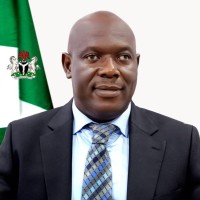
The Hydrocarbon Pollution Remediation Project (HYPREP) has commemorated the 15th anniversary of the release of the United Nations Environment Programme (UNEP) Environmental Assessment Report on Ogoniland, reaffirming its commitment to restoring the environment and improving the livelihoods of affected communities.
In a statement signed by the Project Coordinator, Prof Nenibarini Zabbey, to commemorate the anniversary, HYPREP described the anniversary as a significant milestone in Nigeria’s environmental restoration efforts, noting that the project has made remarkable progress in implementing the recommendations of the landmark UNEP report released on August 4, 2011.
The UNEP report had revealed extensive oil pollution across Ogoniland, severe environmental degradation, and serious public health risks resulting from decades of petroleum operations. It also recommended an initial $1 billion fund to commence the cleanup of the affected communities.
According to HYPREP, the Federal Government formally launched the Ogoni clean-up in 2016, while the Project Coordination Office was established in 2017 to drive the implementation of UNEP’s recommendations.
Zabbey said the current administration has continued to prioritise the project under the Renewed Hope Agenda.
Providing an update on the cleanup, the Project Coordinator disclosed that 30 of the 65 contaminated sites identified by UNEP have been fully remediated, while work is ongoing at several medium- and high-risk locations. It also stated that more than 1.5 million mangrove seedlings have been planted as part of what it described as the world’s largest restoration of oil-degraded mangroves, with over 1,000 hectares of shoreline already rehabilitated.
Zabbey further revealed that 49 Ogoni communities have been connected to potable water schemes through multiple water projects and booster stations aimed at providing safe drinking water across the region.
In the health sector, he said the 100-bed Ogoni Specialist Hospital in Kpite and the 43-bed Cottage Hospital in Buan are nearing completion, adding that several existing health facilities have been upgraded with modern medical equipment, while five ambulances have been donated to improve emergency healthcare services. The Project Coordinator also disclosed that a three-year human health biomonitoring study is being conducted in collaboration with the World Health Organization’s International Agency for Research on Cancer (IARC).
On economic empowerment, Zabbey stated that the Project has created more than 8,000 direct jobs and trained thousands of Ogoni youths and women in various vocational and technical skills, including software development, cybersecurity, aviation, commercial diving, seafaring, mechatronics, and creative arts. The project also reported awarding scholarships to more than 1,000 students, providing grants to small businesses, and supporting persons living with special needs through skills acquisition programmes.
The statement further highlighted ongoing legacy projects, including the Ogoni Power Project and the Centre of Excellence for Environmental Restoration, which it said is about 96 per cent complete. HYPREP also welcomed the recent designation of the Ogoni Wetland as a Ramsar Site of International Importance and pledged to continue promoting biodiversity conservation and sustainable management of the ecosystem.
Marking the anniversary, Zabbey said the progress achieved over the past 15 years demonstrates the collective commitment of government, development partners, stakeholders, and local communities to restoring Ogoniland. He called for renewed collaboration to sustain the cleanup effort, promote environmental sustainability, and support the long-term development of the region. 3
-

 News2 days ago
RSG Targets Nine Million Residents in Mosquito Net Distribution Campaign
-

 Oil & Energy1 day ago
Aiyedatiwa Signs New Electricity Bill
-

 Oil & Energy1 day ago
NLNG Commissions Research And Innovation Centre In RSU
-

 Maritime1 day ago
Marine Minister Commends President Tinubu On NPERA Bill Assent
-

 News2 days ago
KenPoly Holds Eight Convocations, August 29
-

 News2 days ago
RSG Begins Another Phase of Projects Commissioning Today
-

 News2 days ago
RMAFC Completes Revenue Sharing Review, Proposes New Pay
-

 Maritime1 day ago
NAGAFF Petitions IGP Over Alleged Maritime Police Harassment