
Business
FG, States To Build 500 Mega Stations

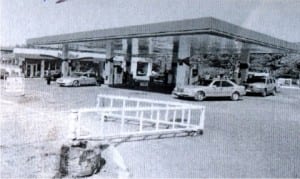
Motorists buying petrol freely without queues at a Filling Station in Abuja, recently
The Federal Government
is partnering with states and local governments as well as private investors to build hundreds of petrol filling stations across the country in a bid to prevent future crisis in the sector.
In a release obtained by The Tide in Port Harcourt recently the government stated that the Department of Petroleum Resources, (DPR) was not doing enough to enforce the new pump price of petrol filling stations.
It said this was inspite of the fact that DPR has stated that its entire staff was around 300 while there were over 30,000 filling stations across the country.
The Minister of State for Petroleum Resources, Dr Ibe Kachikwu confirmed this to journalists at a press conference in Abuja recently.
He stated that the government would also sign joint venture agreements with existing petrol stations in its bid to increase the numbers of outlets run by the Nigerian National Petroleum Corporation (NPPC).
On how the federal government planned to build 800 NNPC mega stations, Kachikwu said the modalities were being worked ????.
He however explained his uncertainly about the number expected to be built.
“Whether it is going to be 800 or 500, I cannot say precisely, but definitely we are trying to develop a lot of filling stations and we are working with state governors in terms of land, and with local governments as well.
He explained that some of the processes would be done through joint ventures with some existing filling stations who are willing to do the JVs with government.
“That is being worked out and before the second quarter of 2016, you will begin to see some things on that”, he said.
On Petrol stations selling above the regulated price, the minister said the government would start selling their products to motorists free of charge.
He however gave an assurance that the DPR would monitor all stations to ensure taht there was full compliance with the regulated price of petrol.



The Nigerian National Petroleum Company Limited (NNPC) has said that ongoing reforms in Nigeria’s oil and gas sector have lifted national crude oil production by 600,000 barrels per day, from about 1.2 million barrels per day to 1.8 million barrels per day.
According to the company, the improvement has strengthened Nigeria’s position as a destination for international energy investment.
Group Chief Executive Officer ( GCEO) of NNPC Limited, Engr. Bashir Bayo Ojulari, made the remarks last week at an Energy Talk titled “Nigeria’s Reform Agenda: Competing for Energy Capital”, moderated by John Defterios, Chairman, MENA, APCO, at the 2026 Abu Dhabi International Petroleum Exhibition and Conference (ADIPEC) in Abu Dhabi, United Arab Emirates.
Ojulari linked the production growth to the implementation of the Petroleum Industry Act (PIA) 2021, an improved investment climate, better investment decisions, and stronger collaboration between NNPC Limited and its partners.
He said the current output level is a milestone in NNPC Limited’s journey towards its 2 million barrels per day target by 2027.
The Company, he explained, is focused on maintaining infrastructure, protecting base production, increasing output from existing assets, and advancing new projects designed to lift production further.
“The figure of 1.8 million barrels per day is a stage in a journey towards our objective.
We are concentrating on the basics, which are maintaining our infrastructure, protecting base operations and executing the projects that will take production higher,” Ojulari stated.
On the domestic market, the GCEO said the removal of petrol subsidy has been accompanied by an expanded Compressed Natural Gas (CNG) programme.
He noted that over 400 CNG conversion centres have been established, while more than 1,000 trucks are transporting petroleum products
Nkpemenyie Mcdominic, Lagos
The Sea Empowerment and Research Centre (SEREC) has call for an independent forensic audit of the Nigerian Maritime Administration and Safety Agency (NIMASA), following conflicting claims over the management and currency status of the Cabotage Vessel Financing Fund (CVFF).
The centre said the controversy surrounding the fund had reinforced its earlier concerns about transparency, accountability and the possible erosion of contributions through currency conversion and administrative decisions.
In a reaction titled, “Cocks Crow at Dawn — On the CVFF Audit Crisis,” forwarded by SEREC’s representative, Eugene Nweke, the organisation said the latest revelations had vindicated its earlier calls for a comprehensive examination of NIMASA’s accounts from 2004 to date.
SEREC said former NIMASA Director-General, Temisan Omatseye, had disclosed that dollar-denominated contributions were converted into naira and invested in fixed deposits during his tenure, while the incumbent Director-General, Dr Dayo Mobereola, maintained that the fund remained in dollars with the Central Bank of Nigeria.
The organisation said the conflicting accounts raised questions about the actual value, location and management of the fund, which was to provide financing support established for indigenous shipowners under the Coastal and Inland Shipping (Cabotage) Act.
It argued that shipowners, as contributors to the fund, deserved documentary evidence showing how much had accrued, where the money was domiciled, the interest generated and the amount currently available for disbursement.
SEREC also warned that converting dollar contributions into naira exposed the fund to significant foreign exchange losses, given the depreciation of the local currency over the years.
According to the organisation, if the contributions were converted into naira and retained in that currency, the fund could have suffered a substantial erosion in its real value, undermining its original objective of strengthening indigenous shipping capacity.
It maintained that the CVFF was contributors’ money and should not be treated as government largesse, stressing that shipowners had a legitimate right to demand accountability.
The centre further criticised maritime industry stakeholders, particularly shipowners’ associations, for allegedly prioritising access to the fund over sustained demands for transparency in its management.
SEREC insisted that no disbursement should take place without a comprehensive forensic audit to establish the fund’s financial history and current position.
It said the audit should cover all contributions, currency conversions, investments, accrued interest and administrative transactions relating to the fund from 2004 to date.
The organisation said the findings would provide the necessary clarity on the financial position of the CVFF and help restore confidence among indigenous shipowners seeking access to the facility.
Nkpemenyie Mcdominic, Lagos
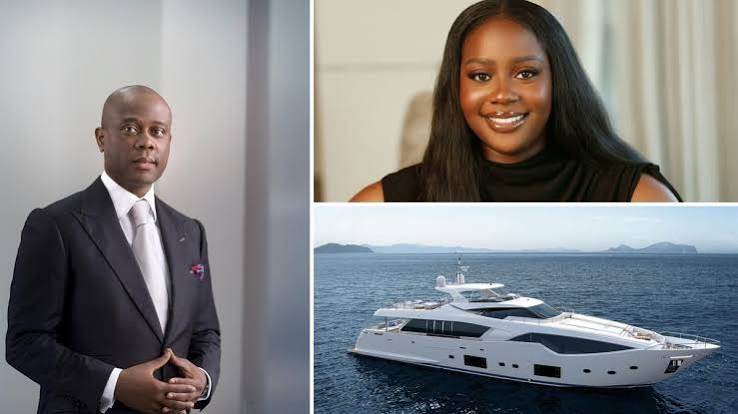
The daughter of late Nigerian banking executive, Herbert Wigwe has sold her father’s luxury yacht for $6.5 million which is the equivalent of N8.74 Billion following legal proceedings involving her, Otutochi Wigwe, and the company holding the vessel, Grosvenor Marine Ventures Limited.
This was contained in an online report obtained by The Tide Source in Port Harcourt recently.
The Source further clarified that $6. 5 Million dollars or N8.74 Billion was the asking price as at March this year but was unable to prove, if the said amount was exactly what the vessel went for.
The yacht, known as Chitochi, is a 2016 Custom Line 108 superyacht measuring approximately 33 metres (108 feet) in length. The transaction was handled by international yacht brokerage firm IYC, with its sales and charter consultant, Mark Elliott, overseeing the sale.
The disposal of the high-value vessel followed legal steps taken to address the corporate status of Grosvenor Marine Ventures Ltd., the company through which the yacht was held.
Otutochi Wigwe reportedly approached a court in the British Virgin Islands (BVI) to secure the restoration of the company to the corporate register, a move that enabled the necessary legal steps towards the sale of the vessel.
The proceedings were central to resolving the corporate issues affecting the company and facilitating the transaction, underscoring the legal complexities that may arise when valuable assets are held through corporate entities in foreign jurisdictions.
The sale is also significant in the context of estate administration, as luxury yachts require substantial financial commitments to maintain, even when they are no longer actively used by their owners or beneficiaries.
Such vessels typically attract considerable expenses, including crew salaries, insurance premiums, berthing charges, routine servicing and other maintenance costs, making their continued ownership a major financial responsibility.
Beyond the recurring expenses, luxury yachts are depreciating assets that may lose value over time. Their disposal can therefore form part of a strategy to preserve estate value, reduce liabilities and convert an expensive asset into liquid funds.
Wigwe, who was the former Group Chief Executive Officer of Access Holdings, died on February 9, 2024, in a helicopter crash in California, United States, alongside his wife, Chizoba; their son, Chizi; and former Nigerian Exchange Group chairman, Abimbola Ogunbanjo.
His death was widely mourned across Nigeria’s banking and business communities, where he was recognised for his contributions to the financial services industry, entrepreneurship and philanthropy.
Wigwe’s passing left behind an estate whose administration involves the management of assets and other financial interests, a process that can require legal and financial decisions to protect the interests of the estate and its beneficiaries.
The sale of Chitochi highlights the challenges associated with managing high-value assets held through corporate structures, particularly where the relevant companies and legal proceedings fall under different jurisdictions.
The $6.5 million transaction brings the yacht’s ownership chapter to a close while illustrating how legal procedures, financial considerations and estate management can intersect in the administration of the assets of a prominent business figure.
‘’We determined to get all our equipments and machinery functioning as we progress. For now we’ve about 105 workers, comprising daily paid harvesters and regular staffs. But aside these 105 staffs we also employ daily slashers who for now are about 100.
“During peak periods, hopefully on or before January 2026 we hope to increase our work force for maximum production”, the firm’s management Stated.
King Onunwor
-
Rivers4 days ago
Don Seeks Repositioning Of Tech Education For Dev
-

 Education4 days ago
PAMO MEDICAL UNIVERSITY -Nullifies Arrest warrant on VC
-
Niger Delta4 days ago
PANDEF Seeks 50% Oil Derivation Allocation Increase
-

 Education4 days ago
IAUE MOVES TO END GHOST WORKERS SYNDROME AS 400 NEW NON-TEACHING STAFF UNDERGO MANDATORY ETHICS TRAINING
-

 News4 days ago
Fresh Ebola Scare As NCDC Records Two Cases
-
News4 days ago
Customs Partners EFCC, NDLEA, Others To Tackle Money Laundering, Terrorism Financing
-

 Politics4 days ago
2027: RIVERS GUBER CANDIDATES SIGN CHARTER TO PRIORITIZE CITIZENS’ DEMANDS
-
 Politics4 days ago
2027: South-East Govs Insist On Tinubu’s Re-election