
Oil & Energy
NBET Begins N729b Debt Settlement For GenCos, Gas Suppliers

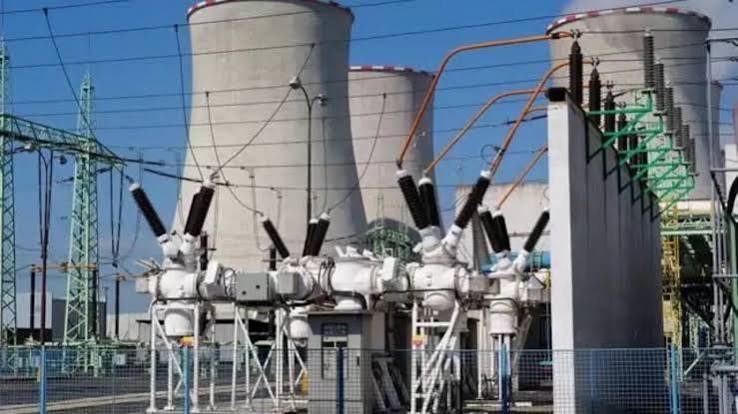
The Nigerian Bulk Electricity Trading Plc (NBET) has commenced the settlement of N729 billion outstanding debts owed participating electricity Generation Companies (GenCos) and their associated gas suppliers.
This is part of the Federal Government’s efforts to address mounting debts that have plagued Nigeria’s electricity sector for over a decade, weakening the financial capacity of generation companies and affecting electricity supply payment
The Managing Director and Chief Executive Officer, NBET, Akin Odeyemi, disclosed this in a statement, at the weekend, following the successful issuance and signing of the N728.979 billion Series 2 bonds under the Federal Government’s N4 trillion Power Sector Multi-Instrument Issuance Programme.
According to NBET, the settlement is structured around two financing instruments, comprising N402 billion in cash bonds and N326.979 billion in non-cash bonds.
“The settlement is being undertaken through a combination of ?402,000,000,000.00 in Cash Bonds and ?326,979,000,000.00 in Non-Cash Bonds, in accordance with the approved settlement framework,” the statement said.
NBET explained that the repayments would help clear historical obligations, improve liquidity across the electricity value chain and strengthen the financial position of operators, while creating greater certainty for future investments.
The aadded that a stronger financial position would enable GenCos to maintain their facilities, improve generation capacity and contribute to more reliable electricity supply.
It also disclosed that preparations were underway for the second phase of the debt reduction programme.
Recall that in July 2025, President Bola Tinubu gave anticipatory approval for a N4 trillion bond initiative aimed at addressing the liquidity shortfall in Nigeria’s electricity sector and settling longstanding obligations to power producers.
Since then, the Federal Government has raised approximately N1.23 trillion through two bond issuances under the programme, as it moves to address legacy debts initially estimated at about N4 trillion.
The first issuance, completed in January 2026, raised approximately N501 billion, while the second secured N728.979 billion in September.
The Series 2 issuance, marketed in August, attracted 11 participating GenCos, compared with eight companies in the first transaction.
N3.3 trillion plan targets legacy debts.
In March 2026, Nairametrics reported that several electricity generation companies had shut down operations amid a mounting N6.8 trillion debt burden, which affected their ability to maintain equipment, secure gas supplies and meet operational expenses.
At the time, industry data showed that 16 of Nigeria’s 33 power plants were not supplying electricity to the national grid, with the remaining facilities generating a combined 3,705 megawatts.
In April, President Bola Tinubu approved a N3.3 trillion payment plan under the Presidential Power Sector Financial Reforms Programme to settle verified legacy debts accumulated between February 2015 and March 2025.
The approved amount followed a government reconciliation exercise and differed from the wider debt burden reported by industry operators.
The bond was subsequently issued and signed in September, paving the way for the latest settlement exercise.


Continue Reading
Global fuel stocks are tighter than they have probably ever been. China just imposed a ban on all fuel exports for the month. Russia has had a diesel export ban in place for months. The United States threatened Europe with a diesel export ban unless European countries released some fuel from storage.
The current crisis is increasingly about fuels, and everyone is prioritizing their own needs.
The topic of resource nationalism is a hot one in energy. Governments of resource-rich countries are being more active in seeking to clinch the best deal with private companies willing to develop these natural resources. But when it comes to energy, it is no longer about the best deal. When it comes to energy, it is about covering local demand for fuels, and because diesel plays such a crucial part in every single economy in the world, diesel is a top priority.
Analysts were warning as early as April that the crisis prompted by the war between the United States and Israel, and Iran, would hurt fuel supply more than crude oil supply. Six months later, the impact is painfully obvious: diesel crack spreads hit an all-time high of over $100 per barrel in September, before easing below that scary threshold; there are not enough refineries to make up for the lost refined product supply from the Middle East; and Ukraine’s Volodymyr Zelensky just said his forces will double down on attacks on Russian refineries.
These developments have pushed diesel prices to record highs, notably in the United States, which prompted talk about a potential diesel fuel ban in order to keep the domestic market supplied, the way that Russia and China are banning exports to keep their own markets well supplied. Only there is a difference: when it comes to the United States, it produces more diesel fuel than it consumes, so it is not exactly short.
The U.S. eventually dropped the idea of a ban, with President Donald Trump even saying it was never really going to happen, after he pressured the EU to release 100 million barrels of crude, diesel, and gasoline from storage. Diesel crack spreads declined. Prices ticked lower, though not much lower, with the U.S. national average at $6.3151 per gallon as of Tuesday. European countries are in a much worse position, however, because most of them are highly dependent on imported fuel. In the case of Europe—specifically the European Union—diesel nationalism may turn ugly.
There are plenty of refineries in the EU, but they are a lot fewer than they were 15 years ago. Capacity is not enough to supply all local markets, hence the growing dependence on both crude oil and fuel imports. Now, supply elsewhere is limited in both crude and refined products, regardless of all those optimistic reports about Hormuz reopening and oil flowing freely out of it. Even if it is, this oil is not flowing to Europe.
The diesel release, to take place over the first 20 days of the four-month period for the 100-million-barrel total release, will provide some relief, but it seems the market has already priced it in. It might have also priced in the fact it would be hard to repeat that release at a later date, which is bound to keep prices elevated. Countries that cover their demand with local refining capacity, such as Bulgaria, may be asked to boost exports. Indeed, Bulgaria recently lifted a ban on diesel exports imposed last year, because the country’s only refinery had output to spare. Should demand from other EU members rise, however, things might change.
The Chinese fuel ban will not do heavy fuel importers any favors, either, not to mention Russia’s diesel export ban extension, which will likely be repeated for another month as Ukrainian attacks on refineries continue. Middle Eastern supply is not coming back anytime soon, it seems.
Almost all reports about tanker movement in the Strait of Hormuz focus on crude oil, and some LPG cargoes. Refineries in the top refining region, then, must still be under repair after Iranian missile and drone strikes. This leaves the United States as the only major source of refined fuels—a source that is fighting to keep domestic prices under control by any means necessary.
There may be arguable aspects about the war in the Middle East, but one thing has been proven beyond the shadow of a doubt by the fighting and the energy crisis it spurred. Energy security has reclaimed its position as a number-one concern for all countries, even those European ones that have spearheaded the decarbonization drive started after 2015. They still claim decarbonization is a top priority—but it is no longer the number-one priority. The number-one priority is securing enough fuel for the local market and local drivers.
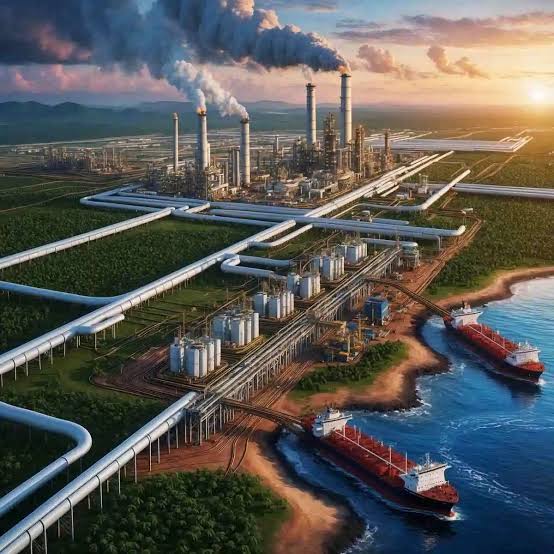
The United Nations Conference On Trade and Development (UNCTAD) has named Nigeria among the oil and gas exporters earmarked to benefit from higher global energy prices.
UNCTAD disclosed this in it’s 2026 Trade and Development Report: The Geoeconomics of Development.
The report identifies Nigeria, Angola, Guyana and Kazakhstan as exporters that could benefit from the energy shock triggered by the conflict in the Middle East.
It warned however that insufficient domestic refining capacity could erode some of the gains
The report, titled ‘Resilience and its limits’ stated that the conflict in the Middle East has damaged energy infrastructure and disrupted transit through the Strait of Hormuz, a major route for seaborne crude oil and liquefied natural gas.
These disruptions, it said, triggered the largest monthly loss of global energy supply on record.
UNCTAD said “Oil and gas exporters outside the Strait of Hormuz, among them Angola, Guyana, Kazakhstan and Nigeria, are positioned to benefit from higher prices.”
“Where domestic refining capacity is insufficient, however, that advantage is partly offset by the steeper rise in refined product prices.”
The report also warns that the energy shock could fuel inflation, tighten monetary policy, increase borrowing costs and heighten financial stability risks.
It argues that addressing energy supply constraints would be more effective against supply-driven inflation than relying solely on monetary and fiscal tightening.
The report calls for stronger multilateral support, increased domestic development financing and greater use of local-currency funding to close financing gaps.
UNCTAD further highlights renewable energy as an opportunity for developing countries to strengthen energy security and reduce exposure to external supply shocks.
The Rural Electrification Agency ( REA) has secured a N100bn financing facility from Stanbic IBTC Bank to support renewable energy developers and expand electricity access to unserved and underserved communities across Nigeria.
The Managing Director/CEO, Rural Electrification Agency, Abba Aliyu, who made this known in a statement, said the agreement would provide eligible developers participating in REA-led electrification programmes, including the World Bank-funded Distributed Access through Renewable Energy Scale-up Project, with access to finance for equipment procurement.
Under the memorandum of understanding signed between the two organisations, Stanbic IBTC would provide a N100bn revolving loan facility with a one-year tenor to eligible project developers.
The amount accessible to each developer would be determined on a case-by-case basis, subject to the underlying grant agreement, the developer’s capacity and the bank’s credit assessment.
Aliyu said the facility would help address one of the major challenges facing renewable energy project delivery, which is access to capital after project approval.
“One of the lessons from our experience under the Nigeria Electrification Project is that having a viable project and an approved grant is not always enough. Developers also need access to the capital required to procure equipment and commence implementation.
“This partnership with Stanbic IBTC is therefore important because it connects our results-based financing framework with commercial finance, giving credible developers a stronger pathway to move projects from approval to delivery and, ultimately, connect more Nigerians to reliable electricity,” he stated.
The partnership is expected to reduce financing constraints that have previously affected the pace of renewable energy project delivery.
The Head, Energy and Infrastructure, Stanbic IBTC Bank, Richard Inegbedion, said the bank’s participation reflected its commitment to infrastructure development and Nigeria’s energy transition.
“The energy access challenge requires strong collaboration between government, developers and financial institutions. At Stanbic IBTC, we recognise that renewable energy projects require financing structures that understand both the opportunities and the realities of the sector.
“Through this partnership with REA, we are creating a financing platform that can help eligible developers access the capital they need to execute projects, while contributing to the development of sustainable energy infrastructure and economic activity across Nigeria,” he noted.
Representing the renewable energy developer community, the Managing Director/CEO, Asolar Systems Nigeria Limited, Hakeem Shagaya, maintained that appropriately structured financing would be critical to delivering renewable energy solutions at the scale required under DARES.
“For developers, access to finance is one of the most important factors determining how quickly an approved renewable energy project can move into implementation.
“A financing framework that is aligned with REA’s result-based structure can significantly improve our ability to procure equipment, mobilise resources and deliver projects within the required timelines.
“ We welcome this partnership because it brings the developer, government and financial sector closer together around a common objective, delivering reliable electricity to communities that need it,” Shagaya submitted.
Beyond the lending facility, Stanbic IBTC will support the transaction through a collection platform designed to enhance financial inclusion and project sustainability.
The bank would also provide financial advisory solutions, including linking developers with original equipment manufacturers and providing international trade tools where practicable.
REA would continue to provide programme-side oversight through developer prequalification, project approvals, grant agreements, authentication of relevant documentation, among others.
The agency said the collaboration was expected to strengthen private sector participation in Nigeria’s electricity access drive by improving access to debt financing, reducing financing-related delays and enabling developers to mobilise equipment and resources more effectively.
According to the statement, the MoU would remain in force throughout the tenure of the World Bank-funded DARES programme managed by REA and will terminate at the end of the programme and upon full repayment of facilities disbursed under the arrangement, subject to the terms of the agreement.
-
Sports4 days ago
BAL: SWAN Rivers Urges Hoopers To Make Nigeria Proud
-
 Nation4 days ago
Amaewhule Family Warns Public Against Ada-Oro Fam Land Transactions
-
News4 days ago
RSG Extends ?200,000 Cash Support, Free Medicals To Flood Victims In Eneka
-
News3 days ago
Rivers Police Arrest Two Kidnappers As Victim Regains Freedom After ?10.3m Ransom
-
News3 days ago
Flood: RSG Extends ?200,000 Cash Support To 35 Flood-Affected Household In Npolu Rumuigbo
-
 Oil & Energy5 hours ago
FG Halts Ban On Solar Import, Gets Stakeholders’ Commendation
-
News3 days ago
Consider Career In Nigerian Army, RSG Tells Youths
-
 Niger Delta3 days ago
IAUE Ranks Seventh In Google Scholar Profile Submission …Expels Final Year Student Over ‘Damaging’ Content Creation