
Maritime
Workers Welfare Our Priority —MWUN PG

The President-General of the Maritime Workers Union of Nigeria (MWUN), Comrade Francis Bunu, has said his administration remains focused on securing better welfare and improved working conditions for maritime workers.
According to him, the union will continue to work for the benefit of its members, with their welfare at the heart of its activities.
Bunu said this when he received the executives of the Maritime Correspondents’ Organisation of Nigeria (MARCON), led by its President, Ismail Aniemu recently.
He said the union’s primary responsibility is to speak for its members and ensure that their interests remain adequately protected.
Bunu noted that the union will not stop pursuing initiatives capable of delivering tangible benefits to maritime workers, particularly through improved working conditions and better welfare packages.
He said the leadership will also build on the gains already recorded, including achievements secured through Collective Bargaining Agreements (CBAs), to further improve the lives of workers and their families.
According to him, the success of the union should ultimately be reflected in the quality of life and working conditions of its members.
Bunu said MWUN will continue to engage relevant stakeholders and pursue opportunities that will advance the interests and welfare of maritime workers.
By: Nkpemenyie Mcdominic, Lagos


Continue Reading
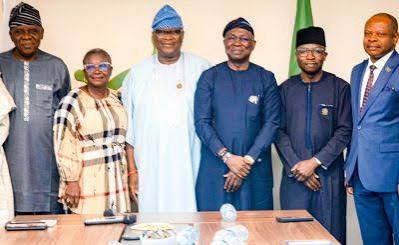
The Director General of Nigerian Maritime Administration and Safety Agency (NIMASA) Dr. Dayo Mobereola, has said that effective collaboration between Maritime Academy of Nigeria (MAN), Oron and the Agency is key to the development of training of seafarers in Nigeria.
Dr Mobereola made this known when the Governing Board of the Maritime Academy of Nigeria MAN, Oron, led by its Chairman, Engr. Kehinde Olayinka Akinola, paid a working visit to the management of NIMASA, at the Agency’s Corporate Headquarters in Lagos to hold talks on seafarers’ training.
The DG announced that the Agency was working on a review of the curriculum of the Standard Training Certification and Watch-keeping STCW, 2017, for Maritime Training Institutions in Nigeria.
“For over 32 years Nigerian training institutions have been operating with obsolete curricula, NIMASA is determined to review the curriculum and benchmark against the very best globally acceptable standard. This is in a quest to ensure that seafarer’s certification in Nigeria enjoys global recognition”, he said.
The DG further reiterated NIMASA’s commitment to supporting the successful training and promotion of Nigerian seafarers through MAN, Oron, while noting that human capital remains one of the most critical components for the development of Nigeria’s Blue Economy.
In his response the Chairman of the Governing Board, Engr. Kehinde Olayinka Akinola stated that the Academy is equipped with state-of-the-art facilities and remains one of the leading maritime training institution in Africa.
While appreciating the management of NIMASA for its continued support to the Academy, the Chairman disclosed that MAN, Oron, has developed a five-year development plan, which includes the acquisition of a training vessel to further enhance practical training for cadets.
He further revealed that the Liberian Maritime Administration and a Liberian maritime training institute, which recently visited the Academy, have expressed interest in collaborating with MAN, Oron, to facilitate opportunities for Nigerian seafarers to undertake sea-time training onboard Liberian-flagged vessels.
The proposed collaboration, he noted, would provide Nigerian cadets with additional opportunities to gain practical experience and strengthen their competitiveness in the global maritime labour market.
By: Nkpemenyie Mcdominic, Lagos
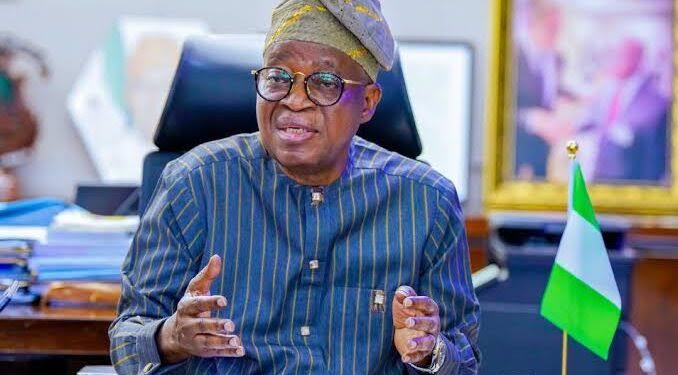
Minister of Marine and Blue Economy, Adegboyega Oyetola, has called on Danish investors and businesses to take advantage of the vast investment opportunities in Nigeria’s marine and blue economy, assuring them of attractive incentives, strong returns and a business environment increasingly geared towards private-sector participation.
Oyetola made the call in Copenhagen, Denmark during a bilateral meeting with Denmark’s Minister for Business and Competitiveness, Martin Lidegaard, as Nigeria stepped up efforts to attract Danish investment, technology and expertise into the country’s maritime sector.
The meeting was part of the activities of the official Nigerian Ministerial Delegation to Denmark on Maritime and the Blue Economy, led by Oyetola, with discussions focused on investment, maritime infrastructure, technology, green transition, port efficiency, skills development and sustainable economic growth.
The minister and his delegation also held discussions with other senior representatives of the Danish government and the wider Danish maritime sector.
The minister said Nigeria had moved beyond establishing the institutional framework for the Marine and Blue Economy and was now entering a phase focused on project development, investment mobilisation, improved sector performance and capacity building.
“Nigeria is looking for partnerships that can improve sector performance, attract investment, deploy technology, strengthen skills and safety, advance sustainability and create quality jobs,” Oyetola said.
He emphasised that Nigeria’s marine and blue economy was open for investment, pointing out that opportunities abound across ports and logistics, ship building and repair, maritime services, digital technology, fisheries, green shipping, renewable energy, marine infrastructure, financing and multi-modal connectivity.
According to him, Nigeria’s extensive coastline, inland waterways, large consumer market and strategic location within West and Central Africa provide investors with access to a wide range of opportunities across the maritime value chain, with significant potential for long-term commercial returns.
He noted that the established presence of Danish-origin companies in Nigeria’s maritime sector demonstrates the viability of the market and provides a solid platform for expanding commercial relations between both countries.
“The presence of some Danish companies in Nigeria provides a strong foundation on which we can build. We want to deepen that relationship and create the conditions for more Danish businesses, investors and technology providers to participate in Nigeria’s maritime transformation,” he said.
The minister urged Danish businesses to look beyond existing investments and explore emerging opportunities in Nigeria’s maritime value chain, stressing that the country needs strategic partners capable of bringing capital, technology, expertise and innovation into the sector.
He said the Nigeria-Denmark engagement was designed to move beyond broad diplomatic commitments towards identifying bankable projects and practical partnerships capable of delivering measurable economic outcomes.
For Denmark, which has internationally recognised expertise in shipping, maritime services, logistics, green technologies and sustainable ocean industries, Oyetola said Nigeria presented an opportunity to combine Danish technology and expertise with the scale and commercial potential of Africa’s largest economy.
Lidegaard welcomed the prospect of closer engagement with Nigeria’s Marine and Blue Economy agenda and stressed the importance of practical partnerships involving businesses, government institutions, technology providers and knowledge institutions.
He said such partnerships would be critical to developing solutions that could be implemented, expanded and commercially sustained in both countries.
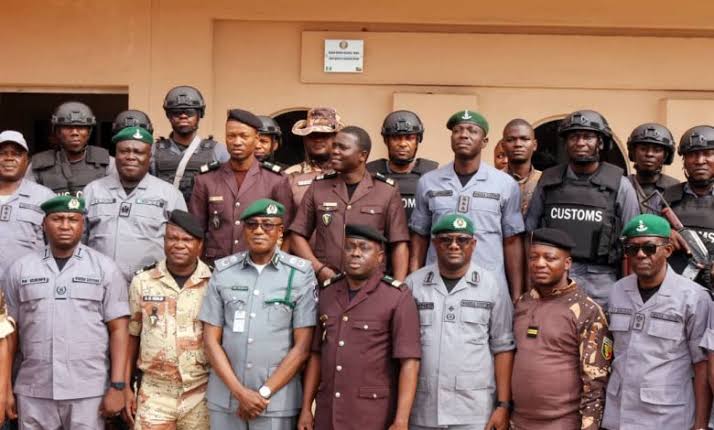
The management of Nigeria Customs Service and the Republic of Benin Customs have resolved to strengthen the cordial working relations between the two countries to enhance economic integration and harmonise cross-border trade barriers.
The event themed:”Join Nigeria -Benin Republic one stop border post Assessment at Seme-Krake”, focussed on “leveraging the Nigeria Customs service Trade Modernisation project to advance seamless cross border trade shared prosperity”.
The two customs boss conducted a joint assessment of the one stop border post as part of their efforts to deepen regional economic integration, harmonise cross border procedures, reduce trade barriers and facilitate the seamless movement of legitimate goods and services between both countries.
Speaking to journalists on Friday at the Seme-Krake Joint Border Post following a joint inspection operation and the signing of a bilateral agreement, the Comptroller-General of Customs, Bashir Adewale Adeniyi, emphasised that the new technology was custom-built by both administrations to reflect their specific operational traits and trade expectations.
?
Adeniyi highlighted that real-time visibility across the border will dramatically enhance enforcement, ensuring that risk alerts raised by one administration reach the other while still actionable.
?
Beyond digital connectivity, the joint assessment identified critical operational priorities required to transform the corridor, including restoring broken-down scanners, reinforcing access control, surveillance, and lighting, as well as establishing harmonised bilingual operating procedures.
?
“What we seek to achieve here is that this border post be treated as a strategic modernisation programme and not as a series of isolated repairs,”
“The objective is a model, technology-enabled joint border post built on customs interconnectivity, joint risk management, coordinated enforcement, secure infrastructure, and accountable joint governance. If we achieve that here, we will have built a template for every other crossing within the ECOWAS community and the African continent.” Adeniyi stated
?Addressing the human element of border commerce, Adeniyi highlighted the critical role of women traders, who make up over 70% of informal cross-border traders across Africa and face disproportionate challenges from delays, opacity, and harassment.
To address this, the Nigeria Customs Service launched a dedicated facility tailored to small-scale women traders.
?
“Its purpose is to bring women into the formal trading system on terms that they can actually meet, simplifying procedures for small consignments, providing clear published information in local languages, and offering accessible contact points and formal channels for complaints,” Adeniyi explained.
?Adeniyi expressed gratitude to the government and people of the Republic of Benin, acknowledging that foundational collaboration begun under former President Patrice Talon and continued support under President Romuald Wadagni, alongside key partners including the ECOWAS Commission, European Union, AfCFTA Secretariat, African Development Bank, and technical partner BSMART from Uganda.
Also speaking, the Director General of Benin Republic Customs Service, Col Raof Malehosso Aboudou said one of the benefits of this CDES platform is that it would reduce stress for stakeholders, and enables both customs organisation to access information launched by traders in real time.
“It reduces stress for travelers and every other person that uses the Joint Order Post and the Joint Order Post also gives birth to coordinated risk management, which is actually one of the core values of the World Customs Organization”
Aboudou said it was necessary to engage the stakeholders when embarking on this kind of initiative because they are the ones that feel the heat the most.
?
“When there is smooth movement at any border, it is the stakeholders that enjoy it at the end of the day. When things are not working, they are the ones that also suffer it. That is why it is very important to involve them.
?
He said that Africa is blessed to have CGC Adeniyi as the current Chairperson of World Customs Organization (WCO).
“We are lucky in Africa, in West Africa, and particularly in Nigeria, to have someone like him. Because he is someone who is committed to improving intra-Africa trade and trade in West Africa, and seeing modernised customs, not just only in Nigeria, but in West Africa and in Africa in general.
?
“The future of the customs really appreciates and recognises his commitment. Just a few days after I was appointed as the Director General of Customs in Benin Republic, the CGC put a call to me and discussed the need for us to pay a visit to the deep bridge somewhere in Zimbabwe, so that we can go and see how organized the one-stop order post is, and see how it can be replicated here in the Joint Order Post Centre.
“He picked me up and also went to pick the Director General of the Cameroonian Customs and we all went together to do a visit to the deep bridge, and saw how things are being done, how things are actually working, how they are supposed to work, how there is smooth operation of customs” he said.
By: Nkpemenyie Mcdominic, Lagos
-

 News2 hours ago
Account For ?126bn ‘Missing’ Electoral Funds, SERAP Tells INEC
-

 News2 hours ago
NDLEA Seizes UK-Bound Cannabis, Drugs Hidden In Bread, Speakers
-

 News2 hours ago
NBA Tasks Law Students On Advocacy, Professional Excellence
-
 News2 hours ago
RSG Tasks Permanent Secretaries On Transformational Leadership …As Number Of PS Rises To 39 In Rivers
-
 News2 hours ago
Rivers HOS, Permanent Secretaries Inducted Into Institute of Directors of Nigeria
-

 Business24 seconds ago
NBA PH Insists On Strict Remuneration Order Compliance
-

 Editorial4 seconds ago
Ogoni: Learning From Oil Wounds
-

 News2 hours ago
2027: INEC Confirms Tinubu, Atiku, Obi, 15 Others For Presidential Race