
Business
Navy Recovers 87,000 Litres Of Crude In Rivers ——Deactivates Four Illegal Refining Sites In Ogu-Bolo


The Nigerian Navy Forward Operating Base (FOB) Bonny has sustained its offensive against crude oil theft and illegal refining activities in Rivers State, with its latest operation resulting in the discovery and deactivation of four illegal refining sites in Awokiri Community, Ogu-Bolo Local Government Area.
The operation, conducted over the week, uncovered 19 dugout pits containing an estimated 84,000 litres of suspected stolen crude oil, while an additional 3,000 litres was discovered in a general-purpose tank, bringing the total quantity of suspected stolen crude oil to approximately 87,000 litres.
According to a situation report from FOB Bonny, the operation followed credible intelligence indicating that new illegal refining sites had been activated in the Awokiri area, prompting the deployment of an anti-crude oil theft team to the location.
The 12-man armed team departed the Shell SLOT Jetty at about 12:20 p.m. aboard RHIB 2 and Suncraft BO103 and proceeded to the area of interest, where a DJI drone was deployed to conduct aerial surveillance.
The aerial surveillance reportedly revealed several suspected illegal refining locations comprising dugout pits, storage tanks and connecting hoses, following which the naval personnel carried out a tactical landing for detailed ground assessment and exploitation.
The operation subsequently led to the discovery of four newly activated illegal refining sites comprising 19 dugout pits. Ten of the pits contained an estimated 84,000 litres of suspected stolen crude oil, while six contained water and three others were freshly excavated and apparently prepared for future use.
Two general-purpose tanks were also discovered at the sites. While one of the tanks contained approximately 3,000 litres of suspected stolen crude oil, the second tank was found empty.
Further examination of the locations revealed several four-inch hoses connecting the dugout pits to the riverbank, an indication that the facilities had been configured to facilitate the movement of suspected stolen crude oil between the waterways and the illegal refining sites.
The recovered suspected stolen crude oil, pits, hoses and other facilities were documented and handled in line with established operational procedures before the naval team withdrew from the area and returned to the Shell SLOT Jetty at about 4:39 p.m.
The latest operation is part of sustained efforts by FOB Bonny to disrupt crude oil theft, illegal bunkering and other maritime crimes capable of undermining legitimate oil and gas operations and commercial activities within its area of responsibility.
In July, the Base uncovered nine illegal refining sites comprising 23 dugout pits in Bonny, with 18 pits containing an estimated 104,000 litres of suspected stolen crude oil, while five freshly excavated pits were reportedly neutralised before becoming operational.
Earlier in the same month, the Base discovered an illegal crude oil storage facility in the Bethel Community axis of Bonny, where approximately 20,500 litres of suspected stolen crude oil were recovered from concealed dugout pits.
The Nigerian Navy has also continued to target the infrastructure and logistics used by criminal networks to establish illegal refining facilities, with FOB Bonny intercepting materials allegedly meant for the construction of such facilities around the Cawthorne Channel in 2024 and arresting three suspects.
The latest development underscores the continuing challenge posed by crude oil theft and illegal refining to Nigeria’s oil and gas sector, while highlighting the importance of intelligence-led operations, aerial surveillance and sustained maritime patrols in protecting critical infrastructure and keeping the waterways around Bonny and adjoining areas safe for legitimate economic activities.
By: King Onunwor


Continue Reading
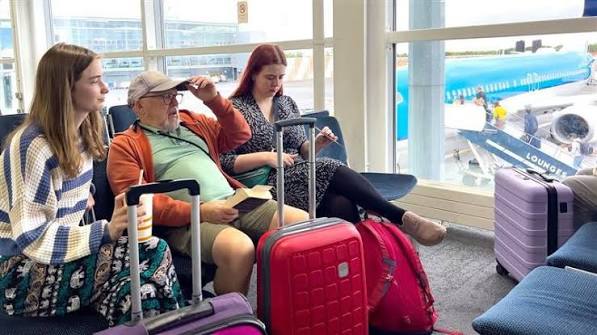
The Managing Director of Chinua Achebe Airport, Umueri in Anambra state, Mr Martins Nwafor has attributed a low record of Passengers traffic in the Airport to high ticket pricing by airline operators using the airport.
Nwafor who disclosed this in an interview with journalists at Omagwa Airport in Portharcourt, said the difference in pricing which favoured neighbouring airports was a major factor responsible for low traffic in the route.
He said the airport now operates eight flights everyday with two service providers, adding that it could be more when it received private jets which were non-scheduled.
Nwafor also encouraged air transport passengers from Anambra and neighbouring states to use the airport to enjoy the cutting edge facility and support its revenue base for greater transformation.
According to him, “we need an increase in the number of flights but the disparity in ticket pricing which favours airports around here, is essentially why they get more flights than us.
“I am not an airline operator, but I know there is a pricing method which is informed by the interplay of demand and supply.
“So, I am calling on the two airline operators using this airport, who incidentally are from Anambra, to look at the disparity in ticket pricing.
“For instance, while a ticket to a nearby airport is N115, 000, it is as much as N200,000 here, it is discouraging people from coming to our airport.
“But we have been talking recently and it is closing up and more passengers are coming here.
“The airport revenue from passengers is from only those taking off from here, those who land here do not pay passenger service charges at the point of origin”.
Nwafor said the Chinua Achebe Airport was aeronautically complete and optimally functional even though there were other necessary ancillary facilities such as hangers, shops, malls which private investors could come and invest in.
He said the airport was over 90 percent complete when it was inaugurated for commercial flight operations, adding that the management had overcome some of the restrictions due to continued improvement.
“The airport itself does not exist on its own, there are infrastructure that are purely aeronautical, they are what make the airport to function, making it safe for airplane to land and take off safely and securely.
“There is no compromise in the aeronautical aspect of the airport; here, if an airport is not ready, an aeroplane will not land there.
“We started with small airplanes of about 50 passengers because we were flying Visual Flight Rules (VFR) which does not permit the use of big airplanes,
“Our Instrument Landing System, that is the Doppler Very High Frequency Omnidirectional Radio Range Equipment, was installed even though not totally calibrated.
“But we have progressed, we have overcome some of the restrictions due to continued improvement and we now fly at night especially in December when we have passenger surge.
“We have more than enough airport taxis and one of the best airport taxi systems, they are well profiled by the security agencies and identified with their vehicles to ensure safety of passengers,” he said.
By: Enoch Epelle

In a bid to carry her stakeholders along on the Post clearance audit(PCA) procedures, the Nigeria Customs service has intensified it ongoing nationwide sensitisation seminar to better educate importers , manufacturers and the entire business communities on the application of the newly introduced World Customs Organisation (WCO) trade facilitation tools as enshrined in the Nigeria Customs Service Act 2023.
The stakeholders workshop which was organise by the Post Clearance Audit (PCA) Unit of the NCS on Thursday in Lagos was to educate stakeholders on the WCO trade facilitation tool, the Authorise Economic Operator (AEO) and the role of the PCA in accordance with the WCO convention and application.
In his keynote address at the workshop at Eko hotel in Lagos , Comptroller General of Customs, Bashir Adewale Adeniyi MFR, said he was
glad to see the trading community so well represented, because according to him “they are the focus of today’s engagement.
“I will begin further back than the audit function itself, because Post-Clearance Audit did not arrive in Nigeria by accident. It arrived because two things happened at about the same time.
“The first is that the Nigeria Customs Service Act, 2023 gave this Service a modern legal foundation, and with it an express mandate to verify compliance after goods have been released. The second is that The Federal Government set a clear
direction on revenue and on the business environment, and asked the agencies of
government to meet both objectives at once.
“That instruction deserves to be stated plainly, because it is harder than it sounds. President Bola Ahmed Tinubu’s administration has pursued a broadening of non-oil revenue, a reform of the fiscal system and a serious effort to reduce the cost and friction of doing business in Nigeria. Customs sits precisely where those objectives meet. We are asked to collect more, and to obstruct less.”
Adeniyi said the scale of the first half of that instruction is worth stating.
He informed that in 2025 , the Service collected ?7.281 trillion against a target of ?6.584 trillion, exceeding it by ?697billion, and rising from ?6.1 trillion the previous year,
“This is a growth of some 19 percent year on year. For 2026 the target set for us is ?11.074 trillion. At the end of
June we stood at ?4.30 trillion, which the Board reviewed at its 65th Regular Meeting on 2nd of September. These figures make a point about the methods that must be applied and not celebrated alone. Numbers of that order cannot be delivered by opening more containers. They can only be delivered by knowing which containers to open.” .
To achieve more revenue collection, Adeniyi said is only one way to do both. “Control has to move off the quay. If every
consignment must be opened at the port before it is released, then revenue assurance and trade facilitation will pull against each other for as long as we practise Customs, and the trader will pay for that contest in demurrage and delay.
Post-Clearance Audit is how that contest is resolved. It allows goods to move on the strength of the declaration, and moves the verification to the records, after release, where it can be done thoroughly and without holding up commerce.
“The good thing is that we now have recent measurement to work with. In January this year the Service published the findings of the Time Release Study conducted at Tin Can Island Port, a facility that handles more than a tenth of Nigeria’s seaborne trade.
“The study followed 601 import declarations from arrival to physical exit, and it was carried out with the shipping lines, the terminal operators, the Nigerian Ports Authority, licensed agents and the banks, so that what it recorded would be the real operating environment and not our own account of it.
“The central finding deserves the attention of everybody in this room. A container at Tin Can Island sat for about 5 days before it left the port. The physical examination of that container took a matter of hours. For 98.7 per cent of consignments, the interval between booking for examination and physical exit averaged close to 4 days, and a small number of prolonged cases carried the overall average to nearly 5.
“Read that carefully, because it does not say what people often assume it says. It
does not say that Customs examination is slow. It says that examination is fast and
clearance is slow, and that the difference between the two is made up of manual
processes, fragmented coordination between agencies, and the waiting that these
produce. The delay is in the architecture, not in the inspection.
“As I said when the
report was launched, the study allowed us to move from assumptions to facts, and some of those facts were uncomfortable.”, he explained.
Speaking further Adeniyi said if the problem was slow examination, the answer would be more examiners.
“It is not, and so the answer is different. The answer is to reduce the number of
consignments that need to be stopped at all, by verifying afterwards those that do not
and not celebrated alone. Numbers of that order cannot be delivered by opening more
containers. They can only be delivered by knowing which containers to open.
“There is only one way to do both. Control has to move off the quay. If every
consignment must be opened at the port before it is released, then revenue assurance and trade facilitation will pull against each other for as long as we practise Customs, and the trader will pay for that contest in demurrage and delay.
“So, the message today is a simple one. Compliance should not be driven by fear
of enforcement. It should be driven by confidence in a system that is fair, predictable and consistently applied. Businesses need clarity. You need to understand your obligations, and you are equally entitled to understand your rights. You are entitled to know that an audit will be conducted professionally, transparently and within the applicable legal framework, by officers”. he noted
It also gives you an opportunity to speak to us. We are listening, and we are prepared to learn.
Adeniyi urges the stakeholders that their partnership must rest on responsibility, and the responsibility runs both ways.
He said the Service expects traders to keep accurate records, make truthful declarations and observe the laws governing international trade.
“Where errors occur, and they will, our system should encourage their prompt correction and voluntary disclosure instead of punishing the trader who comes forward.
“For our part, we are moving the Service from a culture of intervention to one in which compliance is the natural outcome of understanding, trust and cooperation. As we modernise, we are applying technology, trade data and professional expertise to make our processes faster while strengthening revenue assurance.
Earlier in his welcome address, the host and Assistant Comptroller General, Post Clearance Audit ( PCA), ACG Babatude Olomu PhD said the engagement comes at a critical time in the NCS efforts to strengthen PCA as a strategic instrument for revenue assurance, voluntary compliance, trade facilitation and improved customs administration.
“It also provides an important platform for strengthening understanding, cooperation and mutual trust between the Service and our stakeholders.”, he assured
According to ACG Olomu the programme is geared towards strengthening three key objectives: Enhancing Stakeholder Understanding and Voluntary Compliance;
Strengthening Revenue Assurance and Risk-Based Compliance and; Deepening Partnership and Institutional Cooperation.
He said the impact of PCA interventions is increasingly evident in the Service’s revenue performance. “Between January and August 2025, the Service recovered ?21,278,494,169.61, while the corresponding period in 2026 recorded ?27,181,037,678.77 – an increase of ?5,902,543,509.16, representing approximately 27.7% growth year-on-year.
“This substantial improvement reflects the growing effectiveness of our PCA interventions, particularly enhanced risk-based targeting, more robust audit processes, strengthened case management and improved stakeholder compliance.
Beyond the increase in recoveries, this performance demonstrates the PCA’s expanding contribution to revenue assurance, compliance management and accountability, while reinforcing the Service’s commitment to leveraging post-clearance interventions to secure government revenue and promote a more compliant trading environment.
By: Nkpemenyie Mcdominic, Lagos
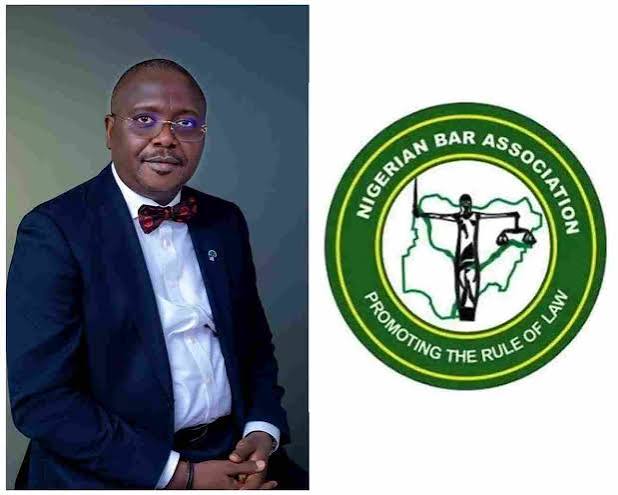
The Nigerian Bar Association, NBA, Port Harcourt Branch, has insisted on strict compliance with the Remuneration Order, directing members to adhere fully to the prescribed payment procedure on professional fees.
In a statement by the Secretary of the Branch, Rachel C. Princewill, and made available to the Public in Port Harcourt recently, the branch reaffirmed that it commenced full compliance with the Remuneration Order with effect from October 1, 2025.
Princewill explained that the position of the branch was in line with the express provisions of the Remuneration Order, stressing that entire amount payable as professional fees on any given transaction must be remitted into the NBA Port Harcourt Branch’s designated account.
According to her, the directive was intended to ensure strict adherence to the provisions of the order and eliminate practices inconsistent with the prescribed remuneration regime.
She disclosed that the branch had reviewed earlier communications on compliance with the Remuneration Order and was reaffirming its established position for the guidance of members.
The NBA Port Harcourt Branch Secretary further announced that the practice of remitting only one per cent of the payable amount into the branch account had been discontinued.
She said the practice was officially banned with effect from September 4, 2026, stressing that members were expected to comply with the new directive forthwith.
Princewill therefore directed members to ensure that the entire ten per cent payable amount is remitted into the NBA Port Harcourt Branch’s Globus account in accordance with the Remuneration Order.
She further stated that all deeds, instruments and other relevant documents must be duly executed before they are submitted for compliance.
The branch secretary urged all members to take note of the directive and ensure strict compliance, noting that the new position was binding on members in handling applicable transactions.
She said the directive was part of the branch’s effort to ensure uniformity and proper adherence to the provisions governing professional fees within the legal profession.
Members seeking further clarification were advised to contact the Branch Treasurer or the Financial Secretary through the telephone numbers provided by the secretariat for necessary guidance.
By: King Onunwor
-

 News2 hours ago
Account For ?126bn ‘Missing’ Electoral Funds, SERAP Tells INEC
-

 News2 hours ago
NDLEA Seizes UK-Bound Cannabis, Drugs Hidden In Bread, Speakers
-

 News2 hours ago
NBA Tasks Law Students On Advocacy, Professional Excellence
-

 News2 hours ago
RSG Tasks Permanent Secretaries On Transformational Leadership …As Number Of PS Rises To 39 In Rivers
-

 News2 hours ago
2027: INEC Confirms Tinubu, Atiku, Obi, 15 Others For Presidential Race
-
News2 hours ago
RSLGSC: Critics Of Biometric Exercise Are Haters Of Rivers -Chairman …Insists Commission Never Sacked 21,000 Workers …Discovers Seven-Year-Old On Staff Roll
-
 News2 hours ago
Cultivate Culture Of Thanksgiving, Fubara Urges Rivers People
-

 News2 hours ago
Nigeria Sustains OPEC Quota Compliance As Oil Output Hits 1.68m bpd