
Maritime
IMO Mourns Five Seafarers Killed In Somalia Rescue Operation

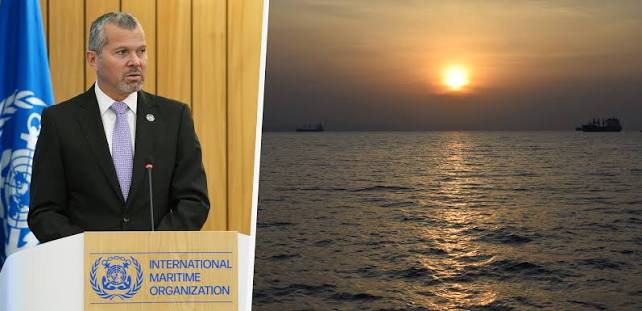
International Maritime Organization (IMO) Secretary-General, Arsenio Dominguez has expressed deep sorrow over the reported deaths of five seafarers during an operation to free the hijacked vessel HONOUR 25 in Somali waters.
The incident occurred on 29 September in the Gulf of Aden region, as security forces carried out a rescue operation to release the vessel and its crew from pirate captivity. Several other seafarers were reportedly seriously injured during the operation.
The HONOUR 25 was one of three vessels released this week after being held captive by pirates and armed robbers.
The other vessels were SEAMULL, also known as SIBU 1, and MT EUREKA. The three ships were seized between April and August 2026.
“It is troubling to have to make these statements so often, and even more difficult to convey in words how distressing it is to continuously hear that seafarers are losing their lives simply for doing their jobs.
“I am deeply saddened to learn of the tragic loss of five seafarers during the rescue of the HONOUR 25 on 29 September, in Somali waters. I offer my heartfelt condolences to their families, friends and fellow crew members”, Dominguez said
The IMO Secretary-General also urged those responsible for the care and welfare of the injured seafarers to ensure they receive the necessary medical treatment and psychological support as they recover from the traumatic experience.
The remaining crew members of the HONOUR 25 were freed alongside the crews of the SEAMULL and MT EUREKA, which were also held captive
By: Nkpemenyie Mcdominic, Lagos


Continue Reading

The Director-General of the Standards Organisation of Nigeria (SON), Dr Ifeanyi Chukwunonso Okeke, has warned that Nigeria cannot achieve lasting economic stability without making product quality and standardisation a priority.
Okeke, in a statement issued by SON’s Director of Corporate Affairs, Mrs Ethan Talatu, on Thursday in Abuja to mark Nigeria’s 66th Independence Anniversary, said the country’s reform gains must be backed by quality-driven local production.
“A nation cannot consume its way to greatness; it must produce its way there.
However, production without standardisation is an exercise in futility,” he said.
He described substandard products as a drain on the economy, a threat to consumers and a major risk to Nigeria’s reputation in international markets.
According to him, SON has intensified enforcement of the Nigerian Industrial Standards (NIS) as part of efforts to convert economic reforms into sustainable stability for businesses and consumers.
Okeke said SON had expanded its testing capacity from 23 to 52 internationally accredited parameters, while its Mass and Balance Calibration Laboratory secured EGAC ISO/IEC 17025:2017 accreditation.
The agency has also commissioned laboratory and office complexes in Minna and Sokoto, bringing testing and calibration services closer to businesses and reducing delays for manufacturers.
On digitalisation, Okeke said SON had introduced the Digital Standards Platform, Electronic Product Identification Scheme, Product Identification Scheme and Special Economic Zones Conformity Assessment Programme to improve access to standards and strengthen product tracking.
He disclosed that 62 new Nigerian Industrial Standards had been introduced, while more than 220 products from 131 Nigerian companies had secured certification to adopted African Standards.
The development, he said, would position Nigerian manufacturers to compete more effectively under the African Continental Free Trade Area (AfCFTA).
SON has also installed a 200kW solar power system at its Ogba laboratory complex in Lagos to support uninterrupted operations.
Okeke called for stronger collaboration among SON, the Nigeria Customs Service, Nigerian Ports Authority and security agencies, particularly through real-time intelligence sharing to tackle substandard and counterfeit products.
“When you see the SON quality mark, you are looking at a shield of safety and a stamp of national pride,” he said.
He urged manufacturers to maintain quality, traders to reject fake products and Nigerians to support locally made goods.
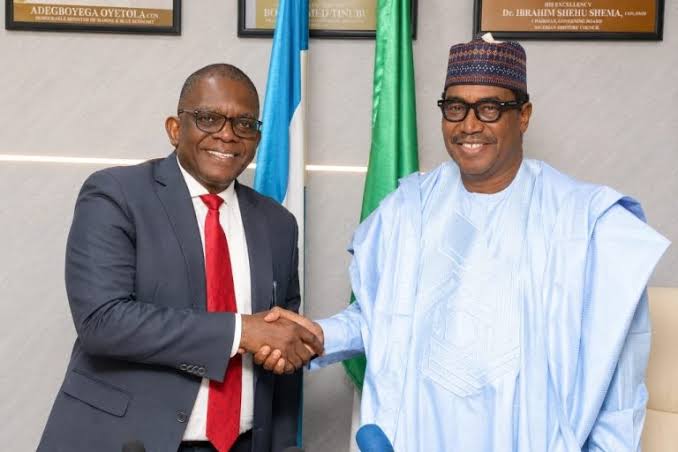
The Director-General/Chief Executive Officer(CEO) of the Nigerian Ports Economic Regulatory Agency (NPERA), Dr. Pius Akutah, has said that
transparent and predictable port economic regulation is critical to lowering logistics costs, attracting investment and unlocking the potential of Nigeria’s fisheries and wider blue economy,
Speaking at the Maritime Correspondents’ Organisation of Nigeria (MARCON) National Conference on Sustainable Fishing in Lagos on Wednesday, Akutah said efforts to grow Nigeria’s fisheries sector must go beyond increasing fish production to addressing the infrastructure, logistics and regulatory bottlenecks that constrain the movement of fish from landing sites to consumers and export markets.
Akutah was represented by NPERA’s deputy director in-charge of Standard Services, Mr Waheed Olagunju at the conference themed, “Sustainable Fishing in Nigeria: Pathways to Growth, Food Security and Coastal Livelihoods.”
Speaking on “Port Economic Regulation as a Catalyst for Sustainable Fishing and Blue-Economy Development in Nigeria,” Akutah said Nigeria’s maritime economy extended beyond shipping and cargo handling to include fisheries, aquaculture, coastal commerce, marine services, logistics and tourism.
He noted that although many artisanal fishers did not directly use major seaports, the broader port and maritime logistics system remained important to the fisheries value chain.
According to him, “fishing vessels and operators depend on imported equipment and components, while processors require machinery, packaging materials and refrigeration equipment. Seafood exporters rely on efficient cargo handling, documentation and transportation to access domestic and international markets”.
Akutah identified high input costs, inadequate cold-chain infrastructure, post-harvest losses, illegal, unreported and unregulated fishing, limited access to finance and governance challenges as major constraints to the sector.
“The central proposition is that transparent, predictable, evidence-based and coordinated economic regulation can reduce friction throughout the fisheries value chain, promote investment and trade, improve food security and strengthen coastal livelihoods,” he said.
He warned that excessive or unclear charges, weak service standards, fragmented procedures and avoidable delays could raise the cost of fish and undermine the competitiveness of Nigerian seafood in domestic and export markets.
Akutah explained that port economic regulation went beyond tariffs to encompass service standards, competition, market access, commercial conduct and dispute resolution.
He said the regulatory framework under the Port Economic Regulations 2015 provided for tariff guidelines, monitoring of service standards, protection of competition, prevention of abuse of dominant market positions, dispute resolution, promotion of efficiency and reduction of the cost of doing business.
The framework, he added, also sought to encourage private-sector investment and monitor concession agreements.
He said the transfer in 2026 of the former economic-regulatory functions of the Nigerian Shippers’ Council to NPERA provided an opportunity to strengthen regulation across the port system.
Akutah clarified that while NPERA is responsible for areas including tariffs and charges, licensing, service standards, fair competition, commercial dispute resolution, trade facilitation and protection of port users, the Nigerian Ports Authority retained responsibility for port infrastructure and its landlord functions.
The NPERA chief executive said the price consumers pay for fish was influenced by a long chain of costs extending beyond harvesting, including fuel, vessel maintenance, landing, ice, storage, transportation, inspection, documentation and port services.
He therefore advocated transparent tariffs, publication of approved charges, closer monitoring of billing practices and effective dispute-resolution mechanisms to eliminate unnecessary costs and commercial disputes.
He advocated greater interoperability among port, customs, maritime, fisheries, health and other government systems to eliminate repetitive submissions and speed up cargo clearance.
He cited the International Maritime Organisation’s Maritime Single Window framework as an important reference for achieving greater digital integration.
Akutah identified efficiency, predictability, inclusion, accountability and sustainability as five principles that should guide port economic regulation in support of the blue economy.
By: Nkpemenyie Mcdominic, Lagos
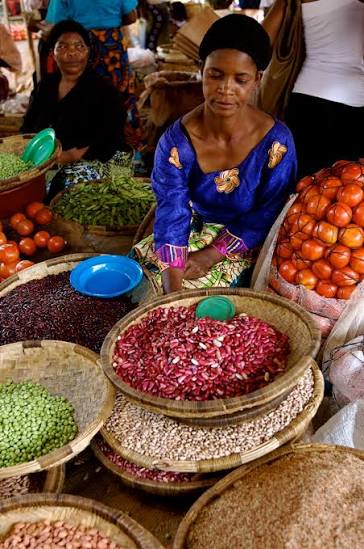
President of the International Maritime Institute of Nigeria (IMION), Rear Admiral (Rtd.) Thaddeus Udofia, has said Nigeria’s continued dependence on seafood imports despite its vast fisheries resources has pose a major challenge to food security, coastal livelihoods and economic development.
Udofia made this known at the 2026 National Conference on Sustainable Fishing, themed: “Sustainable Fishing in Nigeria, From Paddles to Rural Food Security and Coastal Livelihoods.”
He said Nigeria was endowed with extensive marine and inland water resources capable of supporting food production, employment and economic growth, but the country are yet to fully harness the potential of its fisheries sector.
According to him, Nigeria’s maritime domain includes an extensive coastline, its 200-nautical-mile Exclusive Economic Zone (EEZ), inland waterways, creeks, estuaries and the Niger Delta Basin, all of which possess significant fisheries and aquaculture potential.
However, Udofia said the sector had suffered from underinvestment, weak management and unsustainable exploitation over the years.
He cited data attributed to the United Nations Commodity Trade Statistics Database (UN Comtrade), as Nigeria’s imports of frozen fish and seafood rose from $606 million in 2023 to $688.5 million in 2024, with a further increase recorded in 2025.
He described the situation as a paradox, given Nigeria’s abundant aquatic resources and the growing demand for seafood from its large and youthful population.
Udofia identified overfishing, climate change and illegal, unreported and unregulated (IUU) fishing as major threats to the sustainability of Nigeria’s fisheries.
He warned that illegal fishing activities within Nigeria’s maritime domain were depleting fish stocks, while destructive fishing practices were damaging marine habitats and undermining the livelihoods of artisanal fishermen.
“When the local fisherman in Ondo, for instance, ventures out to sea and returns with an empty canoe, that is not simply a bad day at work. That is a direct challenge to Nigeria’s national security,” he said.
To address the challenges, Udofia advocated a strategic framework centred on stronger regulation and enforcement, sustainable resource management, technology and data intelligence, institutional collaboration and community-based fisheries management.
He stressed the importance of using modern maritime technology, including satellite surveillance, spatial monitoring and data analysis, to improve the management of Nigeria’s fisheries resources.
“We cannot effectively manage what we do not accurately measure,” he said.
He also called for stricter monitoring of industrial fishing activities and effective catch-control measures to ensure that fish stocks and marine habitats have sufficient time to regenerate.
On community participation, Udofia said coastal communities should be given a greater role in managing and protecting local fishing grounds.
“We cannot achieve sustainable fishing through rigid top-down enforcement alone without community-driven initiatives,” he said.
He proposed empowering local cooperative societies and giving communities legitimate co-management responsibilities over fishing grounds.
Udofia further advocated greater investment in skills development for young people in coastal communities.
He said IMION was exploring capacity-building programmes that would equip coastal youths not only for fishing but also for opportunities as marine entrepreneurs, ecosystem conservationists, tour guides, boat builders and specialised technicians.
According to him, diversifying coastal livelihoods would help reduce pressure on wild fish stocks while creating additional sources of income for households.
He urged the government, financial institutions, regulators, academia and maritime organisations to work together to develop the fisheries sector.
Udofia called on academia to provide actionable research, financial institutions to develop tailored credit facilities for artisanal fishing cooperatives and regulators to enforce fisheries laws effectively.
By: Nkpemenyie Mcdominic, Lagos
-
Business4 days ago
Maduba Urges Lawyers To Embrace AI, Build Lasting Legacy
-
 Featured4 days ago
UNICEF Strengthens Public Health Emergency Preparedness Across 10 States
-
Business4 days ago
Skills Acquisition: FG To Lift 5m Nigerians Out Of Poverty
-
Politics4 days ago
2027: GROUP PLANS DOOR-TO-DOOR CAMPAIGN FOR RIVERS ADC CANDIDATES
-
 News4 days ago
RSG Relocates Community Secondary School Over Flooding
-

 News1 hour ago
Fubara Reaffirms Support For Investors, Pledges Conducive Business Environs
-
 Oil & Energy1 minute ago
Nigeria Needs $410bn Additional Investment To Achieve Net-Zero Pathway —– Presidency
-
News4 days ago
Three Chiefs Suspended In Oyigbo Over Alleged Chieftaincy Breach