
Oil & Energy
Global Diesel Crunch Fuels New Wave of Energy Nationalism


Global fuel stocks are tighter than they have probably ever been. China just imposed a ban on all fuel exports for the month. Russia has had a diesel export ban in place for months. The United States threatened Europe with a diesel export ban unless European countries released some fuel from storage.
The current crisis is increasingly about fuels, and everyone is prioritizing their own needs.
The topic of resource nationalism is a hot one in energy. Governments of resource-rich countries are being more active in seeking to clinch the best deal with private companies willing to develop these natural resources. But when it comes to energy, it is no longer about the best deal. When it comes to energy, it is about covering local demand for fuels, and because diesel plays such a crucial part in every single economy in the world, diesel is a top priority.
Analysts were warning as early as April that the crisis prompted by the war between the United States and Israel, and Iran, would hurt fuel supply more than crude oil supply. Six months later, the impact is painfully obvious: diesel crack spreads hit an all-time high of over $100 per barrel in September, before easing below that scary threshold; there are not enough refineries to make up for the lost refined product supply from the Middle East; and Ukraine’s Volodymyr Zelensky just said his forces will double down on attacks on Russian refineries.
These developments have pushed diesel prices to record highs, notably in the United States, which prompted talk about a potential diesel fuel ban in order to keep the domestic market supplied, the way that Russia and China are banning exports to keep their own markets well supplied. Only there is a difference: when it comes to the United States, it produces more diesel fuel than it consumes, so it is not exactly short.
The U.S. eventually dropped the idea of a ban, with President Donald Trump even saying it was never really going to happen, after he pressured the EU to release 100 million barrels of crude, diesel, and gasoline from storage. Diesel crack spreads declined. Prices ticked lower, though not much lower, with the U.S. national average at $6.3151 per gallon as of Tuesday. European countries are in a much worse position, however, because most of them are highly dependent on imported fuel. In the case of Europe—specifically the European Union—diesel nationalism may turn ugly.
There are plenty of refineries in the EU, but they are a lot fewer than they were 15 years ago. Capacity is not enough to supply all local markets, hence the growing dependence on both crude oil and fuel imports. Now, supply elsewhere is limited in both crude and refined products, regardless of all those optimistic reports about Hormuz reopening and oil flowing freely out of it. Even if it is, this oil is not flowing to Europe.
The diesel release, to take place over the first 20 days of the four-month period for the 100-million-barrel total release, will provide some relief, but it seems the market has already priced it in. It might have also priced in the fact it would be hard to repeat that release at a later date, which is bound to keep prices elevated. Countries that cover their demand with local refining capacity, such as Bulgaria, may be asked to boost exports. Indeed, Bulgaria recently lifted a ban on diesel exports imposed last year, because the country’s only refinery had output to spare. Should demand from other EU members rise, however, things might change.
The Chinese fuel ban will not do heavy fuel importers any favors, either, not to mention Russia’s diesel export ban extension, which will likely be repeated for another month as Ukrainian attacks on refineries continue. Middle Eastern supply is not coming back anytime soon, it seems.
Almost all reports about tanker movement in the Strait of Hormuz focus on crude oil, and some LPG cargoes. Refineries in the top refining region, then, must still be under repair after Iranian missile and drone strikes. This leaves the United States as the only major source of refined fuels—a source that is fighting to keep domestic prices under control by any means necessary.
There may be arguable aspects about the war in the Middle East, but one thing has been proven beyond the shadow of a doubt by the fighting and the energy crisis it spurred. Energy security has reclaimed its position as a number-one concern for all countries, even those European ones that have spearheaded the decarbonization drive started after 2015. They still claim decarbonization is a top priority—but it is no longer the number-one priority. The number-one priority is securing enough fuel for the local market and local drivers.


Continue Reading
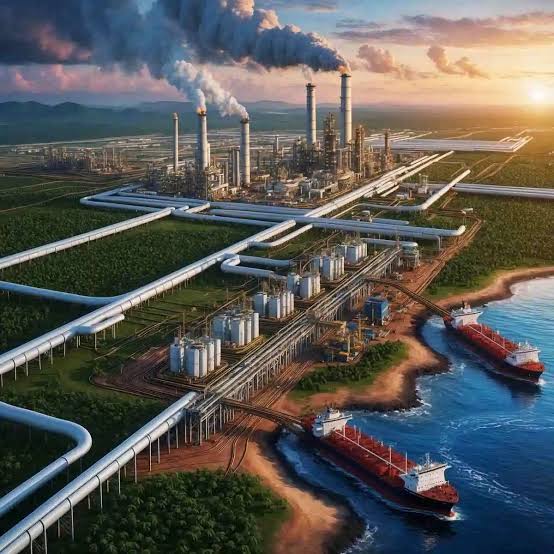
The United Nations Conference On Trade and Development (UNCTAD) has named Nigeria among the oil and gas exporters earmarked to benefit from higher global energy prices.
UNCTAD disclosed this in it’s 2026 Trade and Development Report: The Geoeconomics of Development.
The report identifies Nigeria, Angola, Guyana and Kazakhstan as exporters that could benefit from the energy shock triggered by the conflict in the Middle East.
It warned however that insufficient domestic refining capacity could erode some of the gains
The report, titled ‘Resilience and its limits’ stated that the conflict in the Middle East has damaged energy infrastructure and disrupted transit through the Strait of Hormuz, a major route for seaborne crude oil and liquefied natural gas.
These disruptions, it said, triggered the largest monthly loss of global energy supply on record.
UNCTAD said “Oil and gas exporters outside the Strait of Hormuz, among them Angola, Guyana, Kazakhstan and Nigeria, are positioned to benefit from higher prices.”
“Where domestic refining capacity is insufficient, however, that advantage is partly offset by the steeper rise in refined product prices.”
The report also warns that the energy shock could fuel inflation, tighten monetary policy, increase borrowing costs and heighten financial stability risks.
It argues that addressing energy supply constraints would be more effective against supply-driven inflation than relying solely on monetary and fiscal tightening.
The report calls for stronger multilateral support, increased domestic development financing and greater use of local-currency funding to close financing gaps.
UNCTAD further highlights renewable energy as an opportunity for developing countries to strengthen energy security and reduce exposure to external supply shocks.
The Rural Electrification Agency ( REA) has secured a N100bn financing facility from Stanbic IBTC Bank to support renewable energy developers and expand electricity access to unserved and underserved communities across Nigeria.
The Managing Director/CEO, Rural Electrification Agency, Abba Aliyu, who made this known in a statement, said the agreement would provide eligible developers participating in REA-led electrification programmes, including the World Bank-funded Distributed Access through Renewable Energy Scale-up Project, with access to finance for equipment procurement.
Under the memorandum of understanding signed between the two organisations, Stanbic IBTC would provide a N100bn revolving loan facility with a one-year tenor to eligible project developers.
The amount accessible to each developer would be determined on a case-by-case basis, subject to the underlying grant agreement, the developer’s capacity and the bank’s credit assessment.
Aliyu said the facility would help address one of the major challenges facing renewable energy project delivery, which is access to capital after project approval.
“One of the lessons from our experience under the Nigeria Electrification Project is that having a viable project and an approved grant is not always enough. Developers also need access to the capital required to procure equipment and commence implementation.
“This partnership with Stanbic IBTC is therefore important because it connects our results-based financing framework with commercial finance, giving credible developers a stronger pathway to move projects from approval to delivery and, ultimately, connect more Nigerians to reliable electricity,” he stated.
The partnership is expected to reduce financing constraints that have previously affected the pace of renewable energy project delivery.
The Head, Energy and Infrastructure, Stanbic IBTC Bank, Richard Inegbedion, said the bank’s participation reflected its commitment to infrastructure development and Nigeria’s energy transition.
“The energy access challenge requires strong collaboration between government, developers and financial institutions. At Stanbic IBTC, we recognise that renewable energy projects require financing structures that understand both the opportunities and the realities of the sector.
“Through this partnership with REA, we are creating a financing platform that can help eligible developers access the capital they need to execute projects, while contributing to the development of sustainable energy infrastructure and economic activity across Nigeria,” he noted.
Representing the renewable energy developer community, the Managing Director/CEO, Asolar Systems Nigeria Limited, Hakeem Shagaya, maintained that appropriately structured financing would be critical to delivering renewable energy solutions at the scale required under DARES.
“For developers, access to finance is one of the most important factors determining how quickly an approved renewable energy project can move into implementation.
“A financing framework that is aligned with REA’s result-based structure can significantly improve our ability to procure equipment, mobilise resources and deliver projects within the required timelines.
“ We welcome this partnership because it brings the developer, government and financial sector closer together around a common objective, delivering reliable electricity to communities that need it,” Shagaya submitted.
Beyond the lending facility, Stanbic IBTC will support the transaction through a collection platform designed to enhance financial inclusion and project sustainability.
The bank would also provide financial advisory solutions, including linking developers with original equipment manufacturers and providing international trade tools where practicable.
REA would continue to provide programme-side oversight through developer prequalification, project approvals, grant agreements, authentication of relevant documentation, among others.
The agency said the collaboration was expected to strengthen private sector participation in Nigeria’s electricity access drive by improving access to debt financing, reducing financing-related delays and enabling developers to mobilise equipment and resources more effectively.
According to the statement, the MoU would remain in force throughout the tenure of the World Bank-funded DARES programme managed by REA and will terminate at the end of the programme and upon full repayment of facilities disbursed under the arrangement, subject to the terms of the agreement.
The Nigerian Upstream Petroleum Regulatory Commission (NUPRC) is targeting the recovery of more than 788,000 barrels of oil production per day currently shut-in across 63 operators, while pushing offshore projects estimated at between $30 billion and $50 billion towards Final Investment Decisions (FID).
The commission is also accelerating technical and regulatory approvals to support production growth.
The Commission also plans to use its newly launched 2026 licensing round to deepen exploration and attract fresh capital into Nigeria’s upstream sector, offering 40 oil and gas assets to prospective investors.
Speaking at the 2026 Energy Conference of the Association of Energy Correspondents of Nigeria (NAEC), with the theme “Access to Assets: Empowering Players and Driving Growth,” held in Lagos, the NUPRC’s Chief Executive, Oritsemeyiwa Eyesan, noted that restoring shut-in production, accelerating offshore developments and improving access to petroleum assets are central to Nigeria’s efforts to increase output and move closer to its long-term production ambitions.
Represented by the Assistant Director, Services Department, NUPRC, Mrs. Patricia Temisan-Olatunde, Eyesan explained that the commission’s strategy was aimed at removing investment barriers, increasing production and expanding government revenue.
Eyesan said more than 788,000bpd production has been identified as shut in across 63 operators.
She noted that recovering a substantial portion of that volume could provide a faster route to increased national production than waiting for newly awarded exploration acreage to move through the lengthy development cycle.
This year alone, she said, 77 wells have been successfully re-entered, while 128 wells have been approved for drilling.
“The measures are being implemented alongside executive orders issued by President Bola Tinubu aimed at encouraging investment in Nigeria’s deep offshore petroleum sector. The combined reforms and accelerated approvals were intended to reduce delays and improve the investment environment for upstream operators,” she said.
While noting the launch of its 2026 licensing round with 40 assets on offer, following previous licensing exercises conducted in 2022/2023, 2024 and 2025, Eyesan said the successive rounds were designed to deepen exploration, create jobs, increase production and expand government revenue.
At the 2025 licensing round, 50 oil and gas blocks were offered, attracting interest from nearly 300 companies, with 37 assets eventually taken up, including acreages in frontier basins.
Eyesan disclosed that for the first time, the Anambra Basin, Benue Trough, Chad Basin and Benin Basin attracted significant investor interest, indicating growing attention beyond Nigeria’s traditional Niger Delta producing region.
She said the assets offered in the 2025 round, subject to successful development, have the potential to add about 500 million barrels to Nigeria’s crude oil reserve adding that they are also expected to contribute at least 300,000 bpd of crude oil and condensate within five years, alongside an estimated 20 trillion cubic feet of additional gas reserves and 500 million standard cubic feet per day of gas production.
The potential output, Eyesan said, would support Nigeria’s ambition of reaching three million barrels per day by 2030 and contribute to the Federal Government’s Decade of Gas initiative.
The Commission stressed that the success of licensing rounds should ultimately be measured by what happens after awards are made.
Eyesan said access to petroleum assets must translate into actual development and production, rather than simply the allocation of acreage.
The NUPRC, she further explained, is therefore seeking to make the licensing process more predictable by publishing eligibility requirements, bid parameters, evaluation criteria and conditions of award ahead of the 2026 exercise.
Bids will be submitted through a digital portal and evaluated according to published criteria, while the Commission said it would strengthen communication with bidders through its licensing portal, virtual data room, webinars and a dedicated help desk.
The objective, Eyesan said, was to ensure that eligible Nigerians and international investors compete on a level playing field.
“No bidder will know what others do nott material clarifications would be shared with all participants” she stated, adding that beyond new licensing, the Commission is focusing on bringing existing capacity back into production
-
Sports4 days ago
BAL: SWAN Rivers Urges Hoopers To Make Nigeria Proud
-

 Nation4 days ago
Amaewhule Family Warns Public Against Ada-Oro Fam Land Transactions
-
News3 days ago
Rivers Police Arrest Two Kidnappers As Victim Regains Freedom After ?10.3m Ransom
-
News3 days ago
Flood: RSG Extends ?200,000 Cash Support To 35 Flood-Affected Household In Npolu Rumuigbo
-
News4 days ago
RSG Extends ?200,000 Cash Support, Free Medicals To Flood Victims In Eneka
-
News3 days ago
RSG Seals 21 Unapproved Health Facilities, Arrests Two
-

 Business4 days ago
FG Offers 30-Day Petrol Discount Through NNPC …Sets N1,350 Ceiling Per Litre
-

 Featured3 days ago
NLC Gives FG Two-Week Ultimatum To Reduce Petrol Price …Begins Minimum Wage Talks