
Maritime
FG To Phase Out Substandard, Unsafe Boats

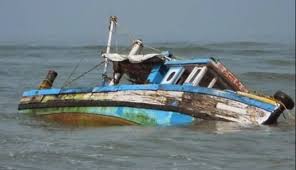
The Federal Government has said it would phase out substandard and unsafe boats and replace them with modern vessels for safety.
The government also said the replacement vessels would ensure safety of lives and property in the waterways
Minister of Marine and Blue Economy, Adegboyega Oyetola, disclosed this while receiving the report of the Special Committee on the Prevention of Boat Mishaps in Nigeria,
“The safety of our citizens on water is not just a policy responsibility, it is a moral duty. Every life lost in a boat mishap is one too many. This report will guide both immediate and long-term interventions”, Oyetola stated.
The Minister said the aim is to meet established safety standards in the waterways.
He emphasized the compulsory use of life jackets, described as non-negotiable for all water transport users.
The Minister called for collaboration with state governments and sub-national authorities, noting that addressing the challenge of boat accidents requires collective effort beyond the federal level.
Oyetola further disclosed that a nationwide distribution of life jackets had been approved for riverine and coastal communities.
The 16-member Special Committee, which was inaugurated on February 27, 2025, was tasked with conducting a comprehensive assessment of commercial boat operations across the country.
The committee’s mandate included identifying root causes of accidents and proposing sustainable safety measures.
Presenting the report, Chairman of the Committee and Managing Director of the National Inland Waterways Authority (NIWA), Bola Oyebamiji, said the committee’s work was extended beyond the initial six-week timeline to ensure a detailed and credible outcome.
Oyebamiji explained that the report, presented in six chapters, covers an evaluation of operational practices, regulatory gaps, vessel design issues, and institutional capacity.
Oyebamiji expressed appreciation to the Minister for his support and to committee members for their contributions.
“This report reflects our collective effort to improve safety and oversight across Nigeria’s waterways. We believe the findings will serve as a strategic guide for enduring reforms”, he said.
The Committee is composed of experts in maritime safety, engineering, law, academia, and public policy.
Members include Dr. Dayo Moberuola, Prof. S. Abiodun, Dr. Babatunde Olaosebikan, Prof. Busayo Fakinlede, Hadiza Idris Kuta, Engr. Yahaya Farouk, Attahiru Maccido, and Denis Tar Iyaghigba.
Others are Gani Tarzan Balogun, Capt. Stan Chucka Igwe, Raiph Onoshakpor, Prof. Ibiba Douglas, Richard Ntan, Babatope Fajemirokun, and Ofie Adams.

Continue Reading


The Maritime Workers’ Union of Nigeria (MWUN) has reaffirmed strong positions towards maintaining non partisan stance ahead of the 2027 general elections .
The President General of MWUN, Comrade Francis Bunu disclosed this while welcoming executives from the Transporters for Tinubu 2027 Political Support Group at its headquarters on 119 Osho Drive, Olodi-Apapa, Lagos,
The union boss underscored MWUN role as a neutral player in national development.
According to a statement signed by Comrade John Kennedy Ikemefuna, Head of Media for MWUN, the union’s President-General, hosted the visitors who outlined their initiative.
Comrade Bunu expressed gratitude for the recognition, affirming the union’s support for any efforts promoting progress, unity, and development in Nigeria.
He emphasized, however, that MWUN remains strictly non-partisan, committed solely to good governance and strategic initiatives that elevate the nation regardless of political affiliation.
This engagement highlights MWUN’s frontline position in labor and transport while reinforcing its impartial dedication to the country’s advancement.
The group aims to foster collaboration among government, transport operators, private entities, and grassroots stakeholders to boost national mobility, economic growth, and sectoral reforms.
By: Nkpemenyie Mcdominic, Lagos

The Chief Executive Officer of Maritime Media Limited and Convener of the Maritime Industry Merit Awards (MIMA), Elder Asu Beks, has called on President Bola Ahmed Tinubu to concession the abandoned floating dockyard owned by the Nigerian Maritime Administration and Safety Agency (NIMASA), describing the asset as a “national embarrassment” after more than a decade of neglect.
Speaking during a live interview on Arise TV on Tuesday, Asu Beks said the floating dock, valued at about N50 billion, was originally planned to be deployed at Okerenkoko in Delta State to support training activities at the Nigerian Maritime University.
According to him, the asset has remained largely unused since its acquisition in 2016, moving between different facilities including the Naval Dockyard Limited, Continental Shipyard Limited and most recently Snake Island in Lagos without being fully operational.
Beks said the prolonged inactivity of the dockyard represents a huge financial loss to the country, especially as government continues to incur costs in maintaining the facility.
“Why should Nigeria allow an asset worth about N50 billion to waste away for over 10 years?” he asked.
He urged the Federal Government to urgently concession the facility to a credible Nigerian private company capable of restoring it to full operational capacity.
Beks specifically suggested Tantita Security Services Limited as a possible operator, citing the company’s track record in oil pipeline and maritime security operations in the Niger Delta.
“With the operational network and technical capacity of companies like Tantita, this abandoned asset can be transformed into a profitable national facility,” he said.
The maritime stakeholder also criticised past leadership in the sector for failing to address the situation, particularly during the tenure of former Minister of Transportation, Rotimi Amaechi, who served for eight years.
According to Beks, the continued neglect of the floating dockyard raises serious questions about asset management in Nigeria’s maritime sector.
He also questioned why successive leadership of NIMASA including former Director-Generals Dakuku Peterside and Bashir Jamoh did not resolve the issue during their time in office.
Beks urged the current Director-General of NIMASA, Dr. Dayo Mobereola, to take decisive action and change the narrative by ensuring the asset becomes productive.
He argued that reviving the dockyard would provide significant economic value to the country, particularly by strengthening ship repair capacity and supporting maritime training.
Beks further noted that issues such as the operationalisation of the floating dockyard and economic regulation in the shipping sector remain far more critical to the industry than symbolic achievements.
He stressed that Nigeria must prioritise the effective utilisation of strategic maritime assets to drive economic growth and reduce dependence on foreigners
By: Nkpemenyie Mcdominic, Lagos

Clearing agents operating at the nation’s ports have criticized the Nigerian Ports Authority ( NPA) over it’s silence regarding unprocessed operational licenses.
The agents warned that the situation could disrupt cargo clearance activities across the ports if urgent action is not taken.
Speaking during a media briefing, the National Public Relations Officer of the Association of Nigeria Licensed Customs Agents (ANLCA), Mr. Emmanuel Onyeme called out spokesperson of the NPA, Mr. Ikechukwu Onyemekara, over alleged failure to respond to calls and messages from stakeholders.
Onyeme said dozens of freight agents who submitted applications for the NPA’s Clearing & Forwarding License operational clearance for PortPASS- an authority to do business with shipping companies have not received any response for more than two weeks
According to Onyeme, the approval from the NPA is a crucial requirement that allows freight agents to gain access to the ports and transact business with shipping companies and terminal operators after securing their licences from the Nigeria Customs Service (NCS).
“Without the Clearing & Forwarding License issued by the NPA, freight agents can not access the ports or engage shipping companies and terminal operators for cargo releases . It is a critical operational requirement,” Onyeme said.
He disclosed that the approval process, which was previously handled at NPA offices within the seaports, has recently been centralised at the authority’s headquarters, forcing agents to submit their documents directly to the office of the Managing Director.
However, Onyeme noted that many of the applications have remained unattended to it.
“As we speak, several freight agents have submitted their documents to the Managing Director’s office, and these applications have been lying there for more than two weeks without any form of response,” he said.
He warned that the silence from the authority is already creating anxiety within the freight forwarding community, especially as many shipping companies and terminal operators have indicated that from April 1, 2026, previously issued NPA Licence approvals will no longer be recognised.
Onyeme further expressed frustration over the lack of communication from the NPA’s spokesman, alleging that repeated attempts by stakeholders to reach him have been unsuccessful.
“The situation is worrisome because there is absolutely no feedback. Calls and text messages sent to the NPA spokesperson have not been responded to, leaving Custom Brokers and freight forwarders agents in the dark over the fate of their applications,” he said.
According to him, the delay could prevent many licensed customs agents from accessing the ports or engaging shipping companies, thereby affecting cargo clearance and port-related businesses.
He therefore called on the management of the NPA to urgently intervene and ensure that the pending approvals are processed without further delay.
“Even if the Managing Director is out of the country or unavailable, there should be a system that allows someone else to handle such important operational matters promptly,” Onyeme added.
By: Nkpemenyie Mcdominic, Lagos
-

 News3 days ago
Nigeria Recorded Two World’s Deadliest Terror Attacks In 2025 –Report
-

 Politics2 days ago
Eid-el-fitr: INEC Urges Staff Discipline Ahead Ekiti, Osun Guber Polls
-

 Editorial2 days ago
Thumbs Up For Sit-At-Home Reversal
-

 News3 days ago
Perm. Sec Pats Rivers NUJ On The Back
-

 News3 days ago
Explosions Rock Lagos, C’River, Kill One, Injure 40
-

 News3 days ago
Fubara Hails Umah Ukpai’s Contributions To Global Christian Evangelism
-

 Education2 days ago
Opobo Kingdom moves to incorporate Ibani Language Into School Curriculum, Takes Off April
-
News3 days ago
Etche Monarch Alleges Death Threats, Assault