
Opinion
Imbibing Leadership Qualities Of Pope Francis

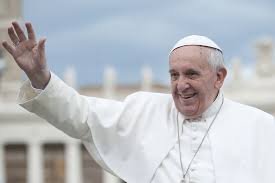
The world emptied at the Vatican City, Rome, Italy last week for the burial of late Pope Francis, the head of the Catholic Church worldwide who died on April 21. Foreign delegates from 164 countries attended the funeral. Among them were the President of the Nigeria’s Senate, Godswill Akpabio, the Minister of State for Foreign Affairs, Bianca Ojukwu, the Catholic Bishop of Sokoto Diocese, Hassan Kuka and other politicians, who were there on behalf of President Bola Tinubu and the entire nation.
Right from the day the Pontiff passed on, through the days preceding his burial, till the day his corpse was laid to rest and uptill now, a lot has been spoken about his great leadership qualities which stood him out among many other leaders in the world.
Some say that in a world increasingly defined by power struggles, materialism, and political division, Pope Francis stood as a rare symbol of humility and selflessness. Since his election in 2013, he redefined what it meant to lead not just a church, but a global moral community. More than just a spiritual figure, Pope Francis was a powerful voice for the voiceless, championing compassion, justice, and mercy.
Others say that from the very beginning of his papacy, Jorge Mario Bergoglio—Pope Francis—made clear that he intended to chart a different course. Choosing to live in the modest Vatican guesthouse rather than the opulent Apostolic Palace, he signaled that his papacy would not be about grandeur. He traded the red papal shoes for simple black ones, and when he was introduced to the world, he asked the crowd to pray for him before offering his own blessing. These symbolic acts spoke volumes about the kind of leader he aspired to be.
Perhaps, the most talked about quality of the cherished leader was his humility. In him, humility was not theoretical but practical. He repeatedly called for a “poor Church for the poor,” aligning the Catholic Church more closely with the needs of the marginalized. Whether washing the feet of prisoners on Holy Thursday or visiting refugee camps, Pope Francis embodied a theology that demands solidarity with the suffering.
Equally mentioned was his selflessness in the face of complex global challenges. He did not shy away from controversial topics—climate change, economic inequality, migration, and even internal Church reform. His encyclical Laudato Si’ challenged both political and economic leaders to treat the planet with reverence, not exploitation. He advocated for inclusive dialogue, calling on governments to welcome migrants as fellow human beings, not burdens.
The passing of Pope Francis indeed marked the end of an era defined by humility, moral clarity, and an unwavering commitment to justice.
nd the question for Nigerian leaders both those present at his funeral and those that couldn’t be there, both political, religious and traditional leaders and indeed all Nigerians is, what lessons can the country learn from the life of the Pontiff? How can we embrace his lifestyle to transform our national fabric?
Pope Francis showed the world that true leadership is rooted in service, not in pomp or power. He declined the luxuries of the papal palace and chose to live among the people. Our leaders, notorious for their obsession with opulence and entitlement, must learn that leadership is not about status symbols—convoys, sirens, and security details—but about responding to the needs of the people with empathy and action.
In a country where public officials often equate success with extravagance, the lifestyle of Pope Francis should teach us that simplicity does not diminish influence. He wore modest clothing, drove a humble car, and redirected attention away from himself and toward the marginalized. Even at death, his coffin was made of simple wood. If our leaders, contractors, heads of institutions and others can practice such simplicity, certainly more resources will be available for education, health, and infrastructure. Nigerians will stop dying of hunger because there will be enough money to invest in farming and other agricultural activities.
Pope Francis was a champion of the poor, migrants, and the forgotten. He spoke boldly against exclusion, even within the Church. As a matter of fact, many Catholics, particularly the divorced and the civilly remarried who could not receive communion, started receiving communion. A close childhood friend of mine belongs to this group. After her first marriage crashed, she remarried but could no longer receive communion until Pope Francis’s Amoris Laettia (The Joy of Love) document of April 8, 2016, began to reshape in our local parishes.
Ours is a deeply divided nation—ethnically, religiously, and politically. Our leaders must rise above sectional interests to promote inclusion, heal old wounds, and govern with the common good in mind. The practice of one law for one tribe or a particular section of the country and other for others should be jettisoned.
Expectedly, Pope Francis’s papacy was not without challenges. Scandals within the Church, resistance from conservative factions, and geopolitical tensions tested his resolve. Some critics even said that his positions were too progressive, even disruptive. Yet even in the face of criticism, he maintains a posture of listening, forgiveness, and dialogue. He did not back down from calling out injustice, environmental degradation, or corruption.
Nigerian leaders should stop prioritizing personal survival over national progress. Currently there is a defection wave going on in the country. Political leaders are dumping the political parties under which they were elected by the people to join other political parties. How do their actions benefit the people that elected them? Some Nigerians for tribal reasons and political profiteering will choose to keep mum in the face of injustice against their fellow citizens. Just as Pope Francis, speaking and acting against injustice—no matter the cost—should be the standard, not the exception if Nigeria must move forward as a united entity.
Another striking attribute of Pope Francis was his ability to listen, dialogue and foster peace. He was a bridge-builder. He engaged atheists, Muslims, and people of all cultures in meaningful dialogue all geared towards peace in the world. In a country as diverse as Nigeria, listening to opposing views and working toward peaceful coexistence should be second nature to our leaders, not an afterthought.
Nigeria will be a better, more progressive country if both the leaders and the led realize that everybody cannot be on the same side of a bargain. Dissenting voices must always be there. Diverse opinions must exist. The ability to tolerate these views and accommodate the opponents is one of the great qualities of a good leader. That, too, is a form of humility—not weakness, but the strength to lead with openness and grace.
Francis never forgot that he was accountable not just to the Church, but to God and humanity. Nigerian leaders, especially those who publicly profess faith, must internalize the idea that leadership is a sacred trust. Governance should reflect conscience and character, not just calculation and convenience.
Pope Francis’s message was simple yet radical: to be truly great, one must serve. In this, he channeled not only the spirit of St. Francis of Assisi, whose name he bore, but also the core teachings of the Gospel. He brought the Catholic Church closer to the people—not by changing doctrine, but by changing tone. His humility was not performative; it was deeply woven into his actions, his words, and his witness.
In honoring the legacy of Pope Francis, Nigerians—leaders and citizens alike—must embrace a new kind of leadership: one marked by humility, sacrifice, and service to others. His life reminds us that change doesn’t begin with policies alone; it begins with character.
Adieu Humble Holy Father
By; Calista Ezeaku



