Editorial
Israel-Gaza War: Sustaining The Ceasefire
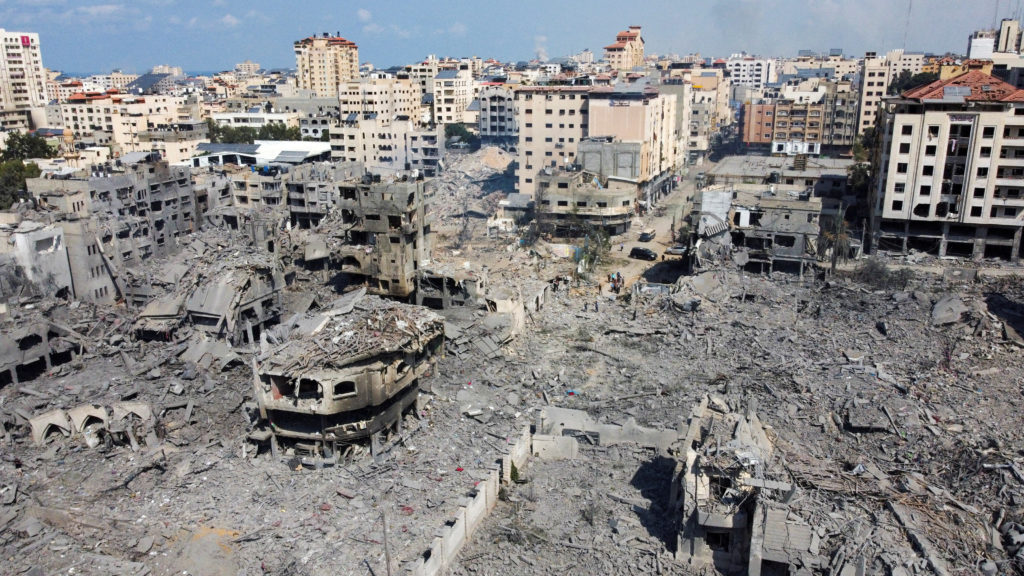
The recent agreement between Israel and Hamas to cease hostilities marks a significant and much-anticipated step toward peace in a conflict that has devastated countless lives and infrastructure in Gaza. The ongoing violence, which has persisted for over 460 days, has yielded catastrophic human casualties and an acute humanitarian crisis. The need for a sustainable peace deal has never been more urgent, and this temporary ceasefire presents an opportunity for all stakeholders to work diligently towards a lasting resolution.
Following the Hamas attack on Israel on October 7, 2023, the conflict saw a dramatic escalation. This attack was described as one of the deadliest in Israel’s history, resulting in the deaths of 1,210 individuals, primarily civilians. In addition to the loss of life, the assault led to the abduction of 251 individuals, with 94 still held hostage in Gaza, as Israeli military sources reported that 34 of them are believed to be deceased. In response, Israel’s military operations have wreaked havoc on Gaza, claiming the lives of approximately 46,788 people, most of whom are reported to be civilians.
Qatar, Egypt, and the United States have facilitated a ceasefire agreement that comprises multiple critical components. Most importantly, it calls for a halt to the violence, providing a much-needed respite for the people of Gaza. The deal also outlines the release of hostages held by Hamas and prisoners detained by Israel. Furthermore, it aims to facilitate the return of displaced Palestinians to their homes, contingent on their viability following the extensive destruction.
While this ceasefire is a welcome development, it is essential for all involved parties to remain committed to a permanent peace agreement. The underlying issues that led to the conflict must be addressed to prevent future escalations and to foster an environment of mutual respect and understanding. As the world watches, the hope is that this temporary cessation of hostilities can pave the way for a more peaceful and stable future for both Israelis and Palestinians.
The peace deal will happen in stages, starting with a six-week period for limited prisoner exchanges, partial Israeli troop withdrawal, and humanitarian aid access. Hamas has released four Israeli soldiers for over 1000 Palestinians, with more releases to come. Israel will reduce troops in Gaza and open the Rafah crossing a week later, with less troop presence in the Philadelphi Corridor and complete withdrawal by the 50th day. The next two phases will depend on how both sides act during the first phase.
Therefore, it is unacceptable for any party to attack the other during a ceasefire. Reports indicate that after a ceasefire was announced, Israel bombed Gaza, killing at least 75 people and injuring many others. This violence during a ceasefire is unacceptable. While Hamas did initiate the conflict by invading Israel, Israel’s response has been far too severe, causing massive destruction in Gaza. The situation has resulted in unprecedented loss of life and devastation in the region.
Gaza has been completely destroyed, and further risks to the truce may create the belief that Israel aims to eliminate Palestinians like Hitler did with the Jews. Israel’s aggressive actions have lost them international support. Young people in the United States and Europe are now openly supporting Palestinians. With a truce in place, hostilities should cease and all parties must honour their agreements.
Hamas, seeing itself as a resistance force, needs to change its tactics for lasting peace. Their attacks on Israel have caused great suffering for innocent people in Gaza and destroyed much of the area’s infrastructure, leading to many lost lives. Both Israel and Hamas must commit to peace and avoid restarting the conflict. Attacking Israeli civilians or soldiers will only provoke strong retaliation from the Jewish State, harming those Hamas aims to protect.
Hamas, like the defunct Palestinian Liberation Organisation (PLO), should accept peace and recognise Israel’s right to coexist, focusing on development and prosperity for Gaza. Israel unilaterally withdrew from Gaza and North Samaria on August 15, 2005, dismantling settlements and troops after an agreement with Egypt. Hamas should stop teaching hate and instead use the opportunities from this withdrawal to help the people rather than build terror infrastructure. If West Bank control is an issue, Jordan might be discussed as a potential administrator.
Should Israel decide to withdraw completely from the West Bank, it is imperative that the Palestinians residing in that region recognise their responsibility to foster a peaceful environment, similarly to how Jordan maintains a harmonious relationship with Israel. To achieve this, the Palestinian people must actively commit to rejecting violence in all its forms and manifestations.
They must understand that genuine peace is not merely the absence of conflict but requires a steadfast dedication to non-violence, coexistence, and constructive dialogue. The era of bloodshed in the area must come to an end, giving way to a future where peace can truly flourish in the West Bank, benefiting all inhabitants and paving the way for a more stable and prosperous region.
Continue Reading
Editorial
Beyond Accessing Bonny By Road
The near completion of the Bonny-Bodo Road by the Federal Government is a remarkable and historic achievement that deserves national commendation. For decades, Bonny Island remained physically isolated from the rest of the state, with residents and businesses forced to rely solely on waterways. Today, that narrative has changed. The road is already in active use, and its immediate effect is evident in the drastic reduction in transportation costs, with local transport fares reported to have dropped by more than 40 per cent in some corridors.
As of December 2025, the 37.9-kilometre Bonny-Bodo Road, comprising 11 strategically engineered bridges, was temporarily opened for daily use between 7 am and 7 pm. The transformational and groundbreaking step has eased transit and marked the first-ever land connection between Bonny Island and other parts of the state. According to transport operators, average travel time has reduced from over two hours by water to less than one hour by road, a change that has immediate economic and social benefits for commuters and businesses alike.
It must be noted that the project spanned many years, surviving policy shifts, funding challenges, and technical hurdles. Its near completion is therefore a reflection of political will. Credit must be given to the Federal Government and particularly to the Rivers State Governor, Sir Siminalayi Fubara, under whose tenure the project has reached fruition. This commendable and steadfast leadership has ensured that a long-standing promise to the people is finally being honoured.
The Bonny-Bodo Road stands as a success story of a tripartite agreement involving the Federal Government, Nigeria LNG Limited as the primary funder, and Julius Berger Nigeria Plc as the constructor. The collaborative and strategic partnership demonstrates how public and private sector synergy can deliver complex infrastructure in difficult terrain. NLNG alone reportedly contributed over 60 per cent of the project funding, underscoring the value of corporate responsibility in national development.
For business owners, the newly constructed road offers a vital turning point. Many traders, investors, and service providers had avoided Bonny because of the risks associated with water travel, including accidents and piracy. With this new land route, access is now safer and more predictable. This liberating and empowering development is expected to stimulate commerce, increase market activity, and attract fresh investments into the area to strengthen the local economy.
The Petroleum Products Retail Outlet Owners Association of Nigeria has stated that the commissioning of the Bonny-Bodo Road will improve national energy logistics and likely lead to a reduction in the price of cooking gas. Nigeria currently spends billions of naira annually on inland water transport inefficiencies. The economically and logistically significant road could reduce distribution costs by up to 20 per cent, a benefit that would be felt directly by households across the country.
The road is expected to be fully commissioned in the first quarter of 2026, with 35 kilometres already reported as fully motorable. This progress reflects assuring and measurable commitment to timely delivery. When completed, the road will support heavy-duty vehicles, enhance supply chain reliability, and further cement Bonny’s role as a critical industrial and maritime hub in the Niger Delta.
This achievement also builds on earlier successes. Opobo has already been connected to land through deliberate government intervention. These efforts show that even the most challenging terrains can be conquered with planning and resolve. Such intentional and visionary actions are redefining infrastructure advancement in riverine areas that were once considered unreachable.
The Trans-Kalabari Road is similarly expected to be completed within the year, opening up vital aisles in the Kalabari axis to road transportation. Once operational, it is projected to serve over 500,000 residents directly. The expansive and inclusive approach to development ensures that growth is not concentrated in urban centres alone but spread across communities.
These projects represent an expanding legacy. By 2027, there will be numerous tangible gains to credit the current administration in Rivers State. Improved mobility, increased trade, and enhanced social cohesion are just a few. This forward-looking and progressive trajectory positions the state as a model for infrastructure-led development in Nigeria.
However, with increased road access comes new security considerations. While sea piracy on waterways may reduce, land-based security challenges could emerge. The government must anticipate and address these risks through effective policing and surveillance. A proactive and balanced security framework will be essential to protect lives and investments along the new highways.
There must also be firm determination to ensure that the road does not come with excessive encumbrances. Issues such as illegal tolling, unregulated settlements, and environmental degradation must be prevented. This disciplined and responsible management will preserve the long-term value of the infrastructure.
Beyond the communities already connected, the state government should extend its vision to other difficult terrains. Oceanic areas such as Kula, Abisse, Idama, Ke, and Bille, among others, should be prioritised. Connecting these communities by road would be equitable and transformative, ensuring that no part of the state is left behind in the march towards development.
If every part of Rivers is linked to land transportation, the blue economy will experience a major boost. Fisheries, tourism, marine services, and coastal trade could collectively contribute billions of naira annually to the state’s economy. This sustainable and wealth-generating potential makes further road expansion not just desirable but necessary.
Editorial
Time For GL 17 In Rivers
Rivers State is indeed fortunate to be led by Governor Siminalayi Fubara, whose remarkable and progressive disposition towards workers has distinguished him from his predecessors since the return to democracy in 1999. His approach to governance reflects empathy, balance and a genuine understanding of the civil service as the engine room of development.
Before his assumption of office, civil servants endured eight excruciating years under the immediate past administration of Chief Nyesom Wike, marked by painful stagnation and systematic neglect. Promotions were withheld, gratuities ignored, annual increments denied and employment processes shrouded in opacity, leaving workers demoralised and disillusioned.
Governor Fubara’s emergence, however, brought a decisive and restorative shift. Long overdue promotions were approved to cover lost years, gratuities were paid and continue to be honoured, while the once suspended Christmas bonus was revived after sixteen years, rekindling hope among public servants.
Even more commendable was the transparent employment process, particularly in the education sector, which injected fresh credibility and renewed confidence into government recruitment. These actions clearly signal a leader determined to rebuild trust between the state and its workforce.
In the same spirit of promoting workers’ welfare, it is both logical and timely to urge the governor to implement the Consolidated Grade Level 17 for civil servants in Rivers State. This call is reasonable and justified, given his proven commitment to labour-friendly reforms.
Grade Level 17 represents a modernised and inclusive salary structure where multiple allowances are consolidated into a single enhanced basic salary. This system simplifies remuneration, rewards seniority and aligns pay with responsibility and service delivery.
In states where this structure is operational, directors are rightly placed on Grade Level 17 rather than 16, ensuring equitable recognition and appropriate compensation. Rivers State should not remain an exception to a standard already accepted nationwide.
It is noteworthy that the Federal Government, many states and even local government councils across the country have implemented this policy. As a former civil servant himself, Governor Fubara possesses a personal and practical understanding of its value and necessity.
Rivers State occupies a strategic and influential position in the federation, economically and politically. Implementing Grade Level 17 would significantly boost morale, reinforce loyalty and inspire greater dedication among civil servants.
The argument that Rivers cannot afford this reform is untenable and unconvincing. It is unacceptable for a state with vast resources to trail behind others that are less financially endowed yet have successfully enforced the policy.
One clear advantage of implementing Grade Level 17 is improved motivation and productivity. A valued workforce is invariably a productive workforce, and fair remuneration directly translates into better service delivery.
Another benefit lies in the retention of experienced professionals who might otherwise seek opportunities elsewhere. Stability, continuity, and expertise are preserved when workers feel respected and adequately rewarded.
The reform would also strengthen institutional capacity and governance, creating a resilient and efficient civil service capable of supporting long-term development goals and policy implementation.
Furthermore, the enforcement of Grade Level 17 will promote a fairer and structured career progression system within the civil service. It will correct long-standing anomalies where officers retire without reaching their deserved peak, despite years of diligent service. Such a reform reassures workers that merit, experience, and dedication are ultimately rewarded.
This is not merely a financial adjustment but a moral and institutional statement about the value Rivers State places on its workforce. By approving Grade Level 17, Fubara will reaffirm his reputation as a compassionate leader and send a clear message that the welfare of civil servants remains central to his administration’s vision for sustainable governance.
Governor Fubara knows firsthand the harsh realities workers face as salaries struggle to meet basic needs. By the end of 2024, over twenty states had adopted the structure, with more joining, making Rivers’ delay increasingly indefensible.
If implemented, this policy will cement Fubara’s place in history as a visionary reformer whose legacy will endure. When the story of the Rivers State civil service is written, his name will be etched in gold, for it is fundamentally unfair for workers to stagnate endlessly on one grade level when a proven solution lies within reach.
Editorial
For A Prosperous 2026
As 2026 begins, Nigeria stands once again at a defining crossroads. The expectations of citizens are high, patience is thin, and the responsibility of leadership has never been more urgent. This year must not be another season of rhetoric; it must be a year of deliberate action that restores confidence in the country and renews hope among the people.
Foremost on the national agenda is security. From terrorism and banditry to kidnapping and communal violence, insecurity continues to erode lives, livelihoods, and national cohesion. Government must strengthen the current fight against insecurity by improving intelligence gathering, equipping security agencies adequately, boosting morale, and deepening cooperation among federal, state, and local authorities.
In this effort, continuous collaboration with strategic partners such as the United States remains crucial. Beyond military support, such partnerships should focus on intelligence sharing, counter-terrorism training, cyber security, and capacity building for law enforcement. Nigeria must leverage international alliances while retaining firm ownership of its security strategy.
Equally pressing is the ailing economy. Inflation, unemployment, and currency instability have placed enormous pressure on households and businesses. 2026 should be the year of hard economic choices—fiscal discipline, support for local production, targeted social protection, and policies that encourage investment, especially in agriculture, manufacturing, and technology.
Infrastructural development must also move from promise to performance. Roads, rail, power, ports, and digital infrastructure are not luxuries but foundations of growth. A clear focus on completing ongoing projects, rather than endlessly inaugurating new ones, will signal seriousness and deliver measurable benefits to citizens.
As the nation looks ahead, preparations for the 2027 general elections must begin now. Credible elections are central to democratic stability. Political actors should moderate their conduct, while citizens must be encouraged to engage peacefully and responsibly in the democratic process.
The Independent National Electoral Commission (INEC) has a special duty in this regard. Early preparations—logistics, voter education, technology upgrades, and staff training—are essential to avoid the familiar last-minute challenges. Transparency and consistency from INEC will go a long way in rebuilding public trust.
In Rivers State, 2026 carries its own weight of expectations. Immediate attention must be paid to preparations for the February bye-elections to fill two vacant seats in the State House of Assembly. INEC, political parties, security agencies, and community leaders must work together to ensure peaceful, credible polls free from intimidation and violence.
Beyond the bye-elections, the state must deliberately cultivate peace as it moves toward the 2027 elections. Rivers has paid a heavy price in the past for political tension and conflict. The lessons are clear: development cannot thrive in an atmosphere of perpetual crisis.
The resurging political crisis in the state must therefore be urgently contained. All stakeholders—across party lines—should put Rivers first, choosing dialogue over confrontation. Institutions must be respected, and the rule of law upheld, to prevent political disagreements from degenerating into instability.
Governor Siminalayi Fubara’s administration must remain focused and undistracted. Governance demands clarity of purpose. The people elected this government to deliver results, not to be consumed by endless political battles that divert energy from service delivery.
Security remains paramount at the state level as well. A secure Rivers State will attract investment, protect individuals and communities, and enable economic activity. Strengthening collaboration between state authorities, security agencies, and local communities should be a top priority in 2026.
Job creation, especially for young people, must also take centre stage. Education and healthcare require renewed investment, not just in infrastructure but in quality and access. A healthy, skilled population is the strongest asset any state can possess.
Ultimately, 2026 should be a year of reset for both Nigeria and Rivers State, a year when leaders choose responsibility over rivalry and vision over short-term gain. If security is strengthened, institutions are respected, and the welfare of citizens remains paramount, the foundations for a more stable and prosperous 2027 will have been firmly laid.
The media, civil society, and traditional institutions also have a crucial role to play in 2026. Agenda-setting must go beyond politics to issues of accountability, transparency, and civic responsibility. Citizens must be consistently informed, not inflamed; mobilised, not manipulated. A vigilant public space will help ensure that leaders at both national and state levels remain responsive to the people they serve.
History will judge 2026 by the choices made today. Nigeria and Rivers State cannot afford drift or distraction. What is required is steady leadership, collective responsibility, and an unwavering focus on peace, development, and democratic integrity. If these priorities guide action throughout the year, 2026 can become a turning point rather than another missed opportunity.
-
Sports3 days agoTinubu Lauds Super Eagles’ after AFCON bronze triumph
-
Sports3 days agoFulham Manager Eager To Receive Iwobi, Others
-
Sports3 days agoAFCON: Lookman gives Nigeria third place
-
Sports3 days ago“Mikel’s Influence Prevent Some Players Invitation To S’Eagles Camp”
-
Sports3 days agoMan of The Match award Excites Nwabali
-
Editorial3 days agoBeyond Accessing Bonny By Road
-
Niger Delta3 days agoINC Polls: Ogoriba Pledges To Continuously Stand For N’Delta Rights … Picks Presidential Form
-
Sports3 days agoPolice Games: LOC inspects facilities in Asaba