
Nation
95% Of Small Businesses Should Be Off Tax – Oyedele


The Federal Government is working on a system that will provide tax relief to 95 per cent of the informal sector of the economy in the country.
Mr Taiwo Oyedele, Chairman of the Presidential Fiscal Policy and Tax Reforms Committee, said this at the closing session of the committee on Sunday in Abuja.
He said this would be achieved through the exemption of businesses earning N25 million a year or less from the various taxes hindering their progress over time.
‘’So, we think that 95 per cent of the informal sector should be legally exempted from all taxes; withholding tax, company income tax, even payee on their staff.
‘’We’re using data to inform our decisions. Currently, if you earn N25 million a year or less, you don’t have to pay company income tax, you don’t have to worry about VAT.
‘’We think that the informal sector are people who are trying to earn legitimate living, we should allow them be and support them to grow to a point where they can then have the ability to pay taxes,” he said.
Oyedele said the new reforms being proposed would focus on the top 5 per cent of that sector, the middle class and the elite for taxes.
He said the committee was drafting the laws to effect the necessary changes in the fiscal policy and tax reform ecosystem of the country.
According to the chairman, the new laws will ensure that reviews become sustained by all governments coming in, adding that: “we don’t want this whole effort to go down the drain, after one or two years.”
On compliance, he urged all stakeholders to fully cooperate with the government in implementing a new fiscal and tax policy that would be used for the general good of the citizens.
‘’We think that the days of being above the law in paying taxes are over. The same thing we’re saying to our leaders, whether they are elected or appointed.
‘’We think they have to lead by example by showing that they have paid the taxes, not only on time, but correctly to the lawful authorities as contained in the various laws,” he said.
He said explained that some of the taxes complained about by Nigerians were those already in the constitution, which the committee had looked at and called for their review.
Oyedele said the committee report would be made to pass through the normal process of legislation in order to give it the full legal backing.
‘’So, our expectation is, as we progress now from ideation, proposal to implementation, you’ll see less and less of those issues and then you’ll see harmony in the direction of the fiscal system.
‘’Not only in the number of taxes we collect, you will also see an improvement in how those monies are being spent.
‘’In terms of priority of spending, in terms of the efficiency of spending and in terms of focusing on what impacts on the lives of majority of our population that live in multi-dimensional poverty,” he said.
Oyedele added that the committee had been working with the sub-nationals and the local government councils in its task of harmonising the taxes into a single digit in the country.
‘’So, we’re convinced, and that’s what the data tells us, that the right path we need to follow, is the path where we repeal many of these taxes, harmonise whatever is left.
‘’We think we can keep that within single digit across local government, state and federal government combined, and then improve the efficiency of collecting those taxes.
‘’We are also very convinced that we need to increase the threshold of exemption for small businesses, for low income earners because if you can’t make ends meet, the last thing you want is someone asking you to pay tax.
‘’We think in fact, when our nation gets to the level we need to be, we should be able to even add money to those who have very little or nothing,” said Oyedele.
At the ceremony, Vice-President Kashim Shettima restated President Bola Tinubu’s commitment to revitalise revenue generation in the country.
“Our aim remains the revitalisation of revenue generation in Nigeria, while sustaining an investment-friendly and globally competitive business environment.
“Contrary to speculations in some quarters, we are not here to frustrate any sector of our economy but to create an administrative system that ensures the benefits of a thriving tax system for all our citizens,” he said.
He said the dynamics of the nation’s fiscal landscape prompted the Tinubu administration to pause and reconsider the direction it was going.
“I am confident that both the Federal and State Governments stand ready to ensure the effective implementation of your reform proposals.
“We shall provide the institutional framework to guarantee the adoption of the consensus of this committee, aligning them with our economic agenda,”said Shettima.



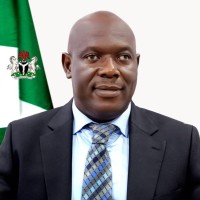
The Hydrocarbon Pollution Remediation Project (HYPREP) has commemorated the 15th anniversary of the release of the United Nations Environment Programme (UNEP) Environmental Assessment Report on Ogoniland, reaffirming its commitment to restoring the environment and improving the livelihoods of affected communities.
In a statement signed by the Project Coordinator, Prof Nenibarini Zabbey, to commemorate the anniversary, HYPREP described the anniversary as a significant milestone in Nigeria’s environmental restoration efforts, noting that the project has made remarkable progress in implementing the recommendations of the landmark UNEP report released on August 4, 2011.
The UNEP report had revealed extensive oil pollution across Ogoniland, severe environmental degradation, and serious public health risks resulting from decades of petroleum operations. It also recommended an initial $1 billion fund to commence the cleanup of the affected communities.
According to HYPREP, the Federal Government formally launched the Ogoni clean-up in 2016, while the Project Coordination Office was established in 2017 to drive the implementation of UNEP’s recommendations.
Zabbey said the current administration has continued to prioritise the project under the Renewed Hope Agenda.
Providing an update on the cleanup, the Project Coordinator disclosed that 30 of the 65 contaminated sites identified by UNEP have been fully remediated, while work is ongoing at several medium- and high-risk locations. It also stated that more than 1.5 million mangrove seedlings have been planted as part of what it described as the world’s largest restoration of oil-degraded mangroves, with over 1,000 hectares of shoreline already rehabilitated.
Zabbey further revealed that 49 Ogoni communities have been connected to potable water schemes through multiple water projects and booster stations aimed at providing safe drinking water across the region.
In the health sector, he said the 100-bed Ogoni Specialist Hospital in Kpite and the 43-bed Cottage Hospital in Buan are nearing completion, adding that several existing health facilities have been upgraded with modern medical equipment, while five ambulances have been donated to improve emergency healthcare services. The Project Coordinator also disclosed that a three-year human health biomonitoring study is being conducted in collaboration with the World Health Organization’s International Agency for Research on Cancer (IARC).
On economic empowerment, Zabbey stated that the Project has created more than 8,000 direct jobs and trained thousands of Ogoni youths and women in various vocational and technical skills, including software development, cybersecurity, aviation, commercial diving, seafaring, mechatronics, and creative arts. The project also reported awarding scholarships to more than 1,000 students, providing grants to small businesses, and supporting persons living with special needs through skills acquisition programmes.
The statement further highlighted ongoing legacy projects, including the Ogoni Power Project and the Centre of Excellence for Environmental Restoration, which it said is about 96 per cent complete. HYPREP also welcomed the recent designation of the Ogoni Wetland as a Ramsar Site of International Importance and pledged to continue promoting biodiversity conservation and sustainable management of the ecosystem.
Marking the anniversary, Zabbey said the progress achieved over the past 15 years demonstrates the collective commitment of government, development partners, stakeholders, and local communities to restoring Ogoniland. He called for renewed collaboration to sustain the cleanup effort, promote environmental sustainability, and support the long-term development of the region. 3
-

 News2 days ago
RSG Targets Nine Million Residents in Mosquito Net Distribution Campaign
-

 Oil & Energy2 days ago
Aiyedatiwa Signs New Electricity Bill
-

 Maritime2 days ago
Marine Minister Commends President Tinubu On NPERA Bill Assent
-

 Oil & Energy2 days ago
NLNG Commissions Research And Innovation Centre In RSU
-

 News2 days ago
KenPoly Holds Eight Convocations, August 29
-

 News2 days ago
RSG Begins Another Phase of Projects Commissioning Today
-

 News2 days ago
RMAFC Completes Revenue Sharing Review, Proposes New Pay
-

 Maritime2 days ago
NAGAFF Petitions IGP Over Alleged Maritime Police Harassment