
Sports
‘Belief Has Returned To Germany Ahead Euro 2024’

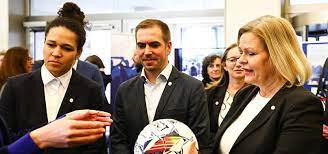
Germany have regained their self-confidence after a 2-0 win against France last week, three months before hosting Euro 2024, World Cup winner Philipp Lahm told Tidesports source in an interview.
Lahm, who is tournament director for Euro 2024, said the promising performance brought back euphoria in our country because the “German national team played football well and played football passionately”.
In Qatar in 2022, Germany reached a new low when they were eliminated at the group stage of a World Cup for the second time in a row.
Hansi Flick became the first Germany coach in history to be sacked and was replaced by Julian Nagelsmann in September.
In Lyon on Saturday, Nagelsmann appeared to be finally moulding a new, young team, less than three months from the opening match of the tournament against Scotland on June 14.
“(Germany) performed completely differently” against France, Lahm said of the victory that came thanks to a first international goal from Bayer Leverkusen’s Florian Wirtz and a Kai Havertz strike.
“We had an established midfield and of course very, very young, dynamic, attacking players. And of course that brings self-confidence.
“But we can only know for sure over a longer period of time.”
Lahm played every minute in Germany’s run to the semi-finals as hosts of the 2006 World Cup before captaining the side to victory in Brazil eight years later.
As captain of the last world-beating German team, Lahm understands how complex the process of developing a top team can be — and that talent may not be enough.
“Super-talented players like Jamal Musiala and Florian Wirtz are still relatively young, but have a lot of experience,” he said.
“They certainly have the talent to raise the German national team to another level, but it’s important everything fits together, that the pieces of the puzzle fit together — and that was certainly the case in 2014.
“Everyone identified with their role and made their skills available to the team.”
Saturday’s victory against France even overshadowed the controversy surrounding the DFB’s decision to ditch long-time kit maker Adidas in favour of Nike, ending a 70-year collaboration with the German sports brand.
“I made 113 international appearances for Germany in Adidas, I played at Bayern Munich in Adidas, I only know the national team in Adidas,” Lahm said.
“When I watched Germany play on TV as a child, it was in Adidas.”
Lahm admitted the move was “a change for us in Germany”, but said: “There must have been serious reasons to change.”
Despite the hope fuelled by Germany’s defeat of France on Saturday, Lahm still named the French, spearheaded by Kylian Mbappe, as tournament favourites.
“They have 40 players who are very, very talented. They have a balanced squad,” he said.
“They can always bring players off the bench who would normally be good enough to play from the start.
“But the important thing is that you have a team on the field.”
While predicting a “big football nation” will win, Lahm said he hoped “perhaps there will be a surprise, that a smaller nation will go far in the tournament and will celebrate together with their fans.”
“But as for winning the title? I’m pretty sure it will be a football nation and one of the favourites, one who has won in the past few years.”
The Euro 2024 hosts hope to channel the spirit of the 2006 World Cup which still holds a defining place in the collective German consciousness.
Known as the “summer fairytale”, it was the moment where a unified and modern Germany showcased itself on the world stage.
Just 18 years ago, the tournament seems from a different time, with this year’s event held in a time of global conflicts and uncertainty.
Late in 2023, Germany’s Federal Office for the Protection of the Constitution (BfV) warned the danger of a terror attack was higher than it has been for a long time.
The attack on a concert in Moscow last Friday by militants linked to the Islamic State group which killed 137 people has prompted new security fears in Germany. Neighbouring France has already raised its security alert to its highest level.
Lahm acknowledged the challenges, but said he hoped the tournament could play a unifying role as the World Cup had done in 2006.
“Safety is the highest priority, right from the start until the end of the tournament,” Lahm said.
“It’s a tournament in challenging times, but I still believe it’s important that we keep coming together.
“In Europe, we always come together to strengthen ourselves, to strengthen our democracy.
“Everyone is warmly welcomed to Germany, especially at this time, when there are many challenges all over the world. (It is important) that people can come together again and celebrate together again.”



The Nigerian, who arrived in China fresh from winning gold at the African Senior Athletics Championships in Ghana earlier on Wednesday, clocked a season’s best of 12.41s behind Olympic champion Masai Russell and Bahamian star Devynne Charlton.
Russell produced a dominant display to win the race in a meeting record and world-leading time of 12.25s, improving on her previous world lead of 12.40s.
Charlton, the reigning world indoor champion, finished second in 12.38s in one of her strongest outdoor performances to date.
Amusan, whose world record of 12.12s remains the fastest time ever run in the event, improved significantly from her previous season’s best of 12.84s set during her victorious outing at the African Championships in Accra.
The 29-year-old was competing in a stacked field that included reigning world champion Ditaji Kambundji of Switzerland, Jamaican pair Megan Simmonds and Ackera Nugent, China’s Wu Yanni and Americans Tonea Marshall and Danielle Williams.
Kambundji, who won the world title in Tokyo last year with a Swiss record 12.24s, finished fifth in 12.82s, while Jamaica’s Nugent placed sixth in 12.98s.
Marshall and Williams failed to finish the race.
Following Amusan’s victory in Accra, the three-time Diamond League final winner expressed gratitude to her supporters while insisting she remained determined to achieve more success this season.
“Beyond grateful to God, my team, supporters, and everyone who continues to believe in me through every season. Historic feeling. Still hungry for more. The mission continues,”

The 10-time African champions are scheduled to take on the Teranga Lionesses on June 5 and 8 at the Remo Stars Stadium in Ikenne, Ogun State, in what will form a key part of their build-up to July’s continental tournament.
The fixtures were confirmed on social media platform X by Super Falcons Show, which announced the details of the encounter and venue.
“Nigeria’s senior women’s national team, the Super Falcons, will take on Senegal Women’s National Team in a double-header international friendly scheduled for June 5 and 8,” the post read.
“Both matches will be played in Ikenne, Nigeria.”
The friendlies come after Nigeria’s proposed training tour of the United Kingdom, which included a planned match against Jamaica, was cancelled due to scheduling complications linked to FIFA’s official women’s international window. The timing meant clubs would not have been obliged to release players.
With that tour shelved, the Senegal fixtures now offer a timely opportunity for coach Justine Madugu and his technical team to assess squad options, test tactical systems and strengthen team cohesion ahead of the WAFCON campaign and longer-term qualification targets for the 2027 FIFA Women’s World Cup in Brazil.
Senegal are expected to provide a competitive regional test, with their physical style and disciplined organisation likely to offer Nigeria a different tactical challenge across both matches.
The Super Falcons, who have dominated African women’s football for decades, will be aiming to use the double-header to fine-tune preparations as they pursue another continental title in Morocco next year.

Dr Bojuwoye, a seasoned medical professional with extensive experience in road running events across Nigeria, is expected to bring added value to the race through his expertise.
As medical director, his responsibilities will include overseeing emergency medical response, coordinating first aid stations along the course, ensuring athlete safety, and supervising medical volunteers and paramedics.
His role is critical in safeguarding the health of both elite and recreational runners, as well as spectators.
In addition to unveiling its new medical director, the organisers also announced five corporate partners for the 2026 edition.
The Development Bank of Nigeria (DBN), Petralon Energy, Razzl Drink, Dan Oil, and Carloha Motors have joined as sponsors, reflecting the race’s growing appeal across diverse sectors of the Nigerian economy.
The Okpekpe race, organised by Pamodzi Sports Marketing Company, has steadily risen in prominence since becoming the first road race in Nigeria to earn World Athletics label status in 2015.
It has since advanced to Gold Label Race status, attracting elite athletes from around the world and cementing its reputation as one of Africa’s benchmark road-running competitions.
Edo State, under the leadership of Governor Monday Okpebolo, has reaffirmed its commitment to supporting the race, citing its role in promoting tourism, community pride, and international recognition for the region.
Race Director Zack Amodu noted that the new partnerships underscore the event’s stature and its impact beyond sport.
We are delighted to welcome DBN, Petralon, Razzl, and Carloha Motors as partners for the 11th edition. Their support, alongside the backing of Edo State, not only strengthens the race but also reinforces its role as a platform for promoting excellence, youth empowerment, and community development,’ Amodu said.
Beyond its sporting significance, the Okpekpe International 10km Road Race has become a catalyst for social, health, and economic benefits.
It encourages fitness and healthy lifestyles, fosters social cohesion by bringing communities together, and generates economic activity through tourism, hospitality, and local commerce.
The event also showcases Edo State’s cultural vibrancy while contributing to Nigeria’s growing reputation in global athletics.
The 11th edition is expected to draw elite athletes, local participants, and international attention, further consolidating Nigeria’s place on the global athletics calendar.
-

 Editorial1 day ago
Enough Of Xenophobic Attacks On Nigerians
-

 Nation1 day ago
RSU, Otonti Nduka Foundation Holds Centenary Conference, Unveil Book on Values in Nigeria
-

 Oil & Energy1 day ago
Rivers PETROAN Elects 12-Member Executive
-

 Environment1 day ago
MOSOP – Tinubu Not Sincere With Ogoni People For Oil Resumption
-
Politics1 day ago
APC Group Protests Ex–Presidential Aspirant’s Disqualification From Rivers Senatorial Race
-

 News1 day ago
Fubara, Wife Hail Tinubu’s Renewed Hope Initiative …As Over 6,800 Families Benefit From Largesse In Rivers
-
Politics1 day ago
Reps Speaker Secures APC Return Ticket For Fifth Term
-

 Maritime1 day ago
Products, Others, To Arrive Lagos Ports Today — MPA