Connect with us

Editorial

Oil Theft: That Alleged Military’s Complicity

Published

on

The Rivers State Governor, Sir Siminalayi Fubara, recently expressed deep concern over the persistent loss of crude oil and its resultant negative impact on the environment. He made allegation, stating that despite his administration’s strong dedication to combat illegal bunkering activities in the state, certain officers of the Nigerian Army were involved in compromising behaviours in specific areas such as Ahoada East and Ogba/Egbema/Ndoni Local Government Areas.
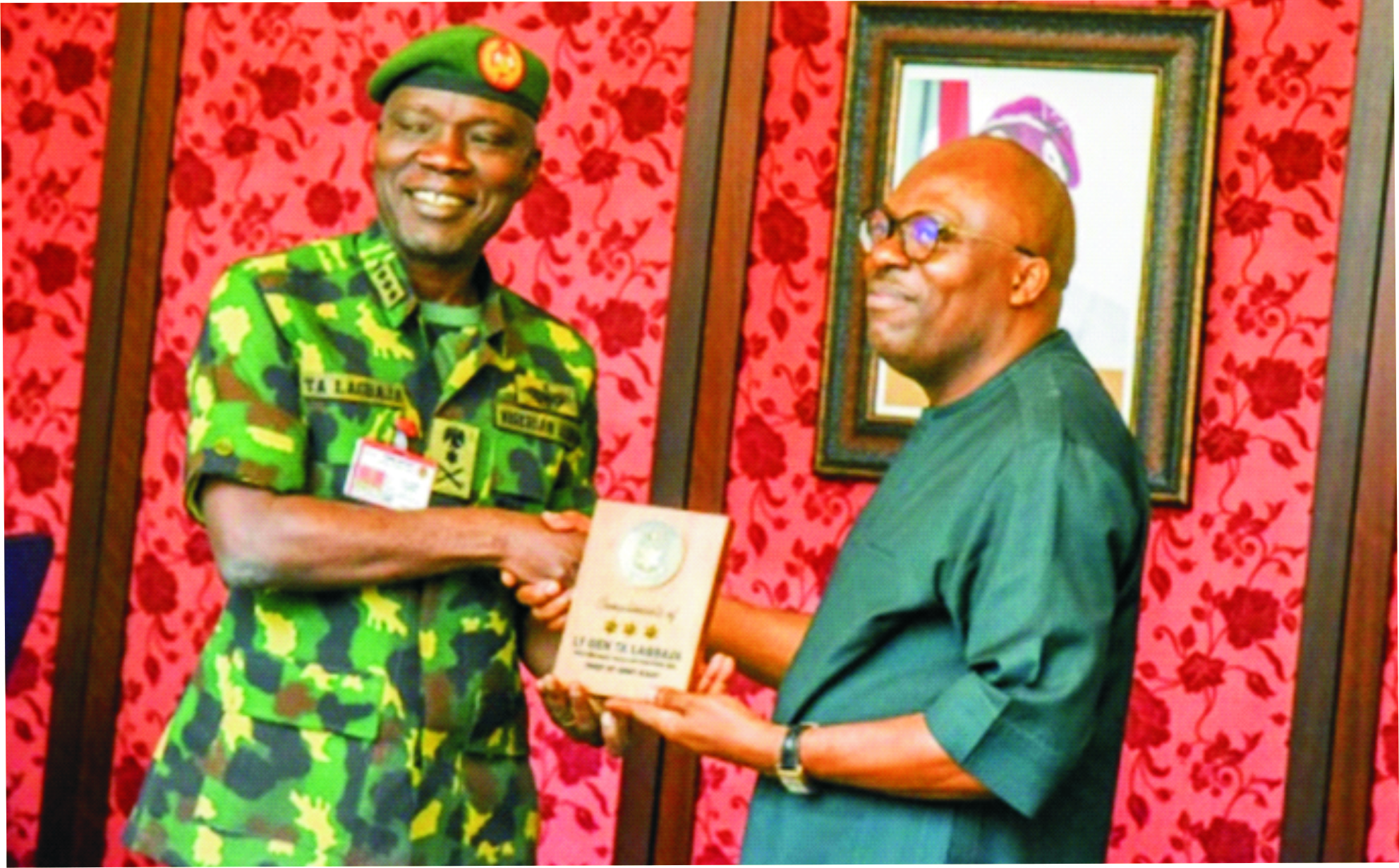
The governor conveyed this allegation during his meeting with the Chief of Army Staff, Lt.-Gen. Taoreed Abiodun Lagbaja, who paid a formal visit to the Government House in Port Harcourt. According to the governor, the implicated officers were affiliated with a specific company located in the Ogba/Egbema/Ndoni Local Government Area.
Fubara said, “One special problem that we have here is the issue of bunkering. In some parts of the state, in Ahoada East and Ogba/Egbema/Ndoni, most of the bunkering activities there, we believe, are subsisting because there is this cooperation between the Army and high-top oil companies. I am saying this because there is this road we are constructing in Ogba/Egbema/Ndoni, and each time the contractors approach this particular company to solicit cooperation to enable them to carry out their obligations, the military always attack the contractors.”
We commend the governor for bravely speaking out against the military’s involvement in the atrocious act, despite encountering stiff opposition to interventions. The governor’s claims have been verified and it is crucial that security agencies are compelled to disclose any member who may be collaborating with the perpetrators. The Federal Government must stay firm in its commitment, promptly fulfilling its responsibility to uncover any complicit official.
Fubara’s observation is supported by the remarks of prominent Niger Delta ex-militant leader, Asari Dokubo, who accused the Nigerian military of being responsible for a greater majority of oil theft in the country. Dokubo made this accusation following a private meeting with President Bola Tinubu in the latter’s office. He mentioned that the President had assured him of conducting an investigation into the allegations of extensive oil bunkering orchestrated by influential naval commanders who served as kingpins, and also pledged to take firm action to put an end to this ignominious practice.
The former militant leader asserted that the culpability for oil theft in the Niger Delta region lies not with the ordinary citizens, who lack the means to orchestrate such complex acts of theft. He contended that the manner in which the oil thieves have conducted their illicit activities had not only deprived the people of the Niger Delta of their means of sustenance, but also constitutes a grave crime against humanity.
To corroborate this claim, a House of Representatives committee is currently investigating the substantial oil theft in the Niger Delta after uncovering, through credible intelligence, collaboration between regulatory agencies and security agencies. The committee has said that it will examine the actions of marginal field operators who are accused of assisting in crude oil theft to compensate for production deficits. The lawmakers have already had discussions with security agencies and plan to also involve marginal field operators, as well as 14 production-sharing contract operators, and 57 joint venture operators in their investigations.
Oil theft in Nigeria is causing severe damage, with roughly 40 per cent of explored crude oil being lost due to theft and measurement inaccuracies caused by insufficient maintenance of metering facilities. The House has estimated that in 2021 alone, the country suffered a loss of $4billion, equivalent to a daily loss of 200,000 barrels. A recent statement from the National Security Adviser, Nuhu Ribadu, confirmed that a staggering 400,000 barrels are being stolen each day. Consequently, Nigeria is unable to meet its current OPEC production quota of 1.8 million barrels per day.
President Bola Tinubu should investigate Governor Fubara’s claims. The military should also conduct an internal investigation to identify any collaborators within its ranks, both current and retired. In 2022, the former Chief of Defence Staff, Lucky Irabor, expressed a commitment to investigating oil theft activities after visiting oil theft sites in Delta State with oil sector executives. His successor, Chris Musa, should ensure that this promise is upheld. The Nigerian Navy should take necessary steps to remove any officer found to be involved in these illicit activities.
The most perplexing aspect of Nigeria’s oil theft situation is the deliberate act of setting vessels ablaze, either onshore or at sea, along with the captured stolen crude oil. This is done without conducting comprehensive investigations, initiating legal proceedings, or obtaining court orders. The government should cease this peculiar and extravagant practice.
The impact of oil theft on the economy is enormous, considering that crude oil contributes to about 90 per cent of the country’s revenue. According to a study published in the European Modern Studies Journal, Nigeria has suffered substantial revenue losses due to oil theft. In 2019, the country lost $2.1billion, followed by $1.9billion in 2020, $7.2billion in 2021, and a staggering $22.4billion in 2022.
The government plays a critical role in safeguarding pipelines and other economic assets, and it is imperative that they strengthen their efforts in this regard. It is essential to identify and apprehend security operatives involved in oil theft, ensuring that they face prosecution for their actions. Any collaborators within the military’s ranks must be held accountable and brought to justice.
This is one best way to ensure that the fight against crude oil theft and illegal refining of petroleum products is eliminated, so as to save the nation of the excruciating pains it faces not just because of huge revenue losses but also the damage to the environment and the consequent health complications.

Continue Reading

Editorial

AFCON ’25: Bravo, Super Eagles, But…

Published

on

The 2025 Africa Cup of Nations staged in Morocco witnessed the Super Eagles soar to an altitude few Nigerians anticipated, confounding pessimism with exuberance and resilience. Before the opening whistle, public confidence was anaemic, yet the team produced a performance laced with audacity and organisation. In a tournament featuring 24 nations and over 52 matches, Nigeria emerged with renewed credibility, reminding the continent of its enduring pedigree through conviction and renaissance.
Only weeks earlier, national morale had been battered by the abysmal failure to qualify for the FIFA World Cup, a disappointment that generated widespread cynicism and recrimination. Many analysts dismissed the Eagles as tactically incoherent and psychologically fragile. Yet, in Morocco, a transformation occurred, marked by revitalisation and determination. Statistical evidence shows Nigeria conceded fewer than one goal per match on average, an emphatic rebuttal to earlier derision and fatalism.
Against popular expectations, the 2025 AFCON became one of Nigeria’s most impressive outings in recent times, judged by fluency and consistency. The Super Eagles completed the group stage with over 55 per cent average ball possession and an 82 per cent pass completion rate, numbers that signify discipline and intelligence. There was a newfound spirit and camaraderie that suggested maturity and self-belief, hallmarks of evolution and professionalism.
Many pundits predicted that the Eric Chelle tutored side would struggle to escape the group stage, citing tactical naivety and limited preparation. Instead, Nigeria navigated the entire competition without losing a single match within regulation time, an extraordinary demonstration of fortitude and concentration. In football logic and jurisprudence, a match not lost in 90 minutes is not truly lost. Penalty shootouts remain a lottery governed by chance and psychology.
The Super Eagles’ representation was laudable and provides a formidable platform for regeneration and continuity. It underscores that Chelle is not as inept as some critics asserted after the World Cup failure. On the contrary, he demonstrated pedagogical acumen and strategic awareness, improving individual performances while enhancing collective harmony. His methods yielded measurable progress in cohesion and adaptability.
Chelle’s capacity to knit a coherent unit with tactical symmetry and individual expression shows unmistakably that he has substance to offer. Therefore, we urge the Nigeria Football Federation (NFF), the National Sports Commission, and the Federal Government to provide institutional backing and contractual stability. Continuity breeds excellence, and excellence requires foresight and investment, not impulsive judgement and expediency.
Judging by the Morocco showing, it is logical to deduce that the Super Eagles possess latent potential yet to be fully exploited. Motivation and encouragement could unlock greater heights of achievement and dominance. Preparation for the next major tournament must commence immediately, with meticulous planning and incremental improvement. Success in Morocco was not accidental but the product of diligence and perseverance, a tempo that must be sustained.
However, commendation should not degenerate into complacency. Given Nigeria’s vast talent pool and storied global exploits, the bronze medal remains inadequate. Nigeria has now finished third at AFCON nine times, a statistic that should provoke introspection rather than celebration. After emerging as the fifth best footballing nation globally following the iconic USA 1994 World Cup, only the gold medal should be acceptable, nothing less than supremacy and preeminence.
The nation must reconnect with the golden era of Okocha, Kanu, Oliseh and Amokachi, among others, when Nigerian football evoked admiration and trepidation worldwide. Between 1994 and 1998, Nigeria won Olympic gold, reached two World Cup second rounds and dominated Africa with flair and authority. That epoch was defined by creativity and confidence, a synthesis of artistry and aggression that captivated the global audience.
Now is the moment for the NFF and the coaching crew to intensify their labour and vision. Ascending to the summit is arduous, but remaining there is exponentially more difficult. Strategic recruitment of eligible players at home and abroad must be pursued with rigour and transparency. Data driven scouting and long term planning should replace sentimentality and improvisation.
It is equally imperative to rejuvenate the squad by replacing tiring legs with youthful exuberance and athleticism. Football in Nigeria is not merely a sport but a social adhesive and cultural obsession. With such abundance of talent, Nigeria should never play second fiddle to any nation. The task is to harness these resources with intentionality and coherence.
Having secured bronze for the ninth time, that position has lost desirability and prestige. The Super Eagles must henceforth be charged with the singular ambition of winning gold. Nigeria has lifted the Nations Cup only three times, compared to Egypt’s seven and Cameroon’s five. Challenging these records demands ambition and accountability, underpinned by discipline and aspiration.
It is deeply shameful that players reportedly boycotted training over unpaid match bonuses, an incident that embarrassed the nation. Authorities must investigate thoroughly and sanction culpable officials to restore integrity and trust. Nations like Morocco invest strategically in their players, infrastructure and welfare, semi- final finish at the 2022 World Cup is empirical evidence of foresight and commitment.
With appropriate motivation, transparent administration and prompt remuneration, the ceiling for the Super Eagles is limitless. Proper welfare enhances morale, while professional management engenders loyalty and sacrifice. If Nigeria aligns talent with structure and vision, continental dominance and global relevance will follow inevitably, crowned by excellence and distinction.
Ultimately, this AFCON outing should serve as a catalytic moment rather than a ceremonial footnote in Nigeria’s football narrative. Countries that dominate consistently do so through long term frameworks, not episodic brilliance, and statistics affirm this truth, as over 70 per cent of AFCON winners since 2000 retained at least 60 per cent of their squads across successive tournaments.
Nigeria must therefore institutionalise progress through robust youth development, sports science and administrative probity. If lessons from Morocco are properly internalised, the Super Eagles can transition from episodic resurgence to sustained excellence, reclaiming continental authority with purpose and conviction.
Continue Reading

Editorial

Fubara: Celebrating A Leader At 51

Published

on

Today is an exceptional day for Rivers State as it marks the birthday of His Excellency, Sir Siminalayi Joseph Fubara, the governor whose leadership has become synonymous with discipline, vision, and transformative development. Born on January 28, 1975, in Opobo Town, Fubara hails from the Opobo/Nkoro Local Government Area, and his journey from a dedicated civil servant to the helm of state leadership is a story worth emblazoning.
Governor Fubara was born into the loving family of Mr and Mrs Siminayi, the second of five children and the first son of the late Joseph and Love Fubara. His father, a former soldier trained overseas, instilled in him a deep sense of discipline and fortitude, while his mother, a civil servant, impressed upon him the virtues of diligence and perseverance. These early lessons in character laid the foundation for a life devoted to service.
Education was central to Fubara’s development. He attended Opobo Primary School before moving to Comprehensive Secondary School, Opobo. His passion for numbers and structure naturally led him to study Accountancy at the then Rivers State University of Science and Technology, now Rivers State University. He further advanced his knowledge with an MBA and MSc from the University of Port Harcourt in 2013 and 2016, respectively. This commitment to personal growth and excellence foreshadowed the accomplishments that would define his career.
Sim, as he is fondly called, began his professional journey in 2003 as a principal accountant at the Rivers State Senior Secondary Schools Board. Through steadfast dedication, he rose to Director of Finance and Accounts at the Government House in 2015 and eventually became Permanent Secretary in March 2020. His expertise in financial administration earned him the role of Accountant General of Rivers State on December 23, 2020, consolidating a reputation for meticulousness and integrity.
Beyond civil service, Fubara’s professional distinctions are numerous. He is a Fellow of the Nigerian Institute of Management and the Association of National Accountants of Nigeria, as well as a Member of the Chartered Institute of Forensic and Investigative Auditors. These credentials reflect both his technical proficiency and his capacity for leadership in complex financial systems.
Fubara is also a man of faith and community. He is a Knight of St. Christopher (KSC) of the Church of Nigeria Anglican Communion and holds the traditional title of Amaopusenibo of Opobo Kingdom. Married to Valerie Fubara, with whom he shares three children, his personal life reflects the same values of commitment and integrity that guide his public service.
As a leader, Fubara embodies humility, patience, and empathy. Representing a new generation of leadership, he has championed the slogan “Consolidating and Continuity of the New Rivers Vision,” seeking to build on the achievements of his predecessor, Chief Nyesom Wike. His administration has prioritised infrastructure, healthcare, education, security, agriculture, and investment, demonstrating a holistic vision for the state.
One of his notable projects is the Port Harcourt Ring Road, a strategic N200bn contract with Julius Berger spanning six local government areas. This initiative is set to alleviate traffic congestion and stimulate commerce, reflecting the governor’s commitment to transformative, citizen-focused infrastructure development.
Fubara’s administration has also prioritised public welfare. Roads, schools, health facilities, and human capital development projects have been completed across multiple local governments. Security agencies have been engaged to maintain peace, while timely payment of salaries, pensions, and gratuities has bolstered confidence in the state’s governance. Initiatives such as Christmas bonuses of N100,000 to civil servants and the provision of high-end buses for intrastate transport demonstrate a tangible commitment to citizens’ daily welfare.
The governor’s impact extends far beyond the completion of roads or buildings. He embodies a distinctive form of leadership rarely seen in Nigeria: a skilled technocrat who has assumed the mantle of governor, prioritising careful planning, structured governance, and respect for institutional frameworks. In a political arena often defined by theatrics and loud pronouncements, his measured approach, methodical decision-making, and commitment to due process mark him as a model of principled leadership.
At 51, Fubara stands at a stage in life that demands equilibrium. Steering a state as intricate as Rivers requires firmness without inflexibility, allegiance without unquestioning loyalty, and patience combined with timely action. His composed and disciplined style has inspired confidence among citizens who crave stability and meaningful governance over spectacle and empty promises.
Birthdays are also moments to ponder what lies ahead. Rivers people rightly anticipate that the next chapter of Fubara’s tenure will transform restraint into concrete achievements, calm deliberation into lasting reforms, and strategic planning into tangible improvements. True leadership is tested not merely by intention but by results—reliable infrastructure, enduring employment opportunities, and institutions that operate efficiently.
This occasion also provides a moment to foster unity. Effective leadership does not demand uniformity but rather the ability to harmonise diverse interests for collective progress. In a state as politically and socially complex as Rivers, a leader must possess the confidence to bridge divides without weakening authority or vision. Fubara’s measured character equips him to serve as that unifying presence.
His journey from accountant to the highest office in the state underscores the value of competence over spectacle. Throughout his career, he has prioritised legality over coercion, systematic governance over populist gestures, and long-term strategies over immediate gains. These attributes, uncommon in public service, remind us that steadfast principles can endure scrutiny and overcome challenges.
Today, as he celebrates another year, it is appropriate to recognise him as a trailblazer—a leader whose promises are matched by tangible outcomes despite resource constraints and political pressures. His accomplishments have earned admiration, even among sceptics, and set a benchmark for others aspiring to lead with integrity.
In honouring Fubara, we celebrate more than the passing of 51 years. We pay tribute to a statesman who has blended discipline, foresight, and humility to serve his people with distinction. May the lessons of these years deepen his wisdom, fortify his resolve, and guide him in shaping a lasting legacy of progress for Rivers State.
Happy birthday, Governor Fubara. Rivers people look on with anticipation, respect, and optimism for a future shaped by unwavering leadership and transformative action.
Continue Reading

Editorial

Beyond Accessing Bonny By Road

Published

on

The near completion of the Bonny-Bodo Road by the Federal Government is a remarkable and historic achievement that deserves national commendation. For decades, Bonny Island remained physically isolated from the rest of the state, with residents and businesses forced to rely solely on waterways. Today, that narrative has changed. The road is already in active use, and its immediate effect is evident in the drastic reduction in transportation costs, with local transport fares reported to have dropped by more than 40 per cent in some corridors.
As of December 2025, the 37.9-kilometre Bonny-Bodo Road, comprising 11 strategically engineered bridges, was temporarily opened for daily use between 7 am and 7 pm. The transformational and groundbreaking step has eased transit and marked the first-ever land connection between Bonny Island and other parts of the state. According to transport operators, average travel time has reduced from over two hours by water to less than one hour by road, a change that has immediate economic and social benefits for commuters and businesses alike.
It must be noted that the project spanned many years, surviving policy shifts, funding challenges, and technical hurdles. Its near completion is therefore a reflection of political will. Credit must be given to the Federal Government and particularly to the Rivers State Governor, Sir Siminalayi Fubara, under whose tenure the project has reached fruition. This commendable and steadfast leadership has ensured that a long-standing promise to the people is finally being honoured.
The Bonny-Bodo Road stands as a success story of a tripartite agreement involving the Federal Government, Nigeria LNG Limited as the primary funder, and Julius Berger Nigeria Plc as the constructor. The collaborative and strategic partnership demonstrates how public and private sector synergy can deliver complex infrastructure in difficult terrain. NLNG alone reportedly contributed over 60 per cent of the project funding, underscoring the value of corporate responsibility in national development.
For business owners, the newly constructed road offers a vital turning point. Many traders, investors, and service providers had avoided Bonny because of the risks associated with water travel, including accidents and piracy. With this new land route, access is now safer and more predictable. This liberating and empowering development is expected to stimulate commerce, increase market activity, and attract fresh investments into the area to strengthen the local economy.
The Petroleum Products Retail Outlet Owners Association of Nigeria has stated that the commissioning of the Bonny-Bodo Road will improve national energy logistics and likely lead to a reduction in the price of cooking gas. Nigeria currently spends billions of naira annually on inland water transport inefficiencies. The economically and logistically significant road could reduce distribution costs by up to 20 per cent, a benefit that would be felt directly by households across the country.
The road is expected to be fully commissioned in the first quarter of 2026, with 35 kilometres already reported as fully motorable. This progress reflects assuring and measurable commitment to timely delivery. When completed, the road will support heavy-duty vehicles, enhance supply chain reliability, and further cement Bonny’s role as a critical industrial and maritime hub in the Niger Delta.
This achievement also builds on earlier successes. Opobo has already been connected to land through deliberate government intervention. These efforts show that even the most challenging terrains can be conquered with planning and resolve. Such intentional and visionary actions are redefining infrastructure advancement in riverine areas that were once considered unreachable.
The Trans-Kalabari Road is similarly expected to be completed within the year, opening up vital aisles in the Kalabari axis to road transportation. Once operational, it is projected to serve over 500,000 residents directly. The expansive and inclusive approach to development ensures that growth is not concentrated in urban centres alone but spread across communities.
These projects represent an expanding legacy. By 2027, there will be numerous tangible gains to credit the current administration in Rivers State. Improved mobility, increased trade, and enhanced social cohesion are just a few. This forward-looking and progressive trajectory positions the state as a model for infrastructure-led development in Nigeria.
However, with increased road access comes new security considerations. While sea piracy on waterways may reduce, land-based security challenges could emerge. The government must anticipate and address these risks through effective policing and surveillance. A proactive and balanced security framework will be essential to protect lives and investments along the new highways.
There must also be firm determination to ensure that the road does not come with excessive encumbrances. Issues such as illegal tolling, unregulated settlements, and environmental degradation must be prevented. This disciplined and responsible management will preserve the long-term value of the infrastructure.
Beyond the communities already connected, the state government should extend its vision to other difficult terrains. Oceanic areas such as Kula, Abisse, Idama, Ke, and Bille, among others, should be prioritised. Connecting these communities by road would be equitable and transformative, ensuring that no part of the state is left behind in the march towards development.
If every part of Rivers is linked to land transportation, the blue economy will experience a major boost. Fisheries, tourism, marine services, and coastal trade could collectively contribute billions of naira annually to the state’s economy. This sustainable and wealth-generating potential makes further road expansion not just desirable but necessary.
Continue Reading

Trending