
Politics
2023: Group Tasks INEC On Fairness To Political Parties

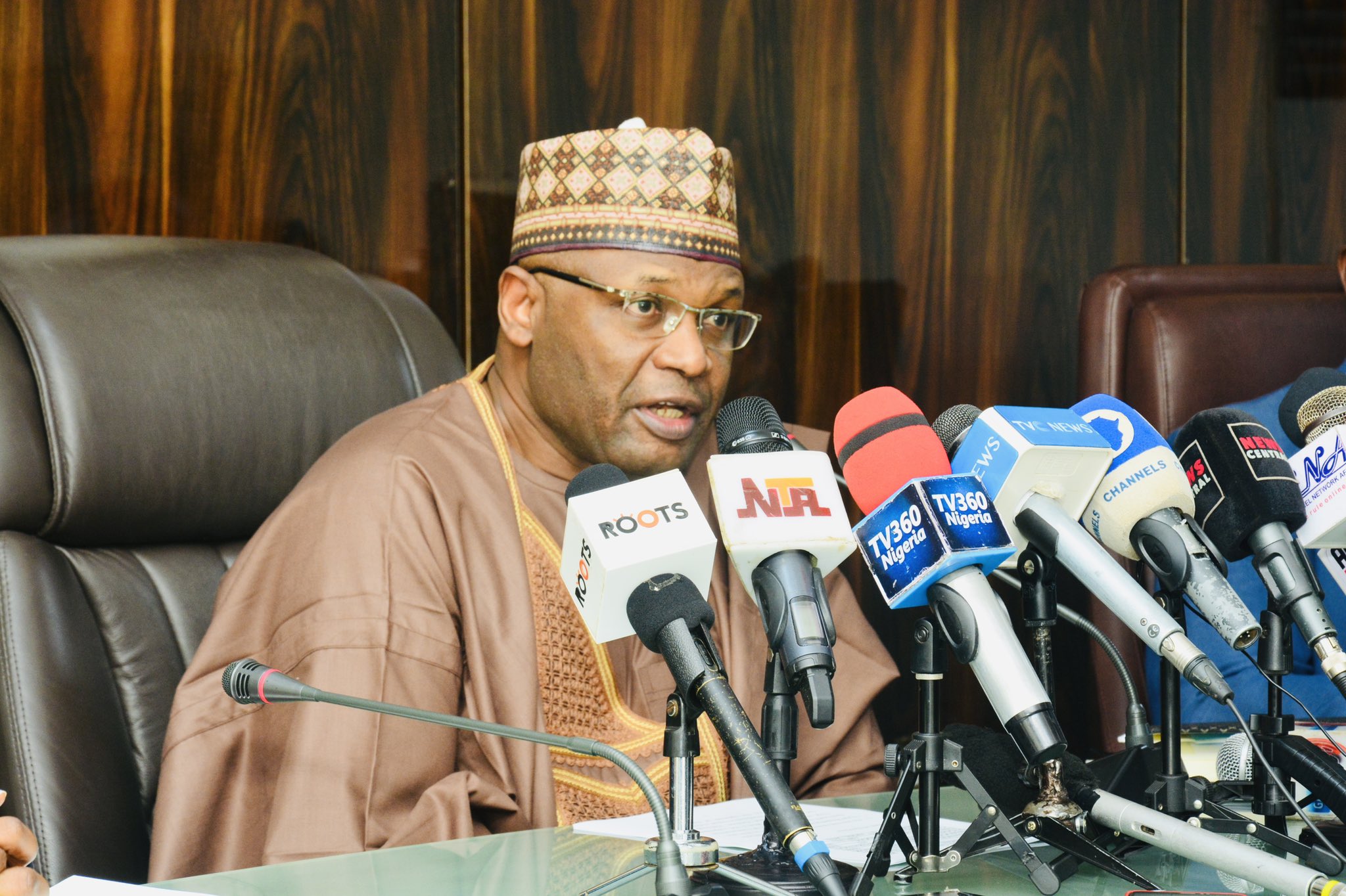
The Abuja School of Social and Political Thoughts (ASSPT) has tasked the Independent National Electoral Commission (INEC) to be fair to all political parties ahead of 2023 general elections.
The Director of the School, Dr Sam Amadi, made the call at a news conference in Abuja, on Tuesday while speaking on the uploading of party agents for the Feb. 25 presidential election.
Amadi urged INEC to work hard and simplify its digital processes to enable efficient and timely upload of Polling Units (PUs) agents by political parties.
He equally advised the commission to factor the interests and challenges faced by the less established political parties in managing its deadlines.
Amadi said from the group’s interactions with some of the parties “outside the major ones, namely the Peoples Democratic Party, the All Progressives Congress, the Labour Party and the New Nigeria People’s Party” the feedbacks were not encouraging.
“We receive reports of difficulty in uploading party agents including difficulty of using the INEC’s portal and the number of PUs to be uploaded.
”Some of the officials of these parties informed us that INEC official did not notify them that their method will only provide online forms suitable for self-service and not for enterprise use cases.
“Some of them have also complained that the tasks requires more time that INEC allocates.
”Some of these party officials are requesting INEC to adopt the Enterprise Data Upload Method which will be easier and faster to enable them to quickly upload their agents.
”And this will enable them be in a position to monitor and defend their votes, especially in the presidential and governorship elections where incentives for rigging and manipulations may be high.
“INEC should recognise the comparative disadvantage of the less established parties and grant them amply opportunity to meet the deadline.
”If INEC is not able to be flexible with its system to enable smooth upload, then it should, within its conveniences and schedule, consider to extend the deadline.
“This will enable effective participation by the less established parties, outside the Big Four to ensure fair participation in competitive election, “ Amadi explained.
Our correspondent reports that the school at the event launched a 2023 Election Observatory to monitor, analyse and provide solutions to issues that would affect the credibility and fairness of the elections.
Amadi said the gesture became necessary in order to help the INEC with necessary information in its preparations towards a credible exercise.
He said, “the objective of the observatory is to offer an independent analysis of the challenges of free and fair election to INEC as the country approaches its general elections.
“We believe that the most important aspect of the electoral process is not the actual voting, but actions taken by the electoral management body to make voting free and fair.
“We are not engaged in election monitoring but rather in observing and analysing the processes and procedures that guarantee fairness and credibility of voting and declaration of results.
“To this end, we will be having weekly press briefings to highlight challenges and offer solutions to ensure the conduct of the 2023 elections remain free, fair and credible.”
The school urged INEC to ensure that all eligible registered voters collect their Permanent Voter Cards(PVCs) before the election dates to avoid disenfranchisement.
He explained that the logistics could be overwhelming for the institutions, adding that the election is a crucial one and its competitiveness requires more transparency and accountability than in the past.
He commended INEC for the decision to use its staff to conduct the election rather than academics outside its control.
“By establishing a committee of its senior management and taking ownership of the process, INEC is proving that it is learning from the failures of the past and is determined to conduct more efficient and reliable elections in 2023.
“This decision underlines a recognition of the needs to standardise the procedures and processes of the elections.
“This is more so as the returning officers make decisions that at times are arbitrary and capricious to undermine the fairness of electoral outcomes,” he said.
Mr Kenneth Eze of Speak Out Africa Initiative, urged INEC to put measures in place for all eligible registered voters, especially students who were now back to their various schools, get their voting PVCs.
“We all know that when the Continuous Voter Registration was conducted, Nigeria students were home due to eight months strike declared by ASUU.
“Today, as we are talking PVCs distributoon and collection, these same largest decision making constituency are currently back in their school busy with their studies.
“Its unfortunate and I am calling the attention of INEC. There is no way they will be in school and still collect their PVCs which they did at home.
“Youth population is over 26 million as we were told by INEC and they must be part of determining who governance us in the next four years, “he said.
He urged the Federal Government to declare public holiday for students for one week and mandate ASUU, Nigeria University Commission (NUC) and stakeholders in education sector to suspend every activity during this one week break.
Oh his part, Mr Law Mefor, fellow of the school, urged INEC to improve its delivery system and overcome some of the managerial shortcomings recorded in the past weeks.
He said some of these suggestions were made to provide fair and effective participation in INEC process and to avert litigations that might damage the credibility of the entire process. (



The Independent National Electoral Commission (INEC) has insisted on the conclusion of the Continuous Voter Registration exercise yesterday (Sunday) despite calls by some opposition political parties and civil society organisations for an extension over concerns that millions of citizens could be excluded from the 2027 general elections.
In a notice issued on its X (formerly Twitter) handle on Saturday, the commission reminded the public that the exercise would end on Sunday, July 26, with designated registration centres open from 9am to 3pm.
“Your future won’t wait. Neither should you. The Continuous Voter Registration (CVR) exercise ends Sunday, 26 July 2026,” the Commission stated.
INEC also reminded prospective voters that they could complete the registration process online through its dedicated CVR portal or visit designated INEC offices and registration centres nationwide for physical assistance.
The new Electoral Act stipulates that INEC is required to stop voter registration, updating and revision of the voters’ register 90 days before an election to allow for data clean-up, the printing of Permanent Voter Cards and other logistical preparations.
The law also requires the Commission to display the voters’ register for claims and objections within the stipulated period to enable eligible Nigerians to challenge omissions and errors and help ensure the credibility of the final register for the polls.
The INEC National Commissioner on Information and Voter Education, Mr Mohammed Haruna, told The Tide source that the Commission would not extend the deadline, stressing that the registration exercise had to close to allow the electoral body to begin cleaning the data already collected.
“By midnight on Sunday, voter registration ends. There won’t be any extension. There are so many things that we need to do at the back end. We have to draw a line; otherwise, we won’t be able to produce a clean copy of what has been posted,” he said.
Mr Haruna explained that the commission’s Information Technology team and the Voter Registration Department would begin processing the data immediately after the closure of the registration window.
He said INEC would deploy its Automated Biometric Identification System to detect and remove multiple registrations before the provisional voters’ register is displayed for public scrutiny.
“We have this automatic biometric system that will check whether somebody has registered more than once. They will publish the register for claims and objections. That is, if anybody thinks a name shouldn’t be on the register, or if he has some claims, for instance, that his name has been omitted or some of his details are incorrect,” he said.
According to him, the final number of newly registered voters would only be known after the biometric verification and the claims and objections process.
“So, it’s after all that has been done that we will have a final figure, which we will now add to the existing 93 million or so. That will then become the voters’ register. We are mandated to give every political party a copy ahead of the election,” Mr Haruna added.
Responding to concerns over the number of Nigerians who may be excluded from the 2027 electoral process by the closure, the national commissioner said INEC could only account for eligible citizens who presented themselves for registration.
He added that the commission had recorded registrations through its online platform, physical registration centres and INEC offices across the 774 local government areas.
According to a public announcement signed by Mr Ariyo Rufus, Head of Department, Voter Education, Publicity, Gender and Inclusivity on behalf of Mr Oluwatoyin Babalola, the INEC Osun State Resident Electoral Commissioner (REC), the said exercise is aimed at assessing its operational readiness and testing the efficiency of the Bimodal Voter Accreditation System (BVAS) ahead of the governorship poll.
INEC stated that the exercise would simulate Election Day accreditation procedures but clarified that no voting would take place during the exercise.
The commission explained that “the mock accreditation would be conducted in selected polling units spread across the three senatorial districts of Osun State, covering Osun Central, Osun East and Osun West.
“In Osun Central Senatorial District, the selected local government areas are Osogbo, Olorunda, Ifelodun and Boripe, with designated polling units identified for the exercise.
“For Osun East Senatorial District, the exercise will take place in selected polling units across Ilesa West, Ilesa East, Oriade and Obokun local government areas.”
INEC also listed Egbedore, Ede North, Ede South and Ejigbo local government areas as the selected councils for the mock accreditation exercise in Osun West Senatorial District.
The commission urged all registered voters whose polling units were selected to participate in the exercise, stressing that only holders of valid Permanent Voter Cards (PVCs) would be accredited.
“This exercise is designed to test the functionality and efficiency of the Bimodal Voter Accreditation System (BVAS) under conditions similar to Election Day. There shall be no voting during the exercise,” the Commission stated.
INEC reaffirmed its appreciation to residents of Osun State for their continued cooperation and support throughout the electoral process.
INEC also assured political parties, the media, civil society organisations and other stakeholders of the Commission’s commitment to conducting a free, fair, credible, transparent and inclusive governorship election in Osun State.
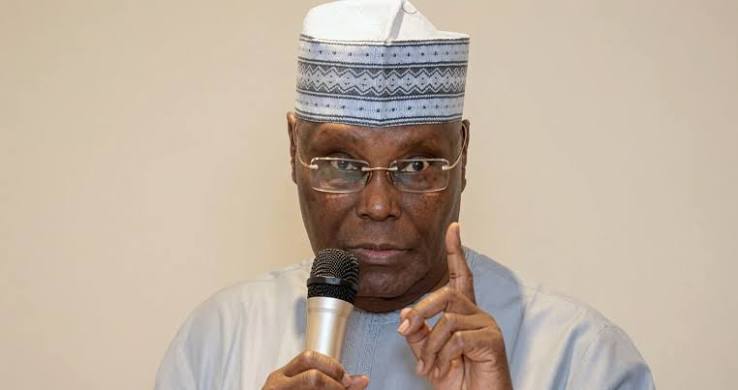
Mr Dare made the remark while criticizing Alhaji Abubakar for hiring a United States of America lobbyist with $1.2 million, in preparation for the 2027 elections.
In a statement he personally signed, Mr Dare said the former vice president can’t take Nigeria down the path of self-destruction.
The statement read in part: “Worse still, for a man who presumes to offer leadership to Africa’s most populous nation, his recent resort to grievance offshoring, outsourcing political warfare to Washington and reportedly paying $1.2 million to an American lobbying firm to peddle petitions against a sitting Nigerian President, stands as an affront to Nigeria’s sovereignty and a vote of no confidence in its democratic institutions.
“It is also a stinging slight, an implicit condescension directed at generations of Nigerian journalists, policy analysts, academics, and public intellectuals who have spent decades analysing, critiquing, and carrying the burden of the nation’s democratic evolution.
“The Atiku Abubakar of today cuts a pitiable figure, a grotesque portrait of what a politician becomes when ambition overwhelms judgment and every political faculty becomes programmed for self-destruction.
“No, Atiku cannot take Nigeria down that path with him. He must travel it alone. But first, Nigerians deserve Atiku Abubakar’s report card. Charity, they say, begins at home, not in Washington.
“Nigerians deserve to know whether the Atiku Abubakar who has long presented himself as a democrat is, in reality, a politician of many colours. He has erected for himself a throne built simultaneously on sand and bayonets. It is time to explode the bayonets.”